
When a Cocoa Bean Processing Plant Becomes Too Costly to Scale
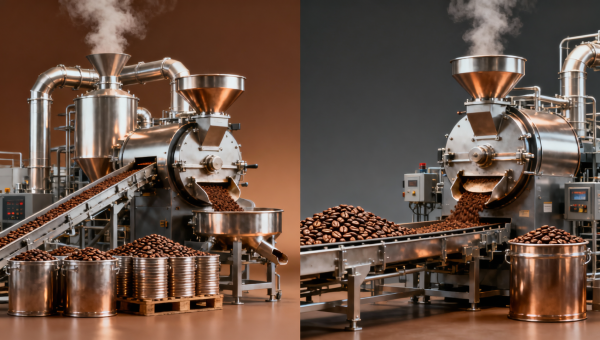
As a cocoa bean processing plant grows, hidden costs often emerge across energy use, labor, compliance, and maintenance. For buyers comparing coffee bean processing equipment, a commercial spice grinder, or even a commercial onion dehydrator, understanding when expansion stops improving margins is critical. This article examines the financial and operational tipping points that turn scale into risk for processors, engineers, and procurement teams.
In primary processing, scale is often treated as an automatic path to lower unit cost. That assumption only holds when throughput, maintenance planning, product quality, and utility infrastructure rise in balance. In cocoa bean processing, the moment capacity expands faster than process control, the plant begins to absorb invisible cost in rework, downtime, inventory pressure, and compliance exposure.
This matters well beyond cocoa. The same financial logic applies to coffee bean processing equipment, spice milling systems, dehydration lines, and other agro-industrial plants where thermal load, material variability, and sanitation standards affect operating margin. For technical evaluators, procurement teams, and financial approvers, the key question is not how to scale faster, but when additional scale stops creating real return.
Why scaling a cocoa bean processing plant becomes expensive sooner than expected
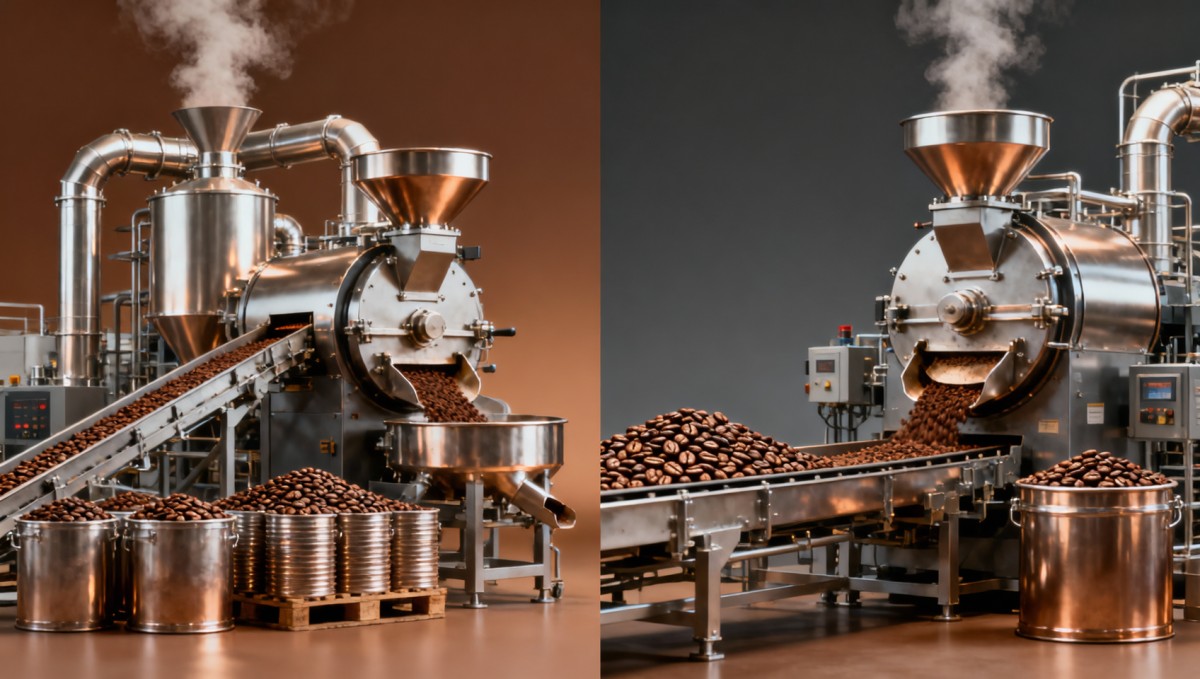
A small or mid-sized cocoa bean processing plant can often absorb inefficiencies through close operator attention and flexible scheduling. Once throughput rises beyond a practical range, usually around 1.5x to 2.5x the original design load, the same workarounds become expensive. Motors run longer, heat recovery becomes insufficient, sanitation windows shrink, and minor inconsistencies in bean moisture or roast profile start affecting larger batches.
The cost increase is rarely limited to one department. Energy demand may rise by 20% to 35% while actual sellable output improves by a smaller percentage, especially when roasters, grinders, winnowers, and presses are not capacity-matched. Plants that expand one machine at a time often create bottlenecks upstream or downstream, leading to idle labor in one zone and overtime in another.
Labor economics also change with scale. At lower volumes, one experienced operator may supervise several process points. At higher volumes, plants frequently need dedicated staff for line balancing, preventive maintenance, quality checks, dust control, and documentation. A line that once needed 6 to 8 people per shift may need 10 to 14 after expansion, even if nameplate capacity suggests better automation.
The same pattern appears in adjacent sectors. A buyer evaluating coffee bean processing equipment or a commercial spice grinder may focus on rated output in kg/h, but the real operating cost depends on utility compatibility, cleanout time, and wear rate. In many facilities, the cost of one additional ton of throughput is driven less by the machine purchase price and more by the supporting systems around it.
The first signs that scale is turning into margin pressure
Several warning signals usually appear before profitability declines. Plants often notice higher electricity use per ton, more frequent stoppages, rising reject rate, or delayed sanitation release. If weekly downtime increases from 2 hours to 6 hours while throughput rises by only 10% to 15%, the expansion may already be underperforming financially.
- Utility consumption rises faster than finished output.
- Maintenance intervals shorten from monthly to biweekly or even weekly checks.
- Product variability increases across roast color, particle size, or butter yield.
- Warehouse dwell time extends beyond 7 to 10 days because downstream dispatch cannot keep up.
These indicators matter to buyers because they reveal whether the line is scaling efficiently or simply getting larger. The difference determines payback period, spare parts demand, and quality risk.
The hidden cost centers that distort expansion economics
The direct cost of a new grinder, roaster, or press is visible in capital expenditure. The more difficult expense sits in process integration. Once plant throughput climbs, utilities, dust extraction, compressed air, water treatment, fire protection, and hygienic zoning may all need upgrades. In many primary processing plants, these secondary investments account for 25% to 45% of the total expansion budget.
Energy is usually the largest hidden cost. Cocoa roasting and grinding create sustained thermal and mechanical loads, while cooling, ventilation, and dust management add indirect demand. If a plant doubles roast capacity but leaves ventilation and heat recovery unchanged, power intensity per ton can worsen instead of improve. Similar patterns affect a commercial onion dehydrator, where airflow balance and moisture removal efficiency determine whether scale lowers or raises unit cost.
Maintenance is another area where financial models are often too optimistic. Bearings, screens, hammers, seals, and conveying elements wear faster when run close to maximum capacity for longer shift windows. A plant moving from one shift to two or from 8 hours to 16 hours daily may cut available maintenance time by 50%, which increases the chance of unplanned stoppages and premium-priced emergency parts.
Compliance costs expand in parallel. As volume grows, documentation expectations rise, especially where food safety, worker exposure, environmental discharge, or export controls apply. Even if certification requirements do not change, audit readiness becomes harder to maintain in a busier plant handling more suppliers, more lots, and more traceability records.
Cost categories that usually increase after capacity expansion
The table below shows how common cost drivers behave once a cocoa bean processing plant moves beyond its original design logic. The same framework is useful when comparing coffee bean processing equipment, spice grinding lines, or dehydration systems.
The main takeaway is that scale cost is cumulative, not isolated. A decision that looks attractive in a capital budget can become weak when utilities, labor, and uptime sensitivity are added into the model. Procurement teams should therefore evaluate total operating architecture, not just machine capacity.
Why adjacent equipment categories face the same issue
Coffee bean processing equipment often encounters similar tipping points in roasting, destoning, and grinding sections. A commercial spice grinder can see sharp increases in cleaning labor, dust collection demands, and screen replacement frequency once product mix expands. A commercial onion dehydrator may struggle with airflow uniformity and moisture carryover if line speed rises without chamber redesign. These comparisons help multi-category buyers use one evaluation model across several plant types.
How to identify the operational tipping point before expansion destroys returns
The tipping point is the stage at which every additional unit of capacity creates disproportionately higher cost, risk, or quality variation. In practical terms, it is often visible when the plant approaches 80% to 85% sustained utilization on core equipment and still depends on manual intervention to keep flow stable. At that level, even minor upstream delays can cascade into quality loss or overtime expense.
A disciplined assessment starts with line balance. Cocoa processing is not one machine; it is a sequence involving cleaning, roasting, cracking, winnowing, grinding, pressing or powder preparation, cooling, and packing. If one step runs at 1,000 kg/h but the next stable step is only 700 kg/h, excess capacity does not create output. It creates queueing, holding time, and possible product degradation.
Decision-makers should also examine changeover time, sanitation cycle length, and effective run hours per day. A line rated for 20 hours of production may only deliver 13 to 15 effective hours once cleaning, warm-up, inspection, and minor stoppages are counted. That difference can alter payback calculations by months or even years.
Quality metrics provide another early warning. If particle size variation widens, butter extraction consistency drops, or moisture control drifts outside internal specification, the plant may be scaling beyond its controllable window. For export-oriented processors, this is especially important because nonconforming lots can affect contracts, not just daily yield.
A practical evaluation framework for engineering and procurement teams
Before approving expansion, teams should review a structured set of operating indicators rather than focusing only on output targets.
- Measure actual utilization over 30 to 90 days, not nameplate capacity.
- Calculate utility consumption per ton at current load and at simulated higher load.
- Map the top 5 downtime causes and their average duration.
- Review quality deviation frequency by batch, lot, or shift.
- Estimate the labor needed for sanitation, inspection, and documentation after expansion.
This method is useful in cocoa, coffee, spice, and dehydration lines because it exposes whether the bottleneck is mechanical, thermal, labor-related, or compliance-driven. It also gives finance teams a more realistic operating model for return-on-investment calculations.
Decision thresholds worth tracking
A plant does not need perfect data to make better decisions. Several thresholds are widely used in industrial evaluations: more than 5% unplanned downtime per month, more than 3% quality loss or rework, sanitation time exceeding 12% of total available production hours, or utility cost rising faster than revenue contribution from added throughput. Once two or more of these thresholds are breached, expansion should be re-scoped rather than accelerated.
What buyers should compare when evaluating processing upgrades across cocoa, coffee, spice, and dehydration lines
Procurement decisions fail when buyers compare unlike metrics. Rated capacity in kg/h is useful, but it should never be the only benchmark. A cocoa bean processing plant may need different priorities than coffee bean processing equipment or a commercial onion dehydrator, yet the same procurement logic applies: compare effective throughput, cleaning time, utility profile, wear life, and process stability under real operating conditions.
Technical evaluators should request data under multiple load conditions, for example 60%, 80%, and 100% of rated output. Some systems perform efficiently near design load, while others show sharp energy penalties or quality drift above 75%. This matters especially for plants expecting seasonal demand swings or mixed product programs.
Financial approvers should also look at serviceability. A lower-priced machine can become more expensive if key parts require 6 to 8 weeks lead time, if maintenance requires specialized labor, or if sanitation adds 45 to 60 minutes per batch. In continuous or near-continuous operations, maintainability often has greater economic value than small differences in purchase price.
For distributors and industrial buyers managing multiple facilities, standardization is another hidden value driver. Shared spare parts, common control logic, and unified operator training can reduce total support cost across several sites, even if one individual line appears more expensive at the point of purchase.
Comparative criteria for upgrade decisions
The table below provides a cross-category comparison framework that buyers can use during equipment shortlisting and supplier discussions.
A strong procurement process translates these questions into total cost of ownership. That is particularly important when comparing different processing assets under one capital program, such as cocoa roasting, coffee handling, spice grinding, or dehydration capacity expansion.
Common procurement mistakes
- Approving capacity growth without verifying utility and ventilation readiness.
- Using supplier nameplate output as the only productivity metric.
- Ignoring sanitation labor and lot traceability workload.
- Underestimating spare parts frequency in abrasive or high-dust applications.
- Assuming one high-capacity machine solves a multi-step bottleneck.
Avoiding these mistakes reduces the chance that a cocoa bean processing plant becomes too costly to scale after capital has already been committed.
Risk control, implementation planning, and FAQ for profitable expansion
Profitable expansion is usually phased, not rushed. Instead of moving directly to a full-capacity jump, many processors benefit from a 3-stage approach: validate bottlenecks, upgrade supporting infrastructure, then increase core process capacity. This sequence reduces the risk of buying faster equipment into a plant that cannot feed, cool, clean, or document it properly.
Implementation plans should include factory acceptance review, utility verification, operator training, and spare parts stocking before commercial start-up. A realistic commissioning window for a moderate plant upgrade is often 2 to 6 weeks, depending on installation scope, sanitation requirements, and integration with existing control systems. Compressing that schedule can increase start-up losses and unplanned rework.
For quality and safety teams, risk control means defining measurable acceptance criteria. These may include stable throughput over 3 consecutive production days, reject rate below an internal threshold such as 1% to 3%, sanitation completion within target time, and documented traceability from raw bean receipt to packed output. The exact numbers vary by plant, but the discipline is consistent across food and primary processing operations.
The most resilient expansion projects are the ones that align engineering logic with procurement discipline and financial reality. In other words, scale should be approved only when the line can sustain it operationally, not merely when the market appears to justify it.
FAQ: practical questions from buyers and plant teams
How do I know whether my cocoa bean processing plant is near its scaling limit?
Look for combined signals rather than one metric. If sustained utilization stays above 80%, unplanned downtime exceeds 5% of scheduled hours, and quality variation is rising, the plant is likely near its stable limit. Review 30 to 90 days of production data before adding major capacity.
Is bigger coffee bean processing equipment always more efficient?
No. Bigger equipment can improve labor efficiency, but only if utilities, dust management, changeover procedures, and downstream packing keep pace. In some plants, an oversized system operating at 50% to 60% load is less efficient than a right-sized line operating steadily at 75% to 85% load.
What should I prioritize when comparing a commercial spice grinder or a commercial onion dehydrator?
Prioritize effective throughput, cleanout time, wear life, energy profile, and airflow or dust control design. For spice grinding, contamination control and screen replacement frequency are critical. For dehydration, moisture uniformity, thermal efficiency, and cleaning access are often more important than peak rated capacity.
What is a reasonable expansion strategy for a mid-sized processor?
A practical strategy is to increase effective output by 15% to 30% first through bottleneck removal, scheduling improvements, and utility balancing. Only after confirming stable gains should the plant consider larger capital additions. This staged model generally produces more reliable payback than a single aggressive capacity jump.
When a cocoa bean processing plant becomes too costly to scale, the problem is rarely the machine alone. The real issue is misalignment between throughput, utilities, maintenance, labor, compliance, and quality control. The same lessons apply to coffee bean processing equipment, a commercial spice grinder, and a commercial onion dehydrator: profitable scale depends on total process fit, not just larger capacity.
For processors, OEM buyers, distributors, and financial decision-makers, the best results come from evaluating line balance, true operating hours, serviceability, and risk thresholds before expansion is approved. If you need a more structured framework for comparing processing options, assessing total cost of ownership, or planning a phased upgrade path, contact us to discuss your requirements, request a tailored evaluation approach, or explore more industrial processing solutions.
Related Intelligence
- Milling MachineryHow to Choose a Horizontal Ribbon Blender for FeedHorizontal ribbon blender feed buying guide: compare vertical feed mixer machine options, animal feed mixers wholesale offers, and line fit for poultry, cattle, and floating fish feed plant projects.
- Milling MachineryWhy use a rotary drum sieve grain line?Why use a rotary drum sieve grain line? Discover how rotary drum sieve grain, grain pre cleaner machine, gravity separator grain, and magnetic separator for feed improve efficiency and quality.
- Milling MachineryHow to avoid grain destoner machine issues?Grain destoner machine issues explained: learn how gravity separator grain, grain pre cleaner machine, and rotary drum sieve grain setup affect performance, reduce downtime, and improve line efficiency.
The Morning Broadsheet
Daily chemical briefings, market shifts, and peer-reviewed summaries delivered to your terminal.
