
Coffee Bean Processing Equipment That Limits Bean Breakage
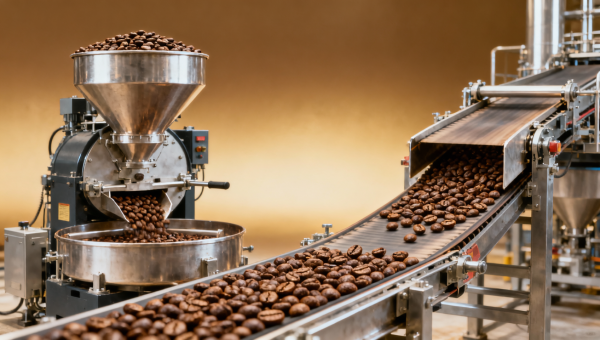
Selecting coffee bean processing equipment that limits bean breakage is critical for preserving product value, roast consistency, and downstream efficiency. For processors comparing systems such as a commercial spice grinder, industrial food drying oven, or cocoa bean processing plant, this guide outlines the technical factors, handling principles, and procurement benchmarks that matter most to operators, evaluators, and industrial buyers.
Why bean breakage control matters in coffee processing lines
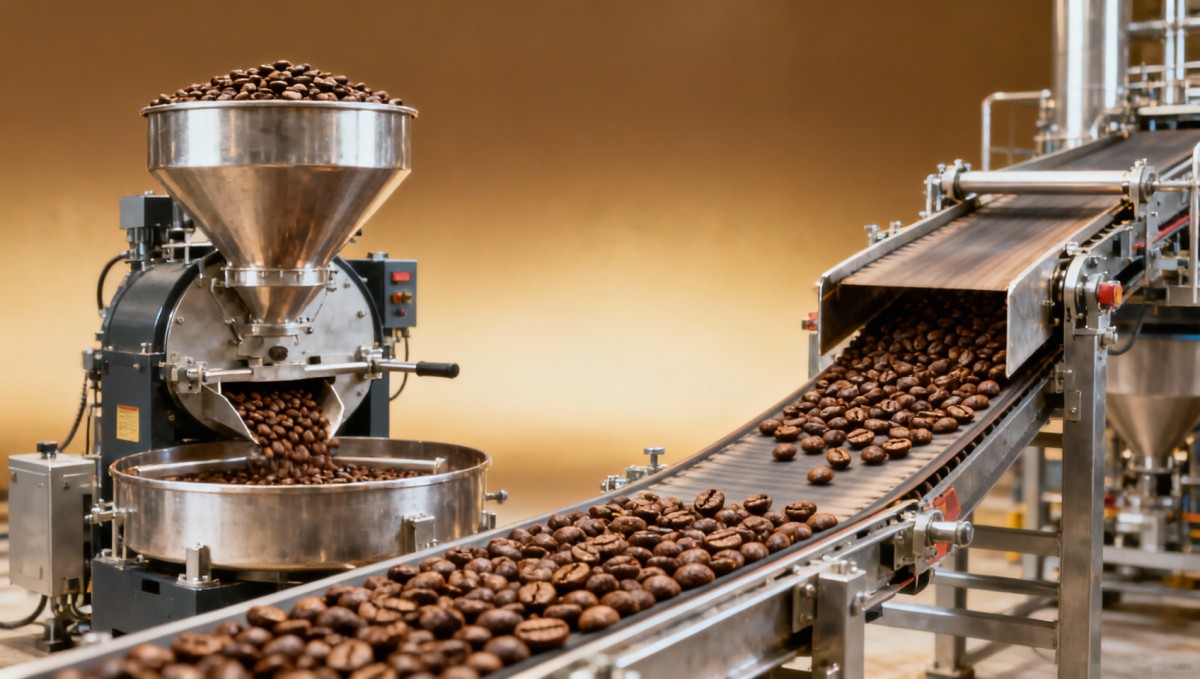
Bean breakage is not a cosmetic issue. In green coffee and post-drying handling, cracked or chipped beans can alter airflow during roasting, increase fines in grinding, and complicate grading, packing, and export acceptance. For operations handling small batches or continuous lines of several tons per day, even a modest rise in breakage can translate into measurable yield loss, more dust, and inconsistent cup results.
For operators, the problem often starts with impact, compression, or uncontrolled drop height. For procurement teams, the real challenge is that many machines are sold on throughput alone, while gentle handling design receives less attention. Technical evaluators should therefore look beyond capacity in kg/h and review feed stability, rotor speed range, contact surfaces, transfer points, and discharge behavior.
This is especially relevant in a cross-sector processing environment where buyers may compare coffee systems with adjacent equipment categories such as a commercial spice grinder or an industrial food drying oven. The mechanical logic is similar: product integrity depends on controlled moisture, uniform feed, suitable contact pressure, and stable residence time. However, coffee beans are more vulnerable to edge chipping than many spice seeds, especially after drying to typical storage-ready moisture ranges.
At AgriChem Chronicle, coverage of agricultural machinery, primary processing, and feed and grain systems helps industrial readers evaluate coffee bean processing equipment in a broader procurement context. That means comparing not only machine labels, but also process risk, compliance expectations, maintenance planning, and supply chain transparency before a purchase order is approved.
Where breakage usually occurs
- At intake, when hoppers are steep, poorly baffled, or fed unevenly from sacks, bins, or elevators.
- During drying or conditioning, when bean moisture drops too quickly over 6–12 hours and shells or structure become brittle.
- At conveying points, especially where beans fall more than 0.5–1.5 meters between conveyors, polishers, destoners, or sorters.
- Inside grinding, hulling, or peeling units, when speed settings are too aggressive for the bean size and moisture condition.
Which machine features actually reduce coffee bean breakage?
Not every coffee bean processing equipment design is suitable for low-breakage handling. The most effective systems typically combine controlled feed, low-impact transport, adjustable mechanical action, and predictable discharge. In practical terms, buyers should ask whether the machine can be tuned for 2–3 crop conditions, not just one ideal sample tested at the factory.
A useful starting point is to separate equipment into handling, drying, size reduction, and finishing stages. For example, an industrial food drying oven can support low-breakage processing when airflow and temperature are uniform, but drying alone does not solve breakage if discharge onto hard chutes remains uncontrolled. Likewise, a commercial spice grinder may offer fine throughput control, but if used on coffee without proper speed reduction and feed moderation, it can create excessive fines rather than preserving bean structure.
Technical teams should map the full line rather than evaluating a single machine. In many plants, 3–5 transfer points cause more breakage than the core processing unit itself. This is why chute angle, liner material, variable frequency drives, feed gate design, and product accumulation zones deserve equal attention during factory acceptance review.
The table below summarizes machine-level features that generally support lower breakage in coffee bean processing lines and related primary processing systems.
Related Intelligence
- Milling MachineryHow to Choose a Horizontal Ribbon Blender for FeedHorizontal ribbon blender feed buying guide: compare vertical feed mixer machine options, animal feed mixers wholesale offers, and line fit for poultry, cattle, and floating fish feed plant projects.
- Milling MachineryWhy use a rotary drum sieve grain line?Why use a rotary drum sieve grain line? Discover how rotary drum sieve grain, grain pre cleaner machine, gravity separator grain, and magnetic separator for feed improve efficiency and quality.
- Milling MachineryHow to avoid grain destoner machine issues?Grain destoner machine issues explained: learn how gravity separator grain, grain pre cleaner machine, and rotary drum sieve grain setup affect performance, reduce downtime, and improve line efficiency.
The Morning Broadsheet
Daily chemical briefings, market shifts, and peer-reviewed summaries delivered to your terminal.
