
Commercial Spice Grinder Cleaning Gaps That Can Trigger Recalls
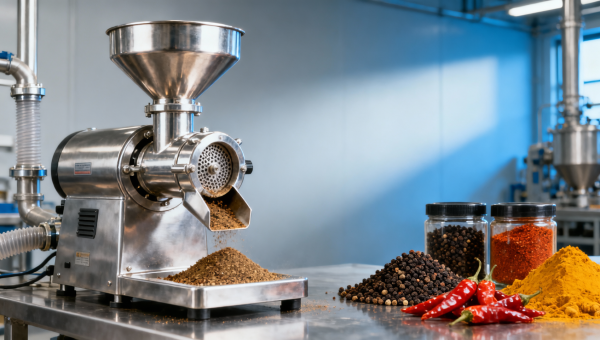
In commercial spice grinder operations, overlooked cleaning gaps can escalate from minor hygiene issues to full-scale recalls, especially in facilities running a black pepper grinding machine, chili powder making machine, or turmeric grinding plant. For processors, QA teams, and procurement leaders, understanding where residue, allergens, and microbial risks hide is essential to protecting compliance, product integrity, and brand credibility.
The core search intent behind this topic is practical and risk-driven: readers want to know which cleaning failures in commercial spice grinding actually lead to recalls, how to identify those failures before an audit or incident, and what actions reduce contamination risk without disrupting throughput. For this audience, the biggest concerns are usually cross-contact, hard-to-clean machine zones, inadequate sanitation verification, documentation weaknesses, and whether current equipment design is creating hidden compliance exposure. The most useful content, therefore, is not generic hygiene advice but specific recall triggers, inspection points, cleaning validation methods, and procurement criteria for safer grinder systems.
Where commercial spice grinder cleaning gaps become recall risks
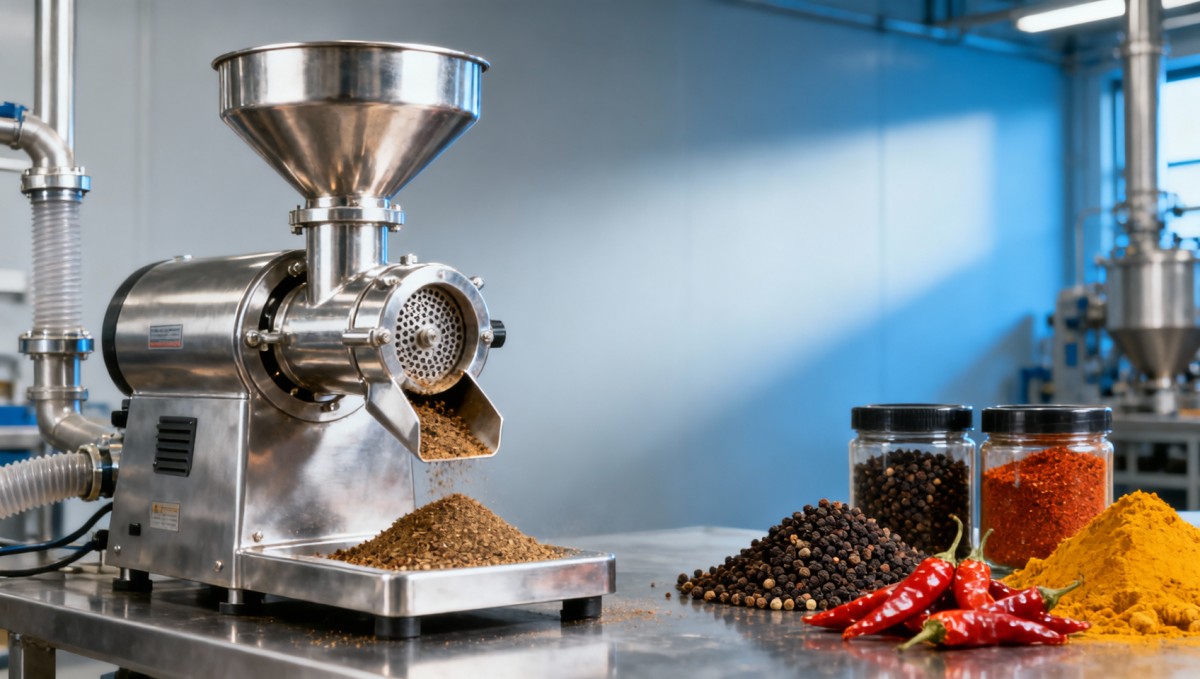
In spice processing, recalls are rarely caused by one dramatic failure. More often, they begin with routine cleaning weaknesses that go unnoticed in daily production. A commercial spice grinder may appear clean externally while retaining fine product dust, oil-rich residue, allergen traces, or microbial harborage points inside the feed system, grinding chamber, discharge path, collection bins, seals, or ducting.
This matters because spice powders are dry products with complex risk profiles. Black pepper, chili, turmeric, cumin, coriander, and blended seasonings can leave stubborn residues that cling to metal surfaces, screens, corners, threads, and gasket interfaces. When a black pepper grinding machine is switched to another product without effective cleaning, residual particles can migrate into the next batch. In a chili powder making machine, oily color-rich fines may accumulate in dead spots and resist fast wipe-down routines. In a turmeric grinding plant, persistent yellow staining may mask incomplete soil removal and make visual inspection unreliable.
From a recall perspective, the most common triggers linked to cleaning gaps include:
- Undeclared allergens due to cross-contact from prior runs
- Foreign material risks from degraded seals, worn brushes, or trapped buildup breaking loose
- Microbial contamination caused by residues in low-access zones
- Chemical contamination from improper detergent rinsing or lubricant exposure
- Labeling mismatches worsened by carryover between products
For QA managers and safety teams, the important takeaway is simple: if a grinder cannot be cleaned consistently, inspected effectively, and verified objectively, it can become a recall amplifier even when the rest of the process looks controlled.
Which hidden machine zones are most often missed during sanitation
Readers evaluating risk usually want specifics, because “clean the machine thoroughly” is not operational guidance. In commercial grinding lines, missed sanitation points tend to cluster in places where product accumulates but access is limited.
Common blind spots include:
- Feed hoppers and inlet transitions: Powder bridges and fines cling to welds, corners, and slide gate edges.
- Grinding chambers: Rotor-stator interfaces, impact surfaces, pins, and internal liners can trap compacted spice dust.
- Screens and sieves: Fine mesh retains particles even after air blow-off or superficial brushing.
- Discharge chutes: Residue often builds where geometry changes or where static causes powder adhesion.
- Dust collection systems: Filters, cyclones, and duct bends may hold legacy material that later re-enters the stream.
- Gaskets, seals, and clamps: These are classic harborage zones, especially if cracked, compressed, or poorly seated.
- Fasteners, threads, and tool-contact parts: These areas are easy to overlook during fast turnaround cleaning.
- Conveying interfaces: Transfer points between grinder, sifter, and packing system often remain outside the “owned” cleaning checklist.
For operators, these areas are where routine sanitation SOPs often fail under production pressure. For technical evaluators and procurement teams, these are also the design features that separate a cleanable industrial grinder from one that only appears hygienic in a brochure.
Why dry cleaning alone can fail in black pepper, chili, and turmeric applications
Dry cleaning methods are widely used in spice plants because moisture can create caking, corrosion, microbial concerns, and drying downtime. However, relying on dry cleaning alone does not automatically mean the process is adequate.
In a black pepper grinding machine, the fine powder can settle into enclosed areas and remain undisturbed by compressed air or vacuuming unless the machine is opened properly. In a chili powder making machine, oily compounds and intense pigments can smear across surfaces, making dry removal less effective. In a turmeric grinding plant, powder may stain internal surfaces so heavily that visual cleanliness no longer reflects actual residue levels.
The issue is not whether dry cleaning is acceptable; it is whether the cleaning method is validated for the product and equipment. Many recall scenarios begin when facilities assume that because a line handles “dry material,” sanitation is inherently low risk. In reality, dry systems can conceal carryover very effectively.
A stronger approach is to define cleaning by risk category:
- Between same-product runs: Controlled dry clean may be sufficient if verified
- Between different spices: More extensive disassembly and inspection may be required
- Between allergen and non-allergen products: Validated changeover cleaning is essential
- After high-oil or high-color products: Enhanced residue removal and verification should be standard
This is where many facilities discover that the sanitation challenge is not worker effort but equipment architecture, access time, and unrealistic production scheduling.
How QA and food safety teams can verify cleaning before it becomes a compliance issue
Verification is one of the most practical user concerns behind this topic. Many plants have cleaning procedures, but fewer have strong evidence that those procedures work under real operating conditions.
To reduce recall exposure, QA teams should combine several verification layers rather than depend on visual checks alone:
- Pre-op visual inspection: Useful but insufficient as a standalone control
- ATP or rapid hygiene testing: Helpful in some contexts, though limitations exist in dry powder environments
- Allergen-specific swabbing: Critical when shared equipment processes allergenic ingredients
- Residue sampling: Important where spices leave persistent color, oil, or fine particulates
- Changeover validation records: Demonstrates repeatability and audit readiness
- Trend analysis: Repeated findings at the same machine point often indicate a design or SOP weakness
For quality leaders, the real value lies in linking sanitation verification to release decisions. If a grinder repeatedly fails at the same seal, screen, or transfer zone, the issue should not remain an operator retraining note. It should trigger a corrective action review covering equipment condition, disassembly method, cleaning chemistry, clean time allocation, and possible redesign.
Documentation also matters commercially. In regulated and export-oriented markets, poor cleaning records can widen the impact of a contamination event, making root-cause defense harder and increasing the likelihood of broader batch review or withdrawal.
What procurement and technical buyers should look for in a more cleanable grinder system
For procurement teams, enterprise decision-makers, and financial approvers, the article’s practical question is often this: how do we know whether our current or planned grinder design is increasing sanitation risk?
When assessing a commercial spice grinder, cleanability should be treated as a commercial performance factor, not just a maintenance detail. A lower-cost machine with difficult access, excessive dead zones, or frequent seal failures may create hidden costs through changeover delays, product loss, QA labor, audit findings, and recall exposure.
Key evaluation criteria include:
- Tool-less or simplified disassembly: Reduces skipped cleaning steps during fast changeovers
- Smooth internal surfaces and sanitary weld quality: Minimizes powder retention points
- Minimal dead legs and enclosed harborage zones: Improves inspection confidence
- Accessible screens, rotors, and contact parts: Speeds cleaning and verification
- Seal and gasket durability: Prevents contamination and unplanned replacement cycles
- Dust management integration: Helps control residual carryover and housekeeping burden
- Material compatibility: Important for abrasive or staining spices such as turmeric and chili
- Documented cleaning guidance from the OEM: Supports validation, training, and audit evidence
Distributors and agents should also pay attention to these points, because end users increasingly ask not just about throughput and fineness, but about sanitation downtime, allergen control, and recall prevention. A machine that performs well mechanically but poorly hygienically is becoming harder to justify in professional procurement environments.
How to reduce recall risk without sacrificing throughput
One reason cleaning gaps persist is that plants feel forced to choose between hygiene discipline and production efficiency. In practice, the stronger strategy is to redesign the sanitation model so risk reduction supports uptime instead of competing with it.
High-impact actions include:
- Map all product-contact and near-contact zones across grinder, cyclone, sifter, collector, and transfer equipment.
- Separate cleaning SOPs by product family rather than using one generic procedure for all spices.
- Set trigger points for full teardown cleaning based on allergen runs, high-oil products, or visible residue trends.
- Validate changeover procedures under real production conditions, not only during ideal trial runs.
- Use inspection checklists tied to machine-specific risk points such as screens, seals, and discharge transitions.
- Track sanitation time, failures, and repeat findings to identify whether the issue is labor, design, or scheduling.
- Review equipment upgrades using total cost of risk, including waste, downtime, nonconformance, and recall exposure.
For management teams, this approach turns sanitation from a compliance burden into an operational control. For line personnel, it creates clearer expectations. For buyers and technical evaluators, it provides a more disciplined way to compare machinery options beyond headline capacity claims.
Final assessment: cleaning gaps are often equipment and system problems, not just housekeeping failures
Commercial spice grinder recalls are rarely caused by a lack of awareness that cleaning matters. More often, they result from hidden residue zones, weak verification, rushed changeovers, and machine designs that are harder to sanitize than teams initially assumed. Whether the operation uses a black pepper grinding machine, a chili powder making machine, or a turmeric grinding plant, the underlying lesson is the same: if contamination can hide, it eventually can move.
The most useful way to assess risk is to stop viewing sanitation as a routine end-of-shift task and start treating cleanability as a core process capability. Facilities that pair machine-specific inspection, validated cleaning methods, and smarter procurement standards are in a much stronger position to prevent recalls, satisfy auditors, protect product integrity, and defend brand value.
Related Intelligence
- Milling MachineryHow to Choose a Horizontal Ribbon Blender for FeedHorizontal ribbon blender feed buying guide: compare vertical feed mixer machine options, animal feed mixers wholesale offers, and line fit for poultry, cattle, and floating fish feed plant projects.
- Milling MachineryWhy use a rotary drum sieve grain line?Why use a rotary drum sieve grain line? Discover how rotary drum sieve grain, grain pre cleaner machine, gravity separator grain, and magnetic separator for feed improve efficiency and quality.
- Milling MachineryHow to avoid grain destoner machine issues?Grain destoner machine issues explained: learn how gravity separator grain, grain pre cleaner machine, and rotary drum sieve grain setup affect performance, reduce downtime, and improve line efficiency.
The Morning Broadsheet
Daily chemical briefings, market shifts, and peer-reviewed summaries delivered to your terminal.
