
Black Pepper Grinding Machine or Cryogenic Milling for Aroma Retention?
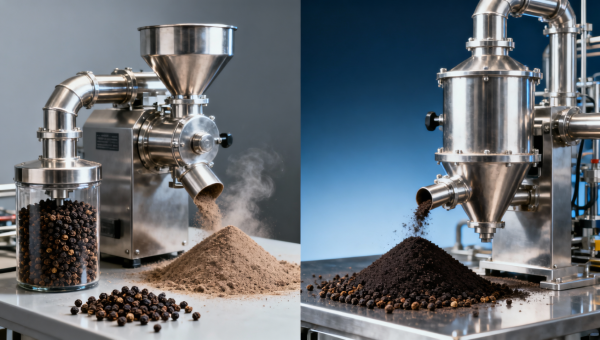
For spice processors evaluating aroma preservation at scale, the choice between a black pepper grinding machine and cryogenic milling can directly affect volatile oil retention, product consistency, and operating cost. From commercial spice grinder lines to turmeric grinding plant and chili powder making machine applications, this comparison helps technical teams, buyers, and decision-makers identify the most practical route for premium flavor, compliance, and production efficiency.
Why aroma retention becomes a commercial decision, not just a processing detail
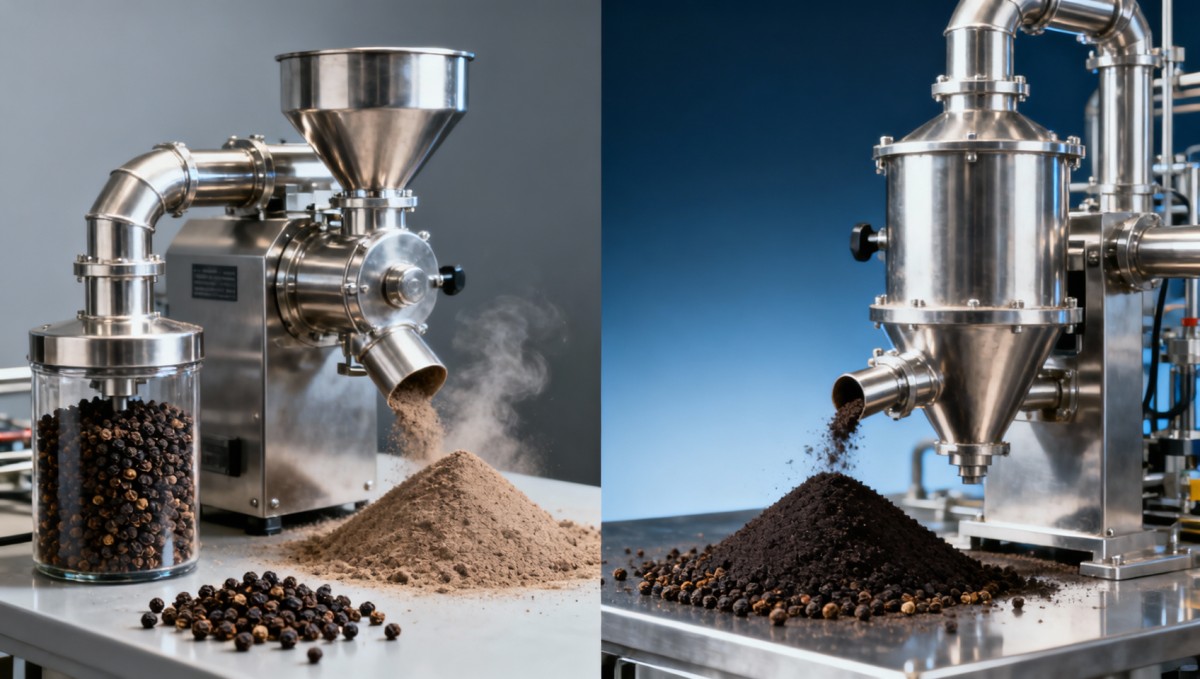
In industrial spice processing, black pepper is unusually sensitive to grinding heat. The sharper, top-note aroma that buyers associate with premium pepper depends on volatile oils that can dissipate during size reduction. Once output moves from lab-scale batches to continuous production over 6–12 hours per shift, temperature rise, residence time, and air exposure become procurement issues as much as process issues.
That is why many processors compare a conventional black pepper grinding machine with cryogenic milling. The question is not simply which method is more advanced. The practical question is which route aligns with target mesh size, throughput, cleaning frequency, utility cost, and customer claims around aroma, color, and product consistency across multiple lots every week or every month.
For operators, the pain point is stable output without clogging, overheating, or excessive fines. For technical evaluators, it is whether the selected system can hold a workable process window, often within a temperature-sensitive range. For procurement and finance teams, the issue is payback: does better aroma retention justify higher capital cost, added nitrogen or liquid nitrogen consumption, and more specialized maintenance?
This is where a disciplined comparison matters. AgriChem Chronicle serves readers who work in regulated, performance-driven sectors where equipment selection affects quality claims and contract supply reliability. In that context, a black pepper grinding machine should be judged not only on grinding ability, but also on traceable process control, sanitation suitability, spare-part support, and realistic total cost over a 3–5 year operating horizon.
What usually drives the review process
- Aroma-sensitive premium products, where small changes in volatile loss can affect export acceptance or distributor feedback.
- Target particle size bands, such as coarse cracked pepper, medium culinary powder, or finer seasoning blends.
- Cleaning and allergen control needs, especially when the same spice grinder line also handles turmeric, chili, cumin, or blended seasonings.
- Budget pressure, where decision-makers need a measurable quality gain rather than a purely theoretical technical upgrade.
Black pepper grinding machine vs cryogenic milling: what actually changes in production?
At a process level, the core difference is thermal load. A conventional black pepper grinding machine reduces size through impact, shear, or a combined action, and heat is generated by rotor speed, friction, and repeated particle contact. Cryogenic milling lowers product temperature before or during grinding, usually with an inert cooling medium, so pepper becomes more brittle and volatile compounds face less thermal stress during reduction.
In practical terms, this affects at least 5 procurement dimensions: aroma retention, achievable fineness, throughput stability, dust behavior, and utility profile. Conventional grinding can be highly effective for many commercial applications, especially when processors control feed rate, stage grinding, and air handling. Cryogenic systems are most attractive where premium sensory quality or heat-sensitive compounds justify the additional operating complexity.
The table below summarizes the differences most often reviewed by technical teams, buyers, and plant managers when comparing a standard spice grinder line with cryogenic milling for black pepper and related spice products.
The key interpretation is straightforward: cryogenic milling is not automatically the right answer. If the business sells mainstream pepper powder, blended seasonings, or foodservice packs where cost per kilogram is tightly controlled, a well-configured black pepper grinding machine may deliver the best balance. If the product is sold on sensory differentiation, export-grade consistency, or high-value ingredient positioning, cryogenic milling deserves closer evaluation.
Where conventional grinding still performs well
A modern spice grinding setup can narrow the performance gap when processors use 2-stage or 3-stage reduction, controlled feeding, cyclone separation, dust collection, and limited recirculation. In many plants, these process improvements reduce overheating enough for acceptable aroma retention without moving to a fully cryogenic system.
This is especially true when black pepper is one product among several. A line that also supports turmeric grinding plant duties or a chili powder making machine workflow often needs flexibility and fast sanitation changeover. In such mixed-production environments, the simpler operating model of a conventional grinding machine can be commercially attractive.
Where cryogenic milling has a stronger case
Cryogenic milling gains value when the process target is not just fine powder, but fine powder with controlled aroma, lighter color shift, and reduced smearing. This matters in premium retail spices, aroma-critical extracts feedstock, and formulations where black pepper is used as a sensory lead note. It also helps when the material becomes difficult to mill cleanly under ambient conditions.
In buyer review terms, cryogenic milling tends to move from optional to strategic when 3 conditions are present at the same time: high margin per kilogram, strict lot-to-lot sensory expectations, and customer acceptance criteria tied to performance rather than only price.
Which processing route fits black pepper, turmeric, and chili applications best?
Not every spice behaves the same under grinding stress. Black pepper contains valuable volatile compounds, turmeric presents color and staining concerns, and chili introduces heat, dust, and pungency management issues. A processor choosing between a black pepper grinding machine and cryogenic milling should therefore evaluate both product chemistry and line utilization, not only nameplate capacity.
In a commercial spice grinder line running 1–3 materials per shift, throughput flexibility often matters more than absolute aroma preservation. In contrast, a dedicated premium pepper line may accept slower processing or added cooling cost if the final pack commands a stronger margin. This is why application mapping is one of the first steps in responsible equipment selection.
The table below helps separate typical use cases. It does not replace pilot testing, but it does highlight where a conventional grinding route is usually sufficient and where cryogenic milling is more likely to justify further technical review.
A practical reading of this table is that cryogenic milling is strongest when black pepper itself is the value driver. For broader spice operations, especially those serving multiple SKUs with weekly changeovers, a modular conventional solution may be easier to justify. Many processors gain more from improving feed conditioning, classifier setup, and dust extraction than from jumping immediately to low-temperature milling.
Three common operating scenarios
- Small-to-mid batch premium pepper production: lower volume, higher margin, sensory quality is central to the sales message.
- Multi-spice contract processing: flexibility, cleaning time, and utility cost matter as much as aroma retention.
- Large-volume commodity supply: uptime, spare-part availability, and predictable cost per ton are often the deciding factors.
How technical teams usually validate fit
A sensible review often includes 4 checkpoints: target mesh range, expected hourly output, acceptable product temperature window, and sanitation/changeover frequency. If these four are not defined early, equipment discussions become vague and price-led, which increases the risk of under-specification or over-investment.
Where possible, teams should ask for trial support using representative raw material with real moisture variation. Pepper from different origins or harvest periods may behave differently during milling, and this matters when approval depends on repeatable plant performance rather than one successful demonstration run.
What should buyers, QA teams, and finance reviewers check before approving a system?
A procurement review should not stop at machine type. The better question is whether the entire grinding system can protect flavor, support compliance, and maintain output under real production conditions. In food and ingredient environments, buyers typically review at least 6 areas: material contact design, dust handling, cleanability, process control, spare parts, and supplier response time for commissioning or troubleshooting.
Quality and safety personnel usually focus on sanitary design, contamination risk, and the ability to document cleaning and inspection. For black pepper grinding machine projects, this may include screen access, dead-space reduction, seal integrity, and compatibility with routine wash-down or dry-clean procedures. Where export markets are involved, documentation discipline can be as important as mechanical performance.
Finance approvers often need a simpler framework. Instead of asking whether cryogenic milling is technically better, they ask whether the quality lift creates enough commercial benefit over 12–24 months. This may come from higher selling price, lower rejection rate, stronger buyer retention, or the ability to enter a premium segment. If none of these are realistic, a conventional route may remain the rational choice.
A practical pre-approval checklist
- Confirm the target output range in kg/h or t/h, not just daily volume, because hourly load determines heat generation and classifier behavior.
- Define the required particle distribution, not only nominal mesh, since excess fines can affect flowability, appearance, and aroma release.
- Check utility needs over a normal production week, including power, compressed air, dust collection, and cooling medium if cryogenic milling is considered.
- Review cleaning time per changeover; in mixed spice plants, a 30–90 minute difference can materially affect line utilization.
- Ask for the expected lead time for wear parts and service support, especially if the line is intended for continuous or near-continuous operation.
Compliance and documentation considerations
Processors supplying food, feed, botanicals, or regulated ingredient markets frequently need equipment documentation that supports internal audits and customer approval. While final requirements vary, common expectations include traceable material contact information, maintenance records, cleaning procedures, and operating instructions that can be aligned with GMP-style discipline or customer quality manuals.
AgriChem Chronicle’s audience often works across regulated supply chains where technical purchases need to satisfy multiple departments. That is why successful approvals usually combine engineering review, QA review, and commercial review in a 3-step process rather than treating grinding equipment as a simple commodity purchase.
Common misconceptions, implementation risks, and the next step for serious buyers
One common misconception is that cryogenic milling always guarantees superior market results. In reality, if raw material quality is inconsistent, storage conditions are poor, or post-grinding packaging allows aroma loss, the process advantage can narrow quickly. A milling decision only works when upstream handling and downstream packing are aligned with the same quality objective.
Another mistake is assuming that a conventional black pepper grinding machine is suitable only for low-grade output. That is not true. Many processors achieve strong commercial performance with ambient grinding by using staged reduction, tighter feed control, and disciplined maintenance. The real risk is choosing a machine without defining the process target, then blaming the equipment for a planning problem.
A third issue appears during project timing. Buyers sometimes focus on purchase price and overlook implementation details such as installation sequencing, commissioning support, operator training, and trial material preparation. Even a technically sound system can underperform if the team has only 2–3 days for startup and no agreed acceptance checklist covering output, temperature behavior, and clean-down verification.
FAQ for equipment review teams
How do I choose between a black pepper grinding machine and cryogenic milling?
Start with 4 factors: target aroma positioning, required particle size, hourly throughput, and cost tolerance. If black pepper is a premium product with strict sensory expectations, cryogenic milling deserves attention. If the line must also handle other spices and maintain a lower operating cost, a conventional grinder line may be more practical.
Is cryogenic milling necessary for every premium spice project?
No. It is most relevant where heat-sensitive aroma retention is central to the product promise. For some pepper products, process optimization in a commercial spice grinder line can provide acceptable results without the added complexity of cryogenic utilities and controls.
What lead time should buyers expect for evaluation and implementation?
While exact timing varies by supplier and scope, many teams work through 3 stages: requirement confirmation, technical review or trial, and installation planning. For capital purchases, internal approval often takes 2–4 weeks or longer, especially when QA, engineering, and finance all need sign-off.
What should QA teams ask for before approval?
Request cleaning access details, material contact information, dust management design, inspection points, and a clear operating procedure. If the line supports black pepper, turmeric, and chili, also review cross-product cleaning protocol and how long a normal changeover is expected to take.
Why work with AgriChem Chronicle when comparing processing routes?
AgriChem Chronicle is built for industrial readers who need more than generic equipment descriptions. Our editorial framework connects agricultural machinery, bio-extract processing, fine chemical discipline, and compliance-aware supply chain analysis. That perspective is useful when a black pepper grinding machine decision affects not only production cost, but also product claims, quality risk, and procurement confidence.
If you are evaluating a conventional spice grinder line, cryogenic milling, a turmeric grinding plant layout, or a chili powder making machine configuration, contact us for a focused discussion around parameter confirmation, application fit, delivery expectations, customization scope, documentation needs, sample trial planning, and quotation alignment. A structured review now can prevent an expensive mismatch later.
Related Intelligence
- Milling MachineryHow to Choose a Horizontal Ribbon Blender for FeedHorizontal ribbon blender feed buying guide: compare vertical feed mixer machine options, animal feed mixers wholesale offers, and line fit for poultry, cattle, and floating fish feed plant projects.
- Milling MachineryWhy use a rotary drum sieve grain line?Why use a rotary drum sieve grain line? Discover how rotary drum sieve grain, grain pre cleaner machine, gravity separator grain, and magnetic separator for feed improve efficiency and quality.
- Milling MachineryHow to avoid grain destoner machine issues?Grain destoner machine issues explained: learn how gravity separator grain, grain pre cleaner machine, and rotary drum sieve grain setup affect performance, reduce downtime, and improve line efficiency.
The Morning Broadsheet
Daily chemical briefings, market shifts, and peer-reviewed summaries delivered to your terminal.
