
Chili Powder Making Machine: Where Capacity Claims Often Mislead
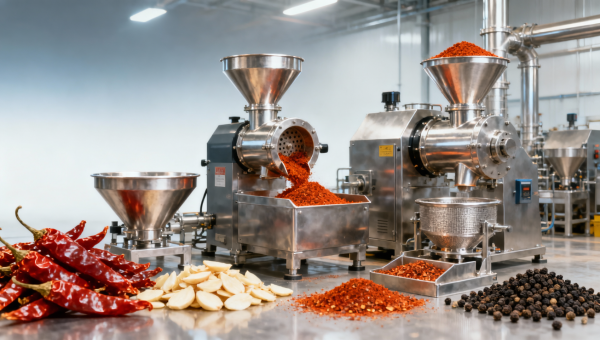
In the market for a chili powder making machine, published capacity figures often look precise yet fail to reflect real production conditions. For buyers comparing a garlic powder making machine, black pepper grinding machine, or commercial spice grinder, understanding how raw material properties, moisture levels, and line design affect throughput is essential. This article examines where capacity claims can mislead and how to evaluate equipment with greater technical and commercial confidence.
Why capacity numbers on a chili powder making machine often fail in real production
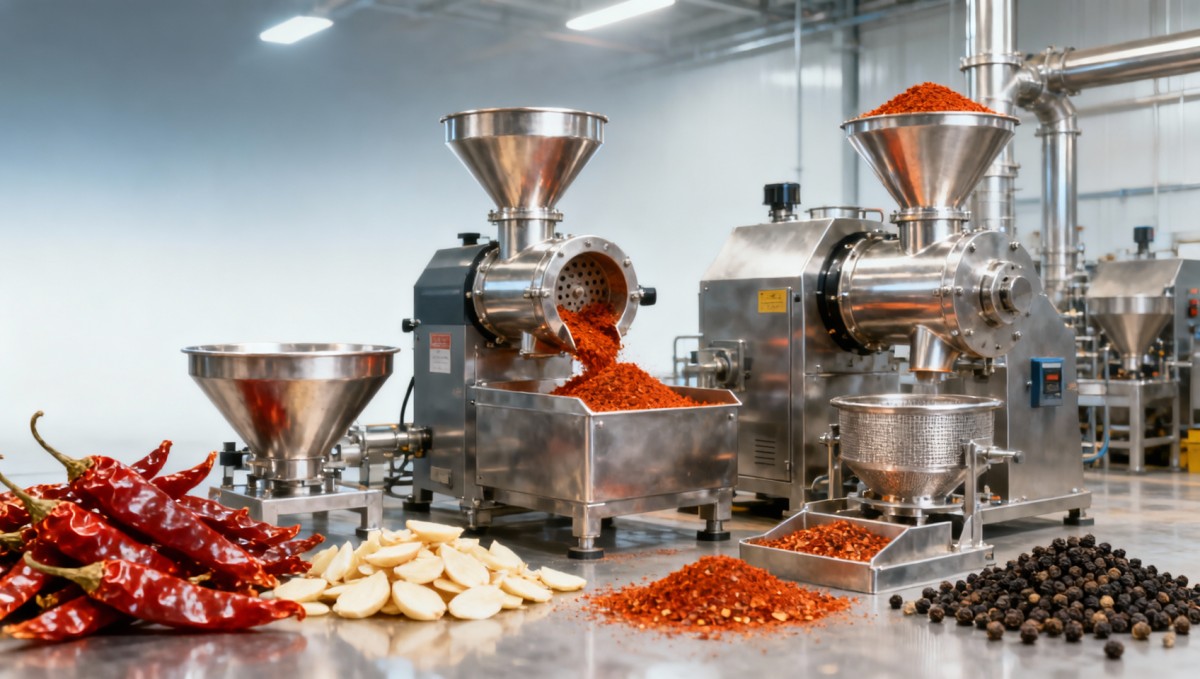
A chili powder making machine is rarely operating under the neat laboratory conditions implied by a brochure. Capacity may be stated as 200 kg/h, 500 kg/h, or 1 t/h, yet those figures often assume a specific raw material state, a specific screen size, and a controlled feed rate. Once actual factory conditions introduce variable chili moisture, stem content, oiliness, and ambient humidity, the real throughput can drop sharply.
This issue matters across the wider spice and botanical processing market. The same mismatch affects a garlic powder making machine, a black pepper grinding machine, and a commercial spice grinder. For technical evaluators and procurement teams, the central question is not the advertised maximum, but the stable, repeatable output over a full shift of 6–8 hours, including cleaning, screening, and material transfer losses.
In primary processing and fine ingredient sectors, buyers increasingly need verifiable production logic rather than simplified headline numbers. That is why AgriChem Chronicle places value on operating context, compliance awareness, and line-level analysis. For industrial users, a realistic capacity assessment reduces the risk of under-sizing, excessive energy cost, inconsistent powder fineness, and rejected batches at the quality-control stage.
Most misleading claims come from four recurring gaps: undefined feed moisture, undefined final mesh target, no mention of pre-crushing or drying, and no distinction between peak output and continuous output. When these variables are ignored, the capacity figure becomes more of a sales reference than a procurement-grade engineering parameter.
The 4 variables that distort throughput most
- Raw material moisture: dried chili at around 8%–12% moisture behaves very differently from material above 13%–15%, especially when fine grinding is required.
- Target fineness: producing coarse flakes and producing 40–80 mesh powder are not the same duty, even on the same chili powder making machine.
- Feed consistency: whole chili, cut pods, seeds, stems, and mixed lots create different loading patterns and can alter stable throughput within the same hour.
- Line configuration: conveyors, feeders, magnetic separation, dust collection, cyclone recovery, and sieving all affect the true line capacity, not just the grinder motor size.
A practical procurement rule is to ask for both peak capacity and recommended continuous capacity. In many industrial evaluations, the more decision-relevant figure is the sustained range under defined conditions, not the maximum achieved during a short test window.
Which technical parameters should buyers verify before trusting output claims?
A useful way to compare a chili powder making machine with a garlic powder making machine or black pepper grinding machine is to convert general marketing claims into measurable operating questions. Capacity should be reviewed together with power load, feeding method, temperature rise, sieve range, and dust control. Looking at only one number invites expensive mistakes in production planning and budget approval.
For operators and quality managers, throughput without quality stability has limited value. If a machine can process 300 kg/h only by generating excess heat, broad particle distribution, or aroma loss, the resulting powder may fail customer or internal standards. In spice processing, thermal sensitivity is especially relevant because color retention, volatile compounds, and flowability can change within a relatively narrow process window.
The table below summarizes the core parameters that should accompany any commercial capacity claim. These apply broadly in spice, botanical, and dry ingredient handling, and they are particularly useful when reviewing multiple equipment quotations over a 2–4 week sourcing cycle.
A reliable quotation should define at least these four parameters. If a supplier cannot explain the test moisture, target fineness, feeding conditions, and continuous running basis, the stated capacity of the chili powder making machine should be treated as provisional. The same caution applies when evaluating a commercial spice grinder for pepper, turmeric, garlic, or mixed seasoning applications.
Questions technical teams should ask during evaluation
Test-condition transparency
Ask whether the capacity was measured using whole dried chili, pre-cut chili, or de-seeded chili. Also confirm whether the test lot was single-origin or mixed. These details affect bulk density and grinding behavior, and they can change line balance downstream at the sifter and packaging stage.
Temperature and product quality impact
Request information on product temperature rise during a typical 30–60 minute test. In spices, overheating may not stop the machine, but it can damage color, aroma, and customer acceptance. For many processors, commercial viability depends on quality consistency more than on theoretical peak kg/h.
Maintenance and screen change frequency
A machine that requires frequent screen cleaning every 45–90 minutes may deliver lower effective output than a slower-rated unit with better stability. Effective capacity should therefore be measured as net saleable powder per shift, not gross feed per hour.
How should procurement teams compare chili, garlic, and pepper grinding systems?
Cross-comparison is often where purchasing teams lose clarity. A chili powder making machine may be quoted beside a garlic powder making machine or black pepper grinding machine as if they are interchangeable. In reality, chili, garlic, and pepper differ in oil content, brittleness, odor persistence, contamination risk, and cleaning difficulty. The machine architecture may look similar, but the operational suitability can differ materially.
For distributors, plant managers, and finance approvers, the objective is not merely to buy a grinder. It is to secure a production solution that fits volume, hygiene requirements, downstream packaging, and total operating cost over 12–36 months. That means comparing equipment by application burden, not by headline horsepower alone.
The comparison table below can help structure a sourcing review when more than one spice or dehydrated ingredient is planned for the same line.
This comparison shows why the phrase commercial spice grinder can be too broad for an informed investment decision. A buyer should align equipment selection with 3 core dimensions: material behavior, required product specification, and operational discipline. Once those are clear, capacity claims become easier to interpret and much harder to misuse in internal approval documents.
A 5-point comparison checklist for B2B buyers
- Define your main product group: single spice, blended seasoning, or multi-product contract grinding.
- Set the target output by shift, such as 500 kg per 8-hour shift, rather than by isolated hourly peak.
- Specify the acceptable fineness band and reject tolerance for oversize material.
- Confirm cleaning time between products, especially when odor transfer or allergen separation matters.
- Assess whether the line includes upstream drying, cutting, metal detection, and downstream screening or packing.
For many projects, the right answer is not the biggest machine but the best-matched process route. That can mean staged grinding, controlled feeding, or an integrated line instead of a stand-alone mill.
What hidden costs appear when capacity claims are overstated?
An overstated chili powder making machine capacity does not only create production disappointment. It can distort budget assumptions, labor planning, warehouse turnover, and customer delivery commitments. If actual output is 20%–35% below the quoted number under your product conditions, the cost impact may appear across multiple departments rather than in one visible line item.
Finance approvers often focus on capital expenditure, while operations teams absorb the downstream inefficiencies. Extra shifts, re-grinding, delayed shipment, unplanned spare parts, and excess dust collection maintenance all raise total cost of ownership. That is why procurement decisions should compare net production economics, not only initial machine price.
In regulated or quality-sensitive ingredient sectors, an unstable grinding process can also increase sampling burden and batch release time. Even where formal pharmaceutical compliance is not required, many industrial buyers still expect documented hygiene, material traceability, and predictable cleaning procedures, especially in export-oriented processing chains.
Common cost drivers that do not appear in a simple quotation
- Pre-treatment costs: extra drying, cutting, or de-stemming may be required to achieve the advertised throughput range.
- Utility costs: a 15 kW–45 kW grinding section may need additional power for feeding, dust collection, cooling, and sieving.
- Labor costs: inconsistent feeding or frequent screen cleaning can add one or two operators per shift.
- Quality losses: off-spec particle size and aroma degradation can reduce saleable output even when feed volume appears high.
A disciplined evaluation method is to calculate output cost per qualified kilogram over a defined period such as one shift, one week, and one month. This reveals whether a lower-priced grinder is genuinely economical or simply transfers cost into downtime, labor, and rejected product.
A practical approval framework for mixed stakeholders
Technical teams should define performance thresholds. Procurement should align quotations to the same test basis. Finance should review cost per qualified kilogram. Quality managers should validate cleanability and contamination controls. When these 4 functions use the same evaluation sheet, internal approval becomes faster and less vulnerable to misleading capacity claims.
How to verify a supplier and build a safer procurement process
In international sourcing, buyer risk does not come only from machine specification. It also comes from incomplete documentation, vague testing conditions, and weak post-sale clarity. For processors serving agricultural, biochemical, or primary ingredients markets, supplier validation should therefore combine equipment review with process transparency and compliance awareness.
AgriChem Chronicle operates in sectors where technical accuracy, raw-material complexity, and cross-border compliance are central. That perspective is valuable when buyers must assess not just a chili powder making machine, but the credibility of the information behind it. A serious supplier should be able to explain material assumptions, provide a structured acceptance scope, and discuss line integration without relying on broad marketing language.
For most B2B projects, a safer procurement workflow can be completed in 4 stages over roughly 2–6 weeks, depending on customization level and sample availability. The point is not to slow purchasing. It is to replace guesswork with documented checkpoints.
Recommended 4-stage evaluation workflow
Stage 1: Define the process basis
List material type, moisture range, target fineness, required capacity per shift, and hygiene constraints. If possible, define 3 sample categories: standard lot, difficult lot, and blended lot. This prevents the supplier from optimizing only for the easiest material.
Stage 2: Align the technical quotation
Request that every quoted chili powder making machine, garlic powder making machine, or black pepper grinding machine states the same basis: feed form, output mesh, continuous run time, and included auxiliary equipment. Without this alignment, price comparison is not meaningful.
Stage 3: Review acceptance and service scope
Confirm what will be checked during factory acceptance or commissioning. A practical list includes 5 items: throughput range, mesh consistency, motor load stability, dust control performance, and cleaning accessibility. Also clarify spare parts lead time and remote support response expectations.
Stage 4: Prepare implementation and operator training
Even a well-chosen commercial spice grinder underperforms if feed discipline, inspection, and cleaning routines are weak. Operator guidance should cover startup sequence, screen inspection, magnet checks, contamination control, and shutdown cleaning. In many plants, the first 7–15 days after installation determine whether theoretical capacity becomes stable production reality.
FAQ: the questions buyers ask most before ordering a spice grinding line
The FAQ below addresses common issues raised by information researchers, operators, technical reviewers, purchasing managers, and distributors. Each answer is framed to support practical evaluation rather than generic product promotion.
How do I know whether a chili powder making machine capacity is realistic?
Treat the number as realistic only when it is tied to defined material conditions. At minimum, confirm moisture range, feed size, final mesh, test duration, and whether the figure is peak or continuous output. A realistic review also considers net output per 8-hour shift after screen cleaning, dust recovery, and product transfer.
Can one commercial spice grinder handle chili, garlic, and black pepper?
Sometimes, but not always efficiently. Multi-product use is possible when the machine design supports suitable screen options, effective cleaning, and control of odor or residue carryover. If your plant processes strongly aromatic or sticky materials in sequence, cleaning time and contamination risk may outweigh the advantage of one shared machine.
What delivery timeline is typical for a standard grinding setup?
For standard configurations, review periods and production lead times commonly fall in the range of 2–6 weeks, excluding shipping and site preparation. Custom lines with feeding, screening, and dust control integration may require longer coordination. Buyers should request a stage-by-stage schedule rather than a single undivided date.
Which documents should quality and safety teams ask for?
Ask for contact-material details, cleaning guidance, electrical documentation relevant to the destination market, and the acceptance basis used for capacity claims. If the equipment will serve export-oriented food, botanical, or chemical-adjacent processing, documentation clarity matters as much as mechanical specification.
Is the lowest quotation usually the best deal?
Not if it excludes feeders, cyclone recovery, sieving, dust control, spare screens, or commissioning support. The lowest initial figure can become the highest operating cost when real output, cleaning time, and maintenance frequency are considered over 12 months of production.
Why work with AgriChem Chronicle when evaluating equipment options?
For buyers in primary industries and fine chemical-adjacent processing, the challenge is rarely lack of supplier claims. The real challenge is separating promotional numbers from operationally meaningful information. AgriChem Chronicle supports that decision environment through industry-focused analysis shaped by agricultural machinery, biochemical processing, ingredient handling, and compliance-aware sourcing realities.
If you are reviewing a chili powder making machine, a garlic powder making machine, a black pepper grinding machine, or a broader commercial spice grinder line, we can help structure the conversation around the issues that matter in procurement: parameter confirmation, material suitability, realistic throughput, delivery scope, documentation clarity, and risk reduction across the supply chain.
You can contact us to discuss 6 practical topics: operating capacity assumptions, target mesh and product quality, equipment comparison logic, expected delivery cycle, customization options for feeding and dust control, and documentation or compliance questions for cross-border purchasing. This is particularly useful for enterprise decision-makers, quality teams, distributors, and technical evaluators preparing internal approval or supplier shortlists.
If your team needs a clearer basis for quotation review, sample-test planning, or line selection, reach out with your material type, moisture condition, target output, and fineness range. A better specification at the start usually saves far more than it costs in the later stages of procurement, commissioning, and production.
Related Intelligence
- Milling MachineryHow to Choose a Horizontal Ribbon Blender for FeedHorizontal ribbon blender feed buying guide: compare vertical feed mixer machine options, animal feed mixers wholesale offers, and line fit for poultry, cattle, and floating fish feed plant projects.
- Milling MachineryWhy use a rotary drum sieve grain line?Why use a rotary drum sieve grain line? Discover how rotary drum sieve grain, grain pre cleaner machine, gravity separator grain, and magnetic separator for feed improve efficiency and quality.
- Milling MachineryHow to avoid grain destoner machine issues?Grain destoner machine issues explained: learn how gravity separator grain, grain pre cleaner machine, and rotary drum sieve grain setup affect performance, reduce downtime, and improve line efficiency.
The Morning Broadsheet
Daily chemical briefings, market shifts, and peer-reviewed summaries delivered to your terminal.
