
Commercial Tahini Maker Output Drops? Check These Wear Points First
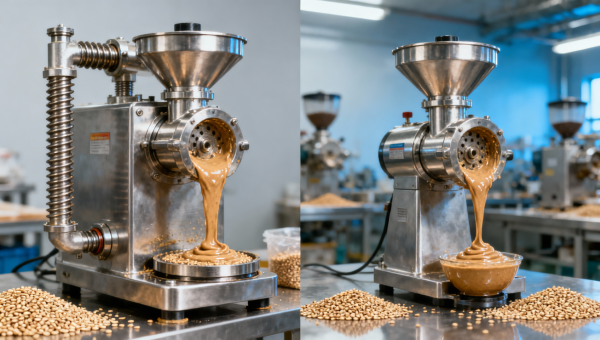
When a commercial tahini maker begins losing output, the cause is often hidden in fast-wearing components rather than the core drive system. For operators, buyers, and technical evaluators comparing a commercial spice grinder, garlic powder making machine, or cocoa bean processing plant, understanding these wear points is essential to protecting throughput, product consistency, and maintenance budgets before small losses become costly production risks.
In continuous paste, powder, and nut-processing lines, output decline rarely starts as a dramatic failure. More often, it appears as a 5% to 12% drop in hourly capacity, a gradual rise in product temperature, a wider particle size range, or a growing need for recirculation. Those signals matter to production supervisors, maintenance teams, procurement managers, QA leaders, and financial approvers because they directly affect waste, labor hours, and batch release reliability.
A commercial tahini maker sits at the intersection of mechanical wear, raw material variability, sanitation discipline, and throughput planning. Sesame paste lines share several wear patterns with adjacent equipment categories, including spice grinding systems, garlic powder making machines, and cocoa bean processing plants. That makes wear-point analysis useful not only for troubleshooting but also for supplier comparison, spare-parts planning, and total cost of ownership evaluation.
This guide focuses on the first wear points to inspect, the symptoms they create, the operating data worth tracking, and the purchasing criteria that reduce unplanned downtime. For industrial readers assessing plant efficiency or evaluating replacement equipment, these checkpoints can help separate a minor service issue from a more expensive performance drift.
Where Output Loss Usually Starts in a Commercial Tahini Maker
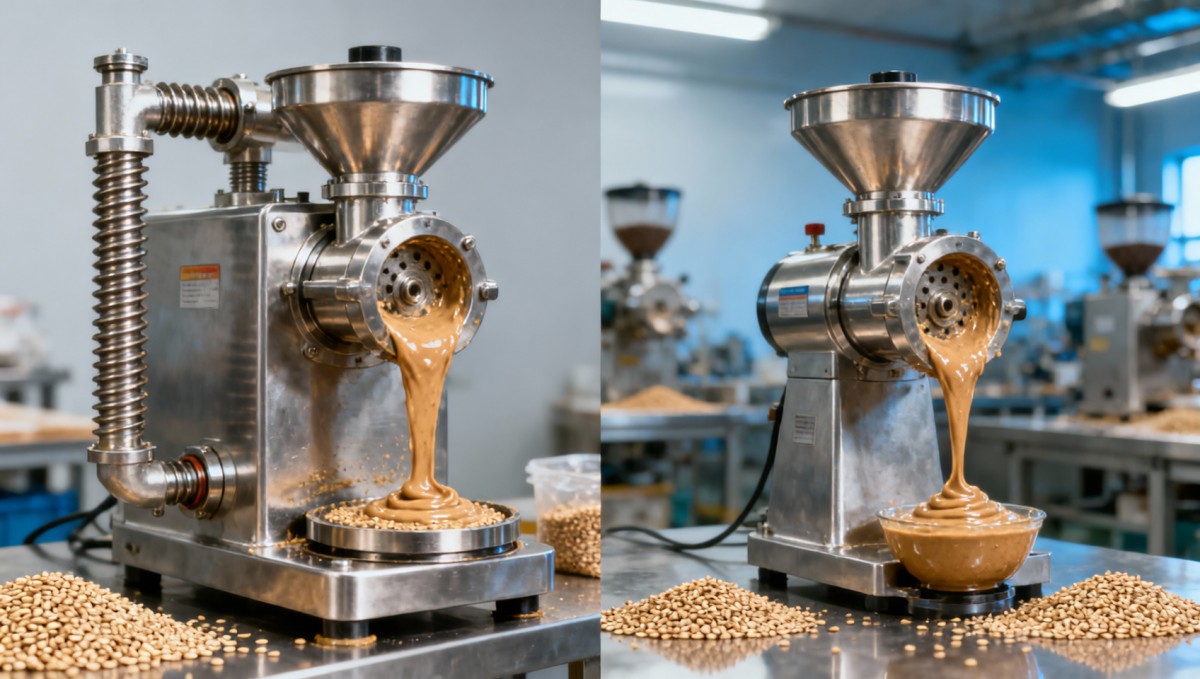
In most commercial tahini maker installations, the first assumption is often motor weakness or electrical instability. In practice, the motor is frequently not the primary cause. Output loss tends to begin at the material-contact zone: grinding stones, colloid surfaces, rotor-stator interfaces, feed screws, seals, and screens. These parts face constant abrasion from sesame solids, oil-rich paste, and occasional foreign particles. Even a wear shift of 0.2 mm to 0.5 mm can affect pressure balance and grinding efficiency.
A worn grinding interface changes more than capacity. It can raise product temperature by 3°C to 8°C, increase recirculation time, and create inconsistencies in smoothness that become visible during filling or downstream packaging. In tahini production, where texture uniformity and oil dispersion are closely tied to customer acceptance, a machine that still runs but no longer performs at its original profile can quietly generate commercial loss.
The same pattern appears in a commercial spice grinder or cocoa bean processing plant. Operators may notice that the machine reaches nominal RPM, but feed resistance, grinding clearance, and discharge flow no longer match the original commissioning condition. This is why technical evaluators should distinguish between “machine operates” and “machine sustains rated output.” A line delivering 450 kg/h instead of its expected 550 kg/h is already carrying a significant hidden cost over a 2-shift schedule.
Another early problem area is the feed path. Hopper bridges, worn auger flights, poor feed consistency, or hardened residue near the inlet can reduce the material flow before grinding begins. In oil-bearing products such as tahini, this can create intermittent starvation and overload cycles. Those cycles accelerate wear further, making a small issue compound within 4 to 8 weeks if not corrected.
The first symptoms operators should document
Instead of waiting for a shutdown, plants should document progressive signs across at least 7 production days. A short data window can miss the pattern, especially if sesame moisture, roast degree, or batch temperature varies. Trend tracking is more useful than a single inspection snapshot.
- Hourly throughput decline of 5% to 15% under the same feed conditions.
- Longer time to reach stable discharge after startup, often rising from 3 minutes to 8 minutes.
- Higher product exit temperature, especially above the plant’s typical control band.
- Visible texture variation, oil separation, or increased downstream sieve rejects.
- More frequent need to adjust clearance, feed rate, or recirculation settings.
For procurement teams, these symptoms also help frame supplier questions. Instead of asking only for motor power or machine capacity, buyers can ask how the equipment handles abrasive wear, what the recommended inspection interval is, and which components are designed as routine consumables versus long-life structural parts.
Critical Wear Points to Check Before Replacing the Entire Machine
Before approving a major capital purchase, maintenance and engineering teams should inspect the highest-impact wear points in a structured order. In many facilities, replacing 3 to 5 targeted parts restores acceptable output and delays full replacement by 6 to 18 months. That matters for financial approvers balancing production urgency with budget discipline.
Grinding stones or grinding discs are usually the first inspection priority. Their surface geometry determines shearing action, paste fineness, and pressure profile. When edges become polished or unevenly worn, material begins to slip instead of grind efficiently. This often creates the false impression that the commercial tahini maker “needs more power,” when it actually needs restored contact geometry.
Rotor-stator assemblies in colloid-type systems are another major wear point. Excessive clearance lowers shearing intensity and can allow partially processed material to pass too quickly. Seals and bearings must also be checked because leakage, contamination ingress, and shaft movement can undermine stable grinding even before catastrophic bearing failure occurs. In wet, oil-rich processing environments, seal wear can progress quickly if sanitation chemicals or dry-running conditions are poorly controlled.
Feed screws, inlet augers, and transfer pumps deserve equal attention. A worn auger flight can reduce volumetric feed by a measurable margin, while a pump with declining sealing performance may introduce pulsation that destabilizes flow. In integrated plants where sesame pre-cleaning, roasting, cooling, and grinding are linked, a local wear issue can ripple across the line and be misdiagnosed as an upstream raw material problem.
High-priority inspection map
The table below summarizes common wear points, their operating symptoms, and the production risks they create in a commercial tahini maker and similar grinding lines.
The key takeaway is that output decline is usually multi-factor, not single-factor. Plants that inspect only the motor or electrical panel often miss the true root cause. A staged inspection sequence can reduce unnecessary replacement decisions and provide a better basis for spare-parts stocking.
A practical 4-step inspection order
- Measure actual throughput against the last verified benchmark, not the nameplate figure.
- Inspect grinding surfaces and clearance settings for wear pattern, polishing, and uneven contact.
- Check seals, bearings, and shaft stability for heat, play, and leakage during operation.
- Review feed consistency, auger condition, and upstream material preparation variables.
This sequence is especially useful for distributors and service partners who need a repeatable troubleshooting framework across multiple customer sites.
How Wear Affects Throughput, Product Quality, and Compliance Control
A commercial tahini maker is not judged by output alone. In regulated or quality-sensitive facilities, wear also affects hygiene, batch repeatability, and documented process control. Quality teams often detect the problem first through viscosity shift, particle size variation, or fill-weight instability downstream. What appears as a maintenance issue can quickly become a QA issue if oil separation, texture drift, or metal contamination risk enters the discussion.
From an operating perspective, even a 7% throughput drop can be more expensive than it looks. Over a 10-hour production day, that may translate into dozens of lost containers, added overtime, or delayed lot release. If the line compensates by increasing recirculation or extending run time, utility consumption and wear on adjacent equipment rise as well. In high-volume plants, cumulative loss across 20 to 25 working days can justify earlier intervention.
Wear also changes thermal behavior. As grinding efficiency declines, the machine may generate more friction for the same tonnage. Product exiting 4°C to 6°C hotter than normal can alter aroma retention, affect oil stability, or require extra cooling time before packing. Comparable thermal concerns exist in a commercial spice grinder and cocoa bean processing plant, where volatile compounds and texture are commercially important.
For safety and compliance personnel, seals and bearing housings deserve additional scrutiny. Leakage paths can compromise sanitation, while bearing damage may increase the risk of particulates entering the process zone if protective barriers degrade. Even in facilities not operating under pharmaceutical-style protocols, disciplined inspection records and preventive maintenance logs are increasingly expected by industrial buyers and auditors.
Operational impact by wear condition
The following comparison helps technical evaluators connect mechanical wear with measurable production outcomes and budget exposure.
This type of condition mapping helps finance and operations align on timing. Not every performance loss requires a new machine, but delayed action often pushes a manageable parts replacement into a costly emergency stop.
Common misreadings that delay the fix
- Assuming lower output is caused only by raw sesame variation without checking the grinding interface.
- Increasing motor load or feed pressure to recover capacity, which may accelerate damage.
- Treating leakage as a housekeeping issue rather than an indicator of seal and shaft degradation.
- Comparing current performance to nameplate data instead of the plant’s real commissioned baseline.
These mistakes are common across powder, paste, and grinding applications, especially when maintenance records are incomplete or spare-parts history is not linked to output data.
What Buyers and Technical Evaluators Should Ask Before Choosing a New System
If a plant decides that replacement or line expansion is the right path, the evaluation should go beyond nominal capacity. A commercial tahini maker may be advertised at a certain kg/h range, but buyers should verify whether that figure applies to sesame of a particular roast level, moisture condition, and target fineness. A realistic capacity band is often more useful than a single top-line number.
Wear-part accessibility should be treated as a commercial issue, not only a maintenance issue. If grinding components take 6 hours to replace instead of 1.5 hours, the annual labor and downtime difference becomes substantial. Procurement teams should ask for recommended spare-parts lists, typical replacement intervals, and whether critical consumables are stocked regionally or supplied only after long lead times of 3 to 6 weeks.
Material selection also matters. Surface hardness, food-contact suitability, corrosion resistance, and finish quality influence both wear life and cleaning performance. For plants that also process spices, cocoa, or oil-rich seeds, cross-application flexibility may be attractive, but only if the machine can maintain stable fineness and sanitation standards across product changes.
Distributors and industrial buyers should also look at service architecture. A lower purchase price can be offset by slow technical response, unclear manuals, or limited commissioning support. In many B2B environments, the more durable commercial decision is the one that protects uptime, not the one with the lowest initial quotation.
Key procurement criteria for grinding and paste-processing lines
The matrix below can support side-by-side supplier comparison for a commercial tahini maker, a commercial spice grinder, or related plant modules.
The strongest purchasing decisions usually come from linking machine specifications to maintenance practicality. A technically strong machine with poor parts support can still become a weak investment in a high-uptime plant.
Questions worth asking suppliers during technical review
- What is the expected wear-part replacement interval under normal sesame processing hours?
- Can the supplier define the test conditions used for the stated kg/h output?
- How long does a standard seal, bearing, or grinding-surface replacement take on site?
- What spare parts should be stocked locally for the first 12 months of operation?
- What operator training is included for process adjustment, inspection, and sanitation?
These questions help turn a quotation review into a true operational assessment, which is especially important for buyers responsible for long-term ROI rather than initial purchasing alone.
Maintenance Planning, Spare Strategy, and Practical FAQ
A stable commercial tahini maker depends on planned maintenance more than reactive repair. Plants that wait for visible quality failure often intervene too late. A better model is to pair weekly operator checks with monthly maintenance review and a quarterly wear audit. This schedule does not need to be complex, but it does need clear thresholds for action.
For example, if throughput falls more than 8% from the last validated benchmark, or if discharge temperature rises above the normal process band by 5°C, the machine should enter a structured inspection cycle. If seal leakage appears in two consecutive runs, that should trigger both component review and sanitation risk assessment. Small rules like these improve decision speed across production, QA, and maintenance teams.
Spare-parts planning should reflect actual lead time, not assumed availability. Critical consumables for a commercial tahini maker, commercial spice grinder, or garlic powder making machine should usually cover at least one replacement cycle on site. In plants with 2-shift or 3-shift operation, keeping no stock of seals, bearings, or grinding interfaces is a preventable risk.
Below are concise answers to common technical and purchasing questions raised by operators, engineering teams, distributors, and industrial buyers during evaluation or troubleshooting.
How often should wear points be inspected?
For continuous or near-continuous use, a visual and performance check every 80 to 120 operating hours is a practical starting point. A more detailed inspection every 250 to 500 hours is common for grinding surfaces, seals, and feed assemblies. Actual frequency should be adjusted for raw material cleanliness, roast level, and sanitation method.
Is declining output always a sign to replace the machine?
No. Many plants recover acceptable performance through targeted replacement of grinding components, seals, bearings, or feed parts. Replacement becomes more likely when multiple systems are worn at once, spare parts are difficult to source, or the machine can no longer meet the plant’s capacity and hygiene requirements after overhaul.
What data should operators log during troubleshooting?
At minimum, log hourly throughput, product exit temperature, motor load trend, adjustment settings, recirculation time, and any leakage or abnormal sound. A 7-day to 14-day record provides better diagnostic value than isolated observations and gives procurement teams a stronger basis for service discussions with suppliers.
What is the most common buyer mistake?
The most common mistake is buying on headline capacity and price while underweighting wear-part access, lead time for consumables, and technical support depth. In many plants, those three factors influence real ownership cost more than the initial equipment price difference.
When a commercial tahini maker starts losing output, the smartest first move is not to assume a drive failure or rush into full replacement. Check the wear points that most directly affect grinding efficiency, flow stability, product quality, and sanitation control. For operators, technical evaluators, procurement teams, and decision-makers, this approach reduces avoidable downtime and supports more accurate capital planning.
If you are comparing a commercial tahini maker, commercial spice grinder, garlic powder making machine, or cocoa bean processing plant, a wear-focused review will reveal which systems are built for sustained industrial performance and which may create hidden maintenance costs. To discuss equipment details, maintenance strategy, or a tailored processing solution, contact us to get a customized recommendation and explore the right next-step option for your production line.
Related Intelligence
- Milling MachineryHow to Choose a Horizontal Ribbon Blender for FeedHorizontal ribbon blender feed buying guide: compare vertical feed mixer machine options, animal feed mixers wholesale offers, and line fit for poultry, cattle, and floating fish feed plant projects.
- Milling MachineryWhy use a rotary drum sieve grain line?Why use a rotary drum sieve grain line? Discover how rotary drum sieve grain, grain pre cleaner machine, gravity separator grain, and magnetic separator for feed improve efficiency and quality.
- Milling MachineryHow to avoid grain destoner machine issues?Grain destoner machine issues explained: learn how gravity separator grain, grain pre cleaner machine, and rotary drum sieve grain setup affect performance, reduce downtime, and improve line efficiency.
The Morning Broadsheet
Daily chemical briefings, market shifts, and peer-reviewed summaries delivered to your terminal.
