
How to Choose a Paddy Separator Machine for Stable Output
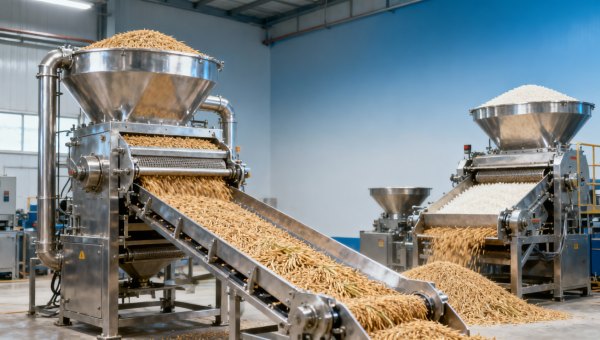
Selecting the right paddy separator machine is critical to achieving stable output, consistent grain quality, and lower operating losses in modern milling lines. Whether you are comparing a rotary rice grader, rice color sorter machine, rice whitener machine, or paddy husker machine for a commercial rice mill plant, the right choice affects efficiency, maintenance, and ROI. This guide outlines the key factors technical teams and buyers should evaluate before investing.
For mill operators, project managers, quality teams, and procurement reviewers, the paddy separator sits at a decisive point in the process flow. If separation efficiency is weak, brown rice recirculation rises, husker load becomes unstable, and downstream polishing and sorting performance can decline within a few shifts. In medium- to large-scale plants, even a 2% to 4% drop in separation quality can translate into measurable yield loss, higher energy use, and more operator intervention.
A sound buying decision therefore goes beyond nameplate capacity. It should assess feed characteristics, separation principle, adjustment range, maintenance frequency, utility demand, and the supplier’s ability to support commissioning and spare parts. The goal is not simply to buy a machine, but to secure stable output over 8-hour, 16-hour, or 24-hour operating cycles.
Why the Paddy Separator Matters in a Modern Rice Milling Line
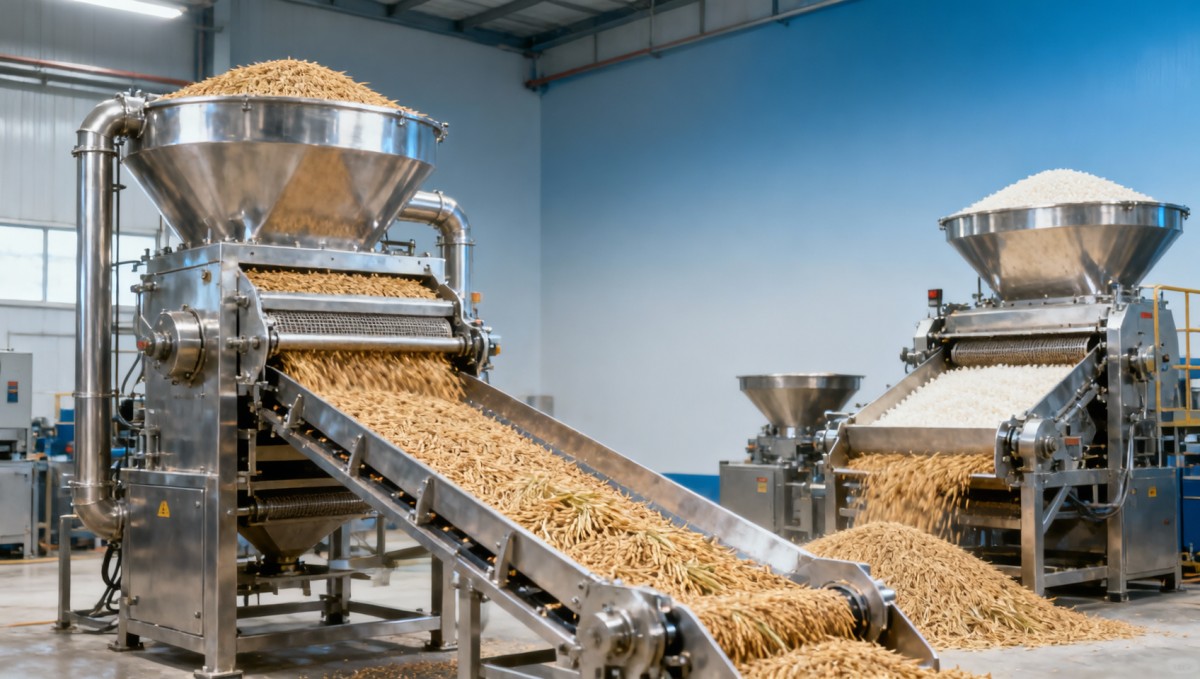
A paddy separator machine is designed to separate unhusked paddy from brown rice after husking. This step directly influences recirculation efficiency and the consistency of downstream equipment such as the rice whitener machine and rice color sorter machine. When separation is unstable, mills often experience bottlenecks, fluctuating grain appearance, and a rise in broken kernels.
In practical milling operations, stable output usually depends on three linked variables: husker performance, separator accuracy, and feed uniformity. A separator that performs well at 3 tons per hour but loses accuracy at 5 tons per hour may not suit a plant planning capacity expansion within 12 to 24 months. Technical teams should therefore evaluate both current throughput and the realistic peak load range.
Different machine types can behave differently under changing raw material conditions. Grain moisture, varietal differences, kernel dimensions, and upstream husking efficiency all affect separator results. For example, paddy at 13% to 14% moisture may separate differently from lots above 15%, especially when mixed varieties or uneven drying are involved. Machines with limited adjustment sensitivity can struggle under such variation.
Buyers should also understand the cost of poor separation beyond simple yield numbers. Reprocessing increases wear on elevators and conveyors, more brown rice can be sent back unnecessarily, and quality control teams may see larger variation in whiteness and head rice rate. In a commercial rice mill plant, these secondary effects often matter as much as the machine’s purchase price.
Core operational impact areas
- Separation efficiency influences how much paddy is correctly routed for re-husking instead of moving into whitening stages.
- Stable feed reduces load variation on elevators, hoppers, and polishing units over continuous 2-shift or 3-shift operation.
- Better separation helps reduce unnecessary recirculation, which can lower power consumption and mechanical wear over time.
- Consistent product flow supports tighter process control for quality inspection, bagging, and lot traceability.
Where the separator fits among other rice processing machines
Many buyers compare a paddy separator machine with equipment such as a rotary rice grader or paddy husker machine without mapping the full process logic. The separator is not a replacement for grading or color sorting. Instead, it acts as a stabilizing link between husking and subsequent refining. A well-matched configuration improves the efficiency of the entire line rather than one isolated stage.
The table below summarizes how the separator interacts with related equipment in a typical commercial rice mill plant.
The key conclusion is that the separator should be evaluated as a line-balancing asset, not only as a single machine purchase. A separator that is well matched to the husker and downstream machines often supports better line economics over 3 to 5 years than a lower-cost unit with limited tuning flexibility.
Key Selection Criteria: Capacity, Grain Characteristics, and Separation Performance
The first selection checkpoint is effective throughput under actual production conditions. A supplier may quote nominal capacity at ideal feed conditions, but mills should verify capacity at their own expected paddy mix, moisture range, and husker discharge pattern. For many commercial applications, it is wise to keep the target operating load at 70% to 85% of maximum rated capacity to preserve separation stability during long runs.
The second checkpoint is compatibility with grain properties. Short-grain, medium-grain, and long-grain rice can behave differently on gravity- or tray-based separation systems. If the plant handles more than one variety across the year, adjustment range becomes a major buying criterion. Teams should ask whether settings can be changed within 10 to 20 minutes and whether the machine maintains repeatability after cleaning or restart.
The third checkpoint is measurable separation performance. Instead of relying on broad claims, ask suppliers how they define acceptable carryover and recovery under standard operating conditions. A practical review often includes paddy in brown rice outlet, brown rice in paddy outlet, feed consistency, and performance drift after 4 to 8 hours of operation. These details are more useful than general claims of “high efficiency.”
Power demand, vibration behavior, and footprint should also be reviewed early. In retrofit projects, insufficient floor space, uneven foundations, or mismatched discharge elevations can increase installation cost. Even a 5 kW to 15 kW machine may require structural checks if installed on an upper level near sifters, whiteners, or aspiration equipment.
Technical indicators worth checking
- Rated and effective capacity at real moisture conditions, not only laboratory values.
- Adjustment range for tray angle, vibration, stroke, or feed distribution depending on machine design.
- Outlet purity consistency over 1 shift, 2 shifts, and continuous operation.
- Maintenance access for screens, trays, bearings, and dust-prone points.
- Spare parts replacement cycle for wear items over 6 months to 12 months.
Typical evaluation ranges in procurement reviews
Most buyers benefit from reviewing the machine against a standard scoring sheet before issuing a purchase order. The table below provides a practical framework for internal technical and commercial review.
This type of matrix helps technical evaluators and finance approvers align on practical risk. A machine with a slightly higher purchase price may still be the stronger option if it offers wider adjustment range, lower maintenance downtime, and more predictable performance under changing crop lots.
How to Match Machine Design to Plant Layout and Operating Strategy
Machine selection should always be tied to the plant’s process design. A paddy separator machine that performs well in a new-build facility may be difficult to integrate into an older plant with constrained floor levels, limited aspiration capacity, or inconsistent upstream feeding. Before procurement, project teams should confirm inlet and outlet heights, vibration transfer risk, maintenance clearance, and access for routine cleaning.
Operating strategy matters as much as physical layout. A plant running one variety at steady volume can often tolerate a narrower tuning range. By contrast, a contract processing facility or export-focused rice mill that handles seasonal quality variation needs a more adaptable separator. In such environments, repeatable calibration and quick setup recovery can be more valuable than a marginal increase in rated throughput.
The separator should also be sized in relation to adjacent equipment. If the paddy husker machine can process 6 tons per hour but the separator performs reliably only at 4.5 tons per hour under normal moisture conditions, the mismatch will create line imbalance. Similar issues can arise when a rotary rice grader or polishing section is oversized while the separation stage becomes the limiting factor.
Engineering teams should further consider utilities and environmental control. Dust extraction, noise level, and vibration isolation influence both operator safety and long-term machine stability. In enclosed milling plants, even moderate dust accumulation over 2 to 3 weeks can affect sensors, bearings, and adjustment mechanisms if housekeeping and aspiration are weak.
Plant integration checklist
- Verify whether the feed stream is continuous or surge-based and whether a buffer hopper is needed.
- Check available maintenance clearance on at least 3 sides for cleaning and wear-part access.
- Confirm electrical compatibility, including motor load, control panel interface, and emergency stop integration.
- Review aspiration and dust collection points to prevent grain dust accumulation around moving assemblies.
- Assess whether the machine foundation can handle continuous vibration without transmitting it to nearby precision equipment.
Typical fit-for-use scenarios
Selection becomes clearer when buyers map the machine to an operating scenario instead of a catalog page. The comparison below offers a practical view.
The main takeaway is that the best paddy separator machine is not universal. It is the model that fits the plant’s throughput profile, raw material variability, staffing level, and layout constraints with the lowest practical operating risk.
Procurement, Inspection, and Lifecycle Cost Considerations
For business evaluators and finance approvers, the purchase price is only one part of the investment case. A useful procurement review should include installation cost, commissioning support, spare parts availability, expected wear-item consumption, downtime exposure, and training scope. Over a 3-year horizon, these factors can materially influence total ownership cost, especially in high-throughput plants running 250 to 300 days per year.
Factory inspection should focus on verifiable points. Ask for a witness test under representative feed conditions if possible, or at minimum request detailed test parameters. Technical teams should review vibration stability, outlet purity consistency, ease of adjustment, and cleaning accessibility. A visual inspection of frame rigidity, bearing arrangement, and discharge control often reveals more than sales literature.
Spare parts strategy is another common blind spot. If critical wear parts require 6 to 10 weeks of lead time, a low-cost machine can become expensive once an unscheduled shutdown occurs. Buyers should identify which parts should be stocked on site for the first 12 months and confirm whether local or regional support exists for emergency needs.
Commissioning and operator training should be written into the purchase scope. Even a capable separator can underperform if initial setup is poor or if operators do not understand feed balancing and calibration logic. A basic training package should cover daily checks, weekly cleaning, adjustment procedures, and restart steps after line stoppage.
Practical procurement questions to ask suppliers
- What is the machine’s effective throughput range under normal moisture and mixed lot conditions?
- Which wear parts are expected to be replaced within the first 6 months, 12 months, and 24 months?
- How long does standard commissioning take: 1 day, 3 days, or longer for a full line?
- Can the supplier provide operating and maintenance documentation for quality and safety teams?
- What response time is available for troubleshooting, spare parts dispatch, and technical escalation?
Common procurement mistakes
Three mistakes appear frequently in rice mill equipment buying. First, selecting purely on rated capacity without testing operating stability. Second, underestimating integration cost in retrofit projects. Third, treating operator training as optional. These issues usually surface within the first 30 to 90 days after startup, when production targets and quality expectations become harder to meet.
A disciplined review process reduces these risks. It also helps align technical, commercial, and quality stakeholders around the same decision criteria, which is especially valuable when evaluating multiple bids for a commercial rice mill plant expansion.
Maintenance, Risk Control, and Frequently Asked Questions
Stable output depends not only on correct machine selection but also on disciplined maintenance. In normal operation, daily checks should cover feed uniformity, unusual vibration, dust buildup, and outlet consistency. Weekly attention often includes cleaning of critical surfaces, inspection of fasteners, and verification that adjustment settings have not drifted. A simple 15-minute routine can prevent minor issues from becoming a half-day shutdown.
Quality and safety teams should also monitor contamination and housekeeping risk. Grain dust around moving parts can shorten service life and create cleaning challenges. If the separator is installed near a rice color sorter machine or rice whitener machine, dust control becomes even more important to preserve reliability across the line. Preventive maintenance schedules should be documented and linked to production records.
For project managers, it is useful to define acceptance criteria during startup. Typical checks include stable throughput for a 2-hour or 4-hour run, acceptable outlet purity, operator ability to adjust settings, and no abnormal noise or heating. These criteria create a practical basis for sign-off rather than relying on subjective impressions.
The questions below reflect common concerns from buyers, users, and technical reviewers evaluating paddy separator machine investments.
How do I know if a separator is too small or too large for my mill?
If the machine must run near 95% to 100% of rated capacity to meet target output, it is usually too small for stable production. If it is consistently loaded below 50% without clear expansion plans, it may be oversized and less cost-efficient. A practical target is often to operate in the 70% to 85% band, leaving room for feed variation and future growth.
How often should maintenance be scheduled?
Daily visual checks are recommended, with more detailed weekly and monthly inspections depending on throughput and dust conditions. Plants running 16 to 24 hours per day generally need tighter preventive maintenance intervals than single-shift operations. Wear parts should be reviewed against the supplier’s guidance and actual operating conditions rather than calendar time alone.
Can one paddy separator machine handle multiple rice varieties?
Yes, but suitability depends on the adjustment range and repeatability of the machine. Plants processing short- and long-grain rice, or seasonal lots with different moisture and kernel characteristics, should prioritize designs that allow fast and consistent recalibration. Ask whether operators can return to validated settings in 10 to 20 minutes with minimal trial-and-error.
What should be included in a startup acceptance checklist?
At minimum, include feed stability, separation consistency, vibration and noise behavior, operator setup time, cleaning access, and outlet quality over a defined run period. For larger projects, it is also sensible to document spare parts delivery, training completion, and maintenance handover before final sign-off.
Choosing a paddy separator machine for stable output requires a balanced view of process performance, plant integration, serviceability, and lifecycle cost. The strongest decision is usually the one that aligns the machine with your rice variety profile, operating load, maintenance capabilities, and long-term line development plan. If you are evaluating options for a commercial rice mill plant or comparing related equipment such as a rotary rice grader, rice color sorter machine, rice whitener machine, or paddy husker machine, now is the right time to obtain a tailored technical review. Contact us to discuss your application, compare configurations, and get a practical equipment selection plan built around your production goals.
Related Intelligence
- Milling MachineryRice Polisher Machine Wholesale: What to Check Before BuyingRice polisher machine wholesale guide: compare paddy separator machine, paddy husker machine, rice whitener machine, rotary rice grader and rice color sorter machine before you buy.
- Milling MachineryWhen Does a Rice Color Sorter Machine Pay Off?Rice color sorter machine ROI explained: compare with paddy separator machine, rotary rice grader, and paddy husker machine to see when quality gains, labor savings, and premium sales justify the investment.
- Milling MachineryRotary Rice Grader vs Plansifter: What Really Works Better?Rotary rice grader or plansifter? Compare paddy separator machine integration, rice color sorter machine efficiency, and commercial rice mill plant ROI to choose the smarter grading solution.
The Morning Broadsheet
Daily chemical briefings, market shifts, and peer-reviewed summaries delivered to your terminal.
