
Rotary Rice Grader vs Plansifter: What Really Works Better?
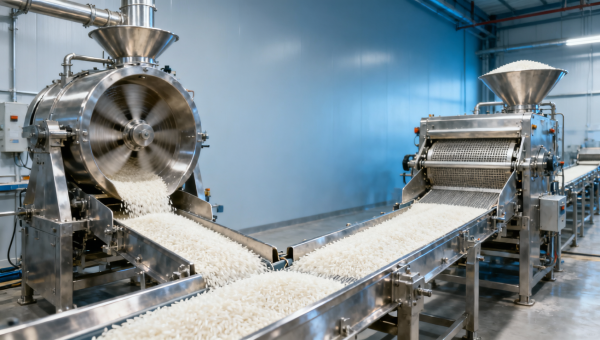
When specifying a rice milling line, the choice between a rotary rice grader and a plansifter affects grading accuracy, throughput, maintenance, and downstream quality control. For buyers comparing a paddy separator machine, rice color sorter machine, rice whitener machine, or a full commercial rice mill plant, this guide explains which solution performs better under real operating, technical, and investment conditions.
For technical evaluators, plant operators, procurement managers, and capital approvers, this is rarely a simple machine-to-machine comparison. The grading section sits between milling stability and finished rice consistency, so a poor choice can raise broken rice carryover, reduce color sorter efficiency, and create packaging variation that affects customer acceptance.
In practical terms, the better option depends on capacity band, target grain uniformity, maintenance resources, floor layout, and the economic value of tighter grading. A rotary rice grader may deliver strong performance in many medium-capacity mills, while a plansifter may outperform it in multi-stream, high-precision, or premium product environments.
How Rotary Rice Graders and Plansifters Differ in Real Mill Operation
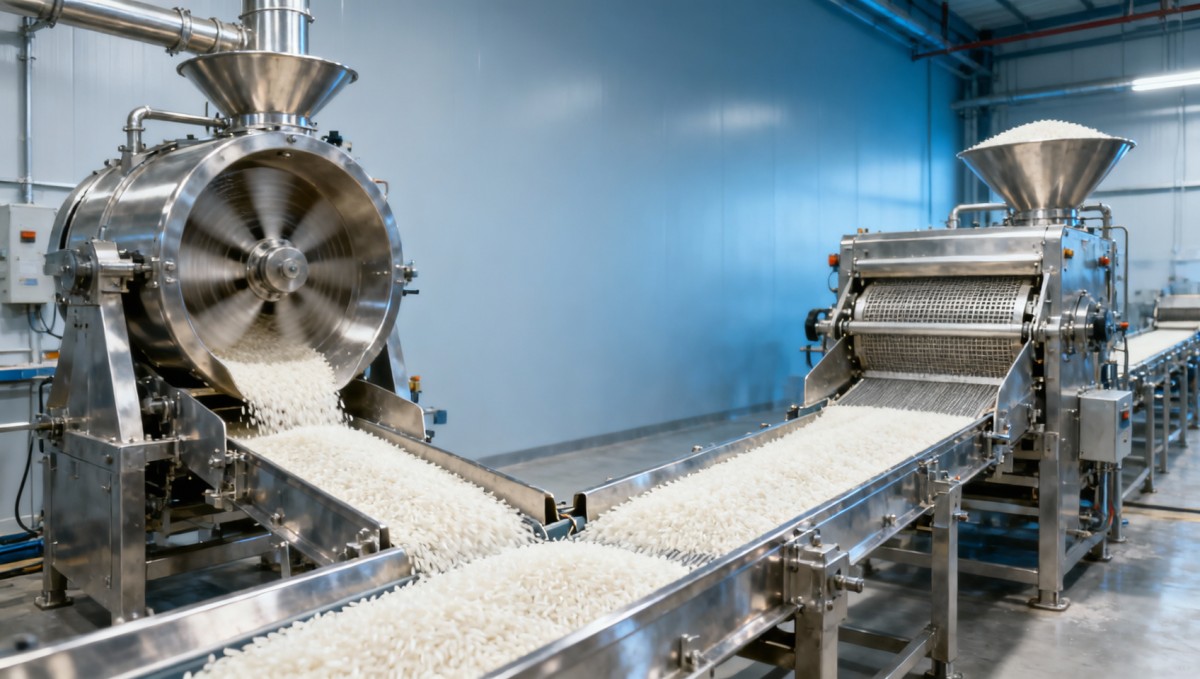
A rotary rice grader typically uses rotating cylindrical or eccentric screening motion to separate rice by size. In rice mills processing roughly 2 to 8 tons per hour per line, this design is often valued for compact installation, straightforward operation, and lower operator training demand. It is commonly selected where plant teams want a dedicated sizing stage without the complexity of a larger sifting stack.
A plansifter, by contrast, relies on reciprocating or gyratory motion across multiple sieve decks. This arrangement supports finer fraction separation across several size bands at the same time. In mills targeting 5 to 20 tons per hour, especially where premium head rice recovery and export-grade consistency matter, the plansifter is often considered for its superior screening precision and flexible deck configuration.
The operational difference is not just motion type. A rotary rice grader is usually easier to integrate into a standard rice milling line with fewer structural demands. A plansifter often needs more careful foundation planning, vibration control, and airflow management, especially when connected upstream to a rice whitener machine and downstream to a rice color sorter machine.
From a user perspective, rotary systems are often favored in mills that prioritize uptime and uncomplicated servicing. Plansifters are more attractive where the quality team needs narrower cut points, multiple discharge streams, and better control over oversize, head rice, brokens, and fine fractions. This distinction becomes more important when the final product is packed in 5 kg, 25 kg, and 50 kg formats with different grade specifications.
Core technical distinction
The core issue is separation behavior. Rotary rice grader systems usually provide stable performance over a narrower number of grading cuts, while a plansifter can support 3 to 6 deck layers or more, depending on design. That means a plansifter can sort material into more controlled streams, reducing recirculation and helping downstream polishing or sorting equipment run closer to optimal load.
Where this matters most
- Premium edible rice lines that require tighter size uniformity before optical sorting.
- Commercial rice mill plant projects with more than 1 finished grade and multiple packaging SKUs.
- Operations where labor is limited and process stability must be maintained over 16 to 24 hours per day.
The table below outlines the most relevant technical differences buyers usually review during line design, retrofits, or tender comparison.
The practical conclusion is that a rotary rice grader is not automatically “less capable,” nor is a plansifter always “better.” The value of a plansifter appears when mills monetize better grade separation, while rotary machines remain highly competitive when layout simplicity, lower service complexity, and predictable operation are the dominant goals.
Which Solution Performs Better for Accuracy, Throughput, and Product Quality
If the question is pure grading accuracy, the plansifter often has an edge. Its multi-deck structure allows more precise control over size segmentation, which can reduce overlap between head rice and brokens. In mills producing export-oriented or retail-grade rice, even a 1% to 3% improvement in size consistency can influence finished product value, especially where buyers enforce strict visual and fraction standards.
If the question is stable throughput with lower mechanical complication, the rotary rice grader may be the stronger answer. Many operators report that rotary designs are easier to keep running consistently during long shifts, particularly in facilities with variable paddy input quality. When raw material moisture shifts by 1% to 2% or when broken content fluctuates, simpler screening systems can be more forgiving in day-to-day operation.
Downstream quality control also changes the answer. A rice color sorter machine performs best when feed distribution is uniform and the grain size range is tight. Plansifters typically improve this precondition. That means the color sorter may reject less good product and operate with fewer false ejects, improving final recovery. In contrast, if the downstream system already has strong correction capacity, a rotary grader may be fully adequate.
The rice whitener machine is another important reference point. Excessive variation entering whitening and later grading can raise broken generation. If the plant is processing delicate varieties or long-grain rice that is more fracture-sensitive, the choice of grading equipment should be evaluated together with whitening pressure, polish intensity, and aspiration balance rather than as an isolated machine purchase.
Performance by decision objective
Buyers often frame the comparison too broadly. A more useful approach is to define the priority: best fraction precision, easiest maintenance, lowest installed cost, or strongest compatibility with a full commercial rice mill plant. The next table summarizes performance by objective rather than by generic claims.
For most mills, “better” should be measured against reject rate, head rice recovery, labor hours per month, and maintenance interruption frequency. If a plansifter improves product value enough to offset higher complexity within 12 to 24 months, it may be the stronger investment. If not, a rotary rice grader usually remains the more rational operating choice.
Selection Criteria for Buyers, Engineers, and Financial Approvers
A disciplined procurement review should start with line capacity and product mix. A mill selling mainly one standard grade may not capture enough value from a more advanced grading system. But a processor supplying foodservice, retail, and export channels at the same time often needs multiple quality windows. In those cases, a plansifter can support more precise grade differentiation and reduce rework.
The second factor is utility and infrastructure readiness. Plansifters can require more vertical space, tighter frame stability, and more careful vibration management. If the existing building has limited headroom or retrofit constraints, the rotary rice grader may reduce civil adjustment costs. This matters in brownfield projects where installation delays of 2 to 6 weeks can create commercial risk.
The third factor is maintenance capability. Plants with in-house technicians familiar with screen balancing, deck cleaning routines, and periodic inspection every 250 to 500 operating hours can manage plansifters effectively. Mills depending on small maintenance teams or remote service networks may prefer rotary systems because they generally impose fewer fine-tuning tasks during routine operation.
Financial approvers should also evaluate total cost of ownership rather than purchase price alone. This includes spare screen replacement, downtime cost, operator training, cleaning time, and the economic impact of improved finished grade quality. In some cases, a machine that costs more initially can deliver lower cost per ton if it reduces product giveaway or lowers downstream sorting loss.
A practical 6-point evaluation checklist
- Confirm hourly throughput target, including peak season load, not only average load.
- Define the number of finished grades and acceptable broken percentage by market.
- Audit available installation height, foundation condition, and conveyor connections.
- Estimate maintenance labor capacity per shift and spare parts lead time.
- Test grading performance together with paddy separator machine and color sorter settings.
- Model payback based on value recovery per ton, not only equipment CAPEX.
Common selection mistake
One common mistake is selecting a grader from catalog capacity alone. A nominal 10 TPH machine may underperform if feed distribution is uneven, moisture is unstable, or upstream polishing creates excess fines. Real acceptance tests should review at least 3 metrics: separation efficiency, broken carryover, and hourly throughput under normal plant conditions.
The following table helps procurement teams compare operating and commercial risk before issuing a final purchase order.
For mixed buyer groups, the strongest decision framework is shared: engineering validates fit, quality validates separation performance, operations validates maintainability, and finance validates payback. This cross-functional approach reduces the risk of choosing a machine that looks strong on paper but weak in everyday mill conditions.
Maintenance, Risk Control, and Integration with the Full Rice Milling Line
In operating plants, maintenance burden often becomes the deciding factor after commissioning. Rotary rice grader systems usually have fewer layers and less complex internal access, which can shorten cleaning and screen inspection time. For mills running 2 shifts daily, saving even 20 to 30 minutes per maintenance cycle can translate into meaningful annual productivity gain.
Plansifters require more disciplined preventive maintenance. Screen condition, deck alignment, suspension parts, and vibration behavior all need periodic review. This is not a flaw; it is the tradeoff for tighter grading performance. However, when maintenance intervals are missed, the machine may lose accuracy gradually rather than fail suddenly, making hidden quality drift a real risk for quality control teams.
Integration with a paddy separator machine also matters. If the separator passes too much unseparated material forward, the grading section may be forced to process unstable feed, reducing efficiency for both rotary and plansifter systems. Similarly, if the rice whitener machine is generating excessive stress cracks, no grading technology can fully recover quality. The machine choice must therefore align with the full process chain.
For project managers, commissioning should include line balancing rather than isolated machine testing. A realistic startup plan often includes 3 stages: dry run, material trial, and stabilized production verification over 24 to 72 hours. This helps confirm whether the chosen grader supports target throughput without shifting quality problems downstream.
Recommended maintenance focus points
- Inspect screens and sieves for wear, blinding, or looseness every 250 operating hours in normal duty.
- Review vibration stability, fasteners, and bearing condition at least once per month.
- Check feed uniformity and discharge stream contamination during product changeover.
- Coordinate grader adjustment with color sorter sensitivity and whitener output quality.
Risk signals buyers should not ignore
Warning signs include oversized promises without trial conditions, no clarity on spare screen supply, vague installation tolerances, and no discussion of integration with aspiration or conveyor flow. These issues can delay startup by 1 to 3 weeks and create disputes over whether the problem lies in the grader or elsewhere in the line.
The safest procurement route is to request a process-based proposal. That proposal should describe feed assumptions, moisture range, target fractions, maintenance schedule, and recommended upstream and downstream settings. This is especially important for commercial rice mill plant investments where several machines must work as one controlled system.
FAQ: Choosing the Right Grading Solution for a Commercial Rice Mill Plant
Is a rotary rice grader enough for export-quality rice?
It can be, provided the export program does not require very narrow fraction control and the upstream process is stable. For medium-volume lines with consistent paddy quality and strong optical sorting, a rotary rice grader can meet commercial export needs. But for premium segments where size uniformity strongly affects contract compliance, a plansifter often offers more confidence.
When does a plansifter justify the extra investment?
It is usually justified when the mill handles multiple grades, larger capacities, or higher-value markets. If tighter grading improves recovery, reduces false rejects at the rice color sorter machine, or supports a premium selling price, the extra investment may be recovered within 12 to 24 months. Without those value drivers, the benefit may remain theoretical.
How should buyers test machine suitability before purchase?
Ask for performance validation based on your rice variety, moisture range, target throughput, and broken percentage. A good review includes at least 4 checks: feed condition, separation quality, maintenance access, and integration with paddy separator machine, rice whitener machine, and color sorting stage. If possible, evaluate operation over a realistic production cycle rather than a short demo.
What is the most common procurement mistake?
The most common mistake is buying for headline capacity instead of process fit. A higher-capacity unit does not guarantee better results if the sieve arrangement, plant layout, and quality target do not match. In many mills, the better decision is the machine that delivers predictable grading, serviceability, and line compatibility rather than the most sophisticated specification.
The real winner between a rotary rice grader and a plansifter depends on what your mill is trying to optimize. If your priority is simpler maintenance, easier installation, and dependable grading in a standard commercial setup, a rotary rice grader often works better. If your priority is tighter fraction control, higher-capacity multi-grade processing, and stronger support for premium finished quality, a plansifter often leads.
For buyers evaluating a paddy separator machine, rice color sorter machine, rice whitener machine, or a full commercial rice mill plant, the smartest approach is to assess the grader as part of the whole line, not as a standalone purchase. A well-matched grading system can improve quality consistency, reduce operating friction, and strengthen long-term return on investment.
If you are planning a new installation or upgrading an existing rice processing line, now is the right time to compare technical layouts, grading targets, and lifecycle cost assumptions. Contact us to discuss your process conditions, request a tailored equipment evaluation, or explore more rice milling solutions aligned with your production and quality goals.
Related Intelligence
- Milling MachineryRice Polisher Machine Wholesale: What to Check Before BuyingRice polisher machine wholesale guide: compare paddy separator machine, paddy husker machine, rice whitener machine, rotary rice grader and rice color sorter machine before you buy.
- Milling MachineryWhen Does a Rice Color Sorter Machine Pay Off?Rice color sorter machine ROI explained: compare with paddy separator machine, rotary rice grader, and paddy husker machine to see when quality gains, labor savings, and premium sales justify the investment.
- Milling MachineryRotary Rice Grader vs Plansifter: What Really Works Better?Rotary rice grader or plansifter? Compare paddy separator machine integration, rice color sorter machine efficiency, and commercial rice mill plant ROI to choose the smarter grading solution.
The Morning Broadsheet
Daily chemical briefings, market shifts, and peer-reviewed summaries delivered to your terminal.
