
When Does a Rice Color Sorter Machine Pay Off?
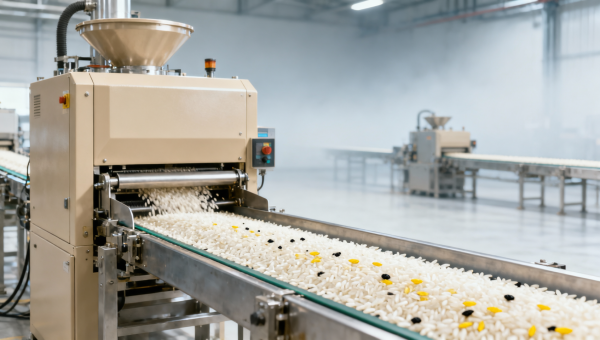
For mill owners and procurement teams, a rice color sorter machine pays off when higher output quality, lower labor costs, and reduced grain loss outweigh the initial investment. Compared with a paddy separator machine, rotary rice grader, rice whitener machine, or paddy husker machine, the sorter’s ROI depends on throughput, defect rates, and market premium for cleaner rice.
In commercial rice processing, this question is rarely answered by machine price alone. A color sorter affects sales grade, rejection rate, export readiness, labor structure, and customer complaint frequency. For operators, it changes daily workflow. For technical evaluators, it changes process stability. For finance teams, it changes payback timing and total cost of ownership over 3–7 years.
This article examines when a rice color sorter machine becomes financially justified, how it compares with adjacent processing equipment, and which operational thresholds typically determine whether the investment produces a fast return or a delayed one. The focus is practical: throughput, defect removal, market premium, maintenance burden, and line integration.
What Actually Drives Payback in a Rice Color Sorter Machine
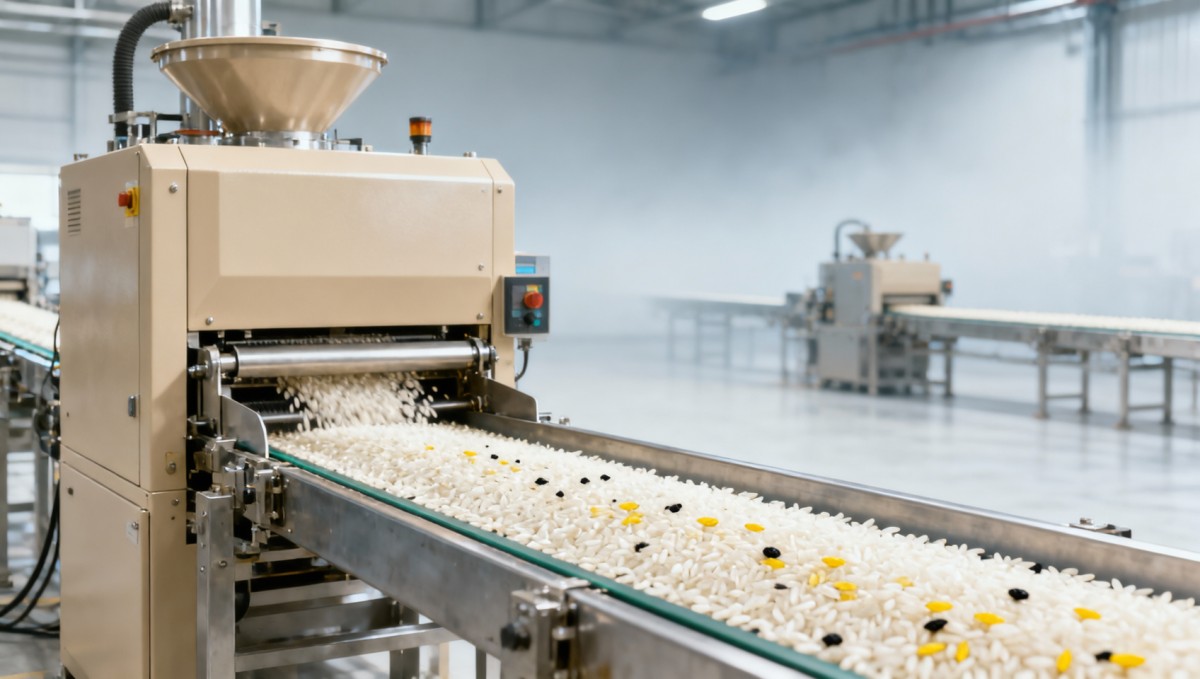
A rice color sorter machine pays off when it captures value in at least 3 places at the same time: improved sale price, reduced manual sorting cost, and lower loss from defective grain passing into finished lots. If only one of these benefits is present, the payback period may stretch beyond 36 months. If all three are measurable, many mills can see a practical return in 12–24 months, depending on plant size and market positioning.
The first variable is throughput. A small line processing 1–2 tons per hour may still benefit from sorting, but the savings base is narrower. A mill running 5–12 tons per hour, 8–16 hours per day, usually has a much clearer economic case because even a 0.5% to 1.5% reduction in rejected finished product translates into meaningful monthly value.
The second variable is incoming grain quality. If raw material quality is already tightly controlled and discoloration defects are very low, the sorter may function more as a quality assurance tool than a profit accelerator. But if the lot contains chalky kernels, yellow grains, black spots, mold-affected kernels, or foreign material, the machine can significantly improve consistency and reduce downstream disputes.
The third variable is market premium. In many distribution channels, the price difference between standard cleaned rice and visibly cleaner rice may range from 2% to 8%, and sometimes more in export or retail-pack channels. A sorter creates the strongest ROI where buyers enforce stricter visual grading and where penalties for quality variation are frequent.
Three core payback levers
- Higher finished rice grade that supports a better selling price per ton.
- Lower dependence on manual sorting teams, especially where labor costs rise 5%–10% annually.
- Reduced brand and shipment risk from off-color kernels entering premium batches.
The table below shows how common operational conditions influence the business case for a rice color sorter machine.
The key takeaway is straightforward: the sorter pays off fastest in medium-to-large mills supplying quality-sensitive customers. In low-volume commodity operations, the machine can still be justified, but only after a careful review of line utilization and achievable price uplift.
How a Color Sorter Differs from Other Rice Processing Machines
A common procurement mistake is to compare a rice color sorter machine directly with a paddy separator machine, rotary rice grader, rice whitener machine, or paddy husker machine as if they perform interchangeable tasks. They do not. Each machine controls a different stage of process quality, and their return profiles are different.
A paddy husker machine removes husk. A paddy separator machine separates unhusked paddy from brown rice. A rice whitener machine improves surface finish by removing bran layers. A rotary rice grader classifies kernels by size or shape. The color sorter comes later, identifying visual defects that size grading and whitening cannot reliably remove.
That distinction matters because some mills try to solve a visual quality problem with upstream equipment upgrades alone. Better husking, whitening, and grading improve uniformity, but they do not fully address discolored grains, fungal spots, insect-damaged kernels, or subtle visual contamination. In other words, the sorter does not replace the rest of the line; it protects the final grade that the rest of the line has made possible.
From a business standpoint, upstream machines often affect capacity and yield, while the color sorter affects presentation, compliance with customer specifications, and rejection control. That makes its value especially visible in premium channels where appearance consistency is audited lot by lot.
Functional comparison across the line
The following table helps technical and commercial teams distinguish process roles and avoid misallocation of capital expenditure.
For project managers and engineering teams, this comparison supports more rational budgeting. The color sorter should be treated as a finishing and quality assurance investment, not as a substitute for poor upstream process control. Mills with unstable feed preparation often underperform because the sorter is forced to compensate for problems it was not designed to solve.
When the sorter adds the most value after grading
- When the mill sells to retailers, exporters, or institutional kitchens with visible quality standards.
- When lot-to-lot consistency matters more than simple bulk tonnage.
- When complaint handling, returns, or rework currently consume 2–5 extra labor hours per production day.
Practical ROI Calculation: Throughput, Defect Rate, and Market Premium
A useful ROI model does not need unrealistic precision, but it must include the right inputs. At minimum, procurement and finance teams should calculate six items: machine investment, installation cost, operating hours, current manual sorting cost, reject or complaint cost, and expected sales premium. Without these inputs, the payback discussion stays too abstract for approval.
Consider a mill processing 6 tons per hour for 10 hours per day over 26 days per month. That equals 1,560 tons monthly. If a color sorter helps recover or protect even 1% of saleable quality value, that can influence 15.6 tons of output equivalent per month. The actual financial effect depends on local selling price and rework cost, but the scale becomes immediately visible.
Now add labor. If manual visual sorting requires 4 workers per shift and the sorter reduces that by 2–3 workers, monthly savings may become substantial, especially where overtime, turnover, or training costs are high. The result is often not full labor elimination, but labor redeployment toward packaging, quality inspection, or preventive maintenance.
Finally, factor in hidden costs. A shipment downgraded by a buyer may trigger price renegotiation, delayed payment, or additional screening. Even one rejected lot in a quarter can materially affect profit. In many operations, the color sorter is justified not only by visible savings but by reduced volatility in customer acceptance.
A simple payback framework
- Monthly benefit = labor savings + quality premium gain + reduced rejection/rework cost.
- Total investment = equipment + installation + training + utility adaptation + commissioning.
- Estimated payback period = total investment divided by monthly benefit.
The table below gives a directional framework for decision-making. Values are operational ranges, not universal market prices, and should be adapted to local conditions.
For finance approvers, the most important discipline is testing the model under 2 scenarios: a base case and a downside case. If the machine still supports acceptable payback when market premium is lower than expected, the project is much more resilient.
Selection Criteria, Integration Risks, and Operational Requirements
Not every rice color sorter machine delivers the same result in the same plant. Selection should begin with actual production conditions, not brochure claims. Technical teams should review grain variety, moisture stability, target defects, upstream cleaning quality, compressed air availability, dust control, and required output accuracy before comparing suppliers.
One of the most overlooked variables is feed consistency. If the product enters the sorter with unstable flow, uneven thickness, or excessive dust, the rejection pattern becomes less reliable. That may increase carryover of defective kernels or cause excessive reject loss. In practice, mills should aim for stable upstream cleaning and grading before final optical sorting.
Another critical factor is utility support. Optical sorters commonly require clean compressed air, voltage stability, and routine cleaning of viewing and ejection systems. If compressed air pressure fluctuates or dust collection is poor, performance may degrade over time. A technically sound installation often depends as much on utilities as on the machine itself.
For quality and safety managers, acceptance testing should be defined in advance. That usually includes at least 3 checkpoints: sorting accuracy on representative samples, throughput under normal load, and reject ratio within agreed tolerance. Without a defined acceptance protocol, post-installation disputes become difficult to resolve objectively.
Key selection checklist
- Confirm target capacity in tons per hour at real production speed, not only peak rated speed.
- Define which defects matter most: yellow kernels, black spots, immature grains, mold traces, or foreign particles.
- Review reject ratio and whether re-sorting is possible without excessive yield loss.
- Verify maintenance intervals, spare parts availability, and expected service response time within 24–72 hours if possible.
- Check training scope for operators, supervisors, and maintenance staff during the first 3–7 days after commissioning.
Common procurement mistakes
- Buying for maximum speed while ignoring actual defect profile and finished grade requirements.
- Assuming the sorter can compensate for poor paddy cleaning, unstable whitening, or inconsistent grading.
- Approving equipment without planning for utilities, dust management, and operator training.
For project leaders, a realistic implementation window is often 2–6 weeks from final site readiness to stable production, depending on foundation work, electrical readiness, and training depth. The better the pre-installation audit, the faster the line reaches repeatable performance.
Who Should Invest, Who Should Wait, and What to Ask Before Buying
A rice color sorter machine is usually a strong investment for mills serving quality-sensitive buyers, processors scaling from regional bulk trade into branded channels, and facilities where labor cost or labor reliability is becoming a constraint. It is also valuable where lot consistency matters for contract renewal and where finished rice must meet stricter internal QC standards.
Some operations should move more cautiously. Very small mills with low daily throughput, highly seasonal production, or low-grade commodity channels may not see rapid payback unless manual sorting is already expensive or customer rejection rates are rising. In those cases, the decision should be based on a 24–36 month model, not a short-term expectation.
For commercial evaluators, the most useful pre-purchase discussion is not “How advanced is the machine?” but “What quality problem will it measurably solve in our current line?” The answer should be tied to current defect rate, current complaint frequency, target throughput, and margin impact. If those numbers are missing, the project is not yet ready for financial approval.
For procurement professionals, vendor evaluation should include service capability, spare part lead times, commissioning support, and clarity of training deliverables. A lower initial price can become expensive if the machine creates frequent downtime or if sensor cleaning and calibration requirements are not well supported.
FAQ for decision-makers
How long does payback usually take?
In practical B2B milling conditions, payback often falls between 12 and 36 months. Faster returns are more common when throughput exceeds 5 tons per hour, manual sorting is expensive, and buyers reward visual quality with a price premium.
Is a color sorter necessary if the mill already has a rotary rice grader?
Usually yes, if the target market values appearance. A rotary rice grader controls size distribution and broken ratio, but it does not reliably remove color-based defects. The two machines solve different quality issues.
What should QC teams verify during acceptance?
They should test at least 3 things: actual throughput, defect removal on representative samples, and reject percentage. It is best to test multiple lots over several hours rather than a single short demonstration run.
What is the biggest warning sign before purchase?
If a supplier cannot connect machine performance to your actual grain condition, target grade, and utility setup, the proposal is incomplete. A credible project should include process assumptions, not only equipment features.
A rice color sorter machine pays off when the mill can convert better visual quality into measurable commercial value, whether through higher sale price, lower labor use, fewer rejected lots, or stronger customer retention. The strongest cases are found in operations with stable volume, visible defect challenges, and buyers who care about final appearance.
For mill operators, engineers, procurement managers, and finance approvers, the best next step is a line-specific evaluation built around throughput, defect profile, and expected grade uplift. If you want to assess whether a sorter fits your current process alongside your paddy separator machine, rice whitener machine, rotary rice grader, or paddy husker machine, contact us to discuss a tailored equipment strategy, request technical detail, or explore a more accurate ROI framework for your plant.
Related Intelligence
- Milling MachineryRice Whitener Machine Buying Mistakes You Can AvoidRice whitener machine buying mistakes can hurt yield and profit. Learn how paddy separator machine, paddy husker machine, rotary rice grader, and rice color sorter machine affect line performance.
- Milling MachineryRice Polisher Machine Wholesale: What to Check Before BuyingRice polisher machine wholesale guide: compare paddy separator machine, paddy husker machine, rice whitener machine, rotary rice grader and rice color sorter machine before you buy.
- Milling MachineryWhen Does a Rice Color Sorter Machine Pay Off?Rice color sorter machine ROI explained: compare with paddy separator machine, rotary rice grader, and paddy husker machine to see when quality gains, labor savings, and premium sales justify the investment.
The Morning Broadsheet
Daily chemical briefings, market shifts, and peer-reviewed summaries delivered to your terminal.
