
India Extends Anti-Dumping Review on Chinese Tractors, Seeders
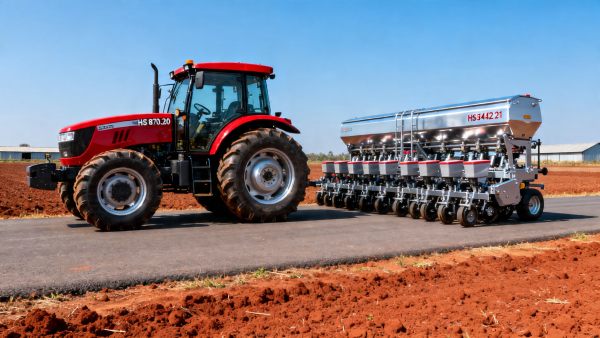
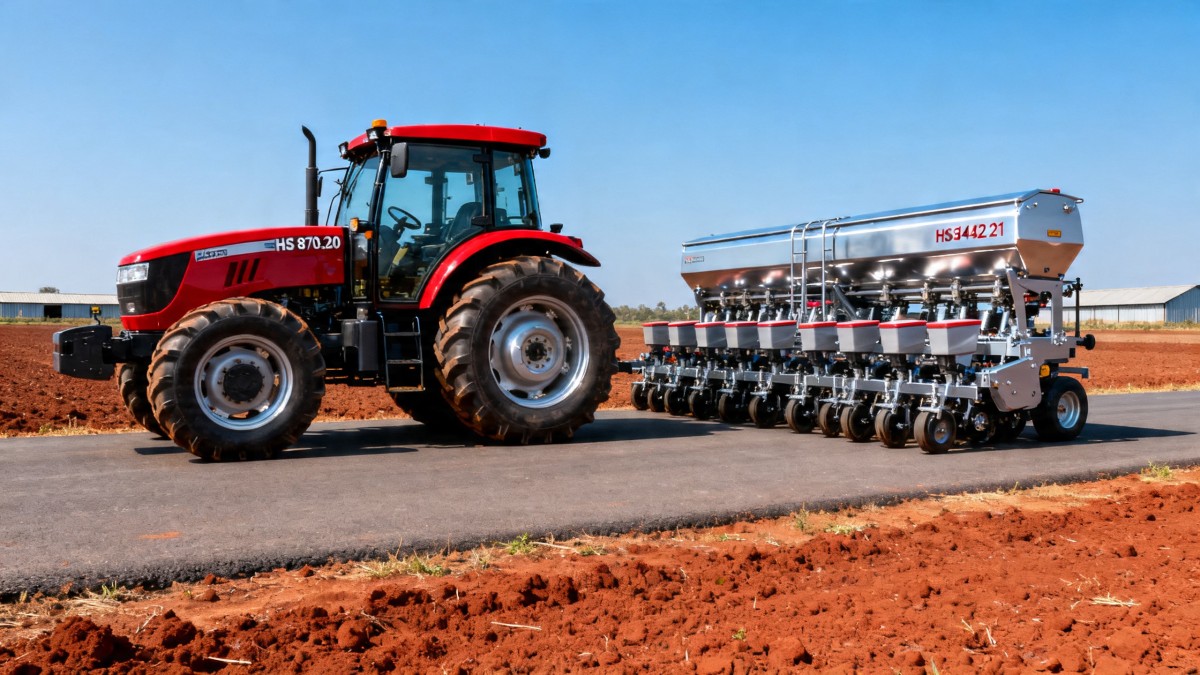
On April 18, 2026, India’s Ministry of Agriculture and Farmers’ Welfare (MoAFW) initiated a sunset review of anti-dumping duties on wheeled tractors (HS 8701.20) and pneumatic precision seeders (HS 8432.21) originating from China. This development directly affects agricultural machinery exporters, importers, and downstream agri-input supply chains — particularly those engaged in cross-border trade between China and India.
Event Overview
On April 18, 2026, the Indian Ministry of Agriculture and Farmers’ Welfare (MoAFW) issued a public notice launching an anti-dumping sunset review concerning wheeled tractors (HS 8701.20) and pneumatic precision seeders (HS 8432.21) imported from China. The investigation was initiated upon application by domestic Indian producers. A preliminary determination is expected by August 2026. If upheld, the existing 12.7% anti-dumping duty will be extended for five years. As of the notice date, Indian customs authorities have intensified documentary scrutiny for these products, increasing average clearance time to 11.2 working days.
Which Subsectors Are Affected
Direct Trading Enterprises
Companies exporting wheeled tractors or pneumatic precision seeders from China to India face immediate operational impacts: higher customs processing time, increased documentation burden, and potential cash flow pressure due to delayed release of goods. The extension of duties — if confirmed — would raise landed costs and compress export margins.
Manufacturing Enterprises (OEMs & Tier Suppliers)
Chinese manufacturers supplying these products — including original equipment manufacturers and component suppliers — may experience reduced order volumes from Indian buyers anticipating tariff continuity. Longer lead times and uncertainty around final duty outcomes could delay new contract negotiations or shift procurement toward alternative markets or locally assembled options.
Supply Chain & Logistics Service Providers
Firms offering customs brokerage, inland transportation, or bonded warehousing services for agricultural machinery imports into India are seeing elevated demand for compliance support and documentation verification. The 11.2-day average clearance delay signals increased coordination needs across port agents, banks, and regulatory intermediaries.
Downstream Agri-Input Distributors & Dealers
Indian distributors and dealers importing or stocking these machines face pricing volatility and inventory planning challenges. With duties potentially locked in for five more years, forward-buying decisions, financing terms, and after-sales service commitments require reassessment amid shifting cost structures.
What Relevant Enterprises or Practitioners Should Monitor and Do Now
Track official timelines and procedural updates closely
Monitor MoAFW and Directorate General of Trade Remedies (DGTR) announcements for key milestones — especially the August 2026 preliminary determination and any subsequent disclosure of essential facts or hearings. These shape legal response windows and commercial contingency planning.
Review product classification and origin documentation rigorously
Verify HS code alignment (8701.20 and 8432.21) and ensure origin certificates, invoices, and packing lists meet Indian customs requirements. Even minor discrepancies now trigger deeper scrutiny — increasing delays beyond the current 11.2-day average.
Distinguish between policy signal and enforceable outcome
The initiation of a sunset review reflects continued domestic industry concern but does not guarantee duty extension. Until the final determination is issued, the 12.7% rate remains in force — but its renewal is neither automatic nor certain. Business decisions should reflect this conditional status.
Prepare for dual-track sourcing or localization scenarios
Assess feasibility of partial assembly in India (e.g., CKD/SKD models), explore third-country sourcing alternatives where technically viable, and update internal risk registers to include tariff extension as a medium-term scenario — particularly for contracts extending beyond Q4 2026.
Editorial Perspective / Industry Observation
From an industry perspective, this sunset review is best understood as a procedural reinforcement of existing trade safeguards — not a new measure. Analysis来看, it signals sustained pressure from India’s domestic agricultural machinery sector to maintain protective pricing conditions amid growing import volumes. Observation来看, the timing coincides with India’s broader push toward mechanization under schemes like Sub-Mission on Agricultural Mechanization (SMAM), making tariff stability a strategic variable for both foreign suppliers and local integrators. Current更值得关注的是 how Indian customs’ heightened documentation enforcement — already active — may persist regardless of the final duty decision, indicating a longer-term shift toward tighter import governance for heavy agri machinery.
Conclusion
This sunset review does not introduce new duties but tests the durability of an existing trade remedy. Its significance lies less in immediate tariff change and more in its implications for predictability, compliance overhead, and strategic positioning in India’s agricultural machinery market. It is更适合理解为 a calibrated signal of regulatory continuity — one that reinforces the need for disciplined documentation practices, proactive stakeholder engagement, and scenario-based commercial planning over the next 12–18 months.
Information Sources
Main source: Official notice issued by India’s Ministry of Agriculture and Farmers’ Welfare (MoAFW), dated April 18, 2026. Ongoing developments — including DGTR’s preliminary determination (expected August 2026) and final ruling — remain subject to official publication and require continuous monitoring.
Related Intelligence
- Heavy Agri MachineryIndia Extends Anti-Dumping Review on Chinese Tractors, SeedersIndia extends anti-dumping review on Chinese tractors and seeders—impacting exporters, OEMs, and agri-supply chains. Act now to navigate tariffs, compliance, and sourcing shifts.
- Heavy Agri MachineryWhy some cassava grating machines waste more starch than expectedCassava grating machines can waste starch through poor design and maintenance. Compare key loss factors alongside coffee processing machinery, palm oil extraction machine, and wheat flour milling plant solutions.
- Heavy Agri MachineryCassava grating machines and the hidden cause of uneven particle sizeCassava grating machines uneven particle size often stems from feed, moisture, and screen issues—not one part. Learn how this buying insight also applies to coffee processing machinery and wheat flour milling plant selection.
The Morning Broadsheet
Daily chemical briefings, market shifts, and peer-reviewed summaries delivered to your terminal.
