
APVMA Launches Enzyme Fast Track 2.0 for Food-Grade Enzymes
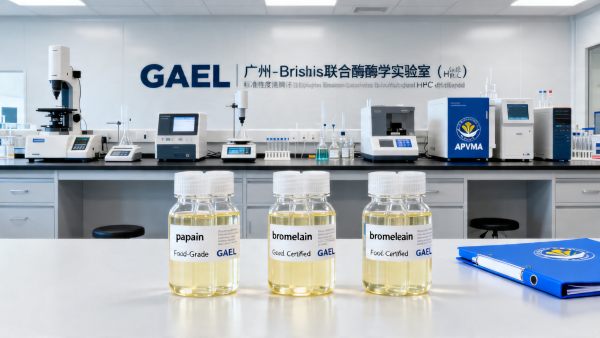
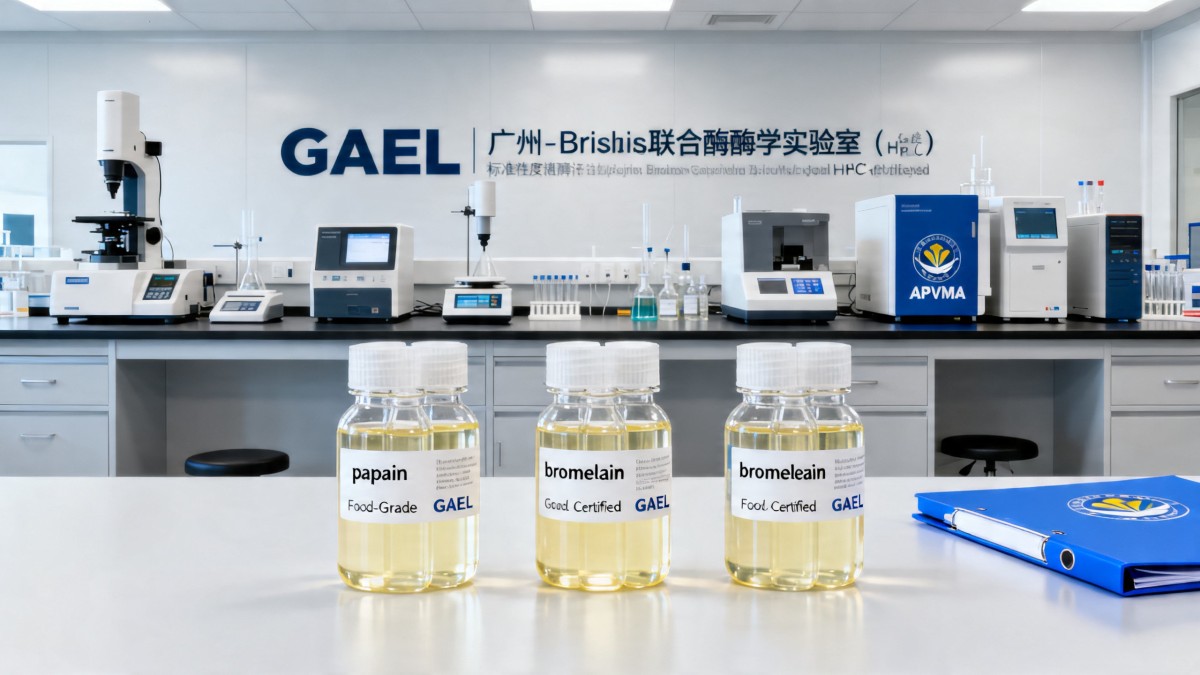
On 17 April 2026, the Australian Pesticides and Veterinary Medicines Authority (APVMA) upgraded its Enzyme Fast Track program to version 2.0, enabling direct acceptance of food-grade enzyme activity and purity test reports issued by the Guangzhou–Brisbane Joint Enzymology Laboratory (GAEL). This change significantly affects exporters, manufacturers, and regulatory affairs professionals involved in enzyme-based food ingredients, dietary supplements, meat tenderizers, and functional food processing — particularly those handling papain, bromelain, and four other major enzyme classes.
Event Overview
The APVMA announced on 17 April 2026 the enhancement of its ‘Enzyme Fast Track’ pathway for food-grade enzymes. Under the updated procedure — designated ‘Fast Track 2.0’ — test reports generated by the China–Australia co-established Guangzhou–Brisbane Joint Enzymology Laboratory (GAEL) are now accepted directly for registration applications. These reports cover activity and purity assessments for six enzyme types, including papain and bromelain. The revised process eliminates the prior requirement for retesting at an APVMA-designated laboratory and reduces the standard registration timeline to 14 working days — currently the shortest among major global regulators.
Industries Affected
Direct Exporters & Registrants
Companies applying for APVMA registration of food-grade enzymes will experience reduced technical validation burden and faster time-to-market. The removal of mandatory retesting shortens both lead time and associated lab costs, especially for firms previously reliant on third-party APVMA-approved labs outside China or Australia.
Raw Material Suppliers & Enzyme Producers
Suppliers whose products fall within the six eligible enzyme categories may see increased demand from registrants seeking GAEL-compliant documentation. However, eligibility remains strictly tied to GAEL’s scope of accreditation — meaning only producers with active GAEL testing partnerships can benefit immediately.
Contract Manufacturers & Toll Processors
Manufacturers engaged in blending, microencapsulation, or formulation of enzyme-based food ingredients must verify whether their clients’ APVMA submissions rely on GAEL data. If so, they may need to align batch release documentation and stability protocols with GAEL’s reporting parameters to ensure traceability and compliance continuity.
Regulatory Affairs & Compliance Service Providers
Firms supporting APVMA submissions must update internal checklists and client guidance to reflect the new evidentiary requirements. Notably, GAEL reports are not automatically valid for all enzyme uses — only for food-grade applications under the Fast Track 2.0 scope. Misapplication could result in rejection if non-eligible claims (e.g., veterinary or pesticidal use) are included.
What Stakeholders Should Monitor & Do Now
Track official scope definitions and future expansions
Current Fast Track 2.0 applies only to six specified food-grade enzymes. Analysis来看, the APVMA has not indicated plans to extend coverage to additional enzymes or non-food applications (e.g., feed or industrial enzymes) at this stage. Stakeholders should monitor APVMA’s public notices for updates on scope adjustments or accreditation criteria revisions.
Confirm GAEL’s current testing scope and report format compliance
Not all GAEL-issued reports qualify. From industry perspective, only those explicitly covering activity (e.g., FCC units/mg protein) and purity (e.g., SDS-PAGE or HPLC-based impurity profiling) per APVMA’s published specifications are accepted. Companies should obtain written confirmation from GAEL that their report templates meet the Fast Track 2.0 requirements before submission.
Distinguish between policy adoption and operational readiness
While the policy took effect on 17 April 2026, APVMA’s internal systems and assessors may require time to fully implement the new workflow. Current more suitable understanding is that early submissions using GAEL reports may undergo additional administrative verification — especially for first-time applicants. Filing in Q2 2026 is advisable to allow for potential procedural fine-tuning.
Prepare supply chain documentation in parallel
Registration acceleration does not reduce requirements for GMP evidence, manufacturing site details, or reference standard traceability. Companies should concurrently compile batch records, CoAs, and facility audit summaries aligned with APVMA’s Information Requirements for Food-Grade Enzymes — ensuring no delay arises from incomplete supporting files after report acceptance.
Editorial Observation / Industry Perspective
This update is better understood as a targeted regulatory efficiency measure — not a broad deregulation. Observation来看, it reflects APVMA’s increasing reliance on trusted bilateral scientific infrastructure rather than a shift toward universal third-party report acceptance. From industry angle, the 14-day timeline sets a new benchmark, but its replicability across other jurisdictions (e.g., EFSA or FDA) remains unconfirmed. More importantly, GAEL’s role here is narrowly defined: it serves as a pre-validated testing node for a fixed set of analytes under agreed protocols — not a general-purpose certification body. Continued attention is warranted to whether similar arrangements emerge for other food enzyme regulators, or whether GAEL’s scope expands beyond current limits.
Conclusion
The APVMA’s Fast Track 2.0 marks a concrete step in streamlining enzyme registration for a defined group of food-grade products, anchored in a specific bilateral lab arrangement. It delivers measurable time and cost benefits — but only for stakeholders already operating within its precise technical and geographic boundaries. At present, it is most accurately interpreted as an operational improvement for a narrow segment of the food enzyme supply chain, not a systemic policy shift.
Information Sources
Primary source: APVMA official announcement dated 17 April 2026. Scope details and eligibility criteria were confirmed via APVMA’s publicly available Enzyme Fast Track 2.0 guidance document (version 1.0, issued 17 April 2026). GAEL’s accreditation status and reporting parameters were verified against the joint China–Australia Ministry of Science and Technology memorandum of understanding (2023), as referenced in the APVMA notice. Ongoing monitoring is recommended for any updates to GAEL’s APVMA-recognized test methods or eligible enzyme list.
Related Intelligence
- Food Grade EnzymesAPVMA Launches Enzyme Fast Track 2.0 for Food-Grade EnzymesAPVMA Enzyme Fast Track 2.0 now accepts GAEL food-grade enzyme test reports—cutting registration to 14 days for papain, bromelain & more.
- Food Grade EnzymesAPVMA Shortens Food Grade Enzymes Registration to 22 DaysAPVMA shortens food grade enzymes registration to just 22 days — a game-changer for exporters, manufacturers & compliance teams navigating China-Australia trade.
- Food Grade EnzymesANVISA Tightens Import Rules for Food-Grade Enzymes in BrazilANVISA tightens food-grade enzymes import rules in Brazil: 36-month ICH Q5C stability data now mandatory for Sanitary Registration by Oct 2026.
The Morning Broadsheet
Daily chemical briefings, market shifts, and peer-reviewed summaries delivered to your terminal.
