
Why some cassava grating machines waste more starch than expected
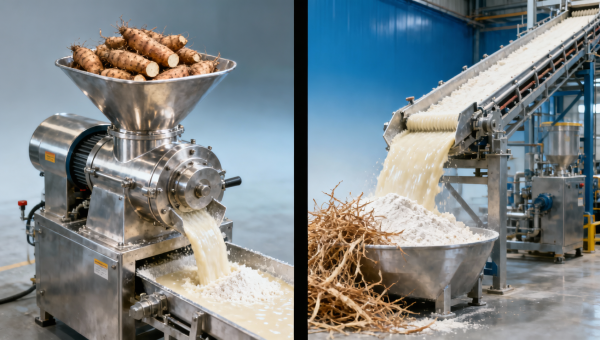
In root and grain processing, even small design flaws can turn valuable yield into hidden loss. This is especially true for cassava grating machines, where poor grating efficiency, screen mismatch, and weak maintenance practices can waste more starch than expected. For buyers comparing coffee processing machinery, palm oil extraction machine systems, or a wheat flour milling plant, understanding these loss points is essential for better equipment selection, cost control, and process optimization.
For operators, technical evaluators, procurement teams, and financial approvers, starch loss is not just a processing issue. It affects extraction efficiency, downstream drying load, wastewater volume, labor intensity, and the true payback period of a machine line. In commercial cassava processing, a seemingly small 2% to 5% starch loss can materially change plant economics over 8 to 16 operating hours per day.
This article explains why some cassava grating machines underperform, how to identify avoidable starch loss before purchase, and which design, operation, and maintenance factors matter most in practical plant conditions. The focus is on B2B decision-making, with guidance relevant to processors, OEM buyers, distributors, and quality control teams.
How starch loss happens inside a cassava grating process
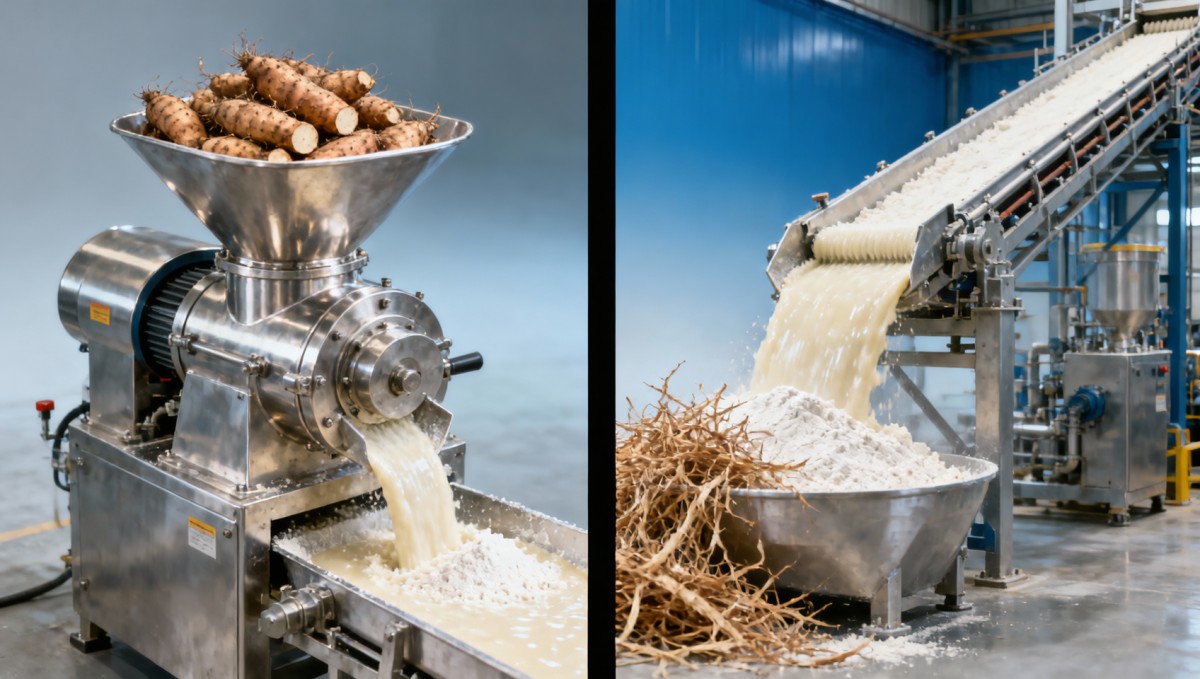
A cassava grating machine is designed to rupture root cells quickly and uniformly so that starch granules can be released for separation. When this mechanical action is incomplete, too much starch remains trapped in coarse fiber. When it is too aggressive in the wrong way, the machine may generate excess fines, heat, or slurry inconsistency that reduces separation performance in the next stage.
In practical terms, starch waste usually occurs in 4 linked points: root feeding, rotor-to-screen interaction, pulp discharge, and post-grating screening or extraction. A processor may blame the extractor, yet the loss may have started 30 seconds earlier at the grater. That is why equipment assessment should look at the entire process line rather than only the motor rating or advertised throughput.
A common operational benchmark is that fresh cassava roots should be grated with stable feed and consistent particle disruption. If feed size varies too widely, or if roots contain excessive peel, sand, or woody portions, extraction losses rise quickly. In many plants, root preparation quality alone can shift starch recovery by 1% to 3% before any mechanical upgrade is made.
Another issue is hidden dilution. If water is added inconsistently upstream or around the grating section, operators may see a smoother slurry and assume performance is improving. In reality, the added water can complicate screening balance, increase pump load, and mask poor grating action rather than solve it.
The most frequent loss mechanisms
The table below summarizes the most common ways starch is lost in cassava grating operations and how each problem appears on the factory floor.
The key point is that starch loss rarely has a single cause. In many factories, 2 or 3 small weaknesses combine: uneven feeding, worn grating surfaces, and delayed cleaning. Together, they can create a persistent recovery gap that is difficult to diagnose without line-by-line observation.
Why this matters beyond cassava alone
The same evaluation logic applies across primary processing sectors. Buyers reviewing coffee processing machinery look at bean damage and separation consistency; palm oil extraction machine buyers focus on oil loss in fiber and nuts; a wheat flour milling plant team monitors flour extraction and bran carryover. In each case, hidden yield loss often begins with mechanical mismatch rather than raw material shortage.
Machine design features that directly influence starch recovery
Not all cassava grating machines are built around the same process assumptions. Some are optimized for smallholder throughput, while others target continuous industrial lines handling several tons per hour. A machine that works acceptably at 0.5 to 1 ton per hour may become inefficient at 3 to 5 tons per hour if rotor balance, chamber clearance, and discharge geometry are not scaled correctly.
Rotor speed matters, but speed alone does not guarantee good starch release. If the grating teeth pattern is too coarse, roots may be torn rather than finely ruptured. If too aggressive, the machine may increase friction and wear without improving extraction. Buyers should ask how the grating element was matched to cassava variety, root moisture, and expected feed uniformity.
Screen design is another overlooked factor. A mismatch between rotor action and screen opening can cause either over-retention or premature discharge. Typical industrial selection may involve perforation or mesh decisions based on slurry behavior, not just nominal size. Even a difference of 0.5 mm to 1.0 mm in effective opening can change how pulp flows and how much usable starch moves to the extraction step.
Structural rigidity also matters more than many buyers expect. Excess vibration leads to uneven wear, poor alignment, and unstable motor load. Over a 6-month to 12-month operating period, that can make the machine produce inconsistent pulp quality even if throughput remains similar on paper.
What to compare during technical evaluation
The following table can be used by procurement teams and engineers to compare grating machine designs before purchase or distributor selection.
For many buyers, the strongest purchasing mistake is evaluating only nameplate capacity and motor power, such as 7.5 kW versus 11 kW, without reviewing particle disruption quality. Higher installed power may raise energy cost but still fail to improve real starch recovery if the mechanical interface is poorly engineered.
Practical selection checklist
- Confirm the expected root throughput range, such as 1 to 2 tons per hour or 3 to 5 tons per hour, and check whether the vendor provides matching performance conditions.
- Ask for wear-part replacement intervals in realistic terms, for example every 400 to 800 operating hours rather than generic durability claims.
- Review how quickly the machine can be opened, cleaned, and restarted, especially if sanitation inspections occur daily or every shift.
- Check whether spare parts can be supplied within 7 to 15 days locally or whether international lead time extends to 4 to 8 weeks.
These points are especially relevant to distributors and agents who must support end users after installation. A technically acceptable machine with weak parts support can still become a high-loss asset in the field.
Operating practices and maintenance mistakes that increase starch waste
Even a well-designed cassava grating machine can waste starch if the operating window is poorly controlled. Uneven feed rate is one of the most common causes. When operators overload the hopper for 10 to 20 minutes and then run the machine half-empty, the rotor experiences inconsistent resistance, which changes pulp texture and weakens downstream separation efficiency.
Root condition is equally important. Cassava stored too long after harvest may show texture changes that affect rupture behavior. In many processing settings, roots are best handled within 24 to 72 hours of harvest to reduce deterioration, microbial load, and dry matter inconsistency. Delayed processing does not always make grating impossible, but it often reduces predictability.
Maintenance discipline is where hidden yield loss often becomes permanent. Worn grating surfaces do not usually fail dramatically on day one. Instead, they reduce extraction performance gradually over weeks, while operators compensate by increasing feed pressure or adding water. This masks the real cause and can expand both maintenance cost and product loss.
Cleaning is another underestimated factor. Pulp residue left for one shift or overnight can harden in corners, alter product flow, and accelerate microbial contamination. That creates quality risks for starch intended for food, feed, or industrial uses and may complicate later compliance checks by quality and safety personnel.
Common operating errors
- Running mixed root sizes without sorting, which creates inconsistent contact between roots and the grating surface.
- Ignoring abnormal vibration or noise for several shifts, leading to misalignment and unstable particle size.
- Using worn screens beyond their practical life, which increases clogging and slows pulp release.
- Skipping lubrication checks at the recommended interval, often every 100 to 250 hours depending on duty and bearing arrangement.
- Allowing peel, stones, or metal fragments into the feed stream, causing premature wear and sanitation concerns.
Suggested maintenance control points
A simple preventive plan can reduce waste significantly. Daily checks should include visual tooth condition, chamber cleanliness, bearing temperature trend, and discharge consistency. Weekly checks can include bolt tightness, rotor balance signs, and screen integrity. Monthly review should compare actual starch recovery, waste fiber texture, and maintenance consumption against the previous 30-day baseline.
For finance and operations teams, this matters because loss control is usually cheaper than capacity expansion. A plant considering a second grater may first recover meaningful output simply by reducing preventable waste from 4% to 2%. That can improve return on existing equipment without major civil work or extra labor.
How to assess starch loss before buying or approving a machine
A disciplined procurement process should combine technical review, process simulation, and service verification. Many purchasing errors happen because stakeholders evaluate different things in isolation: engineers focus on construction, operators focus on ease of use, and finance focuses on initial cost. A good approval process brings these views into one decision matrix.
Before approving a cassava grating machine, ask the supplier to define the operating assumptions behind the quoted capacity. Capacity measured under ideal roots, stable feed, and clean water conditions may not reflect field reality. If your plant handles mixed varieties, variable moisture, or seasonal dirt load, those conditions should be reflected in the evaluation.
A practical acceptance test often includes at least 3 dimensions: throughput over a defined period, quality of grated pulp, and recoverable starch in downstream extraction. Without this, buyers may accept a machine that meets hourly volume but creates more waste in screening and dewatering.
Service support should be reviewed in equally concrete terms. Ask about installation time, commissioning support, operator training hours, spare part lists, and troubleshooting response. For export projects, the difference between 48-hour technical response and 7-day response can materially affect production continuity.
Procurement decision table
The table below offers a structured framework for evaluating suppliers, machine configurations, and lifecycle risk.
The major conclusion is that lowest purchase price is rarely the lowest processing cost. A cheaper machine that increases starch loss by even a few points may become the more expensive option within one harvest season, especially where raw root cost, utilities, and labor are rising.
A 5-step approval workflow
- Define raw material profile, target throughput, and end-product quality requirements.
- Compare at least 3 machine options using the same operating assumptions.
- Review maintenance schedule, spare part access, and operator skill requirements.
- Request a trial, demonstration record, or process reference aligned with your application scale.
- Approve based on total recovery, serviceability, and lifecycle cost rather than price alone.
Implementation, troubleshooting, and cross-sector lessons for processors
Once a cassava grating machine is installed, early-stage monitoring is essential. The first 2 to 6 weeks should be treated as a stabilization period. During that time, operators should record feed consistency, motor load trends, cleaning duration, visible fiber texture, and any change in extraction residue. This creates an operational baseline that can be used to detect waste before it becomes normal.
Troubleshooting should begin with physical evidence rather than assumptions. If starch appears high in residue, inspect root preparation, feed uniformity, grating surface condition, and screen cleanliness before modifying water balance or changing downstream extraction settings. Too many plants try to fix a front-end mechanical problem by adjusting back-end separation.
There is also a strategic lesson for processors operating across multiple product categories. The discipline used to control starch loss in cassava is similar to the discipline used in coffee processing machinery performance checks, palm oil extraction machine efficiency review, or a wheat flour milling plant yield audit. In every case, plant profitability depends on the relationship between machine design, raw material variability, operator behavior, and maintenance quality.
For distributors and industrial decision-makers, that means equipment sales should be supported by application guidance, training, and realistic service commitments. Machines do not create value by specification sheet alone. They create value when they reduce avoidable loss across the full operating cycle.
FAQ for buyers and technical teams
How can a buyer tell if starch loss is caused by the grater or the extractor?
Start by examining the spent fiber immediately after grating and again after extraction. If the pulp is visibly coarse or uneven before extraction, the grater is a likely source. If grating is uniform but residue remains high after screening, the extractor or screen stage may be the larger issue. A 2-step inspection usually gives better answers than changing several settings at once.
What operating data should be recorded during commissioning?
Record at least 6 items: hourly feed rate, motor current trend, water addition rate, cleaning time, residue texture, and estimated recovery consistency across the shift. Data from the first 10 to 20 production days is often enough to identify whether loss is systematic or caused by inconsistent operation.
How often should critical wear parts be checked?
Visual inspection should happen daily in continuous production. More detailed checks are commonly done weekly, with planned replacement based on actual wear and duty. In many industrial settings, a formal review every 200 to 400 hours helps prevent gradual performance decline.
Is a higher-capacity machine always better for future expansion?
Not necessarily. Oversized machines often run below their ideal loading window, which can reduce grating consistency and increase energy cost per ton. It is usually better to match the machine to the realistic 12-month throughput plan and verify whether modular expansion is possible later.
Cassava starch loss is rarely a mystery. In most cases, it can be traced to a combination of machine design mismatch, weak operating control, and delayed maintenance. For technical reviewers and procurement teams, the most reliable path is to evaluate real recovery performance, wear behavior, serviceability, and line compatibility together rather than separately.
For organizations assessing primary processing equipment across sectors, the same principle holds: yield protection is a purchasing issue, an operating issue, and a quality issue at the same time. If you want to compare cassava grating solutions, review process loss points, or build a more reliable equipment shortlist, contact us to discuss your application, request a tailored evaluation framework, or explore more processing solutions.
Related Intelligence
- Heavy Agri MachineryIndia Extends Anti-Dumping Review on Chinese Tractors, SeedersIndia extends anti-dumping review on Chinese tractors and seeders—impacting exporters, OEMs, and agri-supply chains. Act now to navigate tariffs, compliance, and sourcing shifts.
- Heavy Agri MachineryWhy some cassava grating machines waste more starch than expectedCassava grating machines can waste starch through poor design and maintenance. Compare key loss factors alongside coffee processing machinery, palm oil extraction machine, and wheat flour milling plant solutions.
- Heavy Agri MachineryCassava grating machines and the hidden cause of uneven particle sizeCassava grating machines uneven particle size often stems from feed, moisture, and screen issues—not one part. Learn how this buying insight also applies to coffee processing machinery and wheat flour milling plant selection.
The Morning Broadsheet
Daily chemical briefings, market shifts, and peer-reviewed summaries delivered to your terminal.
