
When Does a Twin Screw Food Extruder Make More Sense?
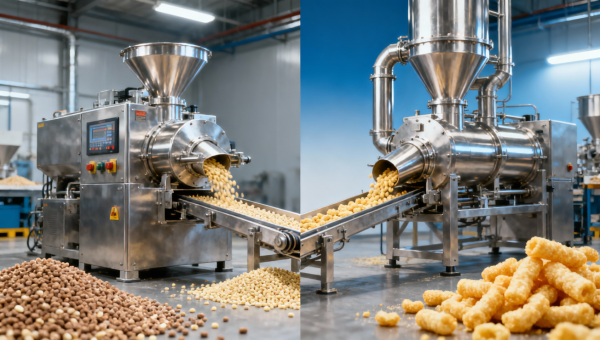
When evaluating throughput, recipe flexibility, and long-term operating costs, a twin screw food extruder often makes more sense than single-screw alternatives. For buyers comparing commercial extruders for food alongside systems such as feather meal machine lines, blood meal processing plant setups, or broader rendering plant equipment, the right choice depends on material behavior, hygiene demands, and process control. This guide helps technical teams and decision-makers identify where twin-screw technology delivers measurable production and quality advantages.
When is a twin screw food extruder the better investment?
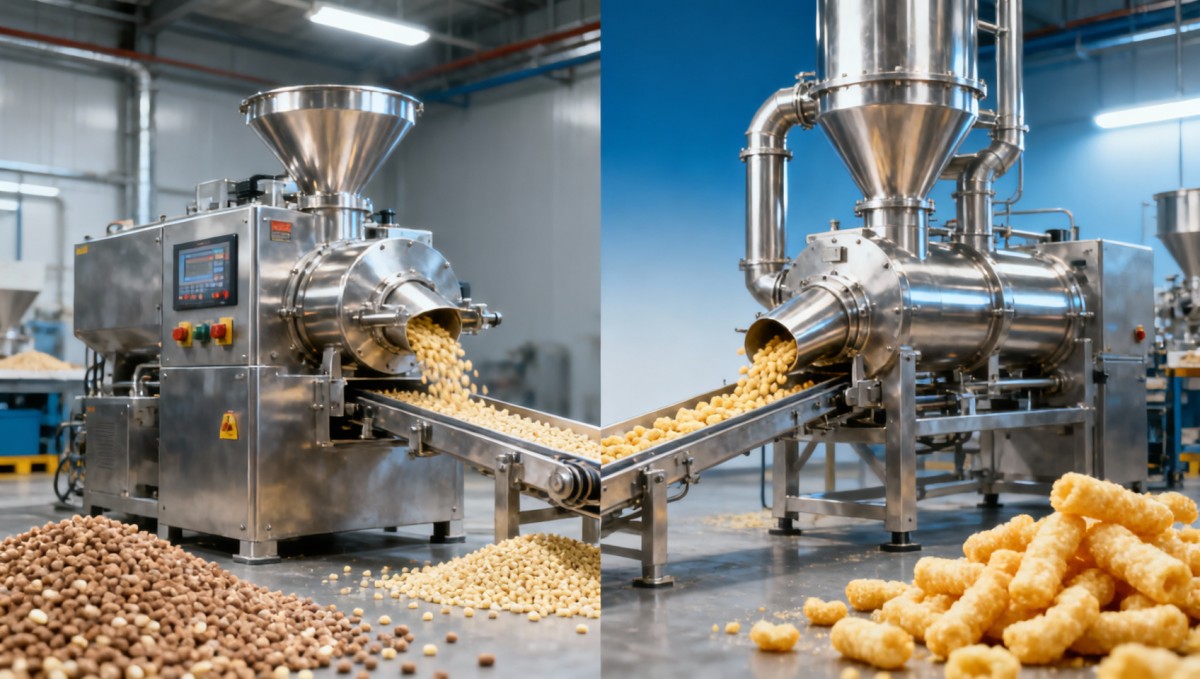
The short answer: a twin screw food extruder makes more sense when your process is difficult to stabilize, your formulations change often, your raw materials vary in moisture or particle size, or your product quality targets are tight enough that inconsistent shear, residence time, or mixing will create waste, downtime, or customer complaints.
For many operations, the purchase decision is not really about “twin screw versus single screw” in abstract terms. It is about whether the added control, flexibility, and processing range of a twin screw system will reduce commercial risk. That matters most to teams responsible for throughput, food safety, formulation accuracy, line uptime, and total cost of ownership.
In practical terms, twin screw extrusion tends to justify itself when you need one or more of the following:
- Reliable handling of sticky, high-fat, high-fiber, or variable raw materials
- More consistent cooking, texturizing, or mixing across changing recipes
- Better control over moisture, temperature, pressure, and shear
- Faster product changeovers and broader SKU flexibility
- Lower risk of blockages, unstable output, or off-spec product
- Improved scalability for premium, technical, or multi-ingredient food products
If your line runs a narrow product range using stable raw materials and cost sensitivity is the main concern, a single-screw extruder may still be sufficient. But if your business is dealing with formulation complexity, quality variation, or frequent operating adjustments, twin screw technology often becomes the more rational long-term choice.
What problems does twin screw extrusion solve better than single-screw systems?
Most buyers start comparing capital cost first, but the more important question is where process losses are already occurring. A twin screw food extruder is usually selected because it solves problems that are expensive to manage with simpler equipment.
These are the most common scenarios:
- Inconsistent feed behavior: Materials that bridge, slip, smear, or feed unevenly are easier to move and process with intermeshing screw designs.
- Poor mixing or uneven product structure: Twin screw systems provide stronger distributive and dispersive mixing, which is valuable for ingredient incorporation and texture control.
- Difficult moisture management: If your product quality depends on tight control of water addition and thermal history, twin screw machines generally offer a wider stable operating window.
- Recipe variability: Plants serving multiple formulations or private-label production often need a machine that can adapt without constant troubleshooting.
- High waste rates: If startup losses, off-spec batches, or unstable output are hurting margins, better process control can outweigh the higher initial equipment price.
This is why twin screw systems are often favored in technically demanding food applications, while simpler configurations remain common in more uniform, lower-risk production environments.
Which applications are most likely to benefit from a twin screw food extruder?
A twin screw food extruder usually makes the most sense in applications where formulation behavior is not simple. That includes products with multiple functional ingredients, changing raw material characteristics, or precise texture requirements.
Typical high-value use cases include:
- Expanded snack products with sensitive texture targets
- Fortified cereals and blended grain products
- Protein-rich or fiber-rich formulations
- Plant-based meat analogues and textured proteins
- Pet food and aqua feed products with complex recipes
- Specialty ingredients requiring controlled thermal and mechanical treatment
For processors already familiar with adjacent heavy-duty systems such as feather meal machine installations, blood meal processing plant equipment, or rendering plant equipment, the comparison is useful: in all of these cases, raw material behavior and process control directly affect output consistency, sanitation, and energy efficiency. The same logic applies to commercial food extrusion. When the material is harder to manage or the product specification is tighter, process capability matters more than the lowest upfront machine cost.
How does twin screw extrusion affect quality, throughput, and operating stability?
This is often the deciding section for technical evaluators and plant managers. A twin screw food extruder can improve business performance in three linked ways: product quality, line stability, and usable throughput.
Quality consistency: Better mixing and more controllable shear help reduce variation in density, expansion, texture, moisture distribution, and ingredient dispersion. That matters if your customers expect uniform product appearance and performance batch after batch.
Operating stability: Twin screw designs are generally better at handling formulation swings and feed fluctuations. That means fewer interruptions, less manual correction, and lower dependence on operator improvisation.
Real throughput: Nameplate capacity alone can be misleading. The useful number is how much on-spec product you can produce per hour over a full shift or week. In many plants, a more controllable twin screw extruder delivers higher effective throughput because it spends less time producing unstable or rejectable material.
These factors are especially relevant for procurement teams reviewing production economics. A lower-cost machine that frequently produces waste, runs inconsistently, or limits formulation options can become the more expensive choice over time.
What should buyers evaluate before choosing a twin screw system?
For procurement personnel, project managers, and financial approvers, the best decision framework is operational rather than theoretical. Instead of asking which machine is “better,” ask which machine better fits your process risk profile.
Key evaluation points include:
- Raw material variability: Do moisture, fat content, particle size, or ingredient quality vary from lot to lot?
- Product portfolio: Will the line run one stable SKU or multiple products with regular changeovers?
- Quality tolerance: How costly are off-spec texture, density, shape, or moisture results?
- Cleaning and hygiene needs: Are there allergen, sanitation, or food safety requirements that demand easier cleaning and tighter control?
- Operator dependence: Does current performance rely too heavily on a few experienced staff members?
- Expansion plans: Will future products require more formulation freedom than today’s line can support?
A strong supplier should be able to review your formulations, expected capacities, utility conditions, cleaning requirements, and downstream equipment integration before recommending machine size and configuration. If a vendor focuses only on motor power or hourly output, the assessment is incomplete.
When does the higher capital cost pay back?
The higher purchase price of a twin screw food extruder is justified when it reduces costs that are usually hidden in daily operations. These include lost production during adjustment, frequent startup scrap, quality rework, unplanned stoppages, recipe limitations, and labor-intensive process correction.
Payback is often strongest in plants where:
- Raw materials are inconsistent or seasonally variable
- The product mix is expanding
- Premium or technical products carry higher margins
- Downtime is expensive because of linked upstream and downstream systems
- Customer quality expectations are strict
- Waste disposal or ingredient losses carry meaningful cost
Finance and executive teams should therefore look beyond the machine invoice. The more relevant comparison is total cost per ton of saleable product, not just acquisition cost per line. In high-variability operations, twin screw technology can protect margin more effectively than a lower-cost system that appears cheaper only on paper.
When might a twin screw food extruder not be necessary?
Not every process needs the extra sophistication. A single-screw machine can still be the right decision if your plant runs a narrow range of products, your materials are stable, your quality targets are less demanding, and your operators already achieve consistent results without frequent intervention.
In those cases, choosing a twin screw system may add capital cost and complexity without generating enough operational return. This is particularly true in facilities that prioritize basic output over recipe flexibility or advanced texturizing performance.
The key is to match machine capability to production reality. Overbuying can be as inefficient as under-specifying the line.
Conclusion: the best choice depends on process difficulty, not just machine type
A twin screw food extruder makes more sense when your operation needs control, flexibility, and repeatability that simpler systems struggle to deliver. It is especially valuable for complex formulations, unstable materials, premium quality targets, and multi-product manufacturing environments where downtime or off-spec output is costly.
For technical teams, the real question is whether your current or planned process demands a wider operating window and more robust material handling. For procurement and business leaders, the question is whether that added capability will improve usable throughput, reduce waste, support future products, and lower long-term production risk.
When the answer is yes, a twin screw system is not just a more advanced extruder. It is the more commercially sensible processing platform.
Related Intelligence
- Milling MachineryHow to Choose a Horizontal Ribbon Blender for FeedHorizontal ribbon blender feed buying guide: compare vertical feed mixer machine options, animal feed mixers wholesale offers, and line fit for poultry, cattle, and floating fish feed plant projects.
- Milling MachineryWhy use a rotary drum sieve grain line?Why use a rotary drum sieve grain line? Discover how rotary drum sieve grain, grain pre cleaner machine, gravity separator grain, and magnetic separator for feed improve efficiency and quality.
- Milling MachineryHow to avoid grain destoner machine issues?Grain destoner machine issues explained: learn how gravity separator grain, grain pre cleaner machine, and rotary drum sieve grain setup affect performance, reduce downtime, and improve line efficiency.
The Morning Broadsheet
Daily chemical briefings, market shifts, and peer-reviewed summaries delivered to your terminal.
