
Commercial Extruders for Food: Which Output Claims Hold Up?
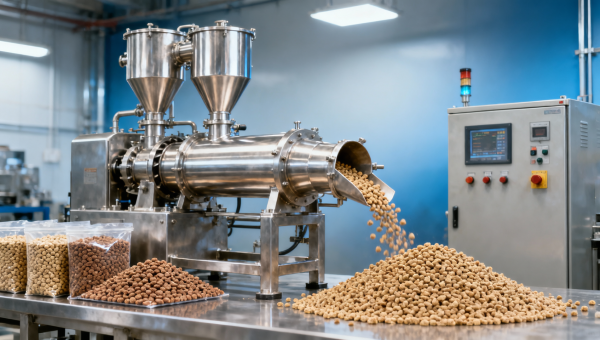
In food processing, output claims can make or break investment decisions. From a twin screw food extruder to other commercial extruders for food, buyers must look beyond headline capacity and verify consistency, energy use, raw material fit, and compliance. For teams also evaluating feather meal machine, blood meal processing plant, or rendering plant equipment options, understanding which performance promises truly hold up is essential.
For procurement teams, plant managers, quality leaders, and finance approvers, the real question is not whether an extruder can reach a peak throughput for 10 minutes under ideal feed conditions. The real question is whether that output is sustainable across 8-hour, 16-hour, or 24-hour production windows without compromising density, expansion, moisture control, sanitation, or downstream packaging stability.
This matters even more in mixed industrial portfolios where food extrusion decisions are compared against other processing assets such as rendering plant equipment or protein meal systems. In each case, nameplate capacity is only one number in a wider operating equation that includes raw material variability, utility demand, labor skill, maintenance intervals, and regulatory documentation.
A sound technical review therefore needs to separate marketing claims from operational truth. The sections below outline which output claims usually deserve confidence, which ones require testing under controlled conditions, and what buyers should document before committing capital.
Why nameplate output often differs from real plant performance
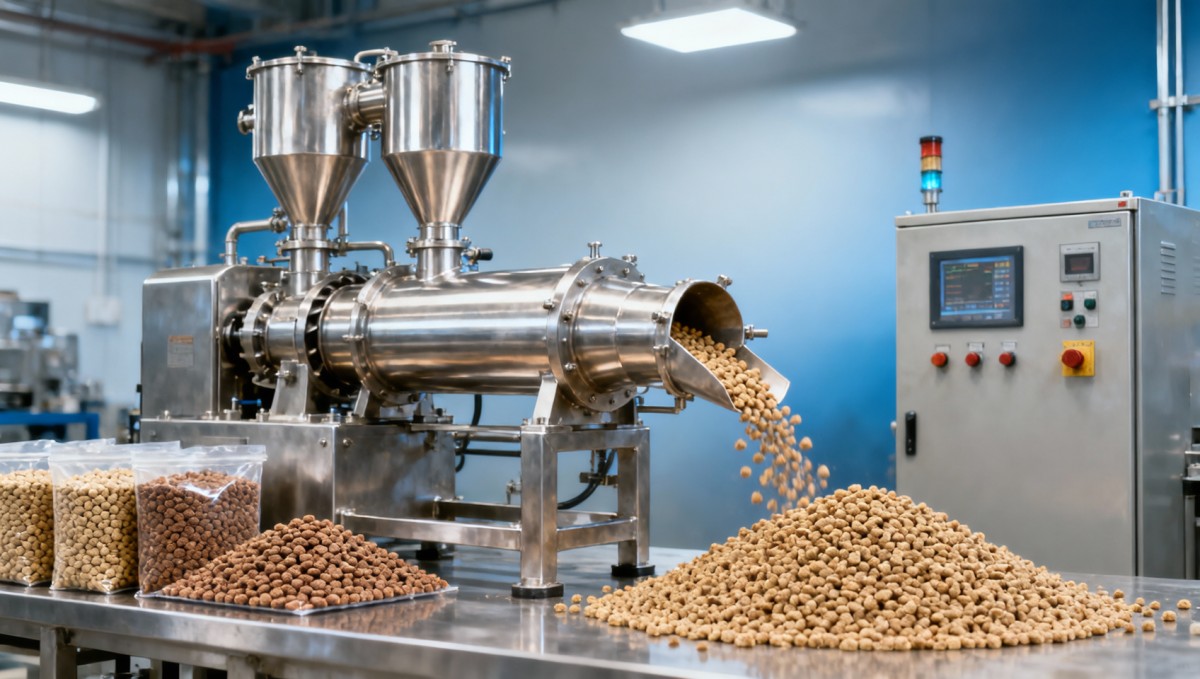
Commercial extruders for food are frequently marketed with impressive hourly figures, such as 300 kg/h, 1,000 kg/h, or even 3 t/h. Those figures may be technically achievable, but they often depend on a narrow set of conditions: controlled feed moisture, stable particle size, a defined recipe, and a specific screw configuration. Once any of those variables shifts, actual output can drop by 10% to 35%.
A twin screw food extruder generally handles formulation variability better than many single screw systems, especially where fat, fiber, starch, or protein ratios fluctuate. Even so, throughput claims should be read together with product quality criteria. If a line reaches its target tonnage only by increasing fines, reducing expansion, or widening moisture deviation beyond ±1.0% to ±1.5%, the claim is less useful in commercial practice.
Another common issue is the difference between gross throughput and saleable output. A machine may process 1,200 kg/h at the barrel, but after start-up waste, trim loss, unstable product during recipe changes, and rejected lots, the net accepted output may be closer to 1,000 kg/h. For finance teams calculating return on investment over 3 to 5 years, that difference is material.
The most reliable suppliers distinguish among peak capacity, continuous production rate, and recommended operating window. That distinction is also familiar in adjacent sectors. A feather meal machine or blood meal processing plant can show high nominal throughput, but true commercial value depends on moisture reduction efficiency, sterility control, and stable discharge quality over long runs.
Four variables that change output the fastest
- Raw material moisture: a 2% to 4% change at infeed can alter torque load, expansion, and die pressure significantly.
- Particle size distribution: coarse or inconsistent grind can reduce stable throughput and increase wear at the screw and die.
- Recipe composition: high-protein, high-fiber, or high-fat formulas usually need lower effective rates than starch-rich formulations.
- Operator control: poorly managed preconditioning, steam dosing, or cutter speed can reduce sellable output even if the machine keeps running.
The table below summarizes where output claims tend to hold up and where they need stronger verification before purchase approval.
For decision-makers, the strongest claim is usually net saleable output over a defined production window. It aligns engineering, quality, and finance teams around one realistic benchmark rather than a headline number.
What buyers should verify in a twin screw food extruder test protocol
A proper validation process should simulate actual plant conditions as closely as possible. For most commercial extruders for food, a short demonstration is not enough. Buyers should request either a factory acceptance test of at least 2 to 4 hours per recipe or a pilot run that captures torque, motor load, barrel temperature, moisture, bulk density, and product acceptance rates.
The best test protocol uses the buyer’s own raw materials or a close equivalent. This is critical because formulas that appear similar on paper can behave differently in the barrel. A pet food, snack, cereal, or plant-protein product with only 3% to 5% more fiber may require a different screw setup and may lose 15% or more in practical throughput.
Procurement and technical teams should also define what counts as success. Capacity alone is not sufficient. A meaningful pass standard often includes output rate, acceptable product shape, moisture control within ±1%, expansion range, specific energy consumption, and no sustained overload above a defined motor threshold such as 85% to 90% of rated load.
For plants with strict compliance requirements, sanitation and traceability should be part of the same review. If cleaning takes 6 hours after a formulation change, the effective daily output can be lower than a simpler system producing 8% less per hour but turning around in 2 hours. The same operating logic applies to a rendering plant equipment line, where cleaning, contamination control, and utility stability directly affect usable production time.
Recommended validation checklist
- Confirm recipe category, infeed moisture, and target final moisture before the run begins.
- Record screw speed, feeder speed, steam or water addition, barrel zone temperatures, and die configuration.
- Measure stable output only after start-up transients are complete, ideally over no less than 60 continuous minutes.
- Separate gross output from accepted output and document scrap during start, stop, and recipe change.
- Capture specific energy use in kWh per ton, not only total motor power in kW.
The following table provides a practical framework for evaluating supplier test data during technical and commercial review.
When suppliers can support this level of documentation, their output claims generally carry more weight. It also shortens internal approval cycles because engineering, quality, and finance teams are reviewing the same evidence set.
Output is only credible when linked to energy, wear, and raw material fit
A commercial extruder that reaches a high throughput by sharply increasing energy draw or accelerating screw and barrel wear may not be the best investment. This is a common blind spot in competitive comparisons. Two lines may both claim 1.5 t/h, but one may consume 20% more energy per ton and require wear-part replacement every 1,500 to 2,000 hours instead of every 3,000 to 4,000 hours.
Raw material fit is equally important. In food applications, ingredients vary by starch damage, fat level, fiber content, ash, and seasonal moisture. A twin screw food extruder often offers better flexibility across formulas, but buyers should still ask which output range applies to which recipe family. A supplier that states 800 to 1,200 kg/h across three defined product classes is usually more credible than one offering a single universal number.
This evaluation principle extends beyond food lines. Teams comparing feather meal machine, blood meal processing plant, or rendering plant equipment options also need to check whether output is quoted for ideal raw input or for the actual material profile seen in the field. Protein by-product systems are especially sensitive to water content, particle size, and thermal load, all of which influence throughput and finished quality.
Maintenance planning should therefore be included in capacity analysis. If a high-output extruder requires unplanned shutdowns every 3 weeks while a slightly lower-output system runs for 6 to 8 weeks between maintenance events, the second option may deliver more annual production. Operations managers should model total available hours, not just hourly rate.
Questions that reveal total cost, not just output
- What is the normal kWh/t range at 70%, 85%, and 100% of rated throughput?
- Which wear parts are considered consumables, and what is the typical replacement interval in hours?
- How does throughput change for high-protein, high-fiber, or high-fat recipes?
- What utility conditions are assumed, including steam pressure, water temperature, and compressed air stability?
A practical interpretation rule
If an output claim cannot be tied to recipe class, energy range, wear expectation, and utility assumptions, it should be treated as preliminary rather than bankable. Procurement teams can still use it for shortlisting, but not for final financial approval.
How different stakeholders should judge output claims
One reason equipment decisions stall is that different departments define “good output” differently. Operators care about control stability and downtime. Quality teams care about moisture, density, and hygienic design. Procurement looks for comparable bids. Finance wants a clear payback model, often over 24 to 60 months. Unless the claim is translated for each audience, approval becomes difficult.
For operators, the key indicator is whether the machine stays inside a manageable operating window. A line that needs constant adjustment to hold 1,000 kg/h may be less desirable than one that reliably delivers 900 kg/h with fewer alarms, lower startup loss, and simpler cleaning. Stable operations often create more value than aggressive nominal output.
For quality and safety managers, output claims hold up only when product specifications remain within acceptance limits. Typical review points include moisture variation, particle integrity, thermal exposure, contamination risk, and traceability of contact surfaces. If documentation on material certificates, cleaning access, and process control is weak, capacity claims become less persuasive.
For procurement and project managers, the priority is comparability. Bid packages should standardize at least 6 to 8 metrics, including net output, recipe assumptions, energy per ton, changeover time, spare parts list, installation scope, commissioning duration, and training days. Without that structure, low-price or high-capacity offers can be misleading.
Finance approvers typically respond best to scenario modeling. Instead of assuming one constant throughput value, model three cases: conservative, target, and stretch. For example, if a system is marketed at 1,200 kg/h, the model might use 950 kg/h, 1,050 kg/h, and 1,150 kg/h. This approach protects against optimistic assumptions while preserving upside visibility.
Stakeholder review matrix
The matrix below helps align cross-functional teams before a final equipment recommendation is issued.
When all four groups use different definitions, deals slow down. When they use a shared output framework, decisions are faster and post-installation disputes are less likely.
Common mistakes, realistic benchmarks, and procurement guidance
The most common mistake is treating the maximum advertised capacity as the default operating rate. In practice, many food extrusion lines perform best at roughly 70% to 90% of theoretical peak, depending on formulation, shift discipline, and utility consistency. This does not mean the equipment is underperforming; it often means the line is running in a stable and controllable zone.
A second mistake is ignoring upstream and downstream bottlenecks. An extruder may be able to run at 1,000 kg/h, but if drying, cooling, conveying, seasoning, or packaging can only sustain 850 kg/h, the line output claim is irrelevant at system level. The same systems view applies in rendering plant equipment, where cooker, press, dryer, and storage balance determines real plant throughput.
A third mistake is underestimating commissioning and ramp-up. Even well-designed systems may need 2 to 6 weeks after installation before teams consistently achieve target throughput across multiple recipes. Plants should account for training, utility tuning, spare parts stocking, and control optimization in the launch plan.
A stronger procurement process uses a staged approach: shortlist by technical fit, verify by documented test protocol, then negotiate using total cost of ownership. This is especially useful when comparing food extrusion lines with other process systems such as feather meal machine or blood meal processing plant equipment, where hidden costs often sit in utilities, sanitation, and wear parts rather than the purchase price alone.
Procurement checklist before final approval
- Request separate figures for peak output, continuous output, and saleable output.
- Confirm which recipes or raw material ranges support each capacity figure.
- Review energy use, spare parts schedule, and expected maintenance hours per month.
- Check cleaning time, changeover time, and documentation for food-contact materials.
- Validate whether commissioning support lasts 3 days, 7 days, or longer, and what training is included.
FAQ: Which output claims usually hold up best?
Claims supported by a documented run of 4 to 8 hours, using representative materials and reporting accepted product rate, are usually the most dependable. Claims based only on instantaneous peak readings are the least dependable for investment decisions.
FAQ: Is a twin screw food extruder always better for output?
Not always, but it is often better where formulations vary or where higher process control is needed. For simple, stable recipes, other configurations may be adequate. The right choice depends on product mix, target flexibility, and maintenance strategy.
FAQ: How long should a serious supplier test run last?
For meaningful review, at least 2 to 4 hours per recipe is a practical minimum, while longer runs provide stronger evidence for shift-level performance and utility stability.
Output claims hold up when they are specific, documented, and linked to product quality, energy use, wear profile, and system balance. For commercial extruders for food, and for adjacent process lines such as feather meal machine, blood meal processing plant, or rendering plant equipment, buyers should prioritize net saleable output over headline tonnage and insist on test conditions that reflect real plant use.
Teams that align engineering, quality, procurement, operations, and finance around the same acceptance criteria make better capital decisions and reduce post-installation surprises. If you are evaluating extrusion or broader processing equipment and need a more structured comparison framework, now is the time to request a tailored assessment, review technical data in detail, and get a solution plan matched to your raw materials, production targets, and compliance needs.
Related Intelligence
- Milling MachineryHow to Choose a Horizontal Ribbon Blender for FeedHorizontal ribbon blender feed buying guide: compare vertical feed mixer machine options, animal feed mixers wholesale offers, and line fit for poultry, cattle, and floating fish feed plant projects.
- Milling MachineryWhy use a rotary drum sieve grain line?Why use a rotary drum sieve grain line? Discover how rotary drum sieve grain, grain pre cleaner machine, gravity separator grain, and magnetic separator for feed improve efficiency and quality.
- Milling MachineryHow to avoid grain destoner machine issues?Grain destoner machine issues explained: learn how gravity separator grain, grain pre cleaner machine, and rotary drum sieve grain setup affect performance, reduce downtime, and improve line efficiency.
The Morning Broadsheet
Daily chemical briefings, market shifts, and peer-reviewed summaries delivered to your terminal.
