
Feather Meal Machine Problems That Lower Protein Value
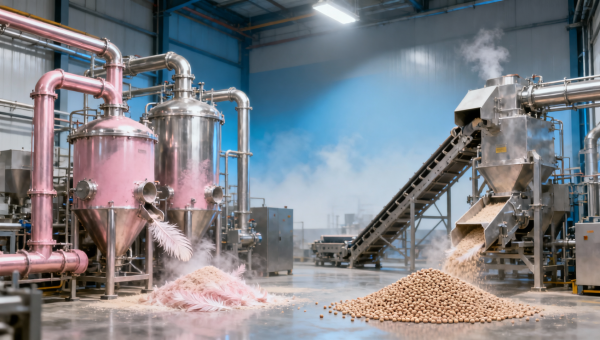
Protein loss in a feather meal machine often starts with heat, pressure, and drying errors that also affect upstream and downstream systems such as rendering plant equipment and a blood meal processing plant. For buyers, operators, and technical evaluators comparing commercial bone crusher integration, poultry slaughterhouse equipment, or broader commercial abattoir equipment, understanding these failure points is essential to protecting amino acid quality, process efficiency, and plant profitability.
In commercial feather meal production, protein value is not determined only by raw feather input. It is shaped by the entire thermal and mechanical pathway, from hydrolysis and sterilization to pressing, drying, grinding, and storage. A plant may achieve acceptable throughput in tons per hour and still lose nutritional value if cystine, lysine, and digestible amino acid fractions are damaged by poor machine settings or inconsistent material flow.
This matters to multiple stakeholders. Operators need stable moisture control and low downtime. Quality teams need repeatable digestibility results and contamination control. Procurement teams need to compare total operating cost, maintenance intervals, and integration risk. Decision-makers need evidence that a feather meal machine supports broader rendering economics rather than creating hidden waste, rework, or downgraded feed value.
Where Protein Value Is Lost Inside a Feather Meal Machine
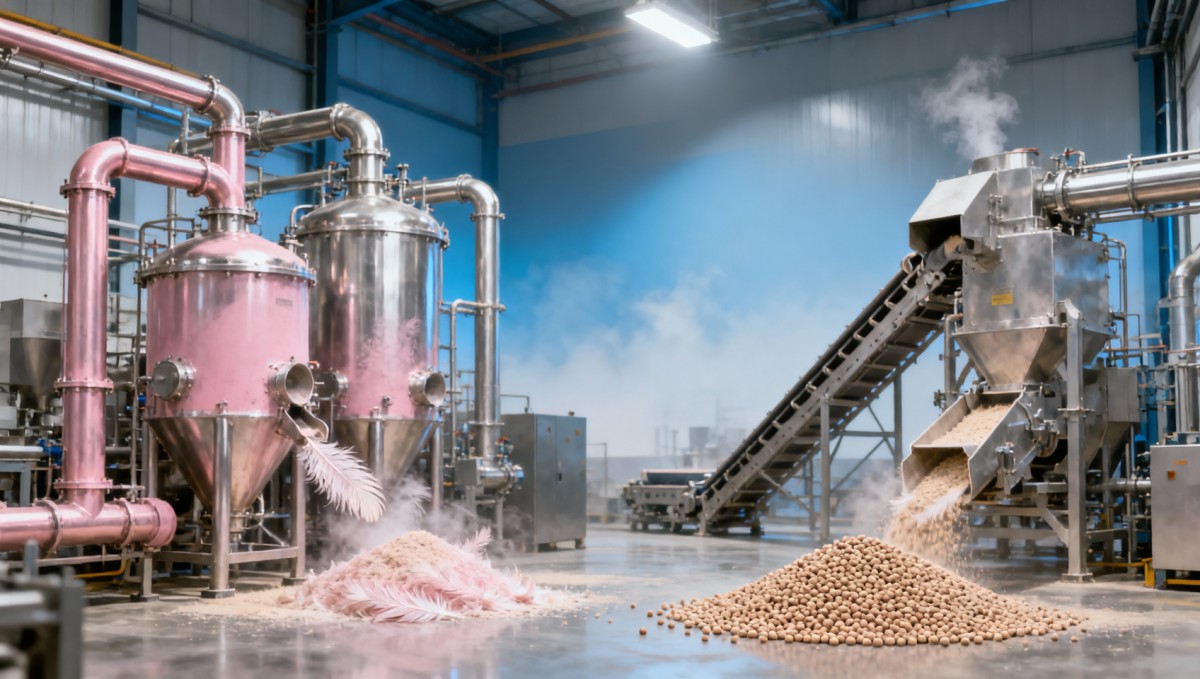
Feathers are rich in keratin, a highly structured protein that requires controlled hydrolysis to become digestible. The challenge is balance. If treatment is too mild, digestibility remains low because the keratin matrix is insufficiently opened. If treatment is too aggressive, amino acids degrade and the final meal loses commercial value. In practical terms, the machine must convert structural protein without overcooking it.
The first major failure point is heat exposure. In many plants, hydrolysis temperatures are commonly controlled within a broad industrial range, often around 130°C to 160°C depending on process design and residence time. Trouble starts when local hot spots develop because of uneven steam distribution, scale build-up, or poor agitation. Even if the average temperature looks acceptable, a 10°C to 15°C local deviation can push sections of the batch into damaging thermal conditions.
The second failure point is pressure instability. Pressure swings affect how effectively feather fibers open during cooking. When pressure rises too fast or drops before full conversion, the batch may show uneven digestibility. Plants often see this as a hidden quality issue: one lot tests acceptably, while the next lot from the same shift shows lower protein availability. That inconsistency complicates feed formulation and buyer confidence.
The third failure point is drying. After hydrolysis and dewatering, moisture reduction must be precise. If meal exits the dryer above the target range, microbial stability and shelf life suffer. If it is overdried, heat damage continues and brittle product generates excessive fines during grinding and conveying. Many operations aim for a finished moisture window near 8% to 12%, but the correct setpoint depends on storage time, ambient humidity, and downstream handling design.
Common process conditions that trigger protein downgrade
- Extended residence time beyond the validated range, such as 15 to 25 minutes longer than standard, which increases amino acid damage.
- Steam quality problems that introduce condensate, leading to unstable heat transfer and moisture imbalance inside the cooker.
- Inadequate discharge control that causes part of the batch to remain in the vessel while the rest moves forward.
- Poor dryer airflow or fouled heat exchange surfaces that raise energy demand and promote overheating at the product surface.
Why this issue spreads beyond one machine
A feather meal machine rarely operates in isolation. If raw material arrives with excessive blood, fat, or bone fragments because poultry slaughterhouse equipment upstream is not separating streams efficiently, the machine must work harder and quality variation rises. Likewise, if a commercial bone crusher or rendering conveying system is poorly synchronized, residence time and feed consistency become unstable. Protein loss is therefore often a systems problem, not only a cooker problem.
Operational Symptoms Buyers and Operators Should Not Ignore
Many plants notice protein loss only after laboratory values decline, but earlier warning signs usually appear on the line. A sudden increase in amperage on the dryer fan, a 5% to 8% rise in steam use per ton, or inconsistent meal particle size may signal that the process is drifting out of control. These are operational indicators that buyers and technical teams should treat as quality signals rather than only maintenance signals.
Color is another practical indicator. Feather meal that becomes unusually dark can reflect excessive thermal load, particularly when combined with a burnt odor or elevated fines. While color alone is not a complete quality metric, it often correlates with overheating events. For procurement teams evaluating equipment, this is why test runs should include both throughput data and product condition checks over several hours, not just a short demonstration batch.
Mechanical symptoms also matter. Repeated plugging in discharge screws, unstable press cake consistency, and excessive wear on paddles or internal surfaces may indicate that the machine is processing material outside its optimal range. In an integrated commercial abattoir equipment environment, those symptoms often trace back to upstream segregation quality or inconsistent feed rate rather than a single isolated defect.
For quality managers, laboratory monitoring should focus on more than crude protein. Digestibility, moisture consistency, ash drift, and batch-to-batch variation are equally important. A product can maintain a seemingly acceptable crude protein percentage while losing nutritional usefulness due to amino acid damage. That creates a commercial risk when feed buyers compare value on digestible protein rather than headline protein alone.
Operational symptom checklist
The table below helps teams connect line-level observations with likely causes and business impact. It is useful during equipment audits, supplier visits, and internal troubleshooting workshops.
The key conclusion is that visual and mechanical clues often appear 1 to 3 shifts before the quality report confirms a problem. Plants that link operations, maintenance, and QC data can intervene earlier and reduce both protein loss and unplanned downtime.
How to Evaluate Feather Meal Equipment Before Purchase or Retrofit
When comparing new systems or retrofitting an existing line, buyers should evaluate more than nameplate capacity. A machine rated for 2 tons per hour or 5 tons per hour may still underperform if thermal control, retention accuracy, or cleanability is weak. Technical evaluators should examine whether the equipment can maintain stable conversion across variable feather loads, not just under ideal test conditions.
One core criterion is process controllability. Ask whether the machine measures temperature at multiple points, how quickly valves respond to setpoint changes, and whether moisture and discharge behavior can be trended by batch or hour. Even in mid-sized plants, adding 3 to 5 meaningful process indicators is often more valuable than simply choosing a larger machine with fewer controls.
A second criterion is integration compatibility. In many rendering facilities, the feather line shares utilities and sometimes conveying logic with a blood meal processing plant or other rendering plant equipment. If the feather system cannot tolerate feed fluctuations or utility changes, upstream disturbances will repeatedly damage quality. Procurement teams should therefore review system response under variable steam pressure, raw material moisture, and line loading conditions.
A third criterion is maintainability. A machine that requires a full stop every 2 to 3 days for cleaning or frequent manual intervention will raise labor cost and increase quality variation between crews. Look closely at wear parts, access points, internal dead zones, and how long standard service tasks take. A 30-minute faster cleaning cycle repeated 20 times per month has a measurable operational value.
Procurement comparison framework
The following table can be used by procurement, engineering, and finance teams to compare proposals using practical decision criteria rather than headline claims alone.
For capital approval, teams should compare total cost of ownership over 3 to 5 years. A lower initial purchase price can be offset by weaker protein recovery, higher steam use, more labor hours, or more frequent wear-part replacement. In protein processing, quality variability is often one of the most expensive hidden costs.
Questions worth asking a supplier
- What moisture range can the system reliably achieve under normal plant fluctuations?
- How is residence time validated when feather input changes by 10% to 20%?
- Which components are expected to wear first, and what is the typical replacement interval?
- Can the line integrate with existing rendering plant equipment controls and utility loads?
Process Control, Maintenance, and Quality Safeguards That Protect Amino Acids
Once a system is installed, protein preservation depends on disciplined operating control. Plants that run stable feather meal production usually define target windows for temperature, pressure, residence time, and finished moisture, then review deviations by shift. The goal is not only hitting throughput, but keeping the process inside a narrow and repeatable envelope. Even a small drift repeated over 7 to 14 days can materially reduce product value.
Maintenance practices should focus on thermal consistency. Steam traps, insulation, valve response, and internal fouling deserve scheduled inspection because they directly influence heat distribution. A plant that checks critical thermal components weekly and performs deeper inspection monthly often catches quality-threatening problems before a major batch failure occurs. This is especially important in integrated slaughter and rendering operations where utility disturbances can cascade across multiple lines.
Quality assurance should also use layered checks. In-process moisture readings, discharge appearance, and energy use per ton provide quick signals. Laboratory confirmation then validates whether digestibility and protein quality remain on target. Instead of relying only on end-product testing, leading operators create a 3-step control logic: monitor the process, verify the batch, and investigate drift before customer complaints appear.
Training matters as much as instrumentation. Operators should know how a 5-minute residence increase, a blocked condensate path, or a dryer airflow reduction changes final meal quality. Many avoidable losses occur not because staff lack effort, but because quality impact is not visible in real time. Cross-training operators, maintenance staff, and QC personnel improves decision speed during abnormal conditions.
Practical control priorities for daily operation
- Record at least 4 core variables per batch or per defined time block: cooking temperature, pressure, residence time, and final moisture.
- Inspect steam and condensate performance at a fixed frequency, such as every 7 days, with documented corrective action.
- Verify dryer cleanliness and airflow balance before major production runs, especially after high-load periods.
- Trend energy use per ton and compare it against product color, odor, and moisture outcomes to identify hidden overheating.
- Review upstream raw material segregation quality from poultry slaughterhouse equipment to prevent contamination and process instability.
Implementation sequence for retrofit projects
For retrofit planning, project managers can reduce disruption by dividing work into 4 stages: baseline testing, control upgrade, mechanical correction, and validation. Baseline testing usually requires 1 to 2 weeks of operational data. Control and instrumentation improvements can often be installed faster than large mechanical changes, making them an efficient first step when capex is constrained.
After implementation, validate the line under at least 3 production conditions: normal load, low load, and peak load. This matters because a feather meal machine that performs well only at one operating point may still create protein loss under real plant conditions. Validation should include product quality checks and utility behavior, not only equipment uptime.
FAQ for Technical Evaluators, Procurement Teams, and Plant Managers
How do I know whether low protein value is caused by the machine or by raw material quality?
Start by separating input variation from process variation. Review feather cleanliness, blood carryover, and storage delay before cooking. Then compare batches processed under different thermal conditions. If crude protein stays similar but digestibility or product appearance changes with operating parameters, the machine or control strategy is likely the stronger factor. In many plants, both causes interact, so system-level review is necessary.
What indicators matter most during an equipment trial?
Do not evaluate only tons per hour. Include residence stability, steam use, finished moisture consistency, color, odor, and ease of cleaning. A trial should ideally cover more than one production condition and run long enough to reveal drift, often at least several continuous hours rather than a brief startup demonstration. Ask for operating data logs, not only visual impressions.
Can poor integration with a blood meal processing plant affect feather meal quality?
Yes. Shared utilities, inconsistent raw material segregation, and synchronized line disturbances can all affect feather processing. If steam demand spikes on adjacent rendering plant equipment, the feather system may experience pressure instability. If raw material streams are not well separated, excess contamination can alter moisture, ash, and thermal behavior. Integration planning should therefore be part of any capital assessment.
What is a reasonable maintenance focus for reducing quality loss without a full equipment replacement?
Prioritize thermal reliability and flow consistency first. In many facilities, improvements in steam control, condensate removal, dryer airflow balance, and cleaning discipline deliver faster returns than complete machine replacement. If these measures reduce moisture drift, darkening, or energy spikes within the first 30 to 60 days, teams gain stronger evidence for any later capex decision.
Protein value in feather meal production is protected when plants treat heat, pressure, drying, and integration as one connected system. Buyers need equipment that is controllable, maintainable, and compatible with upstream and downstream operations. Operators need clear process windows and fast response to drift. Quality teams need routine indicators that reveal amino acid risk before the final report shows a downgrade.
For organizations assessing feather meal machinery, rendering plant equipment, or broader poultry and abattoir processing integration, a disciplined technical review can prevent avoidable losses in both product value and operating margin. If you are planning a retrofit, comparing suppliers, or troubleshooting inconsistent output, now is the right time to get a tailored evaluation, request technical detail, and explore a fit-for-purpose processing solution.
Related Intelligence
- Commercial Feed PelletChina to Upgrade Mandatory Standard for Commercial Feed Pellets in 2026China's 2026 Commercial Feed Pellets mandatory standard upgrade introduces mycotoxin controls, microplastic limits & durability grading—key for exporters, manufacturers & QA teams. Act now to align.
- Commercial Feed PelletU.S.-Iran Strait of Hormuz Tensions Push Feed Pellet Freight Rates Up 8.3%U.S.-Iran Strait of Hormuz tensions spike feed pellet freight rates by 8.3%. Discover how exporters, importers & logistics providers can mitigate risk and adapt fast.
- Commercial Feed PelletVertical Feed Mixer Machine: What Size Do You Need?Vertical feed mixer machine sizing guide: compare batch capacity, daily output, and formula needs. Ideal for horizontal ribbon blender feed buyers, cattle feed processing plant planners, and animal feed mixers wholesale sourcing.
The Morning Broadsheet
Daily chemical briefings, market shifts, and peer-reviewed summaries delivered to your terminal.
