
U.S.-Iran Strait of Hormuz Tensions Push Feed Pellet Freight Rates Up 8.3%
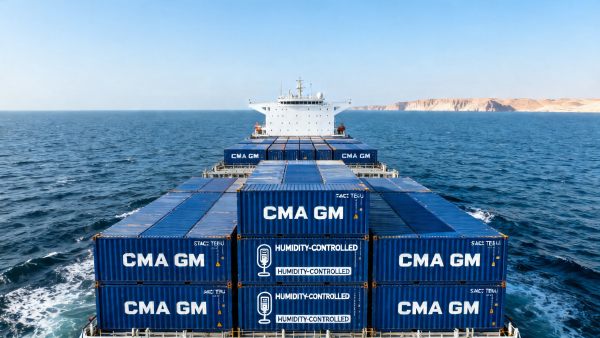
On April 20–21, 2026, escalating U.S.-Iran tensions in the Strait of Hormuz — including commercial vessel attacks and the U.S. Navy’s detention of an Iranian cargo ship — triggered a sharp rise in maritime risk across the Red Sea–Persian Gulf corridor. This development directly impacted Commercial Feed Pellet logistics, prompting CMA CGM to urgently deploy dedicated moisture- and humidity-controlled containers on Asia–Africa routes, with spot freight rates per TEU increasing 8.3% week-on-week. Feed pellet exporters in China, importers in Saudi Arabia, Egypt, and Nigeria, and related supply chain service providers must now reassess cost structures, delivery timelines, and FOB pricing strategies.
Event Overview
Between April 20 and April 21, 2026, confirmed incidents occurred in the Strait of Hormuz: U.S. and Iranian forces engaged in hostile actions affecting commercial shipping, including reported attacks on merchant vessels and the U.S. Navy’s seizure of an Iranian freighter. In response, CMA CGM activated specialized moisture- and humidity-controlled containers for Commercial Feed Pellet shipments on Asia–Africa routes. As a result, the spot freight rate per TEU on these routes rose by 8.3% compared to the prior week.
Industries Affected by Segment
Direct Exporters (e.g., Chinese Feed Pellet Manufacturers)
These enterprises face immediate upward pressure on logistics costs due to the freight rate hike. Since Commercial Feed Pellets require strict humidity control during transit — especially to arid or high-humidity markets — the shift to dedicated controlled-environment containers affects both cost allocation and container availability. Impact manifests in revised FOB quotations, extended lead times for booking, and tighter margin buffers on export contracts.
Importers in Target Markets (e.g., Feed Mill Operators in Saudi Arabia, Egypt, Nigeria)
Importers reliant on consistent, climate-sensitive deliveries are exposed to supply chain delays and inventory volatility. The sudden deployment of specialized containers may reduce general-purpose TEU capacity on key lanes, leading to longer wait times for bookings and potential shortfalls in scheduled arrivals — particularly where local storage lacks adequate climate control.
Supply Chain Service Providers (e.g., NVOCCs, Freight Forwarders, Container Leasing Firms)
Service providers handling Commercial Feed Pellet shipments must adapt to new equipment requirements and routing constraints. The urgent rollout of humidity-controlled containers implies tighter equipment allocation protocols, possible surcharges for specialized units, and heightened coordination needs with carriers and terminals — all affecting service level agreements and operational planning cycles.
What Relevant Enterprises or Practitioners Should Monitor and Do Now
Track official maritime advisories and carrier announcements closely
Monitor updates from the U.S. Fifth Fleet, International Maritime Bureau (IMB), and major carriers (e.g., CMA CGM) regarding route restrictions, security assessments, and equipment deployment status — especially any extension or formalization of humidity-controlled container mandates beyond the current emergency measure.
Review exposure to specific trade lanes and product categories
Assess current and upcoming shipments on the Asia–Saudi Arabia, Asia–Egypt, and Asia–Nigeria corridors, focusing on Commercial Feed Pellet consignments requiring humidity control. Identify contracts with fixed freight clauses versus those indexed to spot rates — as the latter carry higher near-term cost volatility.
Distinguish between temporary operational adjustments and structural shifts
This freight adjustment appears tied to an acute security escalation, not a permanent infrastructure change. However, analysis来看, sustained regional instability could accelerate carrier investment in climate-controlled container fleets — making today’s ad hoc deployment a potential precursor to longer-term equipment standardization for sensitive agri-commodities.
Update contingency plans for procurement, documentation, and customer communication
Exporters should pre-validate alternative routing options (e.g., Suez detours via Cape of Good Hope, if viable) and revise internal cost models to reflect the 8.3% uplift. Importers should confirm warehouse readiness for delayed or staggered arrivals, and both sides should proactively align on revised ETAs and documentation timelines with trading partners.
Editorial Perspective / Industry Observation
From industry角度看, this incident is less a standalone freight shock and more a stress test of climate-sensitive commodity logistics under geopolitical duress. It highlights how narrow chokepoints — even outside traditional feed trade lanes — can rapidly cascade into cost and reliability impacts for niche but high-volume agricultural exports. Current more appropriately understood as a near-term risk signal rather than a completed market shift: the 8.3% increase reflects reactive carrier capacity reallocation, not yet evidence of systemic capacity shortage or long-term rate floor revision. Still, it underscores why feed pellet exporters and importers alike are increasingly factoring maritime security into product specification, contract terms, and insurance coverage — not just as a compliance item, but as a core supply chain resilience parameter.
This development warrants continued attention because it reveals how quickly non-tariff, non-regulatory factors — such as naval interdiction or localized conflict — can reshape cost structures for time- and climate-sensitive bulk agri-exports. The focus should remain on monitoring whether the humidity-controlled container initiative remains temporary or evolves into a carrier-mandated standard for certain commodities on volatile routes.
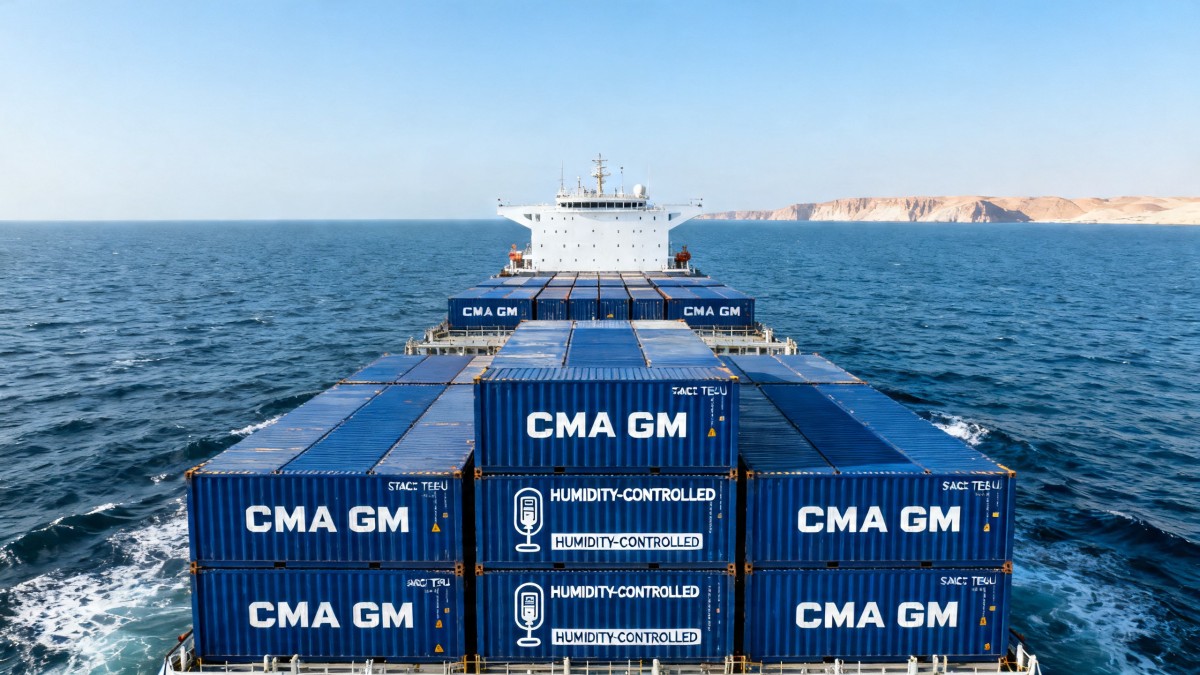
In summary, the April 20–21 Strait of Hormuz escalation has introduced measurable, near-term cost and scheduling friction for Commercial Feed Pellet trade between Asia and Africa. Its significance lies not in scale alone, but in its demonstration of how geopolitical flashpoints intersect with technical transport requirements — turning a regional security event into a tangible operational variable for feed supply chains. Currently, it is best interpreted as a tactical disruption requiring adaptive response, not a strategic inflection point — yet one that merits close watch for signs of normalization or escalation in carrier equipment policy.
Source: Confirmed public reports on U.S.-Iran maritime incidents (April 20–21, 2026); CMA CGM’s operational notice on humidity-controlled container deployment for Commercial Feed Pellet shipments; verified freight index data reflecting the 8.3% TEU rate increase on Asia–Africa routes. Ongoing developments in Strait of Hormuz security posture and carrier equipment policy remain subject to observation.
Related Intelligence
- Commercial Feed PelletU.S.-Iran Strait of Hormuz Tensions Push Feed Pellet Freight Rates Up 8.3%U.S.-Iran Strait of Hormuz tensions spike feed pellet freight rates by 8.3%. Discover how exporters, importers & logistics providers can mitigate risk and adapt fast.
- Commercial Feed PelletVertical Feed Mixer Machine: What Size Do You Need?Vertical feed mixer machine sizing guide: compare batch capacity, daily output, and formula needs. Ideal for horizontal ribbon blender feed buyers, cattle feed processing plant planners, and animal feed mixers wholesale sourcing.
- Commercial Feed PelletAnimal Feed Mixers Wholesale: How to Compare QuotesAnimal feed mixers wholesale guide: compare horizontal ribbon blender feed and vertical feed mixer machine quotes by capacity, compliance, lifecycle cost, and supplier support.
The Morning Broadsheet
Daily chemical briefings, market shifts, and peer-reviewed summaries delivered to your terminal.
