
Bread Slicing Machine Commercial: What to Check First?
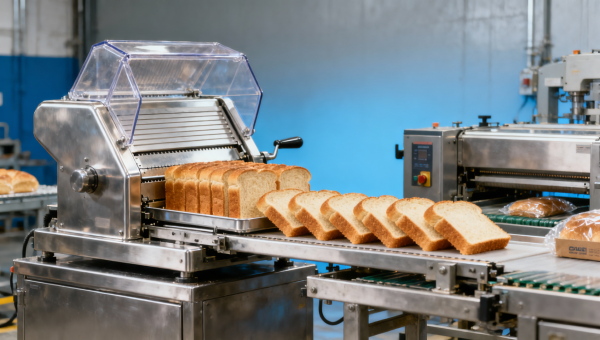
Before investing in a commercial bread slicing machine, the first checks should be practical rather than promotional: required throughput, slice consistency, hygiene-focused construction, operator safety, and fit with the rest of the production line. For bakeries also evaluating a commercial food packaging machine, tunnel oven for biscuits, rotary rack oven bakery system, or planetary mixer commercial unit, the real question is not just whether the slicer works well on its own, but whether it supports stable output, sanitation targets, labor efficiency, and total operating cost across the full process.
For procurement teams, technical evaluators, operators, and plant managers, the best buying decision usually comes from verifying production conditions before comparing brand claims. Bread type, cooling conditions, target slices per loaf, shift length, cleaning frequency, floor space, blade replacement costs, and compliance requirements all matter more than headline speed alone. A good commercial bread slicing machine should improve yield consistency and packaging readiness without creating sanitation, maintenance, or safety problems downstream.
What should you check first before buying a bread slicing machine commercial system?
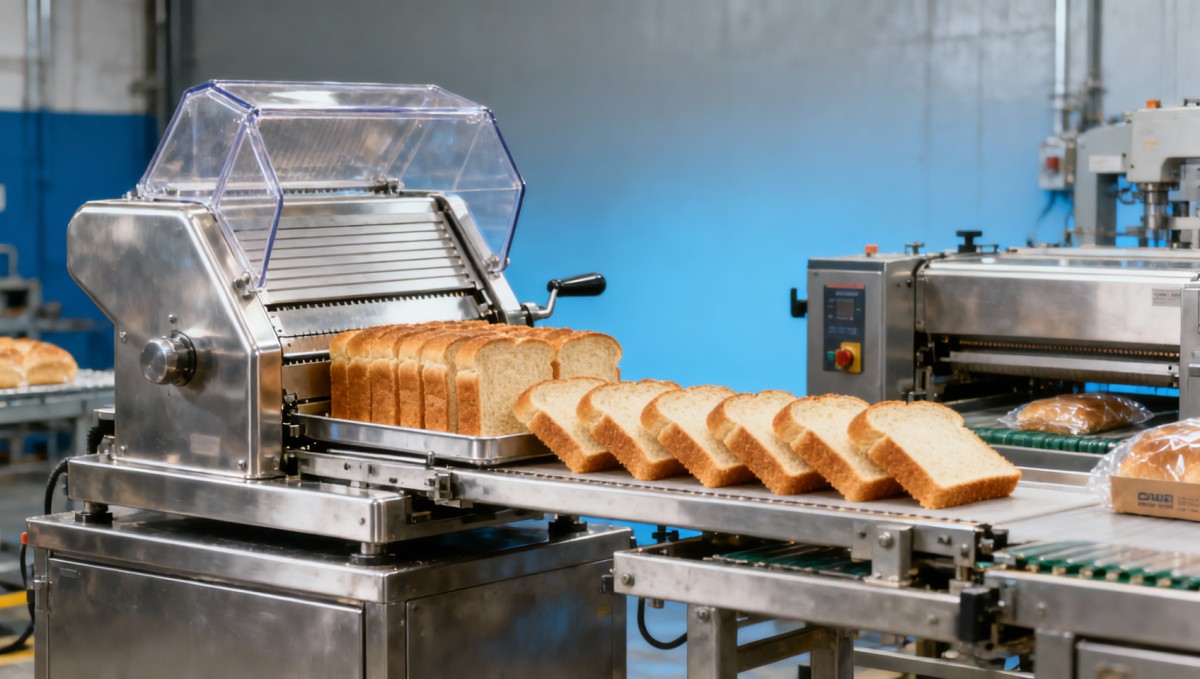
The first thing to check is whether the machine matches your real production profile. Many buyers start with price or nominal capacity, but the better starting point is operational fit. Ask these questions first:
- What bread products will be sliced? Soft sandwich loaves, artisan bread, toast bread, gluten-free loaves, and seeded products behave differently during slicing.
- What is your target hourly output? Peak throughput matters more than average throughput if you run short, high-volume windows.
- What slice thicknesses are required? Fixed thickness may be acceptable for one SKU, but multi-SKU bakeries may need flexibility.
- How important is slice uniformity for packaging and retail appearance? Inconsistent slicing can increase rejects, misfeeds, and customer complaints.
- How will the slicer connect to cooling, bagging, clipping, or sealing equipment? A slicer that cannot synchronize with a commercial food packaging machine may limit line efficiency.
- What cleaning and sanitation standards must be met? This is especially important for plants with strict QA, allergen control, or audit requirements.
If a supplier cannot clearly answer these points with technical data, line drawings, and application references, that is a warning sign. In commercial bakery environments, the wrong slicer typically causes recurring problems in three areas: damaged loaf presentation, avoidable downtime, and poor line integration.
How much throughput do you actually need?
Throughput should be evaluated in relation to your oven output, cooling time, labor pattern, and packaging speed. A commercial bread slicing machine that is too small creates bottlenecks. One that is oversized may cost more to buy, consume more floor space, and run inefficiently at partial loads.
Technical teams should verify:
- Loaves per hour under actual operating conditions, not only under ideal test conditions
- Performance by loaf size and density
- Continuous-duty capability across a full shift
- Infeed and discharge design to reduce loaf handling damage
- Recovery time after jams, cleaning, or blade changes
If your bakery also runs a rotary rack oven bakery line or a tunnel oven for biscuits in adjacent operations, compare slicer output with upstream production variability. A slicer selected in isolation may underperform once real production fluctuations are introduced. For this reason, engineering and project teams should model line balance instead of evaluating slicing speed alone.
Why slice consistency matters more than brochure speed
For operators and quality teams, slice consistency often determines whether a machine adds value or creates hidden cost. Uneven slices can lead to poor stack appearance, bagging issues, weight distribution complaints, and increased product waste.
Check for the following factors:
- Blade frame stability during extended operation
- Consistent slice thickness tolerance across different loaf temperatures and textures
- Minimal crumb generation, especially for soft or enriched bread
- Loaf control during entry and exit to prevent tearing or deformation
- Performance on fresh versus fully cooled loaves
In practical terms, a slightly slower machine with better slice accuracy may produce better overall economics than a faster unit with higher reject rates. Buyers should request sample testing using their own bread products whenever possible. For institutional or retail bakery supply, consistent slice quality is directly linked to customer satisfaction and packaging performance.
What sanitation and cleaning features should buyers prioritize?
Sanitation design should be one of the earliest evaluation points, not a final checklist item. For food plants, especially those operating under formal quality systems, hard-to-clean equipment quickly becomes a long-term operational liability.
Prioritize these design features:
- Food-grade contact surfaces with appropriate stainless steel construction
- Smooth welds and minimal crevice points where crumbs and residues can accumulate
- Easy access to blades and crumb zones for routine cleaning
- Removable or accessible crumb trays
- Tool-less or low-tool disassembly for sanitation tasks
- Clear cleaning procedures and maintenance manuals
For quality control personnel and safety managers, the key question is not just whether the slicer can be cleaned, but whether it can be cleaned reliably within the plant’s available sanitation window. If cleaning takes too long or requires high skill to perform correctly, downtime and hygiene risk both increase.
Which safety and compliance checks should come before purchase approval?
Commercial slicing equipment involves moving blades, pinch points, electrical systems, and repetitive operator interaction. Safety and compliance should therefore be reviewed before commercial approval, not after installation planning begins.
Important checks include:
- Blade guarding and access interlocks
- Emergency stop placement and visibility
- Lockout/tagout suitability for maintenance
- Electrical compliance for your region and plant standard
- Documented operating instructions and training requirements
- Noise, vibration, and ergonomic considerations
Enterprise decision-makers and financial approvers should remember that a lower-cost machine with weaker safety design can become more expensive over time through training burdens, incident risk, and audit exposure. In regulated or internationally audited facilities, documentation quality is also part of the purchasing decision.
How do you know whether the slicer will fit your bakery line?
Line compatibility is often underestimated. A bread slicing machine commercial setup must work with upstream and downstream equipment, product flow, labor practices, and available space. This is especially important when a facility is already using or planning a commercial food packaging machine, mixer systems, proofing units, or oven equipment.
Review these compatibility points:
- Machine footprint and service clearance
- Infeed height and discharge orientation
- Synchronization with bagging or packaging speed
- Power and utility requirements
- Operator access for loading, adjustment, and cleaning
- Future expansion potential if output grows
For bakeries scaling beyond standalone production, integration matters even more than machine price. A slicer that performs well individually but poorly within the line can reduce the value of major upstream assets such as a rotary rack oven bakery setup or a planetary mixer commercial production cell.
What maintenance questions reveal the true cost of ownership?
Purchase price is only one part of the investment. Maintenance frequency, wear parts, technical support, and downtime risk usually determine the real long-term cost. This is where technical evaluators and project managers can protect the business from hidden lifecycle expense.
Ask suppliers these questions:
- How often do blades need replacement or sharpening?
- What is the average maintenance time per week or month?
- Which parts are considered consumables?
- Are spare parts stocked locally or shipped internationally?
- Can in-house technicians service the unit, or is specialist support required?
- What troubleshooting support is available?
A machine with a modest initial premium may deliver lower total cost if it offers faster cleaning, longer blade life, easier part replacement, and stronger service support. For procurement and finance teams, this is a critical distinction between apparent cost and actual operating value.
Which supplier claims should be verified with evidence?
Not all vendor claims carry the same weight. Buyers should request proof, not just marketing statements. The most useful evidence usually includes:
- Performance data using similar bread types
- Customer references in comparable bakery environments
- Factory acceptance testing or sample trial options
- Detailed machine drawings and utility specifications
- Documentation on sanitation, safety, and maintenance procedures
- Warranty terms and response commitments
If the machine is being evaluated as part of a broader bakery equipment investment, ask whether the supplier understands interactions with adjacent assets such as ovens, proofers, conveyors, and packaging systems. Strong equipment performance is easier to achieve when the vendor discusses process conditions rather than only machine features.
A practical shortlist: the fastest way to screen options
For buyers who need a fast internal decision process, this shortlist is often the most effective screening tool:
- Confirm product fit: loaf type, size, density, and desired slice thickness.
- Verify real throughput: not brochure speed, but shift-level output.
- Check slice quality: uniformity, crumb level, loaf presentation.
- Review sanitation design: access, cleanability, crumb management.
- Validate safety features: guarding, interlocks, emergency stops.
- Assess line integration: packaging compatibility, footprint, workflow.
- Calculate maintenance burden: blades, spare parts, downtime exposure.
- Request evidence: trials, references, documentation, service support.
This approach helps procurement teams avoid a common mistake: selecting a commercial bread slicing machine based on price and rated speed while overlooking sanitation constraints, labor realities, and downstream packaging performance.
Final takeaway
If you are asking what to check first in a bread slicing machine commercial purchase, the answer is clear: start with production fit, not product marketing. The best machine is the one that matches your bread characteristics, supports required throughput, delivers reliable slice consistency, cleans quickly, protects operators, and integrates smoothly with the rest of the bakery line.
For bakeries comparing broader investments such as a commercial food packaging machine, tunnel oven for biscuits, rotary rack oven bakery system, or planetary mixer commercial equipment, the slicer should be evaluated as part of the complete operating system. When technical, quality, operational, and financial teams review the same practical criteria early, the result is usually a better-performing line, lower operating risk, and a more defensible capital decision.
Related Intelligence
- Milling MachineryHow to Choose a Horizontal Ribbon Blender for FeedHorizontal ribbon blender feed buying guide: compare vertical feed mixer machine options, animal feed mixers wholesale offers, and line fit for poultry, cattle, and floating fish feed plant projects.
- Milling MachineryWhy use a rotary drum sieve grain line?Why use a rotary drum sieve grain line? Discover how rotary drum sieve grain, grain pre cleaner machine, gravity separator grain, and magnetic separator for feed improve efficiency and quality.
- Milling MachineryHow to avoid grain destoner machine issues?Grain destoner machine issues explained: learn how gravity separator grain, grain pre cleaner machine, and rotary drum sieve grain setup affect performance, reduce downtime, and improve line efficiency.
The Morning Broadsheet
Daily chemical briefings, market shifts, and peer-reviewed summaries delivered to your terminal.
