
Commercial Food Packaging Machine: Buy or Outsource?
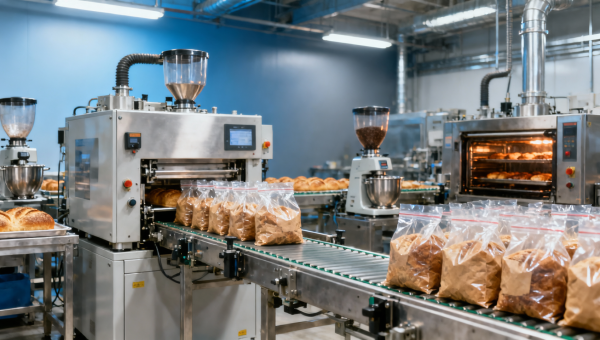
For manufacturers weighing whether to invest in a commercial food packaging machine or outsource production, the decision affects cost control, quality assurance, and scalability. From planetary mixer commercial systems and bread slicing machine commercial setups to tunnel oven for biscuits and rotary rack oven bakery lines, today’s operations often intersect with broader needs in biochemical processing, aquaculture accessories, aquaculture utilities, aquaculture hardware, and Chemical Synthesizers supply chains.
How should manufacturers frame the buy-or-outsource decision?
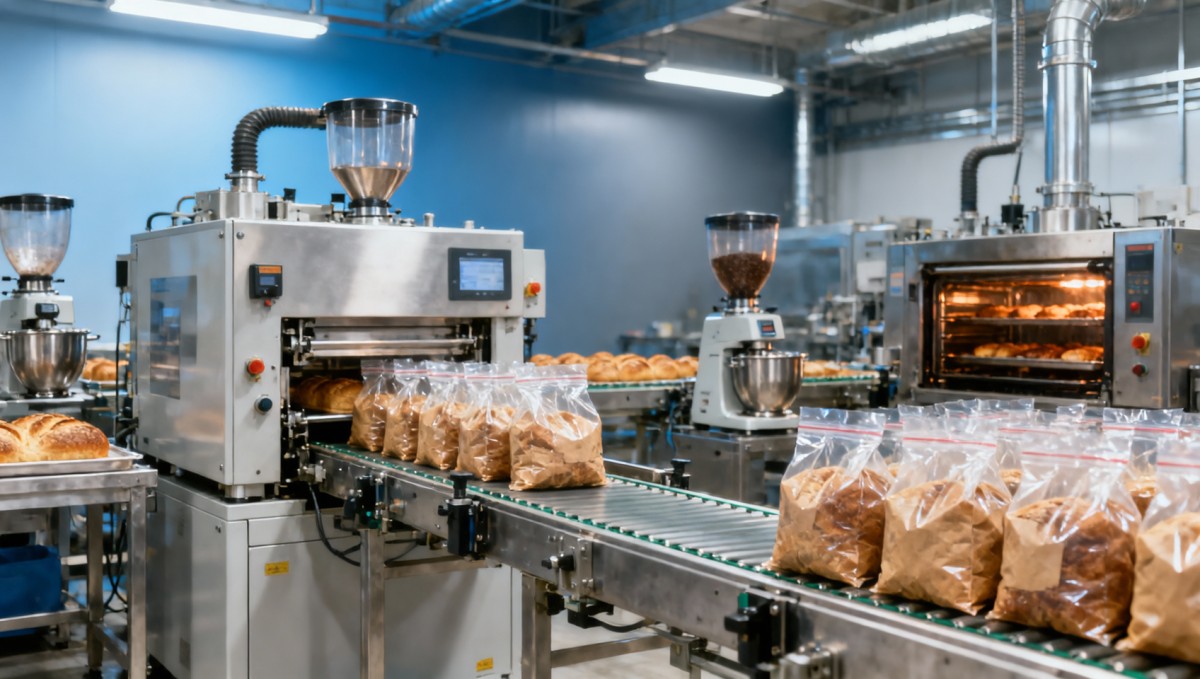
A commercial food packaging machine is not just a production asset. In many B2B environments, it becomes part of a wider operating system that includes upstream ingredients, sanitation controls, traceability records, utilities, labor planning, and downstream logistics. That is why the buy-versus-outsource question should be treated as a structured business case rather than a simple equipment purchase discussion.
For information researchers and technical evaluators, the first distinction is capacity commitment. If output is still unstable, such as pilot runs, seasonal contracts, or fragmented SKU demand, outsourcing can protect cash flow. If production is moving toward repeatable weekly volumes over 2–3 shifts, an in-house commercial food packaging machine may create stronger control over lead times, product handling, and packaging consistency.
Operators and quality teams usually view the decision differently from finance teams. Operators focus on changeover time, sealing stability, cleaning effort, and downtime risk. Finance reviewers prioritize payback period, depreciation, maintenance burden, and working capital exposure. Procurement managers, meanwhile, worry about supplier reliability, contract flexibility, and whether an outsourced partner can hold specification tolerances batch after batch.
In sectors connected to feed, grain processing, bio-extracts, and regulated ingredient handling, the decision also touches compliance. Packaging is often where labeling accuracy, date coding, lot traceability, and contamination prevention become visible. A machine that runs 8–16 hours per day under controlled procedures can strengthen internal assurance, but only if the plant has trained people, validated workflows, and enough maintenance discipline.
Five core questions before any capital approval
- Is your demand stable enough over the next 12–24 months to justify dedicated capacity rather than variable outsourcing fees?
- Do your products require tight control over sealing, fill weight, oxygen exposure, or moisture protection that external packing may not consistently maintain?
- Can your facility support utilities, line clearance, sanitation, and operator training without disrupting core production?
- How sensitive is your business to lead-time volatility, minimum order quantities, and third-party scheduling windows?
- Will owning the packaging step improve traceability and audit readiness for customers asking for documented process control?
This is where AgriChem Chronicle adds value. ACC’s coverage across primary industries, fine chemicals, agricultural machinery, aquaculture technology, and feed processing helps buyers evaluate packaging decisions in the context of the full supply chain. That perspective matters when packaging performance is linked to ingredient stability, distribution conditions, and regulatory scrutiny across more than one industrial segment.
Buy or outsource: which model fits your operating profile?
The best choice often depends on volume profile, product complexity, and service expectations. A company producing a narrow range of high-frequency SKUs may benefit from buying a commercial food packaging machine because the line can be optimized around 1–3 formats with predictable changeovers. A business launching many short-run items may gain more from outsourcing, especially when monthly order quantities vary sharply.
For project managers and engineering leads, internal packaging offers scheduling authority. It can shorten response time when procurement changes film structure, carton dimensions, or coding requirements. Outsourcing, however, can be valuable when line validation is still incomplete or when internal teams cannot support installation, commissioning, and operator ramp-up within a 4–8 week implementation window.
The comparison below helps align commercial, technical, and operational priorities. It is especially useful when your production environment spans food, ingredient processing, bakery systems, or adjacent industrial sectors where material handling and hygiene standards affect final package integrity.
In practice, many firms use a hybrid model. They outsource low-volume or specialty packs while bringing core formats in-house. That approach can reduce risk during the first 6–12 months of market expansion. It also allows procurement and finance teams to compare real operating data before committing to a full-scale commercial food packaging machine installation.
When buying usually makes more sense
Buying tends to be more attractive when packaging affects shelf presentation, labeling accuracy, or contamination control in ways customers can audit. This is common in ingredient blends, bakery products, feed additives, and packaged inputs linked to regulated industrial chains. If every batch requires clear lot coding and repeatable seal quality, internal control often becomes a strategic asset rather than a cost center.
It also makes sense when your line can be balanced with upstream equipment. For example, production based on a planetary mixer commercial process, a tunnel oven for biscuits, or a rotary rack oven bakery line can become inefficient if packaging throughput lags behind baking output. In such cases, internal packaging can remove a bottleneck that outsourcing cannot solve fast enough.
When outsourcing remains the better option
Outsourcing stays relevant when packaging formats change frequently, order sizes remain small, or internal space is constrained. It is also a sensible choice when management wants to avoid maintenance inventory, operator recruitment, and validation work. For businesses still testing distribution channels or export specifications, external partners can provide short-term flexibility while internal standards are being built.
What technical and compliance factors should be checked before buying?
Technical evaluation should start with the product, not the machine brochure. Food characteristics, pack format, oxygen or moisture sensitivity, and cleaning requirements determine whether a line should be semi-automatic or fully automatic. A mismatch here leads to poor seal integrity, wasted film, unstable output, and operator frustration. In most projects, at least 3 categories must be verified: material compatibility, utility support, and cleanability.
Quality and safety teams should document the operating window. Typical checks include temperature behavior at the sealing interface, allowable fill-weight variation, coding clarity, and contact-part hygiene. Even without assigning a brand-specific standard, buyers should ask whether the supplier can document commonly requested food-contact, sanitation, and electrical safety practices suitable for the destination market.
Where production connects to regulated or high-scrutiny sectors, traceability matters as much as machine speed. This is familiar to ACC readers in APIs, biochemical ingredients, aquaculture systems, and feed processing, where batch identity, supplier records, and process transparency are central. A packaging line should therefore be evaluated for recordkeeping compatibility, not only output per minute.
The table below summarizes practical checks often used by procurement, QA, and engineering teams during specification review. These are not fixed legal thresholds; they are decision prompts that help avoid under-scoped purchases and delayed commissioning.
A good technical review should also include a 4-step acceptance path: specification confirmation, pre-shipment review, site commissioning, and performance handover. This gives project managers and finance approvers a clearer basis for milestone payments. It also reduces disputes over what “installed” or “ready for production” actually means.
A practical checklist for cross-functional teams
- Confirm product characteristics, package dimensions, and required output window by shift, not only by hour.
- Review sanitation method, food-contact materials, and whether the line supports your internal QA documentation flow.
- Assess site utilities, spare parts expectations, and training needs for operators, maintenance staff, and supervisors.
- Set acceptance criteria for coding, seals, pack appearance, reject handling, and routine downtime response.
ACC’s editorial strength is especially useful here because technical purchasing rarely happens in isolation. A packaging decision may depend on ingredient sensitivity, export expectations, or line integration with adjacent machinery. Cross-industry intelligence helps buyers ask better questions before capital is committed.
How do cost, risk, and implementation timelines compare?
Cost analysis should go beyond quoted machine price or outsourced unit fee. Buyers should compare total operating impact across at least 6 items: capex, labor, utilities, maintenance, material waste, and service dependency. In many cases, outsourcing looks cheaper in the first quarter but becomes more expensive once volumes stabilize and urgent orders create scheduling premiums.
A realistic implementation plan for buying may include 2–4 weeks for technical clarification, 4–12 weeks for manufacturing or delivery depending on configuration, and 3–10 days for installation and commissioning. Outsourcing can start faster if a qualified packer already has compatible tooling, but onboarding still requires artwork approval, packaging trials, quality alignment, and logistics coordination.
Risk should be scored by function. Procurement risks include single-source dependence and film compatibility issues. Quality risks include coding errors, seal variation, and traceability gaps. Finance risks include underutilized equipment or underestimated service charges. Operations risks include downtime during ramp-up, slow changeovers, and weak preventive maintenance execution.
Common hidden costs companies overlook
- Facility adaptation costs such as electrical upgrades, compressed air routing, guarding, drainage, or floor reinforcement.
- Operator productivity losses during the first 2–6 weeks while teams learn setup, cleaning, and fault response routines.
- Packaging material mismatch that increases reject rates, especially during startup or when multiple film structures are tested.
- Third-party delay costs when outsourced schedules conflict with shipment deadlines or customer order changes.
For financial approvers, the key is to compare a variable-cost model against a control-driven model. Outsourcing transfers some execution burden but introduces external dependency. Buying increases operational responsibility but can improve responsiveness, inspection depth, and internal scheduling. The right choice often depends less on the machine itself and more on how stable your commercial pipeline really is over the next 3–4 quarters.
A useful decision rule for mixed portfolios
If 60%–80% of your packaged volume comes from a small group of recurring SKUs, internal packaging often deserves serious evaluation. If most business comes from custom batches, market tests, or low-frequency products, outsourcing may remain the safer choice. Many firms stage the transition by internalizing only the most stable products first.
FAQ: what do buyers, operators, and quality teams ask most often?
How do I know if a commercial food packaging machine is too large for my factory?
Start with actual shift demand, not peak sales ambition. Review average weekly output, SKU count, changeover frequency, and available labor. If utilization is likely to stay low for 6–9 months, a smaller machine or outsourced model may be more efficient. Oversizing creates avoidable capex pressure and can complicate cleaning, staffing, and material handling.
What should QA and safety managers verify before approving a line?
They should verify food-contact suitability, cleanability, coding consistency, reject management, and line clearance procedure. It is also important to review documentation packs, maintenance access points, and whether inspection records can be integrated into routine audit preparation. In regulated supply chains, traceability and batch identity often matter as much as speed.
Can outsourcing still support high-quality packaged output?
Yes, if the partner is selected carefully and the process is controlled. Buyers should check trial results, process documentation, coding accuracy, packaging-material handling, and response time for nonconformities. A service agreement should define acceptance criteria, review frequency, and escalation rules. Without those controls, outsourced consistency can vary from lot to lot.
How long does implementation usually take when buying equipment?
A common timeline is 6–16 weeks from requirement confirmation to commissioning, depending on complexity, customization, and site readiness. Simpler systems can move faster, while integrated lines with coding, conveyors, weighing, or inspection units take longer. Delays usually come from unclear specifications, late packaging-material approval, or incomplete utility preparation.
Why consult AgriChem Chronicle when evaluating packaging strategy?
AgriChem Chronicle supports decision-makers who need more than generic equipment descriptions. ACC covers the intersections between food packaging, primary processing, fine chemicals, agricultural machinery, aquaculture technology, and supply chain compliance. That breadth matters when a packaging investment affects product stability, export readiness, regulatory expectations, and procurement risk across multiple business units.
For procurement teams, ACC helps frame supplier evaluation beyond price. For technical reviewers, it highlights the process details that influence integration and auditability. For finance and executive stakeholders, it turns operational uncertainty into a clearer investment case by connecting capacity planning, compliance exposure, and implementation discipline.
If you are comparing whether to buy a commercial food packaging machine or outsource, you can use ACC as a structured intelligence partner. We can help you assess parameter confirmation, packaging-line selection logic, lead-time expectations, customization feasibility, common compliance checkpoints, and quotation comparison frameworks. This is especially valuable when your operation also touches bakery systems, feed processing, aquaculture hardware, biochemical ingredients, or Chemical Synthesizers-related supply chains.
Contact us to discuss your current packaging challenge in practical terms: expected output range, product format, utility conditions, quality documentation needs, supplier screening, or implementation timing. If your team needs support with specification review, outsourcing-versus-capex comparison, delivery-cycle evaluation, or a more defensible purchasing brief for internal approval, ACC can help you move from uncertainty to a workable decision path.
Related Intelligence
- Milling MachineryHow to Choose a Horizontal Ribbon Blender for FeedHorizontal ribbon blender feed buying guide: compare vertical feed mixer machine options, animal feed mixers wholesale offers, and line fit for poultry, cattle, and floating fish feed plant projects.
- Milling MachineryWhy use a rotary drum sieve grain line?Why use a rotary drum sieve grain line? Discover how rotary drum sieve grain, grain pre cleaner machine, gravity separator grain, and magnetic separator for feed improve efficiency and quality.
- Milling MachineryHow to avoid grain destoner machine issues?Grain destoner machine issues explained: learn how gravity separator grain, grain pre cleaner machine, and rotary drum sieve grain setup affect performance, reduce downtime, and improve line efficiency.
The Morning Broadsheet
Daily chemical briefings, market shifts, and peer-reviewed summaries delivered to your terminal.
