
When Does Custom Chemical Synthesis Make More Sense?
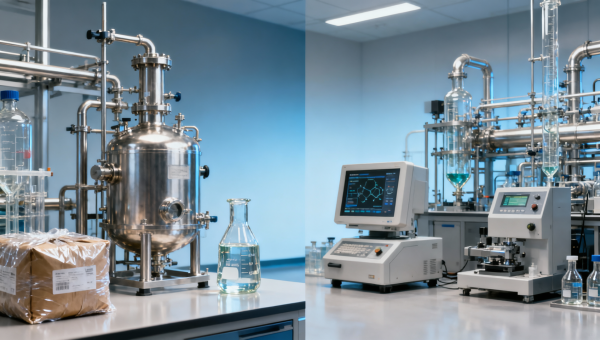
When timelines, purity profiles, or regulatory demands outgrow off-the-shelf options, custom chemical synthesis often becomes the smarter path. For buyers comparing Chemical Synthesizers, biochemical processing partners, and downstream systems—from aquaculture accessories and aquaculture hardware to commercial food packaging machine lines—understanding where tailored synthesis creates technical, operational, and financial value is essential for informed procurement and project success.
When is custom chemical synthesis the better procurement decision?
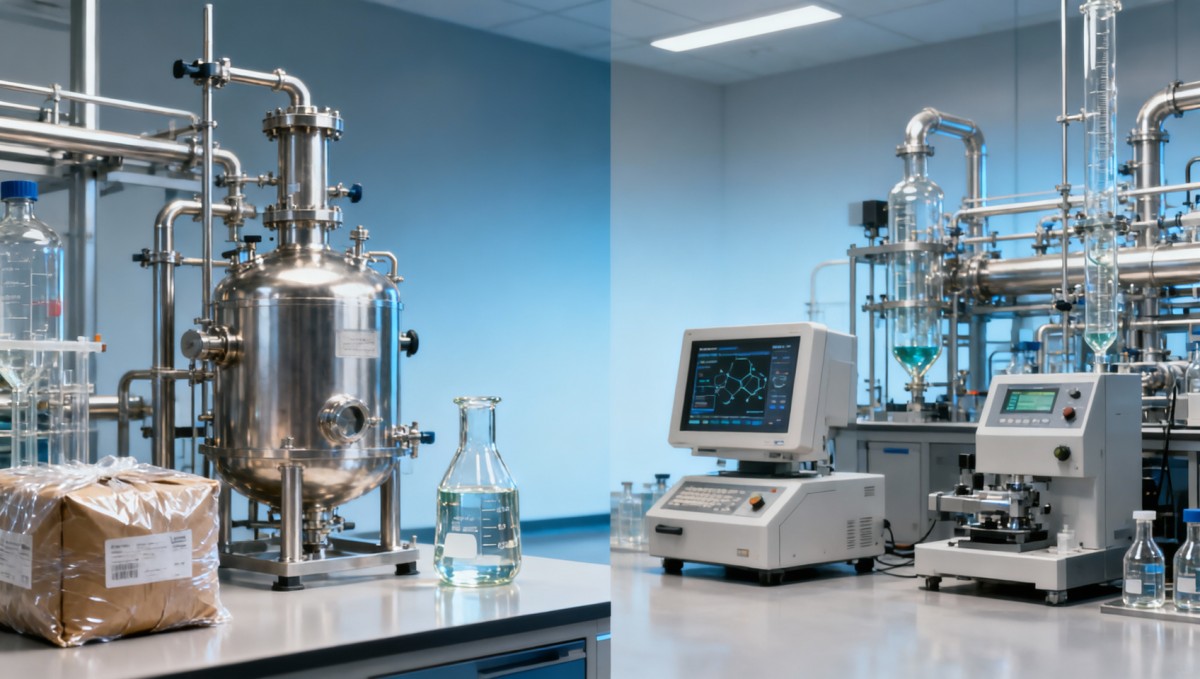
Custom chemical synthesis makes more sense when a project cannot be served reliably by standard catalog chemicals, commodity intermediates, or broad-market formulations. In practical B2B purchasing, that usually happens under 4 conditions: target purity above routine commercial grades, controlled impurity profiles, difficult scale-up windows, or documented compliance needs tied to GMP, FDA, EPA, or internal quality systems.
For technical evaluators and procurement teams, the key question is not simply whether a compound can be made. The better question is whether it can be supplied at the right specification, in the right volume, within a realistic 2–8 week development and transfer window, and with full traceability from raw material sourcing to final release documents. That is where custom synthesis often outperforms off-the-shelf sourcing.
This is especially relevant across fine chemicals, APIs, bio-extract processing, feed inputs, and industrial agriculture support systems. A biochemical process may fail not because the active ingredient is unavailable, but because the available grade does not fit solvent compatibility, residue limits, storage conditions, or downstream equipment tolerances. Operators see this first in batches, while finance teams see it later in scrap, delays, and revalidation costs.
AgriChem Chronicle follows this issue closely because buyers in primary industries increasingly work across connected systems rather than isolated products. A custom synthesis decision may affect reactor scheduling, packaging line changeovers, aquaculture dosing systems, feed stability, and export documentation. Better procurement starts with understanding the total operating context, not only unit price.
Typical signals that standard supply is no longer enough
- Required purity moves from common industrial grades to tighter ranges such as 98.5%+, 99.0%+, or application-specific thresholds defined by internal QC methods.
- The process needs a specific salt form, particle size, solvent residue limit, or moisture range that catalog products do not guarantee lot to lot.
- The project needs pilot quantities first, then a staged scale-up from grams to kilograms to multi-batch production within 3 phases.
- The buyer must align with audit-ready documentation, change control, or controlled sourcing to support regulated markets and internal validation.
If 2 or more of these conditions apply, a custom route usually deserves formal evaluation. It may reduce operational uncertainty even when the quoted unit price is higher than standard stock chemicals.
Which scenarios benefit most from tailored synthesis?
Not every application requires custom work. However, several recurring scenarios across agriculture, biochemicals, and primary processing make tailored synthesis a practical choice. The first is formulation compatibility. A compound that works in lab screening may separate, oxidize, or degrade when introduced into commercial handling systems, including pumps, dosing modules, or food packaging machine support environments where temperature and humidity vary across shifts.
The second is regulatory fit. In API procurement and adjacent fine chemical uses, teams often need a synthesis route that avoids restricted reagents, reduces residual solvents, or supports cleaner documentation. Quality and safety managers usually prefer a route designed for compliance from the beginning rather than trying to adapt a commodity-grade material after procurement.
The third is supply continuity. In volatile raw material markets, buyers may choose custom synthesis because standard suppliers cannot guarantee consistent availability over 6–12 months. A tailored route can sometimes improve resilience by qualifying alternative raw materials, adjusting process steps, or reducing dependence on a single precursor. That matters to project managers balancing commissioning dates, inventory risk, and contract obligations.
The fourth is performance optimization. In aquaculture accessories and aquaculture hardware support systems, for example, specialty treatment chemicals, cleaning agents, or bio-based additives may need exact compatibility with tubing, seals, sensors, or water quality targets. Small changes in pH tolerance, concentration range, or impurity burden can materially change field performance over weekly or monthly operating cycles.
Application scenarios where custom synthesis often creates value
The table below helps procurement teams compare common scenarios, operational triggers, and why custom chemical synthesis may be justified beyond simple product availability.
The value pattern is clear: tailored synthesis becomes attractive when chemical performance must match process realities. The more sensitive the downstream system, the stronger the case for defining the molecule, route, and quality package together rather than buying from generic inventory.
A simple 3-step screening rule for project teams
- Check whether the required grade exists commercially in the needed volume range, such as 1–5 kg for pilot work or 25–200 kg for initial production.
- Compare commercial specifications against actual process needs, including impurity ceilings, residual solvents, storage window, and packaging format.
- Estimate the cost of failure, including retesting, line downtime, reformulation, and supplier change delays. If these costs are material, custom synthesis usually deserves a request for proposal.
Custom synthesis vs off-the-shelf chemicals: what should buyers compare?
Price per kilogram is the most visible comparison point, but it is rarely the most useful one. B2B buyers should compare at least 5 dimensions: specification fit, lead time reliability, batch reproducibility, documentation depth, and total process impact. A lower upfront price can quickly lose its advantage if the material triggers additional qualification work or batch instability.
Operations teams often care about handling behavior and repeatability. Quality teams focus on analytical method fit, lot release consistency, and deviation management. Finance looks at landed cost and working capital exposure. Decision-makers need a joined-up view, especially when the chemical is linked to broader assets such as chemical synthesizers, filtration units, aquaculture hardware, or packaging lines with defined throughput targets.
Lead time is another area where assumptions can be misleading. Off-the-shelf supply may look faster, but stockouts, vendor substitutions, or variable documentation can introduce hidden delays. A custom project may require 2–4 weeks for feasibility and sample preparation, yet it can later provide more predictable release cycles over quarterly planning periods.
The right comparison therefore weighs short-term convenience against long-term control. For projects with narrow tolerances or regulated outcomes, control usually wins.
Decision comparison table for procurement and technical review
Use the following comparison table during sourcing discussions to separate a low-price offer from a low-risk supply strategy.
For financial approval, this comparison helps reframe the discussion from price only to cost of non-conformance. That is often the deciding factor in industrial procurement.
Five checkpoints before approving a supplier shortlist
- Can the supplier define realistic development milestones, such as route review, sample batch, analytical confirmation, and transfer plan?
- Are impurity controls described in measurable terms rather than broad marketing language?
- Is there a clear packaging and storage proposal, for example 5 kg, 25 kg, or drum formats matched to usage frequency and warehouse conditions?
- Can the documentation support audits, internal quality review, and import or export checks where required?
- Does the proposal explain change management if a raw material or process parameter must be adjusted later?
How do compliance, quality, and implementation affect project success?
In regulated or quality-sensitive sectors, custom chemical synthesis is not only a technical task. It is a documentation and implementation exercise. The best route on paper may still fail if analytical methods are not aligned, packaging is unsuitable, or release criteria do not match site operations. That is why quality managers and project owners should be involved early, ideally before the first sample order is approved.
A practical implementation plan usually has 4 stages: requirement mapping, feasibility review, pilot sample validation, and routine supply control. Depending on complexity, these stages can take 3–10 weeks before recurring production is stabilized. Projects involving APIs or sensitive environmental applications may need additional review cycles for impurity methods, storage data, or transport documentation.
Compliance expectations also differ by use case. Some buyers need GMP-style discipline, while others prioritize EPA-aligned environmental controls, food-contact compatibility, or internal site safety protocols. The important point is to state these requirements early. Retrofitting compliance after synthesis development is usually slower and more expensive than building it into the route and release package from the start.
For cross-industry buyers, especially those working between chemicals and equipment, implementation should include process interfaces. A material can be chemically acceptable yet operationally poor if it clogs dosing lines, foams under agitation, shortens filter life, or causes packaging instability during 8–12 hour production runs.
Implementation checklist for technical and quality teams
- Define critical quality attributes, including purity target, impurity ceiling, solvent residue acceptance, water content, and appearance criteria.
- Confirm sampling and retention plans, including how many lots will be reviewed before full approval and how deviations will be handled.
- Verify packaging, storage temperature range, and transport conditions, such as ambient control or moisture protection where applicable.
- Match the material to equipment realities, including pumps, seals, tanks, mixers, and commercial food packaging machine interfaces when relevant.
Common mistakes that increase risk
One frequent mistake is approving a sample based only on a certificate of analysis without checking batch-to-batch reproducibility. Another is underestimating scale effects. A route that works at 500 g may behave differently at 20 kg or 100 kg, especially when heat transfer, mixing, or drying steps change. A third mistake is ignoring the warehouse and handling side, where packaging choice and opening frequency can alter contamination risk and material stability.
These are exactly the issues industrial readers look to specialized intelligence sources to clarify. ACC’s editorial position is valuable here because it connects laboratory logic, procurement reality, and compliance language across multiple sectors, helping teams ask better supplier questions before money and schedule are exposed.
FAQ: what do buyers ask before moving to custom synthesis?
The most useful procurement questions are not abstract. They focus on timing, technical fit, quantity planning, and approval risk. The following answers reflect common decision points seen across fine chemicals, process manufacturing, and industrial agriculture supply chains.
How do I know whether custom chemical synthesis is justified for my project?
Start with 3 tests. First, can standard suppliers meet your exact specification consistently for at least 2–3 consecutive lots? Second, does the material need route-level control over impurities, solvents, or physical form? Third, would a failed batch or delayed line restart cost more than the premium for a tailored supply program? If the answer is yes to two of these, custom synthesis is usually worth formal evaluation.
What lead time should buyers expect?
For non-routine materials, a practical planning range is often 2–4 weeks for feasibility and early samples, then additional time for analytical confirmation and pilot acceptance. More complex projects can extend to 6–10 weeks depending on precursor availability, hazard controls, and documentation requirements. Buyers should request milestone dates rather than a single headline lead time.
Is custom synthesis only relevant to pharmaceuticals?
No. It is highly relevant in APIs, but also in bio-extracts, process aids, aquaculture support chemistry, sanitation inputs, and specialty ingredients where performance depends on exact formulation behavior. In many industrial settings, the decision is driven less by the sector name and more by the need for fit, traceability, and repeatability.
What should procurement request from a potential synthesis partner?
Request a requirement review covering target specification, projected annual volume, batch size assumptions, proposed analytical controls, packaging options, storage guidance, and change control approach. If your operation involves linked systems such as aquaculture hardware or food packaging machine workflows, include those process constraints in the first discussion rather than after sample approval.
Why work with AgriChem Chronicle when evaluating suppliers and custom routes?
AgriChem Chronicle is positioned for buyers who need more than surface-level product promotion. Its editorial scope spans fine chemicals and APIs, agricultural and forestry machinery, aquaculture and fishery technology, bio-extracts and ingredients, and feed and grain processing. That cross-sector view is valuable when a synthesis decision affects not only a chemical specification, but also equipment integration, compliance review, and supply chain planning.
Because ACC focuses on peer-level analysis and market intelligence, it helps information researchers, operators, technical reviewers, procurement managers, finance approvers, and quality teams work from the same fact base. This is especially useful in projects where custom chemical synthesis intersects with broader industrial systems and where a poor sourcing decision can delay commissioning, trigger revalidation, or weaken supply transparency.
If your team is comparing Chemical Synthesizers, reviewing a custom synthesis partner, or assessing downstream compatibility across aquaculture accessories, aquaculture hardware, or commercial food packaging machine environments, ACC can support a more structured evaluation process. Useful consultation topics include parameter confirmation, specification mapping, supplier comparison logic, expected development stages, documentation requirements, sample strategy, and realistic delivery planning.
Contact AgriChem Chronicle to discuss your target compound, purity range, pilot quantity, compliance expectations, packaging format, or quotation pathway. If you are preparing an internal approval or supplier shortlist, ACC can help clarify what to ask, what to verify, and where custom synthesis is likely to create measurable technical and commercial value before you commit budget and schedule.
Related Intelligence
- Custom SynthesisANVISA Expands Custom Synthesis Review to 3-Tier Starting Material TraceabilityANVISA's new 3-tier traceability rule for custom synthesis imports demands full upstream documentation—act now to avoid delays, rejections, and compliance risks in Brazil.
- Custom SynthesisANVISA Extends Custom Synthesis Oversight to Tier-3 SuppliersANVISA Extends Custom Synthesis Oversight to Tier-3 Suppliers: New July 2026 rule mandates full traceability & English GMP docs for Chinese CMOs exporting to Brazil—act now to avoid delays.
- Custom SynthesisWhen Does Custom Chemical Synthesis Make More Sense?Chemical Synthesizers guide: learn when custom chemical synthesis beats standard supply for biochemical processing, aquaculture accessories, aquaculture hardware, and commercial food packaging machine projects.
The Morning Broadsheet
Daily chemical briefings, market shifts, and peer-reviewed summaries delivered to your terminal.
