
ANVISA Expands Custom Synthesis Review to 3-Tier Starting Material Traceability
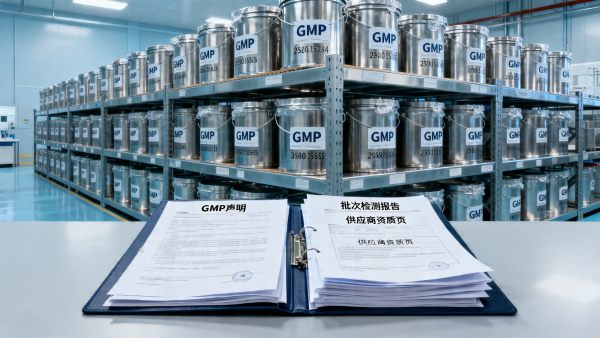
On April 15, 2026, Brazil’s National Health Surveillance Agency (ANVISA) updated its Guidelines for Import Review of Custom Synthesis Chemicals, mandating full three-tier upstream traceability documentation for all custom synthesis imports—including pharmaceutical intermediates and agrochemical custom synthesis products. This development directly impacts pharmaceutical, agrochemical, and fine chemical supply chains operating in or exporting to Brazil.
Event Overview
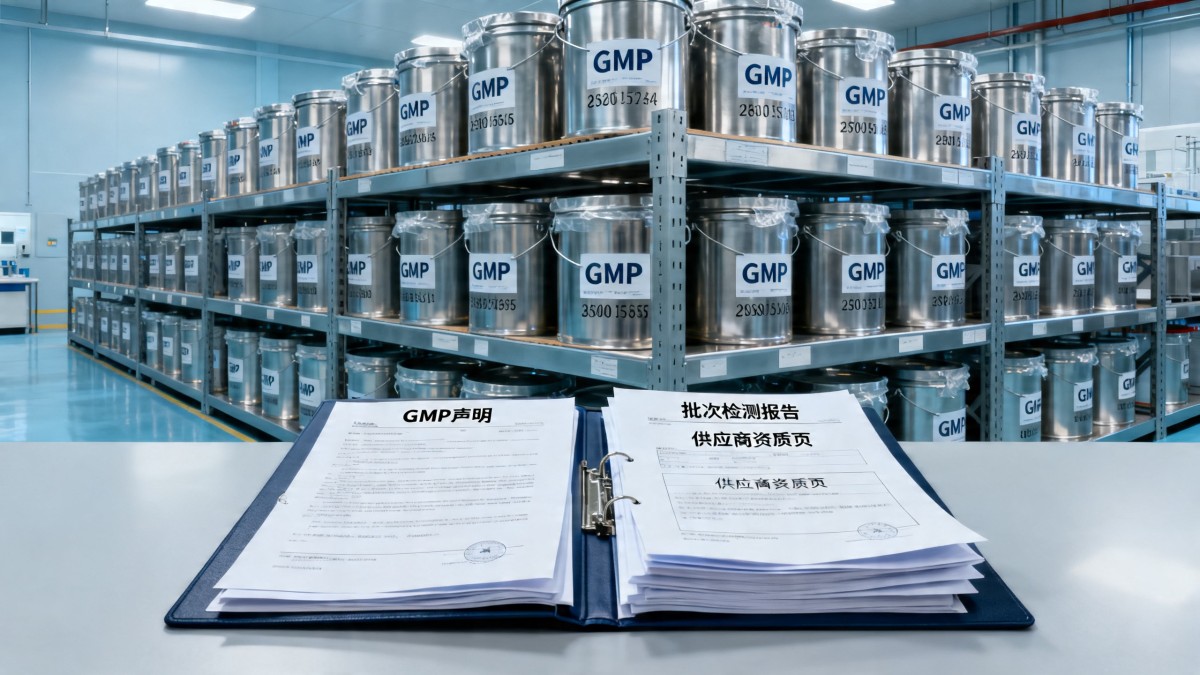
On April 15, 2026, ANVISA published an update to its Guidelines for Import Review of Custom Synthesis Chemicals. Under the revised requirements, importers must submit complete traceability documentation covering three upstream tiers for starting materials: the manufacturer, the purifier, and the packager. Each tier must provide a GMP statement and batch-specific test reports at the time of customs clearance.
Which Subsectors Are Affected
Direct Trading Enterprises
Trading companies acting as importers of record for custom synthesis products into Brazil will bear primary responsibility for document submission. Non-compliance may result in customs delays, rejection of shipments, or mandatory re-submission with verified upstream data—increasing lead times and administrative burden.
Raw Material Sourcing Enterprises
Companies sourcing starting materials (e.g., specialty building blocks, chiral precursors) for custom synthesis must now ensure their own suppliers can produce and share validated GMP statements and batch test reports—not only for their immediate supplier but also for the two upstream entities (manufacturer and purifier). This extends due diligence beyond first-tier relationships.
Contract Development and Manufacturing Organizations (CDMOs)
CDMOs producing intermediates or active pharmaceutical ingredients (APIs) for Brazilian market entry must align internal quality systems with the new traceability scope. Their existing vendor qualification processes may require revision to capture third-tier documentation—particularly where purification or packaging is outsourced.
Supply Chain Service Providers
Logistics providers, regulatory consultants, and customs brokers supporting Brazilian imports of custom synthesis goods must update client onboarding checklists and documentation templates to include verification of three-tier traceability files. Failure to flag missing or inconsistent upstream records may expose clients—and service providers—to compliance risk.
What Relevant Enterprises or Practitioners Should Focus On and How to Respond Now
Monitor official ANVISA implementation guidance and transitional provisions
While the policy took effect April 15, 2026, ANVISA has not yet published detailed FAQs, accepted document formats, or grace periods. Enterprises should track updates via ANVISA’s official portal and subscribe to notifications from Brazil’s Ministry of Health.
Identify high-priority product lines subject to immediate scrutiny
Products classified under ANVISA’s “custom synthesis” definition—especially those used in registered pharmaceuticals or regulated agrochemicals—are most likely to face early enforcement. Companies should map current import SKUs against this definition and prioritize traceability readiness for those items.
Distinguish between regulatory signal and operational rollout
Analysis来看, this requirement reflects ANVISA’s broader alignment with ICH Q5A(R2) and WHO TRS Annex 9 principles on source material control—but does not yet indicate harmonization with EU or US FDA expectations. It should be understood as a Brazil-specific procedural tightening, not a global standard shift.
Initiate upstream documentation collection and internal process mapping
Enterprises should begin compiling existing GMP statements and batch reports for current starting material suppliers—and request documentation from the next two upstream tiers where gaps exist. Internal SOPs for import documentation review should be updated to include three-tier validation checkpoints before customs filing.
Editorial Perspective / Industry Observation
From industry angle, this update signals ANVISA’s increasing emphasis on granular supply chain transparency—not just for final APIs, but for foundational chemical inputs. It is better understood as an enforcement escalation than a policy pivot: the agency is applying existing quality assurance logic further upstream, rather than introducing novel regulatory concepts. That said, the operational complexity of verifying three tiers—including entities that may not traditionally engage with pharmaceutical-grade documentation—makes sustained monitoring essential. The absence of grandfathering clauses or phased timelines suggests urgency in preparation.
Conclusion
This update underscores that regulatory oversight of chemical imports into Brazil is shifting toward deeper supply chain visibility—starting not at the synthesizer, but at the origin of raw inputs. For affected enterprises, it is less a sudden disruption and more a formalization of traceability expectations already emerging in other regulated markets. Current interpretation should emphasize procedural readiness over strategic reassessment: the requirement is specific, actionable, and enforceable as of April 15, 2026—but its practical execution depends heavily on how ANVISA interprets documentation sufficiency in real-time customs reviews.
Information Sources
Main source: ANVISA’s updated Guidelines for Import Review of Custom Synthesis Chemicals, effective April 15, 2026.
Note: Implementation details—including acceptable formats for GMP statements, definitions of ‘purifier’ and ‘packager’, and enforcement thresholds—remain pending official clarification and are subject to ongoing observation.
Related Intelligence
- Custom SynthesisANVISA Expands Custom Synthesis Review to 3-Tier Starting Material TraceabilityANVISA's new 3-tier traceability rule for custom synthesis imports demands full upstream documentation—act now to avoid delays, rejections, and compliance risks in Brazil.
- Custom SynthesisANVISA Extends Custom Synthesis Oversight to Tier-3 SuppliersANVISA Extends Custom Synthesis Oversight to Tier-3 Suppliers: New July 2026 rule mandates full traceability & English GMP docs for Chinese CMOs exporting to Brazil—act now to avoid delays.
- Custom SynthesisWhen Does Custom Chemical Synthesis Make More Sense?Chemical Synthesizers guide: learn when custom chemical synthesis beats standard supply for biochemical processing, aquaculture accessories, aquaculture hardware, and commercial food packaging machine projects.
The Morning Broadsheet
Daily chemical briefings, market shifts, and peer-reviewed summaries delivered to your terminal.
