
Tunnel Oven for Biscuits: How to Avoid Uneven Baking?
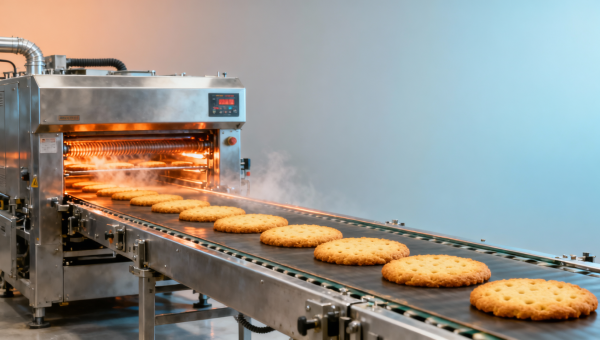
In high-output biscuit lines, uneven baking is rarely caused by the tunnel oven alone. In most plants, the real issue is a combination of airflow distribution, heat-zone imbalance, belt loading inconsistency, moisture variation in the dough, and unstable upstream or downstream integration. For bakery operators, technical evaluators, procurement teams, and project managers, the fastest path to better product uniformity is not guesswork, but a structured review of oven settings, product loading, dough preparation, and line synchronization. If your tunnel oven for biscuits is producing edge burn, pale centers, moisture inconsistency, or variable texture, the solution usually lies in process control as much as in oven design.
Why does a tunnel oven for biscuits produce uneven baking in the first place?
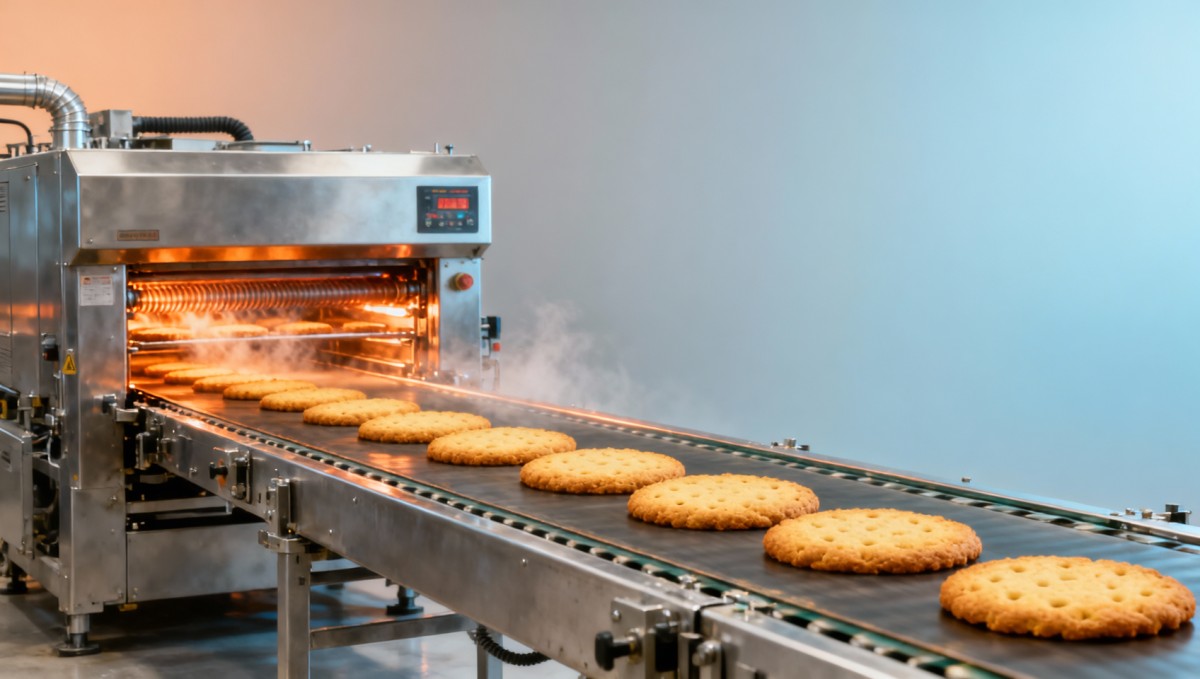
The core reason is simple: the biscuits do not receive the same thermal exposure throughout the baking cycle. But in industrial production, that imbalance can happen in several different ways:
- Non-uniform airflow: Hot air may hit one side of the band harder than the other, creating uneven color or moisture loss.
- Poor burner or heating-zone calibration: One zone may run hotter, cooler, or less consistently than the setpoint suggests.
- Uneven band loading: If biscuits are placed too densely in some lanes and too sparsely in others, heat transfer changes across the width of the oven.
- Dough inconsistency: Variation in dough temperature, thickness, density, or moisture can cause the same oven profile to bake products differently.
- Band speed instability: Even minor fluctuations in residence time affect color development and internal dryness.
- Weak line integration: Inconsistent feeding from a planetary mixer commercial system, depositor, sheeter, or forming unit can create product variation before the oven even starts baking.
For most factories, uneven baking is best treated as a system-level problem rather than an oven-only fault.
What are the first signs that baking uniformity is slipping?
Experienced operators and quality teams usually notice uneven baking before it becomes a serious waste issue. Common warning signs include:
- One side of the biscuit is darker than the other
- Center rows bake differently from outer rows
- Top color develops too quickly while the interior remains under-baked
- Moisture readings vary lot to lot or lane to lane
- Increased breakage during cooling or packaging
- Rejected cartons due to appearance inconsistency
- Flavor variation caused by over-browned sections
These symptoms matter not only for product quality but also for yield, packaging performance, shelf life, and brand consistency. In high-volume operations, a small oven imbalance can quickly translate into major raw material losses and downstream inefficiency.
Which process variables should operators check before changing oven hardware?
Before assuming the tunnel oven needs modification or replacement, operators should first review controllable process factors. This often resolves the issue faster and at lower cost.
1. Check dough consistency at the source
If the dough entering the oven is inconsistent, the oven cannot correct it. Review:
- Water dosing accuracy
- Mixing time and energy input
- Dough temperature after mixing
- Fat distribution and ingredient dispersion
- Resting time before forming
A poorly controlled planetary mixer commercial setup can introduce batch-to-batch variability that later appears as uneven baking.
2. Confirm product geometry
Variations in biscuit thickness, weight, shape, or spacing across the belt directly affect heat absorption. Inspect forming and cutting equipment for wear, misalignment, or deposit inconsistency.
3. Review belt loading pattern
Loading density should be balanced across the oven width. Overcrowded lanes may trap moisture, while open lanes may overexpose products to direct heat.
4. Verify actual band speed
Do not rely only on displayed settings. Confirm actual speed and residence time under production conditions, especially after maintenance or control adjustments.
5. Measure real temperature and humidity behavior
Setpoints alone are not enough. Compare them with actual conditions inside each zone. Temperature mapping and moisture profiling often reveal hidden imbalances.
How do airflow and heat-zone control affect biscuit quality most?
In a tunnel oven for biscuits, airflow management is one of the biggest drivers of baking uniformity. Heat must be delivered consistently across the width and length of the oven while matching the product’s baking curve.
Typical problems include:
- Excess top heat early in the bake: causes premature surface coloring and possible cracking.
- Weak bottom heat: leads to pale bases or incomplete structure setting.
- Cross-band airflow imbalance: creates lane-to-lane color variation.
- Poor exhaust tuning: retains too much moisture or removes it too aggressively.
For biscuits, good baking often depends on sequencing the oven zones correctly. Early zones usually support structure development and moisture control; middle zones drive color and texture formation; final zones help stabilize dryness and finish. If these stages are poorly matched, the result is uneven color, inconsistent bite, or shelf-life variation.
When is uneven baking actually a design or equipment selection problem?
Sometimes the problem is not adjustment but mismatch. Technical evaluators and procurement teams should look deeper when:
- The oven cannot maintain stable profiles at target throughput
- Air circulation design produces repeat cross-band differences
- The heating system lacks precise zone-by-zone control
- The usable belt width does not match product loading requirements
- The oven responds too slowly to recipe changes
- Insulation losses or structural wear affect thermal stability
In those cases, a plant may need more than maintenance. It may require burner upgrades, airflow redesign, improved controls, or a better-specified tunnel oven for biscuits that matches product type, width, moisture target, and capacity expectations.
What should procurement and engineering teams evaluate before buying or upgrading a tunnel oven?
For buyers and project leads, avoiding uneven baking starts during specification, not after installation. Key evaluation points include:
- Product range: hard biscuits, cookies, crackers, sandwich bases, and specialty products all need different baking behavior.
- Zone flexibility: independent top/bottom heat control and adjustable airflow improve process tuning.
- Thermal uniformity data: ask for temperature mapping, reference installations, and performance evidence.
- Belt width and loading compatibility: ensure the design supports the intended lane distribution and output.
- Control system quality: recipe management, real-time monitoring, alarms, and trend records support consistency and traceability.
- Maintenance accessibility: easier cleaning and service access reduce long-term variation caused by neglected components.
- Upstream and downstream integration: the oven must work reliably with mixers, feeders, coolers, and each commercial food packaging machine interface.
For finance and management stakeholders, the right question is not only capital cost, but total production impact: reduced rejects, lower energy waste, fewer complaints, more stable packaging performance, and faster product changeovers.
How can plants troubleshoot uneven baking systematically?
A practical troubleshooting sequence helps teams avoid random changes that create more instability:
- Define the defect clearly: color variation, moisture spread, texture inconsistency, lane imbalance, or batch instability.
- Identify where it appears: specific rows, oven zones, recipes, or shift patterns.
- Check upstream consistency: mixing, dough temperature, forming accuracy, and loading distribution.
- Validate oven mechanics: burners, fans, dampers, sensors, belt tracking, and exhaust settings.
- Map actual operating conditions: compare real temperatures and airflow behavior with targets.
- Run controlled trials: change one variable at a time and document the effect.
- Confirm downstream results: cooling, moisture stabilization, and package integrity after the oven.
This approach helps cross-functional teams align operations, quality, engineering, and procurement around evidence rather than assumptions.
What is the business impact of fixing uneven baking?
For decision-makers, the value goes beyond appearance. Better baking uniformity can improve:
- First-pass yield
- Raw material utilization
- Energy efficiency per kilogram
- Shelf-life consistency
- Line speed confidence
- Packaging reliability
- Customer acceptance and reduced complaint risk
In a competitive biscuit market, consistent baking is not just an operational detail. It supports throughput, brand trust, and margin protection.
Conclusion: how should manufacturers think about uneven baking in biscuit tunnel ovens?
If a tunnel oven for biscuits is delivering uneven results, the most effective response is to treat the line as an integrated process. Airflow, zone control, band loading, dough consistency, and equipment synchronization all shape the final product. Operators should start with measurable process checks, quality teams should verify defect patterns, and engineering or procurement teams should assess whether the oven design truly matches production needs. The plants that solve uneven baking fastest are usually the ones that combine disciplined troubleshooting with better equipment specification and stronger line integration.
In short, uneven baking is preventable when bakeries stop viewing the oven in isolation and instead manage the full system—from mixing and forming to baking, cooling, and packaging—with the same level of technical control.
Related Intelligence
- Milling MachineryHow to Choose a Horizontal Ribbon Blender for FeedHorizontal ribbon blender feed buying guide: compare vertical feed mixer machine options, animal feed mixers wholesale offers, and line fit for poultry, cattle, and floating fish feed plant projects.
- Milling MachineryWhy use a rotary drum sieve grain line?Why use a rotary drum sieve grain line? Discover how rotary drum sieve grain, grain pre cleaner machine, gravity separator grain, and magnetic separator for feed improve efficiency and quality.
- Milling MachineryHow to avoid grain destoner machine issues?Grain destoner machine issues explained: learn how gravity separator grain, grain pre cleaner machine, and rotary drum sieve grain setup affect performance, reduce downtime, and improve line efficiency.
The Morning Broadsheet
Daily chemical briefings, market shifts, and peer-reviewed summaries delivered to your terminal.
