
Rotary Rack Oven Bakery: Is It Right for Your Output?
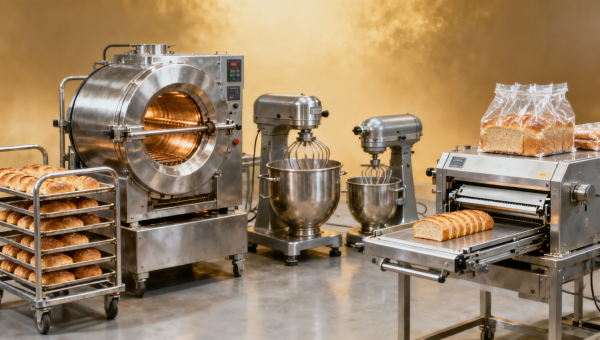
For bakeries balancing throughput, consistency, and capital efficiency, choosing a rotary rack oven bakery setup is not just about heat capacity. It affects workflow with a planetary mixer commercial, bread slicing machine commercial, and even commercial food packaging machine integration. This guide helps technical evaluators, operators, and procurement teams assess whether a rotary rack oven bakery delivers the production flexibility and long-term value their output demands.
In industrial and semi-industrial bakery environments, oven selection often becomes a cross-functional decision involving production, maintenance, quality control, finance, and plant engineering. A rotary rack oven can support broad product diversity, but it is not automatically the best choice for every line. Output targets, product geometry, baking profile, utility load, labor model, sanitation demands, and future line expansion all matter.
For buyers comparing baking equipment in a B2B setting, the practical question is simple: does a rotary rack oven bakery layout improve usable throughput without creating bottlenecks upstream or downstream? The answer depends on how the oven fits into the total process, from dough preparation and proofing to slicing, cooling, and final packaging.
Understanding What a Rotary Rack Oven Bakery Setup Really Delivers
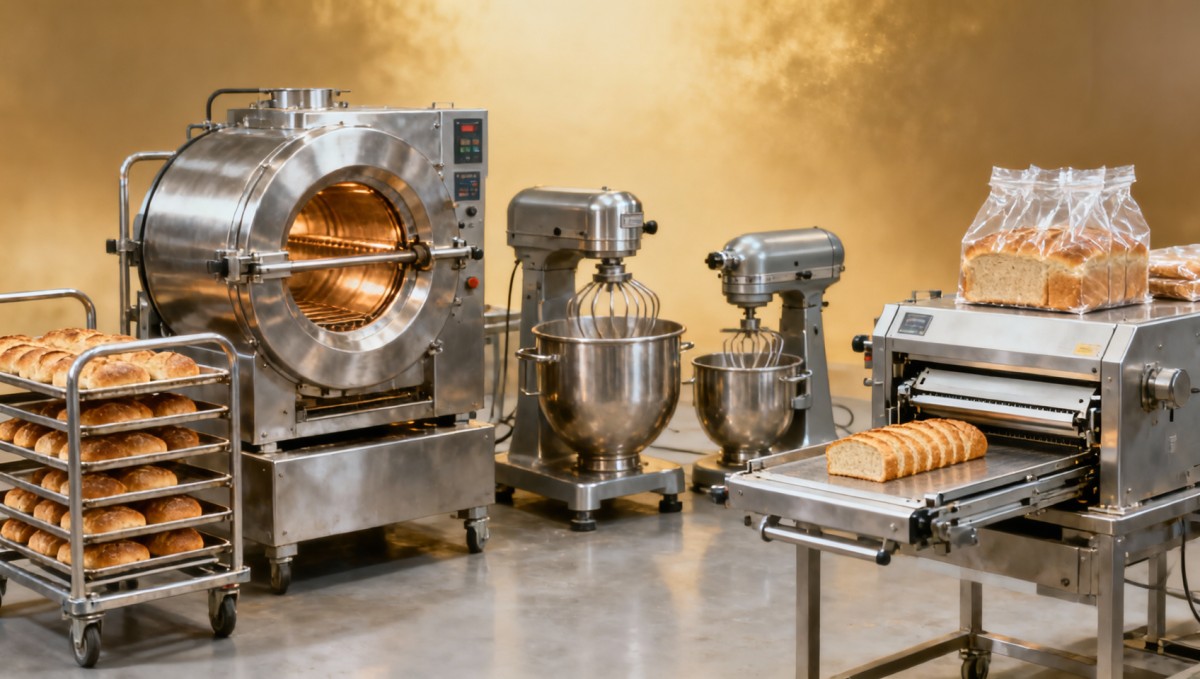
A rotary rack oven bakery system uses a rotating rack to move trays through a controlled heat chamber, helping improve uniformity across multiple shelves. In commercial use, common rack capacities range from 8 to 36 trays, depending on tray size, chamber height, and target products. This makes the format attractive for bakeries that need moderate to high-volume output with product flexibility.
The core operational advantage is batch versatility. A rotary rack oven can process bread loaves, buns, rolls, pastries, cookies, and some cakes on the same machine, provided airflow, steam, and temperature settings are configured correctly. Typical temperature ranges fall between 120°C and 300°C, while bake cycles may vary from 8 minutes for small rolls to 35 minutes or more for larger pan breads.
However, versatility should not be confused with universal suitability. If a facility runs only one or two high-volume SKUs for 16 to 20 hours per day, a tunnel oven may offer better energy efficiency per unit. By contrast, bakeries with 10 to 40 product changes per week often value the adaptability of a rotary rack oven bakery far more than absolute line speed.
Where rotary rack ovens fit best
This oven type is usually a strong fit for regional wholesale bakeries, commissary kitchens, supermarket central bakeries, and contract production sites handling mixed portfolios. It is also useful where floor space is constrained, because one chamber can often replace multiple smaller deck units while simplifying operator flow.
For technical teams, the more meaningful metric is not only trays per cycle, but finished kilograms per hour after considering loading, unloading, product transfer, and cooling time. A nominal 18-tray oven may look sufficient on paper, yet actual plant output can drop by 10% to 25% if rack exchange and staging are poorly designed.
Key performance variables
- Rack size and tray count, such as 16, 18, or 36 trays, determine batch volume and aisle handling requirements.
- Heat source selection, usually gas, diesel, or electric, affects utility cost, temperature recovery, and site infrastructure planning.
- Steam control influences crust formation, shine, and volume in breads and laminated products.
- Airflow pattern and rotation speed affect bake uniformity from top to bottom shelves.
For procurement and project teams, the decision should start with finished output by category, not with oven chamber size alone. A rotary rack oven bakery works best when cycle design, rack logistics, and product diversity are part of the same evaluation.
How to Match Oven Capacity to Real Production Demand
One of the most common buying mistakes is sizing the oven to peak theoretical demand without validating the surrounding process. If the planetary mixer commercial cannot keep dough supply stable, or if proofing capacity is undersized by 15% to 20%, a larger oven will spend too much time waiting for product. The result is higher capital expenditure with no meaningful increase in sellable output.
A useful planning method is to calculate output in three layers: batch capacity, hourly practical throughput, and shift-level sellable output. For example, if a rack holds 18 trays, each tray carries 12 loaves, and a full cycle including loading and unloading is 28 minutes, the nominal result is 462 loaves per hour. But if changeovers, staging gaps, and quality holds add 6 minutes per cycle, real output falls significantly.
This is why operations teams should model at least 3 scenarios: standard day production, peak seasonal production, and mixed-SKU production. In many bakeries, the third scenario reveals the true equipment need, because product switching introduces thermal adjustment, steam reset, and rack sequencing complexity that are not visible in a single-SKU test.
Capacity planning checkpoints
The table below helps buyers translate oven specifications into a more realistic decision framework. It compares the oven with upstream and downstream equipment that often define the true bottleneck in a rotary rack oven bakery environment.
The key conclusion is that output should be engineered as a system. In many projects, the oven is only one of 4 to 6 capacity gates. A well-sized rotary rack oven bakery line usually has balanced dough preparation, proofing, cooling, slicing, and packaging capacities within a practical variance band of about 10% to 15%.
A practical sizing sequence
- Define daily sellable output by product family, not just total kilograms.
- Map batch time from mixing to packaging, including cooling delays that may exceed 45 to 90 minutes.
- Calculate peak-hour demand and compare it with realistic oven cycle frequency.
- Add a contingency margin of 10% to 20% for maintenance, labor shifts, and seasonal SKU expansion.
This approach gives procurement managers and finance approvers a more credible basis for capital planning than relying on a single nameplate capacity figure.
Comparing Rotary Rack Ovens with Other Bakery Oven Options
A rotary rack oven bakery concept should always be benchmarked against deck ovens and tunnel ovens before a final investment decision. Each configuration supports a different production logic. Rotary rack systems are batch-oriented and flexible. Deck ovens offer strong artisanal control for crust and base bake. Tunnel ovens are built for high-volume continuity and SKU stability.
For mixed-product bakeries, the largest advantage of a rotary rack oven is changeover agility. If a site needs to run 8 to 15 different SKUs in a day, batch programmability can support efficient switching with less product compromise than long continuous systems. However, if a plant is running a single bread SKU at several thousand units per hour, a tunnel format may produce a lower unit cost over a 3 to 5 year horizon.
Quality teams should also evaluate product-specific bake results. Some crust-heavy artisan loaves may favor deck environments, while soft rolls, pan bread, and general pastry items often align well with rotary rack ovens. The right choice depends on the product portfolio, not on a universal hierarchy of oven types.
Operational comparison table
The following table summarizes where each oven type tends to perform best from a production and procurement perspective.
The decision often comes down to whether flexibility or unit economics matters more. In facilities supplying multiple retail channels, foodservice clients, or contract runs, the rotary rack oven bakery model usually offers the strongest balance between responsiveness and controlled output.
Common comparison mistakes
- Comparing only chamber size without reviewing labor steps per batch.
- Ignoring energy source availability, especially where electric load upgrades are costly or delayed.
- Assuming the same bake quality across breads, pastries, and dense products without trial runs.
- Underestimating cleaning and preventive maintenance access in compact bakery layouts.
A structured factory acceptance test or on-site product trial is often the safest way to validate the oven choice before final purchase approval.
Technical Selection Criteria for Procurement, QC, and Engineering Teams
For procurement and technical evaluation teams, the strongest rotary rack oven bakery investments are based on measurable selection criteria. These should include thermal stability, bake uniformity, steam repeatability, control interface, service access, spare parts lead time, and utility compatibility. A unit that performs well in demonstrations but is difficult to maintain can become a costly asset within 12 to 24 months.
Quality and safety managers should focus on consistency thresholds. For bread lines, internal crumb development, crust coloration, moisture retention, and pan-to-pan uniformity are often more important than peak temperature. In many bakery operations, acceptable process variance is defined by recipe and product type, but teams commonly target stable results within tightly managed operating windows rather than broad temperature claims.
Engineering teams, meanwhile, must confirm utility and installation conditions early. Gas supply pressure, electrical load, ventilation route, floor loading, door clearance, and rack maneuvering space can all affect total project cost. Even a suitable oven may become impractical if building modifications extend commissioning by 4 to 8 weeks.
Checklist for a disciplined technical review
- Confirm working temperature range and heat recovery time after door opening under full production conditions.
- Review steam generation performance for bread products that need crust development in the first minutes of baking.
- Check control recipes, alarm logic, and operator interface simplicity for multi-shift use.
- Verify spare parts availability and standard response time for service support, ideally within 24 to 72 hours for critical items.
- Assess sanitation access for fans, chamber surfaces, seals, and drain points to support routine cleaning.
Selection factors by stakeholder
Different stakeholders judge the same oven differently. Operators care about loading ergonomics and repeatable programs. QC teams look at bake consistency and contamination risk. Finance looks at depreciation, service cost, and energy demand. Project managers focus on lead time, installation complexity, and ramp-up risk.
A practical procurement file should therefore include at least 6 sections: process fit, technical specification, quality impact, maintenance plan, total cost estimate, and implementation schedule. This structure reduces the chance of selecting a unit that seems competitive at purchase stage but performs poorly over a 5 to 10 year lifecycle.
Where multi-country procurement is involved, buyers should also verify local compliance obligations for fuel systems, ventilation, electrical standards, and food-contact construction details. Even when product quality is strong, site compliance gaps can delay commissioning and raise project risk.
Implementation, Maintenance, and ROI Considerations
The best rotary rack oven bakery investment is not only the one that bakes well on day one, but the one that maintains output stability over years of operation. A typical project includes 5 stages: specification review, layout confirmation, utility preparation, installation and commissioning, then operator training and process tuning. Depending on plant readiness, the timeline can range from 3 to 10 weeks after equipment arrival.
Maintenance discipline directly affects real output. Door seals, burners or heaters, circulation fans, steam systems, rack lift interfaces, and control sensors all need scheduled inspection. In many bakery environments, daily cleaning, weekly verification, and monthly technical checks are sufficient for stable operation, while deeper service intervals may follow quarterly or semiannual plans depending on run hours.
From an ROI perspective, finance teams should avoid evaluating oven cost in isolation. The more relevant calculation includes labor efficiency, scrap reduction, energy use per batch, changeover responsiveness, and revenue protection through better consistency. If a rotary rack oven bakery setup reduces product rejects by even 2% to 4% while improving scheduling flexibility, the payback profile may be more attractive than a lower-priced but less stable alternative.
Lifecycle risk and mitigation table
The table below outlines common risks seen during implementation and operation, along with practical control measures.
The broader lesson is clear: payback is protected by process discipline. A rotary rack oven can deliver excellent flexibility and predictable output, but only when installation, training, and maintenance are treated as part of the investment rather than afterthoughts.
Frequently asked selection questions
How do I know if a rotary rack oven is too large for my bakery?
If planned utilization is consistently below about 60% of practical capacity, capital efficiency may be weak unless future volume growth is already contracted. Evaluate 12-month demand, not just current peak week demand, and compare that with true batch frequency.
Is it suitable for both bread and pastry production?
Often yes, especially in mixed bakery operations. The deciding factors are steam control, airflow management, rack loading discipline, and recipe-specific programs. Trial baking should cover at least 3 to 5 representative SKUs before purchase.
What lead time should project managers expect?
Lead times vary by supplier, configuration, and region, but many projects should budget several weeks for manufacturing and shipment, then additional time for site preparation, installation, validation, and operator training. Complex utility upgrades can extend total project duration.
Which downstream machine is most often overlooked?
In packaged bread operations, the commercial food packaging machine is frequently underestimated. A fast bake stage can still underperform commercially if cooled, sliced, and packaged product cannot clear the line at the same pace.
A rotary rack oven bakery setup is right for your output when your operation needs batch flexibility, reliable consistency, and scalable production without moving into a fully continuous tunnel system. The strongest results come from balancing oven capacity with mixers, proofing, slicing, cooling, and packaging rather than evaluating the oven in isolation.
For technical evaluators, operators, procurement teams, and decision-makers, the smartest next step is a structured assessment of product mix, hourly throughput, utility readiness, maintenance requirements, and downstream integration. To explore a tailored bakery equipment strategy, get a customized solution, consult product details, or learn more about integrated processing and packaging options that match your production goals.
Related Intelligence
- Milling MachineryHow to Choose a Horizontal Ribbon Blender for FeedHorizontal ribbon blender feed buying guide: compare vertical feed mixer machine options, animal feed mixers wholesale offers, and line fit for poultry, cattle, and floating fish feed plant projects.
- Milling MachineryWhy use a rotary drum sieve grain line?Why use a rotary drum sieve grain line? Discover how rotary drum sieve grain, grain pre cleaner machine, gravity separator grain, and magnetic separator for feed improve efficiency and quality.
- Milling MachineryHow to avoid grain destoner machine issues?Grain destoner machine issues explained: learn how gravity separator grain, grain pre cleaner machine, and rotary drum sieve grain setup affect performance, reduce downtime, and improve line efficiency.
The Morning Broadsheet
Daily chemical briefings, market shifts, and peer-reviewed summaries delivered to your terminal.
