
Planetary Mixer Commercial: Which Size Fits Best?
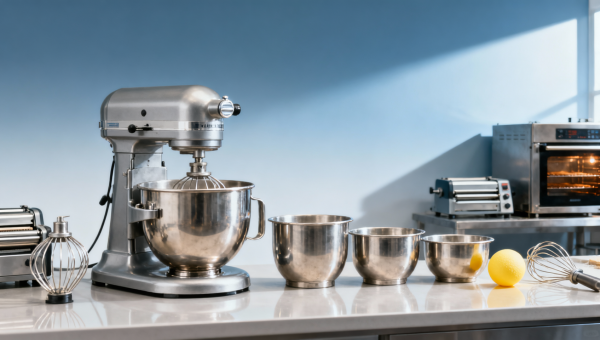
Selecting the right planetary mixer commercial size affects batch consistency, labor efficiency, hygiene control, and return on investment. For buyers comparing bakery equipment with systems such as a commercial food packaging machine, bread slicing machine commercial, tunnel oven for biscuits, or rotary rack oven bakery, capacity must align with production goals, ingredient behavior, and compliance needs. This guide helps technical teams and decision-makers evaluate practical sizing criteria with confidence.
In commercial baking, mixer sizing is not simply a matter of choosing the largest bowl. A planetary mixer commercial unit must fit product mix, hourly output, shift pattern, sanitation workflow, and available floor space. For procurement teams, engineering managers, QA leaders, and finance approvers, the right choice reduces changeover waste, avoids motor overload, and supports more predictable production planning.
This article focuses on practical sizing logic for industrial and mid-scale bakery operations. It covers common capacity ranges, how different doughs and batters behave in the bowl, what technical reviewers should verify, and how to compare investment value against other bakery line equipment. The aim is to support informed purchasing rather than oversimplified catalog decisions.
Why planetary mixer size matters in commercial bakery operations
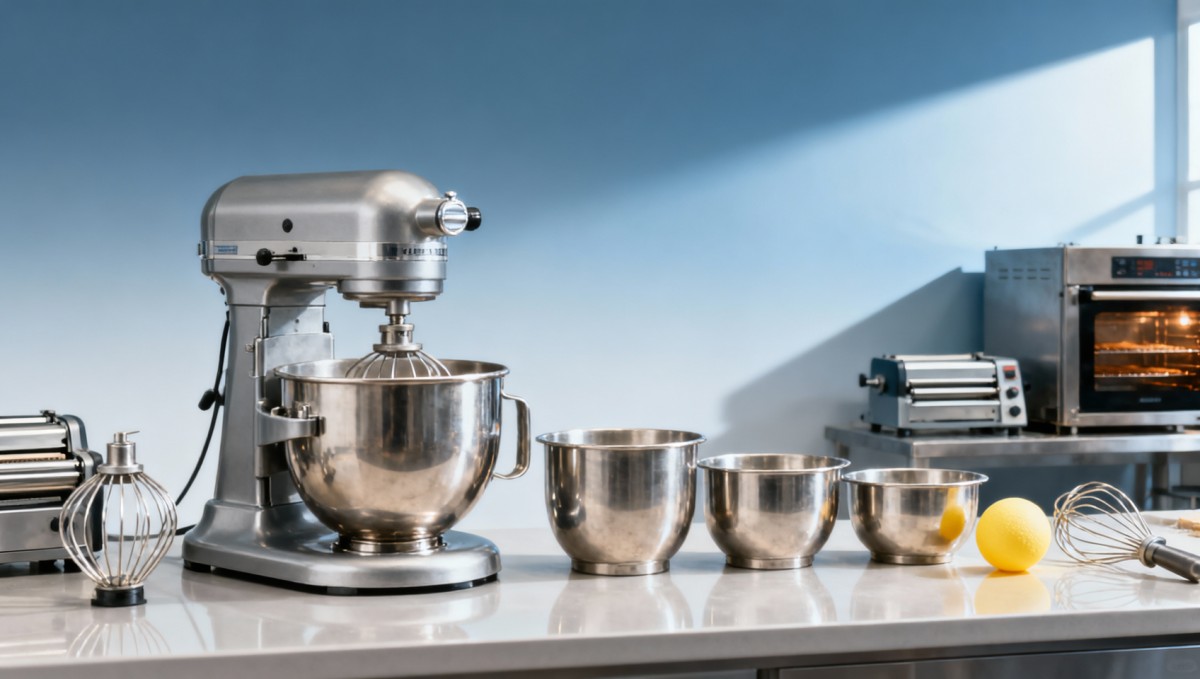
A planetary mixer commercial system is often used for cake batter, cream, icing, cookie dough, mashed fillings, light bread dough, and premixes. Unlike continuous mixers or spiral mixers, its value lies in versatility. However, that flexibility creates a sizing challenge. A bowl that is too small may require 3 to 5 extra batches per shift, while an oversized unit can reduce mixing efficiency for low-fill recipes and increase cleaning time.
For bakeries running 8-hour to 16-hour production cycles, mixer size directly affects labor deployment. If one operator spends an extra 6 to 10 minutes per batch on loading, scraping, and bowl change, the cumulative loss over 20 batches becomes significant. In operations linked with a tunnel oven for biscuits or a rotary rack oven bakery setup, uneven upstream batching can also create downstream bottlenecks.
Product quality is equally sensitive. High-fat batter, whipped cream, and medium-viscosity fillings respond differently to bowl geometry, agitator reach, and speed control. A planetary mixer commercial machine running at only 15% to 20% of its effective fill may struggle to achieve proper incorporation. Conversely, overloading above the practical limit can increase heat build-up, inconsistent dough development, and premature wear on gears or motors.
Operational consequences of poor sizing
The most common mistake is selecting by bowl liters alone. Actual usable capacity depends on recipe density, hydration, aeration target, and mixing stage. A 60-liter bowl does not mean every product can be mixed at 60 liters. Thick cookie dough may only use 40% to 50% of nominal volume, while whipped cream may run safely higher if speed and temperature are controlled.
- Undersized mixer: more batches, longer labor hours, more frequent bowl handling, and higher risk of production delay.
- Oversized mixer: poor small-batch performance, reduced mixing consistency, unnecessary power draw, and larger sanitation workload.
- Mismatched application: acceptable for batter but weak for dough torque, or suitable for cream but inefficient for dense inclusions.
For technical teams, the sizing decision should be tied to net batch mass, target batches per hour, and product family. In many plants, 3 to 4 core SKUs generate over 70% of mixer utilization. Those high-volume recipes should define the equipment baseline, not occasional specialty products.
Common capacity ranges and the best-fit production scenarios
The market usually offers planetary mixer commercial models in broad ranges such as 10 to 20 liters, 30 to 40 liters, 50 to 80 liters, and 100 liters or above. These ranges support very different production environments. Selection should reflect actual output per shift, product viscosity, and the number of planned changeovers per day.
The table below summarizes common capacity brackets and the bakery scenarios they typically support. These are planning ranges rather than universal rules, because dough density, ingredient temperature, and tool selection all affect effective load.
A practical takeaway is that 30 to 40 liter mixers often suit facilities producing several fresh batches per day, while 50 to 80 liter units are better for plants that need a more stable output window across 2 shifts. Above 100 liters, buyers should verify whether production really supports the batch size or whether two medium mixers would give better flexibility.
When one large mixer is not the best answer
Many buyers assume a larger planetary mixer commercial machine automatically improves efficiency. In reality, one 80-liter unit may be less effective than two 40-liter units if the facility runs 6 to 8 SKUs daily with frequent allergen or flavor changeovers. Parallel mixing can shorten waiting time, reduce cross-contamination risk, and keep one line active during cleaning or maintenance.
This is especially important when the mixer feeds packaging or oven systems with fixed throughput. If a commercial food packaging machine expects a steady handoff every 12 minutes, oversized batch cycles can create stop-start flow. Good sizing matches the tempo of the line, not just the maximum bowl volume.
Quick sizing checkpoints
- Calculate average net batch weight for the top 3 selling products.
- Estimate required batches per hour over peak demand, not low season only.
- Apply a practical fill ratio, often 40% to 80% depending on product type.
- Check whether sanitation, cooling, and staging time exceed mixing time.
Technical criteria beyond bowl volume
A sound planetary mixer commercial evaluation should include motor power, transmission robustness, speed range, bowl-lift method, attachment compatibility, surface finish, and safety interlocks. Bowl size is only one part of the selection. Dense dough and high-sugar formulations can generate torque demand far above what casual buyers expect.
In technical review meetings, it helps to define the recipe envelope first. For example, aerated sponge batter, cookie dough with inclusions, and whipped cream each stress the machine differently. Some bakeries operate at ambient temperatures of 20°C to 25°C, while others work in chilled rooms near 12°C to 16°C. These conditions influence viscosity and mixing load, which in turn affects the appropriate machine specification.
The following table highlights practical engineering factors that matter when comparing models from different suppliers. These points are useful for operators, project managers, QA teams, and purchasing departments that need objective evaluation criteria.
For most buyers, a balanced machine performs better than an oversized but under-specified unit. If a plant produces heavy dough for 4 hours daily and whipped products for 2 hours, the mixer must cover both torque and speed-control needs. Reviewing only nominal capacity may lead to underperformance despite a seemingly adequate bowl volume.
Hygiene, safety, and maintenance points
Quality and safety teams should verify whether the machine design supports routine sanitation in less than 15 to 25 minutes between product families, depending on recipe residue. Hard-to-clean guards, exposed fasteners, or rough finish areas can add labor and raise contamination risk. For allergen-managed plants, this concern may outweigh minor price differences.
Maintenance planning also affects size choice. Larger mixers can require heavier bowl handling and more downtime for transmission service. Buyers should ask for preventive maintenance intervals, spare-part availability, and expected wear points over the first 12 to 24 months of operation.
A practical buying framework for procurement, finance, and project teams
Selecting a planetary mixer commercial model should involve more than operator preference or initial quotation. A solid purchasing framework aligns production demand, total ownership cost, compliance, and installation constraints. In many organizations, the final decision touches at least 5 roles: operations, technical evaluation, procurement, quality, and finance.
A useful first step is to map the mixer into the broader bakery line. If the facility already uses a bread slicing machine commercial setup, proofing equipment, and a rotary rack oven bakery system, the mixer must support their throughput rhythm. A machine that produces one oversized batch every 40 minutes may not be as useful as a unit that feeds the line in smaller, more regular intervals.
Decision-makers should compare not only purchase price but also labor hours, expected waste, utility use, spare parts, sanitation effort, and the cost of production interruption. Even a 10% to 15% higher equipment price can be justified if the machine reduces one labor step per batch and cuts changeover time by 20 minutes across two daily cycles.
Recommended evaluation checklist
- Define monthly output target by product family, not total tonnage alone.
- Record actual batch size, mixing time, staging time, and cleaning time over at least 1 full production week.
- Verify utility compatibility, including voltage, frequency, floor loading, and working clearance for bowl movement.
- Review operator ergonomics, especially bowl lift, guard access, and attachment changes.
- Request a load-specific recommendation for dense dough if the plant handles high-viscosity recipes.
Typical procurement timeline
For standard equipment, quotation review to purchase approval often takes 2 to 6 weeks. Factory scheduling, shipment, and installation can add another 4 to 12 weeks, depending on region and customization level. If the machine is part of a wider line upgrade with packaging and oven integration, project managers should allow extra time for site readiness and operator training.
Finance teams also benefit from a simple return model. Estimate saved labor hours per week, reduced rejected batches, and avoided overtime during peak season. When a planetary mixer commercial upgrade removes even 1 repeated manual step from a 25-batch weekly schedule, the annual impact can be more meaningful than the difference between two close quotations.
Frequent sizing mistakes, risk control, and final selection advice
The most frequent sizing error is buying for theoretical future growth without validating current process data. A bakery expecting volume expansion in 18 months may still be better served by a medium-capacity planetary mixer commercial unit today if product mix remains unstable. Flexibility often has higher operational value than oversized capacity during transition periods.
Another mistake is using a generic “liters per batch” assumption across all products. Batter, cream, and dough have different fill behaviors. A safe decision requires at least 3 recipe trials or, if trials are not possible, a supplier review based on ingredient density and target texture. Technical teams should insist on application-specific guidance rather than a single broad capacity claim.
Risk control also includes installation planning. Door opening size, drainage access, cleaning zone layout, and operator traffic paths matter. A machine that technically fits the room may still create unsafe handling if bowl transfer requires tight turns or shared paths with hot trays from the oven area.
FAQ for commercial buyers
How do I know if I need a 40 L or 60 L planetary mixer commercial unit?
Start with your most frequent recipe, target batch weight, and number of batches per hour. If your operation runs small to medium batches with high SKU variety, 40 liters may provide better agility. If the same products repeat over 2 shifts with stable volumes, 60 liters can reduce labor touchpoints. The right answer depends on effective fill ratio, not nominal volume alone.
Is a planetary mixer suitable for heavy bread dough?
It depends on hydration, batch size, and production frequency. A planetary mixer commercial machine can handle some light to medium dough applications, but frequent heavy dough mixing may favor other mixer types. Buyers should confirm torque capacity, recommended dough load, and mixing duty cycle before purchase.
What should quality teams inspect before approval?
Focus on food-contact materials, ease of cleaning, guard design, residue-prone corners, bowl handling safety, and repeatable speed control. If the bakery has allergen separation requirements, check whether cleaning can be completed within the plant’s validated sanitation window, often 15 to 30 minutes depending on residue level.
How much spare capacity is reasonable?
Many facilities aim for moderate headroom rather than extreme oversizing. A practical approach is to allow room for planned growth while keeping the main recipes within an efficient fill band. Too much reserve can reduce batch quality for small runs and increase ownership cost without adding real throughput value.
The best planetary mixer commercial size is the one that fits your actual production pattern, recipe behavior, hygiene requirements, and line integration strategy. For most B2B buyers, success comes from balancing effective batch capacity, usable speed range, cleanability, and total operating cost rather than chasing maximum bowl volume.
If you are comparing bakery mixers alongside packaging, slicing, or oven equipment, a structured technical review will prevent costly mismatch and support smoother project execution. To evaluate the right configuration for your plant, consult your equipment team, request application-specific guidance, and get a tailored sizing plan before final approval. Contact us to discuss your production goals, compare options, and obtain a customized solution.
Related Intelligence
- Milling MachineryHow to Choose a Horizontal Ribbon Blender for FeedHorizontal ribbon blender feed buying guide: compare vertical feed mixer machine options, animal feed mixers wholesale offers, and line fit for poultry, cattle, and floating fish feed plant projects.
- Milling MachineryWhy use a rotary drum sieve grain line?Why use a rotary drum sieve grain line? Discover how rotary drum sieve grain, grain pre cleaner machine, gravity separator grain, and magnetic separator for feed improve efficiency and quality.
- Milling MachineryHow to avoid grain destoner machine issues?Grain destoner machine issues explained: learn how gravity separator grain, grain pre cleaner machine, and rotary drum sieve grain setup affect performance, reduce downtime, and improve line efficiency.
The Morning Broadsheet
Daily chemical briefings, market shifts, and peer-reviewed summaries delivered to your terminal.
