
Processing Machinery Downtime Causes That Are Easy to Miss
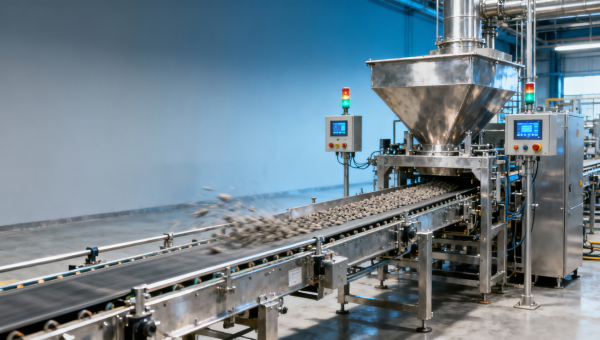
Unexpected processing machinery downtime often starts well before a breakdown alarm appears. In grain handling, feed additive dosing, fishery processing, and broader agricultural production environments, the most expensive stoppages are often triggered by small, overlooked issues: inconsistent material flow, poor cleaning access, sensor drift, lubrication mistakes, utility instability, and minor operator workarounds that slowly become standard practice. For maintenance teams, plant managers, technical evaluators, and financial decision-makers, the key takeaway is simple: many downtime events are preventable if hidden failure patterns are identified early and treated as system risks rather than isolated mechanical faults.
For organizations operating in regulated or margin-sensitive environments, missed downtime causes do more than reduce throughput. They can create quality deviations, disrupt supply commitments, raise energy and labor costs, weaken supply chain transparency, and compromise confidence in production planning. This article focuses on the easy-to-miss causes of processing machinery downtime that matter most in real operations, and how to assess them before they become costly failures.
Why “unexpected” downtime is usually not truly unexpected
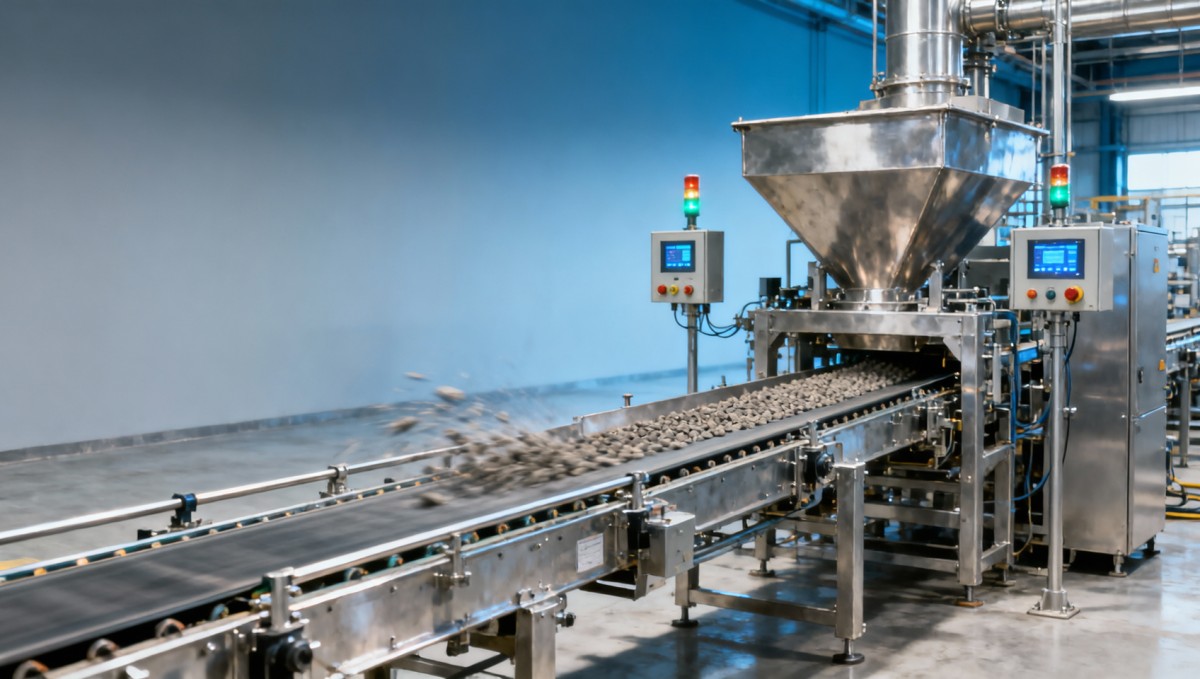
In most processing plants, downtime is called unexpected only because its early signs were not connected soon enough. A conveyor trip, pellet mill overload, blocked dosing line, separator fault, or packaging stop may look like a sudden incident, but the root cause often develops over days or weeks.
For technical teams and plant operators, this means the real problem is rarely just the failed component. It is usually a weak point in inspection routines, operating discipline, utility control, material handling, or maintenance planning. For business leaders and project owners, the implication is equally important: downtime reduction is not only a maintenance issue, but an operational reliability strategy tied directly to output, compliance, and cost control.
The most commonly missed causes tend to fall into a few categories:
- Material-related issues that create unstable machine loading
- Small utility fluctuations in air, steam, power, or water
- Instrument and sensor errors that are accepted as normal noise
- Cleaning and contamination buildup in hard-to-see areas
- Human workarounds that gradually bypass intended process control
- Poor alignment between production targets and machine design limits
Material behavior problems that look like equipment failure
One of the easiest downtime causes to miss is inconsistent material behavior. In grain storage and feed & grain processing, bulk solids do not always flow the same way from one batch, season, or supplier lot to the next. Variations in moisture, particle size, density, oil content, temperature, and contamination can all change how machinery performs.
This often leads to symptoms that are misdiagnosed as purely mechanical problems:
- Frequent feeder stoppages caused by bridging or rat-holing in hoppers
- Motor overloads due to denser-than-expected product
- Blockages in additive dosing lines from caking or hygroscopic materials
- Excess wear in conveyors and screw systems due to abrasive fines or foreign matter
- Unexpected shutdowns in grinders, mixers, and pelletizing systems caused by uneven feed rates
In fine chemicals, bio-extracts, and ingredient processing, the same principle applies. Slight changes in viscosity, solvent residue, powder cohesiveness, or crystallization behavior can create downtime events that maintenance teams wrongly attribute to machine defects.
The practical response is to review downtime together with raw material and in-process variability. If stoppages cluster around supplier changes, weather shifts, storage conditions, or specific formulations, the issue may be process-material interaction rather than machine condition alone.
Sensor drift and small control errors that slowly destabilize the line
Many plants focus on major component failures but underestimate minor control inaccuracies. A sensor that is slightly out of calibration may still appear functional, yet create repeated inefficiencies and shutdowns over time.
Examples include:
- Level sensors that misread vessel fill status and trigger false stops
- Temperature probes that drift enough to affect viscosity, drying, or reaction consistency
- Load cells that distort batching accuracy and cause downstream imbalance
- Pressure sensors that hide developing restrictions in lines or filters
- Speed feedback errors that create unstable synchronization between linked machines
For quality managers and safety teams, this is especially important because control drift can cause both downtime and product nonconformance. For financial approvers, the hidden cost is significant: a line may appear operational while gradually losing throughput, increasing waste, and consuming more labor hours for correction.
A strong evaluation method is to compare recurring downtime records with calibration history, alarm frequency, manual overrides, and product quality deviations. If operators are routinely compensating for “known quirks,” that is often a sign of a control issue that has already become a downtime risk.
Lubrication, alignment, and fastener issues that are too small to trigger urgency
Not all missed downtime causes are sophisticated. Some of the most expensive stoppages begin with basic reliability gaps that are considered too minor to prioritize.
Typical examples include:
- Using the wrong lubricant grade for temperature, load, or washdown conditions
- Over-lubrication of bearings, which can be as damaging as under-lubrication
- Minor shaft misalignment that increases vibration and seal wear
- Loose fasteners in vibrating systems, especially conveyors, screens, and mills
- Belt tension drift that reduces efficiency before causing a shutdown
- Seal degradation that allows dust, moisture, or chemicals to enter critical assemblies
These issues are often missed because the machine continues running while degradation builds slowly. By the time the fault becomes visible, teams are dealing with an urgent stoppage instead of a planned correction.
For technical evaluators and project managers, this reinforces a useful principle: reliability is often determined not by major equipment design alone, but by how consistently small maintenance standards are executed in the real plant environment.
Cleaning limitations and contamination buildup in hard-to-reach zones
In agricultural processing, aquaculture systems, feed production, and fine chemical environments, cleaning is directly linked to uptime. Areas that are difficult to access, inspect, or clean often become hidden sources of downtime.
Common trouble spots include:
- Dead zones in ducting, transfer points, and enclosed housings
- Residue buildup around dosing screws, valves, and nozzles
- Dust accumulation near motors, sensors, and electrical cabinets
- Sticky ingredient deposits in heated lines or pump internals
- Cross-contamination from incomplete changeovers
The result may be product carryover, false sensor readings, restricted movement, overheating, or sanitation-related stops. In some sectors, especially where GMP, FDA, EPA, or strict customer quality requirements apply, this also creates compliance exposure.
For decision-makers evaluating new machinery, cleaning accessibility should be treated as a productivity factor, not just a hygiene feature. Equipment that is difficult to clean often carries a hidden lifecycle cost through longer changeovers, more frequent faults, and higher labor dependence.
Utility instability that operators normalize until a major stop occurs
Processing machinery depends on stable utilities, yet many downtime investigations focus only on the machine itself. Short power dips, compressed air fluctuations, poor steam quality, cooling water inconsistency, or vacuum instability can all interrupt production without leaving obvious mechanical evidence.
These issues are easy to miss because operators may adapt informally:
- Resetting controls after brief voltage disturbances
- Reducing machine speed when air pressure drops
- Accepting irregular heating performance as normal in seasonal conditions
- Running around recurring valve or actuator delays
Over time, these workarounds hide the true root cause and distort maintenance reporting. What appears to be a machine reliability problem may actually be a utility quality problem affecting multiple assets.
For enterprise leaders focused on supply chain transparency and market forecasting, this matters because utility instability undermines production predictability. If uptime assumptions are built on unstable utilities, capacity planning and delivery commitments become less reliable than reported OEE numbers suggest.
Operator workarounds and undocumented process changes
When teams are under pressure to maintain output, they often create practical short-term fixes. These workarounds may keep the line moving, but they also introduce hidden downtime risk.
Examples include:
- Manually forcing equipment sequences to save time
- Disabling nuisance alarms without correcting the source
- Using unofficial startup or shutdown steps
- Changing setpoints to compensate for upstream inconsistency
- Skipping minor inspections during high-demand periods
These behaviors are not always signs of poor discipline. In many cases, they reveal that the current process design, alarm philosophy, staffing level, or equipment interface does not fully match real operating conditions.
For managers, the key is to treat repeated workarounds as improvement data. If experienced operators rely on memory and improvisation to avoid stoppages, then the process likely contains undocumented fragility. Standardizing best practice, updating SOPs, and redesigning recurring pain points can reduce both downtime and training risk.
How to identify the hidden causes before they become expensive failures
The most effective plants do not wait for a catastrophic breakdown to investigate reliability. They use a structured method to detect patterns across maintenance, operations, quality, and procurement data.
A practical review framework includes the following questions:
- Do downtime events correlate with certain raw materials, suppliers, or storage conditions?
- Are operators repeatedly intervening in the same part of the process?
- Do minor alarms, resets, or speed reductions happen more often than formal reports show?
- Are calibration records, lubrication tasks, and inspections completed on schedule and verified?
- Do cleaning delays or contamination findings align with recurring stoppages?
- Are utility quality trends monitored alongside machine availability?
- Is the machine being used within the operating envelope assumed during purchase or design?
For technical assessment teams, this kind of cross-functional review is more useful than judging machinery by nameplate capacity alone. For financial stakeholders, it provides a clearer basis for investment decisions by distinguishing between issues that require process discipline and those that justify capital upgrades.
What decision-makers should prioritize when reducing downtime risk
If the goal is to reduce processing machinery downtime in a meaningful way, priority should be given to the factors that improve operational stability across the whole system rather than isolated repairs.
The highest-value priorities usually include:
- Improving visibility into small recurring stoppages, not only major failures
- Linking downtime analysis with material variability, quality data, and utility performance
- Strengthening calibration, cleaning access, lubrication control, and alignment routines
- Capturing operator knowledge and converting informal workarounds into reviewed procedures
- Evaluating whether machine selection truly matches product characteristics and production targets
- Using preventive and condition-based maintenance where hidden wear trends are common
In sectors such as feed & grain processing, agricultural machinery systems, aquaculture technology, and fine chemicals, reliability is rarely achieved through one corrective action. It comes from recognizing that downtime is usually a system signal. The earlier overlooked weak points are identified, the lower the cost of correction and the stronger the long-term production confidence.
In summary, the downtime causes that are easiest to miss are often the ones that create the greatest long-term loss: unstable materials, sensor drift, cleaning blind spots, utility inconsistency, small maintenance errors, and normalized operator workarounds. Teams that investigate these hidden factors systematically can improve uptime, protect product quality, strengthen compliance, and make better operational and investment decisions. In real processing environments, the biggest reliability gains often come not from reacting faster to failures, but from seeing the quiet warning signs earlier.
Related Intelligence
- Milling MachineryHow to Choose a Horizontal Ribbon Blender for FeedHorizontal ribbon blender feed buying guide: compare vertical feed mixer machine options, animal feed mixers wholesale offers, and line fit for poultry, cattle, and floating fish feed plant projects.
- Milling MachineryWhy use a rotary drum sieve grain line?Why use a rotary drum sieve grain line? Discover how rotary drum sieve grain, grain pre cleaner machine, gravity separator grain, and magnetic separator for feed improve efficiency and quality.
- Milling MachineryHow to avoid grain destoner machine issues?Grain destoner machine issues explained: learn how gravity separator grain, grain pre cleaner machine, and rotary drum sieve grain setup affect performance, reduce downtime, and improve line efficiency.
The Morning Broadsheet
Daily chemical briefings, market shifts, and peer-reviewed summaries delivered to your terminal.
