
Fishery Equipment Choices That Raise Maintenance Costs Later
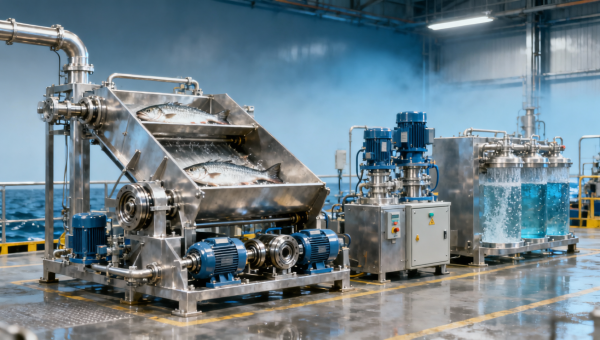
Choosing Fishery Equipment on purchase price alone can create hidden maintenance burdens that erode margins across Industrial Farming operations. For buyers, operators, and technical evaluators, understanding how component quality, processing machinery compatibility, and Supply Chain Transparency affect lifecycle costs is essential. This introduction examines the overlooked equipment choices that later increase downtime, spare-parts dependency, compliance risk, and long-term ownership expenses.
Why low upfront fishery equipment prices often turn into expensive maintenance problems
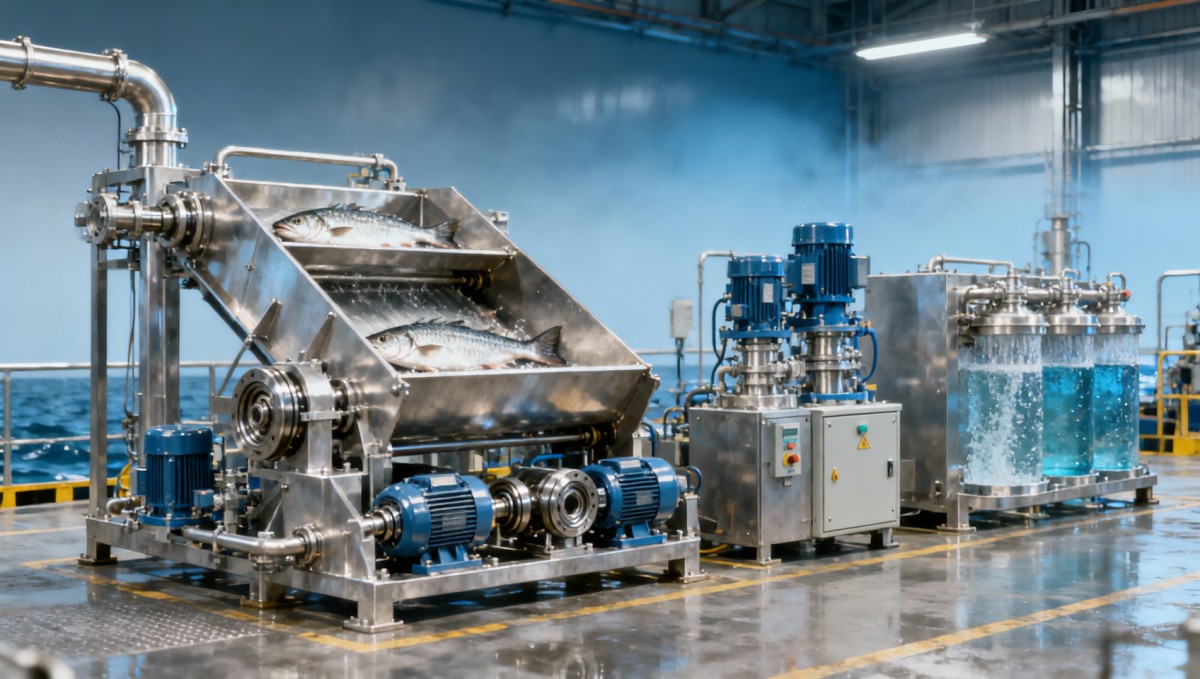
In aquaculture and fishery tech procurement, the lowest quotation often hides the highest cost of ownership. Pumps, feeders, graders, conveyors, aeration assemblies, filtration units, and control panels may look comparable on paper, yet maintenance outcomes differ sharply over a 12–36 month operating window. For industrial farming operators, the issue is rarely one dramatic failure. It is the accumulation of seal leaks, bearing wear, corrosion, sensor drift, delayed spare-parts supply, and labor-intensive servicing.
Technical evaluators usually see the first warning signs in material selection and serviceability. A stainless surface may appear acceptable until exposure to brine, high humidity, disinfectants, or organic residues reveals weak weld finishing or poor fastener quality. Operators notice another pattern: equipment that is difficult to clean or recalibrate tends to miss routine maintenance intervals. Once weekly maintenance slips into monthly reactive repairs, downtime expands and biosecurity risk increases.
Financial approvers should look beyond purchase price and ask three basic questions. How often does the machine require planned intervention? How long does each service stop last, typically 2–6 hours or closer to 1–2 shifts? How dependent is the site on proprietary parts with 2–4 week lead times? These factors directly influence maintenance budgets, harvest consistency, and labor planning.
Where hidden maintenance costs usually begin
Most hidden costs start at specification shortcuts. Undersized motors run hotter under continuous duty. Inadequate ingress protection allows moisture to damage controls. Mixed-material assemblies create galvanic corrosion points. Low-grade hoses harden faster under UV exposure and chemical washdown. None of these issues always appear during commissioning, but many emerge after 6–18 months of routine operation.
- Choosing equipment designed for intermittent use when the site actually runs 16–24 hours per day.
- Accepting closed proprietary control systems that only one vendor can diagnose or reset.
- Ignoring cleanability and access points, which increases service time for every inspection cycle.
- Failing to verify local or regional spare-part stocking, which turns a small fault into a long stoppage.
For information researchers and project managers, the practical takeaway is simple: fishery equipment should be assessed as an operating asset, not a one-time purchase. ACC’s editorial coverage is especially relevant here because lifecycle cost in aquaculture rarely depends on one machine alone. It depends on the interaction between materials, operating intensity, compliance obligations, sanitation routines, and the reliability of the supporting supply chain.
Which equipment choices raise lifecycle cost the most in aquaculture operations?
Some equipment decisions create predictable maintenance burdens across hatcheries, grow-out systems, onboard handling, and fish processing support lines. The most common cost drivers are poor corrosion resistance, inaccessible wear components, incompatible controls, and overcustomized designs that lock the facility into a narrow service channel. In practice, maintenance cost increases when routine work takes too long, requires specialist tools, or depends on imported parts for ordinary failures.
The table below summarizes typical fishery equipment choices that seem economical at procurement stage but often generate higher maintenance frequency, more unplanned shutdowns, and larger spare-parts exposure over time. It is intended as a screening tool for procurement teams, technical reviewers, and finance stakeholders evaluating total ownership cost.
The key lesson is not that low-cost equipment is always a poor choice. It is that the wrong low-cost choice often shifts expense from capex to opex. In fishery equipment selection, even a modest increase in maintenance labor every week can exceed the original price difference within one budget cycle, especially in facilities running multiple lines or seasonal peaks.
High-risk categories buyers should examine first
Start with components exposed to continuous moisture, vibration, solids, and cleaning chemicals. These usually include pumps, aeration blowers, feed delivery systems, water treatment skids, fish handling conveyors, and grading units. In these categories, the maintenance burden is usually determined by 4 core factors: materials, accessibility, standardization, and diagnostics.
A practical review list for technical teams
- Confirm whether wear parts can be changed on site in under 60–90 minutes without dismantling adjacent equipment.
- Check whether motors, sensors, and seals follow widely available industrial specifications.
- Review whether washdown areas require higher ingress protection and more robust cable routing.
- Verify if the supplier provides preventive maintenance intervals by hours, cycles, or monthly schedule.
When these checks are skipped, maintenance cost usually appears later as overtime labor, emergency freight for parts, and preventable production interruptions. For enterprise decision-makers, that is the real procurement risk.
How should buyers compare fishery equipment before approving procurement?
A reliable procurement process for fishery equipment should compare at least 5 dimensions: operating environment fit, component standardization, maintenance accessibility, controls compatibility, and spare-parts support. Purchase committees often evaluate price and output first, but long-term performance depends just as much on how the machine integrates into sanitation practices, electrical systems, and local technical support capacity.
The table below can be used as a practical procurement scorecard. It is especially useful for cross-functional reviews involving operations, finance, quality, and engineering. Rather than asking which machine is cheapest today, the scorecard asks which option is least likely to become a maintenance liability during the next 24 months.
This type of scorecard helps teams convert maintenance risk into a procurement discussion that finance can understand. If one option requires a 2–4 week wait for a common seal kit while another supports local sourcing within 48–72 hours, the apparent savings from the lower bid may disappear quickly. That is particularly true in production systems where delayed feeding, reduced oxygenation, or interrupted grading can affect output quality and biomass management.
Questions every procurement team should ask before approval
- What are the preventive maintenance intervals: daily, weekly, monthly, or by operating hours?
- Which 5–10 wear parts are most likely to be replaced during the first year?
- Can local technicians perform standard service without vendor attendance?
- How long is the normal spare-parts lead time for motors, sensors, belts, seals, and boards?
- Does the machine fit existing washdown, safety, and electrical protocols?
For project leaders, one more question matters: what happens if the supplier changes a component series after installation? Equipment with poor documentation or limited interchangeability often becomes harder to maintain after only one product revision cycle. ACC’s value in this context lies in helping buyers interpret technical whitepapers, manufacturing claims, and market signals with more discipline before they commit capital.
What maintenance, compliance, and quality risks are often overlooked?
Fishery equipment decisions affect more than repair budgets. They also influence hygiene control, worker safety, recordkeeping, and environmental compliance. Equipment that traps residue, leaks lubricants, creates unstable guarding conditions, or complicates calibration can produce cascading issues across operations and quality systems. In regulated or audit-sensitive environments, maintenance quality is inseparable from compliance quality.
For quality control and safety managers, 3 areas deserve close attention. First, cleanability: surfaces, joints, and dead zones should support routine sanitation. Second, containment: pumps, seals, and hoses should minimize leakage under expected duty cycles. Third, traceability: manuals, service logs, and component identification should be clear enough for internal review and external audit. These are not luxury features. They reduce operational uncertainty.
Common compliance-linked maintenance failures
A frequent problem is choosing equipment built without enough consideration for routine washdown and disinfection. Electrical enclosures may be adequate for dry utility rooms but not for wet production areas. Similarly, low-visibility part numbers or incomplete documentation can slow incident investigation. Where food-contact or water-contact surfaces are involved, procurement teams should align technical review with relevant hygiene and safety expectations rather than treating maintenance as a separate topic.
Another overlooked issue is sensor and control drift. Dissolved oxygen, temperature, feed rate, and flow-related systems all depend on stable measurement. If calibration procedures are unclear or require hard-to-source tools, operators may postpone checks. Over a quarterly cycle, small deviations can distort process control and increase stock stress, feed inefficiency, or water management problems.
A practical compliance review checklist
- Confirm whether operating manuals include preventive maintenance, cleaning steps, and calibration frequencies.
- Check whether wetted or exposed surfaces are suitable for the site’s sanitation chemistry and moisture profile.
- Review guarding, lockout access, and inspection points for routine operator safety.
- Verify whether documentation supports internal quality records and external compliance review.
Because ACC covers both primary industries and highly regulated chemical sectors, it offers an unusually useful perspective for buyers who need to connect equipment reliability with documentation discipline, traceability, and compliance expectations. That interdisciplinary lens is important when fishery operations increasingly intersect with environmental controls, feed inputs, water treatment, and process accountability.
How to reduce long-term fishery equipment maintenance cost before installation
The most effective way to reduce maintenance cost is to intervene before the equipment reaches site. By the time recurring failures appear, the procurement advantage has already been lost. Buyers should build a pre-installation review in 4 steps: duty confirmation, maintainability audit, spare-parts planning, and documentation review. This process does not need to be bureaucratic. It needs to be disciplined enough to catch avoidable design or sourcing risks.
A 4-step decision framework
- Match the equipment to the real operating pattern, including moisture level, solids load, cleaning frequency, and daily runtime.
- Review service access with operators and maintenance personnel, not only with sales or project teams.
- Define a first-year spare-parts list covering critical wear items and likely consumables.
- Check manuals, wiring references, calibration steps, and support channels before final acceptance.
For many sites, a practical target is to ensure routine service can be completed within planned maintenance windows of 2–4 hours, without crane access, destructive disassembly, or sole dependence on remote vendor intervention. Where operations run seasonally or at high biomass density, contingency planning should also cover fast-moving replacement items with local or regional supply options.
Alternative strategies may also make sense. Instead of choosing a heavily customized assembly, some facilities benefit from modular systems using standardized drives, open controls, and interchangeable sensors. The initial quotation may be slightly higher, but the long-term result is often better maintenance resilience. Standardization reduces technician training time, simplifies inventory planning, and improves replacement flexibility when product lines change.
Why decision-makers use ACC during vendor evaluation
ACC supports procurement teams that need more than promotional claims. Its editorial model brings together biochemical engineers, agricultural scientists, and trade compliance specialists to interpret manufacturing capability, technical documentation, and supply chain transparency in a commercially useful way. For buyers comparing fishery equipment, this means clearer insight into whether a supplier can support lifecycle reliability, not just shipment of the initial unit.
That matters when the procurement decision must satisfy multiple stakeholders at once. Operators need dependable uptime. Technical reviewers need maintainable design. Finance teams need predictable operating cost. Safety and quality managers need traceable documentation. ACC helps connect those interests into a more credible purchasing discussion.
FAQ and next step: what should your team review before selecting fishery equipment?
Before final vendor selection, many teams still have the same practical questions. The answers below are designed for buyers, operators, quality teams, and project managers who need a fast but structured reference for reducing future maintenance costs without slowing procurement unnecessarily.
How do I know if fishery equipment is likely to become maintenance-heavy later?
Look for 5 warning signs: non-standard wear parts, poor service access, weak documentation, unsuitable materials for wet or saline conditions, and unclear local support. If a supplier cannot define maintenance intervals, common replacement items, and expected lead times, the risk is usually higher. Ask for a first-year maintenance plan before issuing the purchase order.
What procurement detail is most often missed by finance approvers?
Spare-parts dependency is often underestimated. A lower-priced machine may require proprietary parts with 2–4 week delivery, while a slightly more expensive alternative uses standardized components available within days. The financial impact is not just part price. It includes downtime, labor inefficiency, disrupted schedules, and possible quality loss.
How long should maintenance planning cover before installation?
A practical planning window is the first 12 months, with specific attention to the first 90 days after commissioning. During this period, teams should identify critical consumables, calibration needs, expected inspection frequency, and escalation contacts. For heavier-duty systems, a 24-month parts and service outlook is even more useful.
Which standards or compliance topics should be reviewed?
Review the standards relevant to your region and application, especially electrical safety, environmental controls, sanitation compatibility, and any documentation needed for internal quality systems. If your process links to broader regulated sectors or export requirements, documentation quality and traceability become even more important than headline equipment output.
Why choose us as an information partner before procurement?
AgriChem Chronicle helps industrial buyers move from marketing claims to evidence-based equipment evaluation. If your team needs support on parameter confirmation, product selection, component compatibility, delivery lead times, documentation depth, certification expectations, sample or pilot discussion, or quotation comparison, ACC provides a specialized editorial environment grounded in primary industries, biochemical processes, and global compliance realities.
Contact us when you need a more rigorous view of fishery equipment choices before budget approval or technical sign-off. We can help frame the right vendor questions, compare maintainability factors, identify supply chain transparency issues, and organize decision inputs for procurement, engineering, quality, and finance teams. That is the fastest way to avoid equipment choices that look affordable now but raise maintenance costs later.
Related Intelligence
- Commercial FishingFishery Equipment Choices That Raise Maintenance Costs LaterFishery Equipment buying mistakes can drive hidden maintenance costs across Industrial Farming. Learn how processing machinery fit and Supply Chain Transparency reduce downtime and protect margins.
- Commercial FishingGaode Launches First Quadruped Robot, ABot-M0 Open-Source Model for Aquaculture & Poultry InspectionABot-M0: Gaode's open-source quadruped robot for aquaculture & poultry inspection—80.5% task success, field-tested in Brazil & Vietnam. Discover how it transforms autonomous farm inspections.
- Commercial FishingGaode Launches First Quadruped Robot, Open-Sources ABot-M0 for Aquaculture & PoultryGaode launches first quadruped robot & open-sources ABot-M0 — an embodied AI model for aquaculture and poultry automation, with 80.5% Libero-Plus task success.
The Morning Broadsheet
Daily chemical briefings, market shifts, and peer-reviewed summaries delivered to your terminal.
