
How to choose aquaculture products that meet FDA standards?
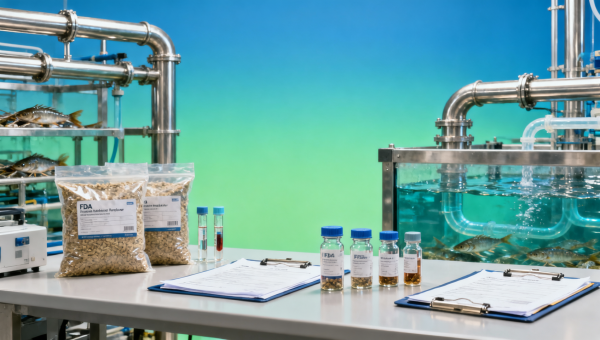
Choosing aquaculture products that meet FDA Standards requires more than checking labels. From aquaculture equipment and Feed Ingredients to Bio Ingredients used in aquaculture production, buyers must evaluate compliance, traceability, and process integrity. This guide offers Peer Analysis for operators, quality teams, and decision-makers seeking safer sourcing, stronger Aquaculture Tech performance, and alignment with regulated supply chains linked to industrial milling and pharmaceutical processing.
For commercial farms, integrators, processors, and procurement teams, the challenge is rarely a single product claim. It is whether the full chain—from raw material selection and manufacturing controls to transport, storage, and on-site use—can withstand regulatory review and internal audit. In aquaculture, one weak point can affect harvest timing, residue risk, animal performance, and market access.
FDA-related purchasing decisions usually involve multiple stakeholders: operators want stable performance, quality managers need documented control points, finance teams compare lifecycle cost, and project leaders must reduce commissioning delays. A disciplined evaluation method helps buyers balance compliance, throughput, and budget without sacrificing supply reliability.
Understand What “FDA-Ready” Means in Aquaculture Purchasing
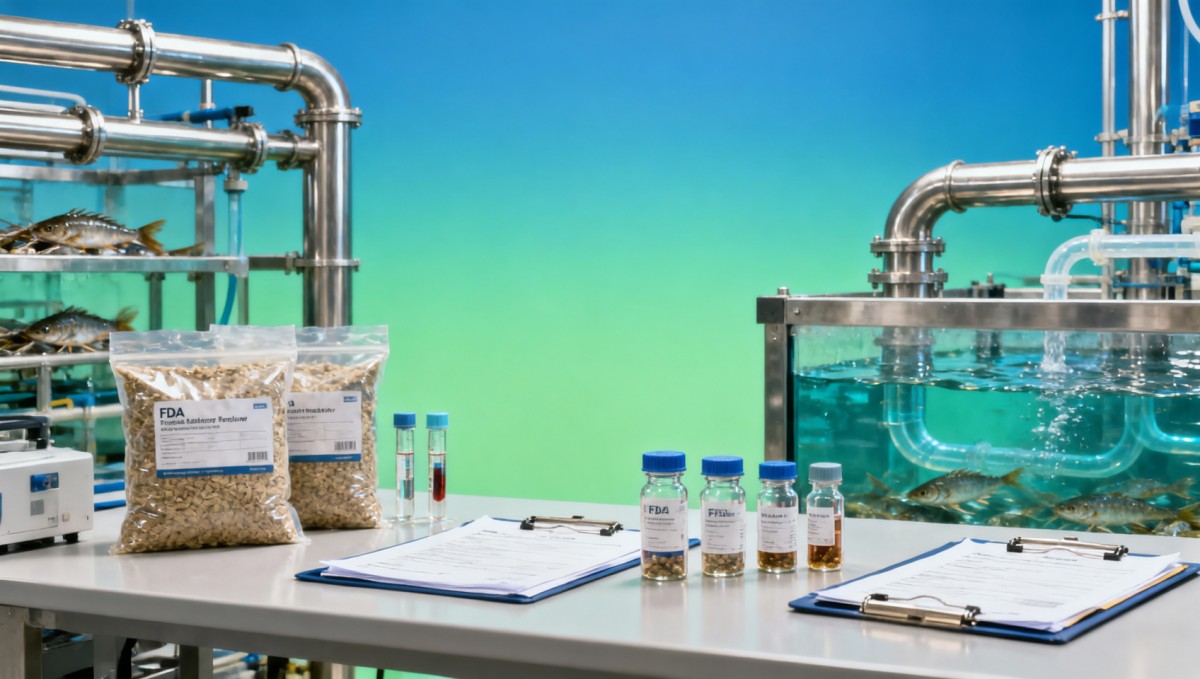
In practice, FDA alignment does not mean every aquaculture product is directly “FDA approved” in the same way. The correct question is whether the product, ingredient, contact material, or process fits the intended use, supports legal market entry, and is backed by records that can be reviewed during quality or import inspections. For most buyers, this means evaluating documentation, residue risk, contamination control, and supplier discipline across at least 4 checkpoints.
Aquaculture procurement often covers 3 broad categories: production inputs such as feed ingredients and bio-based additives, operational systems such as pumps, piping, tanks, and aeration components, and processing-contact products used in harvesting, chilling, or transfer. Each category carries different compliance questions. A feed premix may require ingredient traceability and lot control, while a water-contact liner may need material suitability and migration-related declarations.
Buyers should also distinguish between regulatory language and marketing language. Claims such as “food safe,” “export grade,” or “clean label compatible” are not enough on their own. A qualified supplier should be able to provide a specification sheet, certificate package, manufacturing site information, batch or lot coding logic, and retention time for records, often ranging from 2 to 5 years depending on the product category and customer protocol.
For decision-makers in integrated operations, the most practical standard is not a slogan but an evidence trail. If a product enters a regulated food chain, touches culture water, affects fish metabolism, or influences processing hygiene, the purchasing team should review intended use, contamination pathways, and whether supplier controls align with HACCP, GMP-style discipline, and import documentation needs.
Core compliance areas buyers should verify
- Ingredient and material identity: exact composition, technical grade vs. feed grade, and any restricted substances.
- Traceability: lot coding, production date, shelf life, and the ability to trace one batch back to raw inputs within 24–48 hours.
- Manufacturing controls: documented sanitation, changeover procedures, contamination prevention, and deviation handling.
- Transport and storage integrity: sealed packaging, temperature or humidity limits, and documented handling conditions.
How product category changes the review depth
A probiotic, acidifier, pigment, mineral supplement, or plant extract used in feed typically deserves deeper scrutiny than a non-contact structural component. Likewise, recirculating aquaculture system modules that include seals, adhesives, membranes, or dosing units may require more documentation than standard frames or external support hardware. Review effort should rise with exposure risk and regulatory sensitivity.
The table below helps teams map common aquaculture product types to the evidence normally requested during purchasing and quality review.
The key takeaway is simple: documentation depth should follow exposure risk. Products that directly affect fish health, residue profile, or product-contact hygiene need stronger evidence than general infrastructure items. That approach improves both audit readiness and purchasing efficiency.
Evaluate Supplier Documentation, Traceability, and Process Control
A technically sound product can still become a poor purchase if the supplier cannot document consistent production. For B2B buyers, supplier control should be assessed in 5 layers: legal identity, manufacturing discipline, quality testing, traceability response speed, and change notification. When any of these layers is weak, quality teams usually spend more time on incoming inspection, deviation management, and corrective action.
Start with document review, but do not stop there. Ask whether the supplier can explain how a lot is created, how long a batch runs, what critical parameters are monitored, and what happens if a result falls outside specification. A reliable supplier should answer these questions in operational terms, not only with sales language. Response time matters too; in many industrial supply chains, document retrieval within 1 business day is a practical benchmark for approved vendors.
Traceability is especially important for aquaculture products linked to regulated export channels. If a contamination event occurs, teams may need to identify all affected lots shipped over a 30-day, 60-day, or 90-day window. Suppliers that cannot support forward and backward trace exercises quickly create unnecessary operational risk.
Process control also determines consistency. For example, a fermentation-derived ingredient may have tighter sensitivity to moisture and temperature than a mineral input. A polymer component used in filtration or dosing may require controlled curing and post-production cleaning. Buyers should ask what variables are monitored, how often calibration occurs, and whether retention samples are kept for defined periods such as 6 months, 12 months, or until expiry.
A practical supplier screening sequence
- Confirm legal manufacturer and production site, not only the trading entity.
- Review specification, SDS, COA format, and any material or ingredient declarations.
- Request a sample documentation pack covering 2–3 recent lots.
- Assess traceability response speed and change-control communication process.
- Validate packaging, shipping conditions, and nonconformance handling procedures.
Red flags that often appear before larger compliance problems
Common warning signs include vague ingredient names, inconsistent COA formats, no clear batch coding logic, large variations in color or odor between lots, and frequent substitution of source materials without prior notice. Another red flag is when a supplier shares certificates but cannot explain the process behind them. For regulated procurement, process transparency matters as much as the document itself.
The following comparison table can help procurement, QA, and finance teams score suppliers in a more objective way before final approval.
This type of structured review reduces hidden costs. Even if a lower-priced source appears attractive, weak documentation can trigger more inspections, more rejected lots, and longer approval cycles. Over a 12-month period, those indirect costs often outweigh an initial unit-price advantage.
Match Product Specifications to Operating Conditions and Risk Level
An aquaculture product may be compliant on paper yet still underperform in the field if it does not match the farm’s species, water system, throughput, or cleaning protocol. Specification review should therefore connect compliance evidence with actual operating conditions. This is particularly important in recirculating systems, hatcheries, shrimp farms, and integrated feed-to-harvest operations where small mismatches create repeated downtime or quality drift.
For equipment, buyers should verify temperature range, chemical compatibility, pressure tolerance, flow rate, cleaning method, spare part interval, and expected service life. For ingredients and bio-inputs, the review should cover inclusion rate, solubility or dispersion behavior, stability window, interaction with water chemistry, and whether storage conditions such as 15–25°C or dry-room control are required. These technical details directly affect both compliance and performance.
Operators and project managers should also compare startup conditions with steady-state conditions. Some systems perform well during a 7-day pilot but become unstable after 60–90 days of continuous exposure to salinity, UV, biofouling, or cleaning chemicals. Likewise, some ingredients are acceptable during initial feeding trials but show handling or uniformity issues at commercial mixing volumes above 5 tons or 10 tons per batch.
The goal is to reduce the gap between supplier specification and site reality. This requires technical dialogue early in procurement, not after installation or first delivery. Teams should ask for operating envelopes, maintenance intervals, cleaning compatibility, and failure modes before purchase orders are finalized.
Specification points that should never be skipped
- Contact conditions: direct feed contact, direct water contact, splash exposure, or dry-zone installation.
- Environmental stress: freshwater vs. marine salinity, UV exposure, pH fluctuations, and cleaning chemical contact frequency.
- Operational intensity: daily runtime, target throughput, dosing accuracy, and expected maintenance every 250, 500, or 1,000 hours.
- Storage and handling: shelf life of 6–24 months, sealing requirements, and transport conditions during hot or humid seasons.
Typical mismatch scenarios
A common example is choosing an additive based only on active content without checking its flowability in automated dosing or feed blending lines. Another is selecting a pump or membrane component that meets nominal flow requirements but is not suited to the cleaning frequency used on site. In both cases, the product may satisfy initial paperwork review yet fail operationally within weeks.
To avoid such failures, run a pre-purchase review involving operations, QA, and engineering together. A 3-way review often surfaces hidden risks faster than a document-only procurement path. For higher-value systems, a short validation phase of 2–4 weeks can provide far better cost control than a rushed full-scale rollout.
Build a Purchase Workflow That Supports Audit Readiness
Buying FDA-aligned aquaculture products should be treated as a controlled workflow, not a one-time transaction. The strongest teams use a staged process that links sourcing, technical review, supplier approval, incoming inspection, and ongoing performance monitoring. This reduces approval delays, protects production continuity, and gives finance teams a clearer picture of total cost over 6 months to 24 months.
A practical workflow usually has 5 stages: product definition, supplier screening, technical validation, commercial approval, and post-purchase review. Each stage should have assigned owners. For example, operations define performance requirements, QA reviews documentation, procurement handles quotation comparison, and finance approves based on total landed cost and risk exposure. When ownership is unclear, critical records are often missed.
Incoming control is equally important. Even approved products should be checked against predefined acceptance criteria such as packaging integrity, lot identity, key COA fields, and visible condition. For sensitive ingredients or high-risk product-contact items, some companies also retain reference samples from every lot for at least one shelf-life cycle or a minimum of 6 months.
Post-purchase review closes the loop. Teams should track 4 indicators at minimum: delivery reliability, lot consistency, documentation accuracy, and field performance. A quarterly review cadence is often enough for stable vendors, while new or critical suppliers may need monthly review during the first 90 days.
Recommended implementation workflow
This workflow helps procurement teams move beyond price comparison. It creates a repeatable decision framework that supports audits, faster onboarding, and more stable performance across multiple sites or seasonal production cycles.
Cost control without lowering compliance quality
Finance approvers should compare landed cost rather than ex-works price alone. Include freight sensitivity, required testing, storage losses, maintenance frequency, spare parts consumption, and failure-related downtime. A product that costs 8% more upfront may still reduce annual cost if it cuts rejected lots, emergency replacement, or labor-intensive inspection.
This is particularly relevant for industrial aquaculture and feed-linked operations where one delayed shipment can interrupt a multi-stage schedule. For critical items, dual-sourcing or safety stock covering 2–6 weeks is often more practical than relying on a single low-cost source with uncertain lead time.
Common Mistakes, FAQs, and Final Selection Advice
Many procurement problems come from treating compliance as a checkbox instead of a system. Buyers may focus on one certificate, one sample, or one attractive price point while missing the broader control chain. In regulated aquaculture supply, stronger outcomes come from combining technical fit, traceability depth, supplier responsiveness, and total-cost discipline.
Another frequent mistake is separating procurement from operations. When operators are not involved early, equipment may be hard to clean, ingredients may be difficult to dose, and maintenance intervals may not match actual farm routines. Involving end users during the first review round often prevents avoidable rework within the first 30 days after delivery.
The final selection should therefore answer 4 questions clearly: Is the product suitable for the intended use? Can the supplier prove consistent control? Does the product perform under real operating conditions? Can the records support internal and external review if needed? If any answer is uncertain, the purchase is not yet ready.
FAQ: How long does qualification usually take?
For standard consumables with complete documents, supplier qualification may take 5–10 business days. For higher-risk ingredients, product-contact systems, or multi-site approvals, 2–6 weeks is more realistic. If on-site validation or trial production is needed, the full cycle can extend to 30–60 days.
FAQ: Which documents matter most during review?
The most useful documents are the specification sheet, COA template, SDS where relevant, lot coding explanation, origin or composition statement, and change notification policy. For equipment, material declarations, cleaning instructions, spare parts lists, and maintenance intervals are also important. The right document set depends on whether the product is an ingredient, a process aid, or a contact surface component.
FAQ: What are the most common selection errors?
The top errors are relying on generic claims, failing to test documentation across multiple lots, ignoring transport and storage conditions, and approving products without cross-functional review. Another mistake is focusing only on compliance paperwork while overlooking real-world performance under salinity, cleaning cycles, or high-throughput feeding and pumping conditions.
FAQ: When should a buyer request a trial before full purchase?
A trial is recommended when the product directly affects animal performance, residue profile, dosing accuracy, or continuous system uptime. It is also wise when switching suppliers, changing formulation sources, or installing product-contact equipment in high-density systems. A 2-week to 4-week controlled trial is often enough to identify major fit issues before full-scale commitment.
Selecting aquaculture products that meet FDA-related expectations is ultimately a risk-management exercise grounded in technical detail. Buyers who combine documentation review, supplier verification, operating-fit analysis, and structured onboarding will make better decisions across compliance, performance, and cost. To evaluate specific aquaculture equipment, feed ingredients, or bio-input sourcing pathways in more detail, contact us to discuss your application, request a tailored assessment, or explore more solutions aligned with regulated supply chains.
Related Intelligence
- RAS SystemsSASO Accelerates RAS Systems Local Certification for Chinese FirmsSASO accelerates RAS systems local certification for Chinese firms—leverage CNAS & ISO 22000 to skip retesting and get VOC in 7 days!
- RAS SystemsSASO Streamlines RAS Systems VOC for Chinese ExportersSASO Streamlines RAS Systems VOC for Chinese exporters: Get mandatory Saudi VOC in just 12 days with CNAS testing & ISO 22000 — faster clearance, smarter compliance.
- RAS SystemsWhich Aquaculture Hardware Is Worth Buying First?Aquaculture accessories and aquaculture utilities worth buying first: discover aquaculture hardware that boosts water quality, uptime, and compliance for faster, safer farm growth.
The Morning Broadsheet
Daily chemical briefings, market shifts, and peer-reviewed summaries delivered to your terminal.
