
Commercial flour mill machinery upgrades that actually improve flour stability
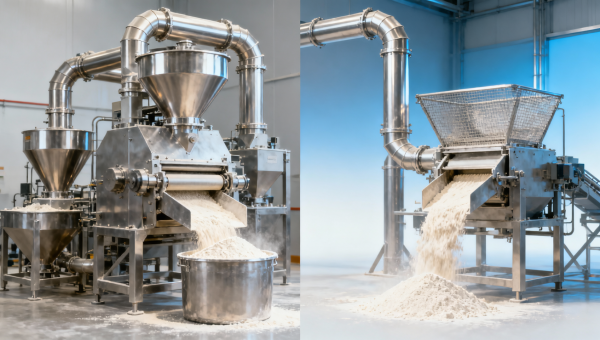
Upgrading commercial flour mill machinery is no longer just about boosting throughput; it is about delivering consistent flour stability, tighter particle control, and safer production outcomes. For buyers comparing a wheat flour milling plant with adjacent processing assets such as coffee processing machinery, parboiled rice mill plant systems, or seed oil expeller wholesale lines, the real value lies in upgrades that reduce variability, improve quality assurance, and strengthen long-term operating efficiency.
In practical milling environments, flour stability means more than a uniform bag appearance. It affects ash consistency, moisture behavior, dough performance, shelf life, downstream blending accuracy, and customer complaint rates. For operators, quality teams, procurement managers, and plant executives, the right machinery upgrade must therefore be judged by measurable process control, not by motor size alone.
This matters even more in integrated primary processing businesses where grain handling, ingredient preparation, and adjacent processing lines share utilities, labor, and maintenance resources. A flour mill that cuts particle deviation from roughly 8% to 3%, lowers unplanned stoppage by 10–20%, and supports faster sanitation cycles can create value across production planning, compliance, and financial approval.
For ACC readers evaluating capital allocation, this guide focuses on the machinery upgrades that reliably improve flour stability in commercial settings, what technical teams should verify before purchase, and how to implement improvements without disrupting core milling output.
Why flour stability has become the real upgrade benchmark
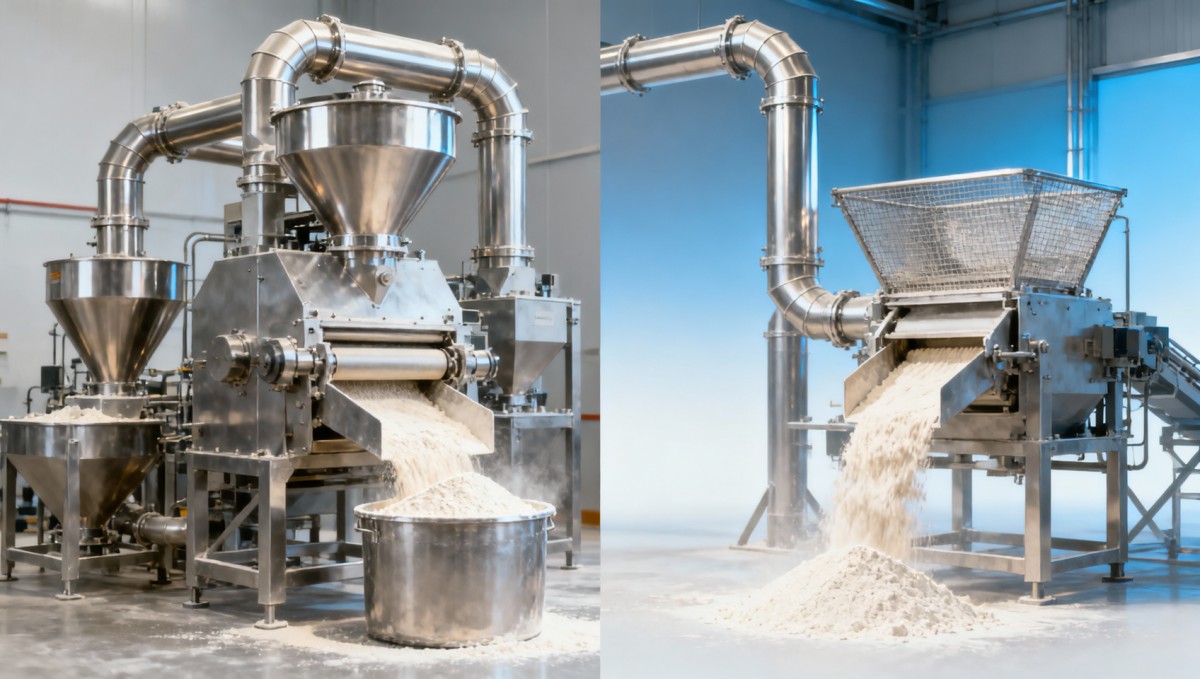
In many commercial mills, the historic upgrade metric was tons per day. That remains relevant, but a 120 TPD line with unstable flour can generate more downstream cost than a 90 TPD line with tighter process discipline. Variability in granulation, moisture, or bran contamination often shows up later as rejected batches, blending corrections, or customer quality disputes.
Flour stability is shaped by a chain of mechanical and control decisions: cleaning efficiency, conditioning precision, break release settings, roller balance, sifter integrity, pneumatic transport stability, and final blending accuracy. A weakness at any one point can magnify lot-to-lot inconsistency, especially when wheat origin, protein level, or seasonal moisture shifts by 1–2 percentage points.
For technical evaluators, the key question is simple: does the upgrade reduce process variation within normal operating ranges? In many plants, a practical target is to keep finished flour moisture variation within ±0.3% to ±0.5%, major particle distribution within a narrow internal band, and metal or foreign matter risk controlled through validated inspection points.
For procurement and finance teams, stable output also supports a stronger cost model. Better extraction control, fewer rework loops, and lower dust burden can reduce waste, labor intervention, and consumable use over a 12–36 month window. That makes stability-focused upgrades easier to justify than purely capacity-driven retrofits.
Where instability usually starts
Most mills do not suffer from one catastrophic defect. Instead, they accumulate small deviations across several process nodes. Common sources include uneven grain tempering, worn corrugation on rollers, inconsistent feed rates, screen blinding in plansifters, and dust recirculation that disturbs product purity.
- Raw grain moisture entering the mill outside the preferred conditioning window, often by 0.5–1.5%.
- Roll gap drift caused by wear, vibration, or manual setting inconsistency over long shifts.
- Insufficient aspiration and air balancing, leading to bran carryover and unstable separation.
- Lack of final flour blending control, which can mask variability only temporarily.
These issues are not unique to flour plants. Buyers familiar with coffee processing machinery or parboiled rice mill plant systems will recognize the same pattern: upstream conditioning and separation stability usually determine final product consistency more than nominal machine speed.
Machinery upgrades that typically deliver the biggest stability gains
Not every retrofit offers the same return. In commercial flour milling, the most effective upgrades usually improve control at transition points: before grinding, during reduction, and at final classification. Plants with limited budgets often get better results from 4 targeted improvements than from one large but poorly integrated equipment replacement.
The first high-impact area is grain cleaning and conditioning. Improved destoning, magnetic separation, scouring, and moisture dosing reduce raw material noise before the wheat reaches the rolls. In practical terms, conditioning systems that hold dwell time in a controlled range such as 12–24 hours, depending on wheat type, often deliver more uniform milling behavior.
The second area is the roller mill section. New rolls, better gap control, vibration monitoring, and more stable feeding systems can narrow particle fluctuation and reduce unnecessary starch damage. Even when the frame remains in place, upgrading feed rolls, sensors, and adjustment mechanisms may materially improve flour stability.
The third area is plansifting and pneumatic conveying. Fine flour classification depends on screen condition, balanced airflow, and reduced pulse variation through the transport loop. If a plant upgrades grinding but leaves old sifter cloths, poor seals, or unstable aspiration untouched, the final product will still vary more than expected.
Priority upgrade areas by operating effect
The table below summarizes where stability-oriented investments generally produce the clearest operational benefit in medium and large commercial mills.
A useful procurement takeaway is that stability gains are often cumulative. Upgrading only one machine can help, but coordinated improvements across cleaning, grinding, sifting, and blending usually provide the strongest reduction in variability.
Do not ignore utility-side retrofits
Compressed air quality, dust collection, fan balancing, and electrical stability can all influence flour consistency. Plants running with voltage fluctuation, overloaded filters, or inconsistent air pressure frequently misdiagnose these utility issues as core machinery defects. In retrofit planning, at least 5–7 utility checks should sit alongside machine inspection.
How to evaluate upgrade options before capital approval
A strong purchasing decision starts with defining what “improved flour stability” means for the business. For one mill, the trigger may be ash drift. For another, it may be unstable granulation for bakery clients, excessive customer returns, or sanitation downtime that limits production windows. Without a baseline, vendors may present capacity features that do not solve the actual quality issue.
A practical review should compare the current line against 4 categories: raw grain variability, mechanical condition, process control capability, and downstream quality risk. This approach helps align the priorities of operators, quality managers, and finance approvers. It also prevents over-specification, which can inflate payback periods beyond 36 months without proportionate gains.
Technical teams should request verification data in operating terms rather than generic brochures. Useful questions include: what is the adjustment accuracy of feed and gap systems, what maintenance interval is realistic under a 2-shift or 3-shift schedule, how long does screen changeover take, and what contamination control points are built into the design?
This discipline is especially important when a business compares flour milling investments with other primary processing assets. A seed oil expeller wholesale line may emphasize extraction yield, while coffee processing machinery may focus on moisture and bean integrity. Flour systems need a more granular view of particle control, extraction consistency, and hygienic product handling.
Decision matrix for buyers and technical reviewers
The following matrix can be used during vendor review, internal approval meetings, or distributor discussions to rank retrofit options more objectively.
If buyers structure discussions around these factors, they are less likely to approve a retrofit that looks modern on paper but fails to improve flour behavior where it matters most: consistency over repeated production cycles.
A practical 5-step internal review process
- Collect 30–60 days of data on moisture, ash, extraction, downtime, and complaint trends.
- Map the process points where variation first appears instead of where it is finally detected.
- Separate must-have upgrades from optional automation add-ons.
- Request installation and commissioning plans with realistic shutdown windows, often 3–10 days by scope.
- Review total cost of ownership over at least 24 months, not just acquisition price.
Implementation, commissioning, and maintenance without losing production control
Even the right machinery upgrade can underperform if installation is rushed or commissioning is treated as a one-day event. In commercial flour plants, successful upgrades typically involve phased integration, baseline testing, controlled start-up, and a validation period long enough to cover raw material variation. A 2–6 week stabilization phase is common for meaningful assessment.
During installation, operations teams should protect three priorities: product safety, utility continuity, and material routing clarity. Temporary bypasses, additional cleaning, and revised operator instructions are often needed when old and new systems overlap. This is particularly important in facilities that also operate feed, grain cleaning, or related processing equipment within the same production campus.
Commissioning should confirm not only whether the machine runs, but whether it runs stably under load. Plants should compare pre-upgrade and post-upgrade data on at least 6 checkpoints: grain moisture after conditioning, break release consistency, flour moisture, particle profile, dust accumulation trend, and sanitation time per shift or per batch window.
Maintenance planning matters just as much as commissioning. A mill that improves stability for the first 90 days but lacks a wear inspection schedule will soon lose the benefit. For most commercial lines, monthly inspection of roll condition, weekly review of aspiration balance, and daily sanitation checks create a workable preventive framework.
Common implementation mistakes
- Replacing grinding equipment without recalibrating tempering and feed distribution.
- Adding automation but leaving poor-quality sensors or inconsistent sampling practices in place.
- Failing to train operators on new response thresholds, alarm settings, and cleaning procedures.
- Assuming performance on one wheat type will hold across all incoming grain lots.
Maintenance checkpoints that protect flour consistency
A practical service plan should define task frequency, acceptable deviation, and responsible teams. For example, if plansifter cloth integrity is checked every 7 days and airflow is verified every 14 days, quality drift can often be detected before it reaches packaging. Similarly, roll wear review every 500–1,000 operating hours helps maintain stable grinding behavior.
Distributors and service partners can add real value here by offering spare part planning, remote diagnostics where available, and maintenance training aligned to the mill’s staffing reality. A technically strong machine with weak service support is rarely the best long-term choice for a high-utilization flour operation.
Frequently asked questions from buyers, operators, and quality teams
Flour mill retrofits often involve cross-functional questions because the same investment affects output, hygiene, labor, quality control, and budget approval. The questions below address the concerns most commonly raised during technical and purchasing reviews.
Which upgrade should come first if the budget is limited?
Start where process variability is introduced earliest and at the highest volume. In many cases that means cleaning and conditioning first, then roller control, then sifting and aspiration. If the plant already has acceptable upstream control, a final blending and monitoring upgrade may provide the fastest visible consistency improvement.
How long does a typical commercial retrofit take?
Lead time depends on scope, layout changes, and spare part sourcing, but many retrofit packages fall within 4–12 weeks for preparation and 3–10 days for physical installation. Full process stabilization may require another 2–6 weeks, especially when multiple wheat origins or recipes are involved.
What should quality control teams ask for after commissioning?
They should request a measurable comparison of pre-upgrade and post-upgrade data, including moisture consistency, key particle distribution points, sanitation performance, and deviation response time. It is also useful to define alarm thresholds and escalation procedures so operators know what to do when values move outside the acceptable range.
Are higher automation levels always better?
Not always. Automation adds value when sensors are reliable, calibration is maintained, and staff can act on the data. In some mills, a well-executed mechanical retrofit with disciplined operating procedures produces better stability than a complex control package that is underused or poorly maintained.
Commercial flour mill machinery upgrades should be judged by one central outcome: whether they make finished flour more stable, predictable, and easier to control across real operating conditions. The strongest results usually come from coordinated improvements in cleaning, tempering, grinding, sifting, aspiration, and final monitoring rather than from isolated equipment changes.
For information researchers, plant users, technical assessors, procurement teams, and financial approvers, the best investment is one that translates mechanical improvement into measurable quality assurance, lower process variability, and clearer maintenance discipline. If you are evaluating a wheat flour milling plant upgrade or comparing it with other primary processing assets, now is the right time to request a tailored technical review, consult product details, and explore a solution built around long-term flour stability.
Related Intelligence
- Milling MachineryHow to Choose a Horizontal Ribbon Blender for FeedHorizontal ribbon blender feed buying guide: compare vertical feed mixer machine options, animal feed mixers wholesale offers, and line fit for poultry, cattle, and floating fish feed plant projects.
- Milling MachineryWhy use a rotary drum sieve grain line?Why use a rotary drum sieve grain line? Discover how rotary drum sieve grain, grain pre cleaner machine, gravity separator grain, and magnetic separator for feed improve efficiency and quality.
- Milling MachineryHow to avoid grain destoner machine issues?Grain destoner machine issues explained: learn how gravity separator grain, grain pre cleaner machine, and rotary drum sieve grain setup affect performance, reduce downtime, and improve line efficiency.
The Morning Broadsheet
Daily chemical briefings, market shifts, and peer-reviewed summaries delivered to your terminal.
