
Commercial flour mill machinery selection gets harder with mixed grains
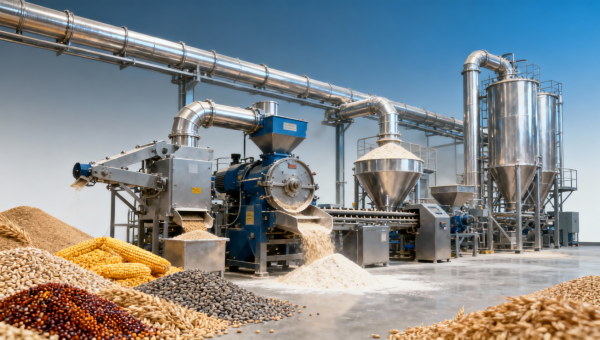
Choosing commercial flour mill machinery is no longer straightforward when processors handle mixed grains, variable moisture, and tighter quality demands. For buyers comparing a wheat flour milling plant with adjacent options such as coffee processing machinery, seed oil expeller wholesale lines, or even a parboiled rice mill plant, technical fit now matters as much as output. This article outlines the key selection factors shaping cost, safety, efficiency, and long-term procurement decisions.
In practical procurement, the issue is no longer whether a line can grind grain, but whether it can maintain stable flour quality across changing raw materials, operator shifts, and production schedules. Mixed-grain processing introduces more variability in kernel hardness, oil content, ash behavior, and screen load than single-grain systems typically face.
That makes equipment selection a cross-functional decision. Operators focus on uptime and cleanability, technical evaluators look at process control and wear parts, procurement teams compare total ownership cost over 3–7 years, and quality managers need consistent particle size, food safety, and traceability. A poorly matched milling system can raise energy use by 8%–15%, increase flour deviation, and shorten maintenance intervals.
Why mixed grains change the machinery selection equation
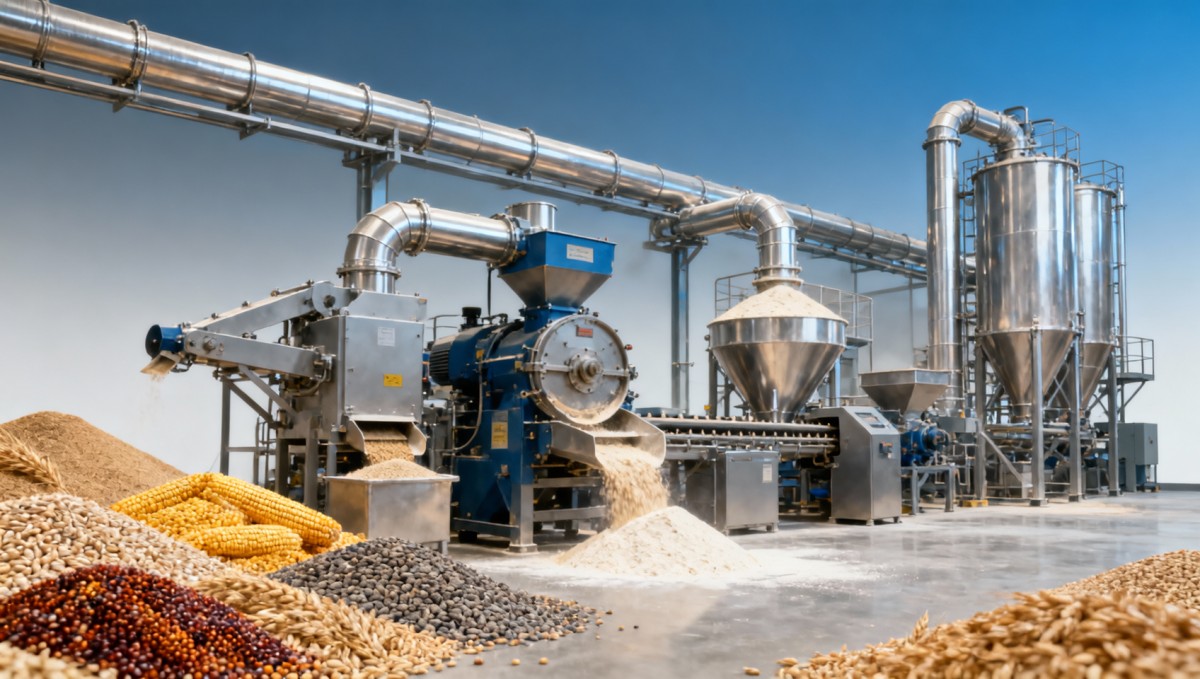
A commercial flour mill designed mainly for uniform wheat behaves differently when maize, sorghum, millet, barley, pulses, or specialty grains enter the flow. Mixed grains vary in bulk density, husk ratio, moisture absorption, and brittleness. Even a 2%–4% shift in incoming moisture can alter break performance, flour release, and downstream pneumatic conveying efficiency.
For plant managers, that means selection must begin with the raw material matrix, not just target capacity. A line rated at 20 TPD or 100 TPD under standard wheat conditions may underperform when a mixed formula includes high-fiber or higher-oil components. In many cases, the actual stable throughput falls by 10%–25% if cleaning, conditioning, and grinding sections were not configured for variable feedstock.
The comparison with adjacent processing sectors is also useful. Coffee processing machinery, for example, often requires precise handling of bean hardness and heat sensitivity. Seed oil expeller wholesale lines must manage oil-bearing materials where residue build-up affects sanitation and yield. A parboiled rice mill plant must address moisture migration and grain breakage after hydrothermal treatment. Flour milling buyers increasingly face a similar multi-variable decision environment.
This is why modern flour mill procurement should separate “nameplate capacity” from “usable production capacity.” Usable capacity reflects cleaning loss, tempering time, extraction targets, contamination risk, and product changeover frequency. For mixed grains, those factors are often more decisive than the headline motor rating or footprint.
Core variability drivers in mixed-grain milling
- Moisture variation of 11%–16% can change grinding behavior and screen load significantly.
- Kernel hardness differences increase roller setting sensitivity and wear rate.
- Oil-bearing or high-fiber materials create faster residue accumulation in sifters and ducts.
- Different end products may require 2–5 particle size targets within the same plant.
- Frequent recipe shifts raise the importance of cleaning access and contamination control.
Typical material considerations before specifying a line
Before requesting quotations, buyers should define at least four material conditions: grain mix ratio, incoming moisture range, daily production hours, and desired flour extraction. A line running 16 hours per day on 70% wheat and 30% coarse grains requires a different break-release balance than a 24-hour plant dedicated to refined wheat flour.
This early material profiling also improves supplier comparison. Without it, quotations often look similar on paper while hiding major process differences in cleaning stages, aspiration design, roller count, and automation level.
Key technical criteria for selecting commercial flour mill machinery
A sound selection process should evaluate the line as an integrated system rather than as isolated machines. The essential modules usually include pre-cleaning, destoning, magnetic separation, moisture conditioning, grinding, plansifting, bran finishing, pneumatic conveying, dust control, and packing. Missing one critical module can create hidden cost in labor, product loss, or safety compliance.
For mixed grains, the first technical checkpoint is flexibility in process settings. Roller gap adjustment, differential speed, screen mesh replacement time, and airflow control should allow adaptation within short production windows. If parameter changes take 2–3 hours, the plant will struggle with smaller batches and recipe rotation.
The second checkpoint is sanitation and contamination control. Mixed-grain plants often serve different customers or product claims, so dead zones, hard-to-open covers, and inaccessible ducts can become quality risks. In food-grade environments, buyers should examine whether routine cleaning can be completed within one maintenance shift and whether contact surfaces support hygienic inspection.
The table below summarizes technical criteria that usually have the greatest influence on long-term performance, especially where raw material variability is high and product specifications are tighter than commodity milling.
The main takeaway is that flexibility and controllability matter as much as output rating. A lower-capacity line with stronger cleaning, better monitoring, and faster changeover can outperform a larger but rigid system in real mixed-grain operations.
H4-level checks during technical review
Power, wear, and maintenance
Buyers should request power consumption estimates under realistic load, not idle or ideal material conditions. In many mid-scale plants, energy demand may fall in the 25 kWh–70 kWh per ton range depending on grain type, extraction target, and pneumatic layout. Wear rates on rollers, screens, and aspiration seals should be reviewed together with spare part lead times.
Control of fines and heat
Excess heat and over-grinding can damage product functionality, especially in composite flour applications. Temperature rise, airflow balance, and feed regulation should therefore be discussed during technical clarification, not after installation.
Comparing system configurations by plant type and procurement goal
Not every buyer needs the same level of automation or modularity. A distributor looking for standardized inventory may favor compact, repeatable configurations. A food processor producing 3–4 flour blends may prioritize recipe flexibility. A larger industrial operator may need integration with storage, batching, and ERP-linked traceability. The best choice depends on product mix, labor structure, and expected expansion within 24–36 months.
The market generally segments into small commercial lines, mid-scale modular plants, and higher-capacity automated systems. While capacity is an obvious differentiator, the more meaningful distinction is how each configuration handles raw material variability and changeover frequency.
The following comparison helps procurement teams align technical scope with business use case, especially when they are also evaluating adjacent equipment investments across grain, coffee, oilseed, or rice processing.
From a decision-making standpoint, modular systems are often the most balanced option for mixed-grain users. They can support phased investment, allow process adjustments, and reduce the risk of overbuying fixed capacity too early.
A practical decision path for buyers
- Define target products, including at least 2 quality parameters such as extraction rate and particle size range.
- Map raw material variability over a 6–12 month period, not just one harvest batch.
- Estimate real operating hours, labor availability, and sanitation frequency.
- Compare 3-year to 5-year ownership cost, including wear parts, downtime, utilities, and training.
- Check whether expansion requires add-on modules or complete line replacement.
This procurement discipline is especially useful for financial approvers and enterprise decision-makers. It converts the discussion from initial machine price to productivity, utilization, and risk control over time.
Quality, safety, and compliance considerations buyers should not overlook
In flour and grain processing, quality failures often start upstream. Inadequate cleaning, poor aspiration balance, and weak preventive maintenance can cause contamination, inconsistent granulation, elevated dust levels, or unexpected downtime. Mixed-grain plants face more exposure because material changes can leave residues in transfer points, sifters, and bins if clean-out is incomplete.
For quality and safety teams, the equipment review should cover food-contact materials, inspection access, magnet placement, dust collection, and maintenance lockout practices. Dust management is not only a housekeeping issue. Fine suspended particles can affect product integrity, worker safety, and equipment reliability if extraction and sealing are poorly designed.
Documentation also matters. A serious supplier should be able to provide layout drawings, utility lists, wear part schedules, recommended maintenance intervals, and commissioning scope. Buyers comparing multiple offers should verify whether training covers only startup or includes operator optimization after 30–90 days of running.
The checklist below can help quality managers and procurement teams align machinery selection with operational control and audit readiness.
For most buyers, the lesson is clear: quality and safety are not separate from machinery performance. They directly affect yield, downtime, labor efficiency, and customer acceptance. A cheaper line with poor access and weaker dust control can become more expensive within the first year of operation.
Common mistakes during evaluation
- Using only theoretical output without testing mixed-grain conditions.
- Ignoring utility demand such as compressed air, dust collection, and tempering water.
- Underestimating spare part lead times for rollers, screens, and seals.
- Approving equipment before defining quality acceptance criteria.
Implementation, lifecycle cost, and FAQ for procurement teams
Even well-selected commercial flour mill machinery can disappoint if implementation is rushed. A realistic project usually includes 4 phases: specification, engineering confirmation, installation and commissioning, and stabilization. Depending on plant size, delivery and startup may take 6–16 weeks for simpler systems and longer for integrated automated projects.
Total ownership cost should combine capital expenditure with energy, spare parts, service response time, operator training, and planned stoppage frequency. For some processors, the difference between two quotations may look narrow at purchase but widen significantly over 24 months if one line requires more unscheduled maintenance or more manual intervention.
Distributors and resellers should additionally consider after-sales support depth. A system that can be remotely diagnosed, documented clearly, and serviced with standard wear parts is easier to support in multiple markets. That matters when selling to end users who expect response within 24–72 hours for critical failures.
For mixed-grain processors, commissioning should include recipe validation, not just mechanical startup. At minimum, buyers should test 2–3 representative grain formulas, verify extraction and fineness ranges, and document settings for repeat production.
FAQ: How should buyers compare quotations?
Compare quotations across 6 points: real throughput under target grain mix, energy demand per ton, included cleaning modules, automation scope, wear part list, and commissioning support. If one offer is 10% cheaper but excludes key cleaning or monitoring components, the apparent savings may disappear quickly.
FAQ: Which plants benefit most from modular systems?
Processors with seasonal raw material changes, 2–5 product recipes, or expansion plans within 2–3 years usually gain the most. Modular layouts allow phased upgrades in grinding passages, sifters, or packing sections without replacing the full line.
FAQ: How much training is usually needed?
For a new mixed-grain line, operators typically need 3–7 days of startup training plus process follow-up after initial production. Maintenance teams may need additional instruction on wear inspection, roller alignment, and sanitation routines.
FAQ: What should financial approvers focus on?
They should focus on utilization rate, payback sensitivity to downtime, spare part cost over 12 months, and expected product mix changes. A machine selected only on purchase price may create higher per-ton processing cost and weaker flexibility when market demand shifts.
Commercial flour mill machinery selection is now a broader operational decision shaped by material variability, sanitation demands, process flexibility, and lifecycle economics. Buyers who define raw material ranges early, compare system architecture instead of headline capacity alone, and test quality control assumptions before purchase are better positioned to secure stable output and lower risk.
For manufacturers, processors, distributors, and industrial procurement teams seeking dependable guidance across feed and grain processing, a structured evaluation can shorten decision cycles and improve investment accuracy. To discuss a tailored machinery selection strategy, request technical clarification, or explore broader primary processing solutions, contact us today and get a customized plan aligned with your production goals.
Related Intelligence
- Milling MachineryHow to Choose a Horizontal Ribbon Blender for FeedHorizontal ribbon blender feed buying guide: compare vertical feed mixer machine options, animal feed mixers wholesale offers, and line fit for poultry, cattle, and floating fish feed plant projects.
- Milling MachineryWhy use a rotary drum sieve grain line?Why use a rotary drum sieve grain line? Discover how rotary drum sieve grain, grain pre cleaner machine, gravity separator grain, and magnetic separator for feed improve efficiency and quality.
- Milling MachineryHow to avoid grain destoner machine issues?Grain destoner machine issues explained: learn how gravity separator grain, grain pre cleaner machine, and rotary drum sieve grain setup affect performance, reduce downtime, and improve line efficiency.
The Morning Broadsheet
Daily chemical briefings, market shifts, and peer-reviewed summaries delivered to your terminal.
