
Where a wheat flour milling plant loses profit before packing begins
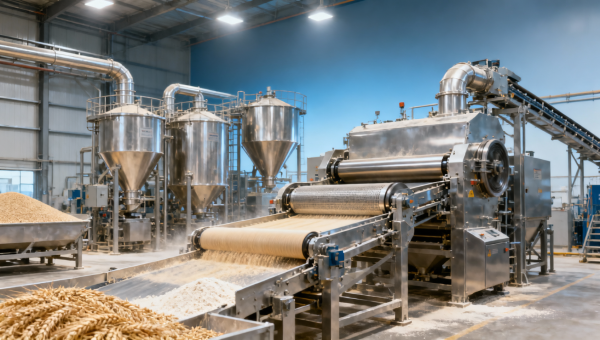
Profit leakage in a wheat flour milling plant often starts long before packaging, hidden in grain cleaning, tempering, grinding efficiency, energy use, and maintenance gaps. For buyers comparing commercial flour mill machinery, coffee processing machinery, or parboiled rice mill plant systems, understanding these upstream loss points is essential to improving yield, quality control, and investment returns.
In feed and grain processing, profit is rarely lost through one dramatic failure. It is more often drained in small percentages: 0.5% excess bran carryover, 2% avoidable energy waste, 3 hours of unplanned stoppage per week, or moisture variation that reduces flour consistency and customer acceptance. For operators, procurement teams, quality managers, and financial approvers, these upstream losses matter because they directly affect extraction rate, ash control, equipment life, and payback period.
A wheat flour milling plant is a chain of interdependent mechanical and process decisions. If grain intake, cleaning, tempering, grinding, sifting, aspiration, and maintenance are not aligned, the packaging line merely hides the evidence rather than solving the root cause. The real commercial question is not only how many tons per day a plant can process, but how efficiently it converts raw wheat into saleable flour grades with predictable operating cost.
This article examines where flour mill profitability typically erodes before packing begins, what technical signals buyers should review during equipment evaluation, and how commercial milling operators can reduce hidden losses through better configuration, process discipline, and maintenance planning.
Raw Wheat Intake and Cleaning: The First Margin Filter
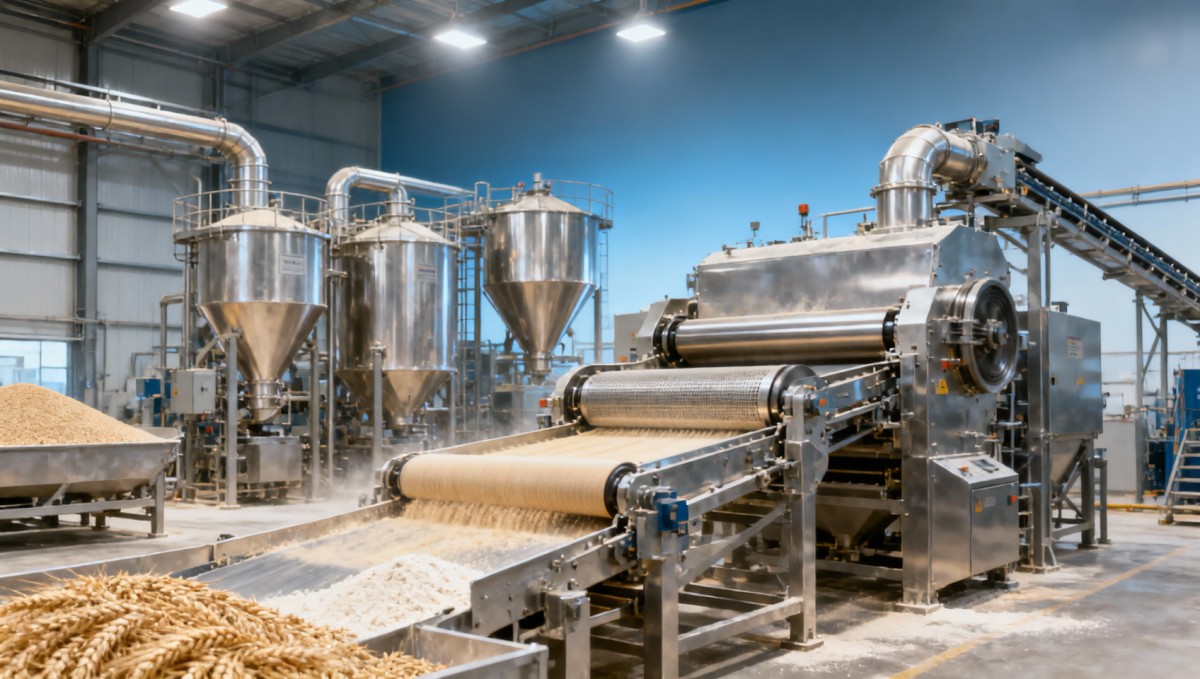
The first profit leak often appears at intake. Many milling plants focus on headline capacity such as 50 TPD, 120 TPD, or 300 TPD, yet overlook how incoming wheat variability affects actual flour recovery. If foreign matter, broken kernels, stones, dust, and uneven grain size are not separated efficiently, downstream roll wear rises, sifter load increases, and flour contamination risk expands.
In practical terms, even a 1% avoidable impurity burden on 100 tons of wheat per day means 1 ton of unnecessary non-flour material entering the process chain. That burden does not only lower yield. It also adds abrasive load to scourers, de-stoners, dampening systems, and roller mills, shortening service intervals and increasing power consumption.
Why intake errors become expensive later
Poor intake control creates a compounding cost structure. Dust accumulation raises sanitation requirements. Stones and metallic particles increase safety and equipment risk. Overly aggressive cleaning, however, can also remove sound grain or crack kernels, which reduces effective extraction. The technical objective is not maximum rejection, but accurate separation with minimal good grain loss.
Most commercial plants should assess cleaning line performance at 3 checkpoints: pre-cleaning efficiency, fine cleaning efficiency, and good grain loss in rejects. Operators who only track throughput often miss whether the cleaning line is removing waste selectively or simply discharging value together with contaminants.
Key intake and cleaning indicators
Before comparing machinery suppliers, buyers should ask for practical operating ranges rather than promotional descriptions. The table below highlights common loss points at the front end of a wheat flour milling plant.
The main conclusion is simple: intake and cleaning are not auxiliary steps. They are the first margin filter. A plant that buys wheat well but cleans poorly may lose more value than a plant paying a slightly higher wheat price but protecting kernel integrity through better separation accuracy.
- Check whether the cleaning line is matched to wheat origin, impurity profile, and daily tonnage, not just nominal machine capacity.
- Review reject samples during trials or commissioning to confirm acceptable good grain loss.
- Verify access for sanitation, screen changes, and magnet inspection every 1–2 shifts where dust loads are high.
Tempering and Moisture Control: Small Deviations, Large Yield Consequences
After cleaning, tempering is one of the most underestimated profit drivers in a wheat flour milling plant. The purpose is straightforward: condition the bran and endosperm so separation during grinding becomes cleaner and more efficient. In practice, poor moisture dosing or inadequate rest time causes uneven break release, excessive bran powder, unstable ash levels, and lower extraction.
For many wheat types, target conditioning moisture may increase by roughly 1.5%–4.0%, followed by tempering time from 6 to 24 hours depending on hardness, ambient temperature, and final flour specification. If moisture variation exceeds about ±0.3% across bins or batches, downstream grinding performance often becomes inconsistent enough to affect flour color and particle profile.
Where tempering profit loss occurs
Losses usually arise in four areas: inaccurate water addition, poor mixing uniformity, insufficient residence time, and lack of feedback measurement. Some plants rely on manual estimation rather than calibrated inline control. Others have storage bottlenecks that force wheat into the mill before moisture has fully equilibrated. Both situations reduce the efficiency of break and reduction passages.
The commercial impact is larger than many buyers expect. A modest extraction reduction of 1% in a mid-scale 150 TPD plant can represent substantial annual revenue erosion, especially where premium flour grades command tighter ash and color tolerances. Tempering is therefore not merely a grain preparation step; it is a margin protection step.
Typical control points for technical evaluation
When comparing equipment or retrofitting an existing line, the following parameters should be reviewed as part of process design rather than left to operator improvisation.
The key takeaway is that moisture control should be specified with the same seriousness as roller mill count or installed power. Plants that skip this discipline often compensate later with tighter sifter settings, more regrind, and more quality complaints, all of which reduce profit before any bag is filled.
- Match tempering bin volume to daily tonnage and expected wheat blending strategy.
- Use routine moisture checks at intake, after dampening, and before first break.
- Train operators to treat moisture variation as a process alarm, not a normal nuisance.
Grinding, Sifting, and Extraction Balance: Capacity Is Not the Same as Profit
Many procurement decisions in commercial flour mill machinery still overemphasize nameplate output. However, a 200 TPD mill running at unstable extraction is often less profitable than a 150 TPD line with tighter roll settings, better stock distribution, and more stable flour quality. The margin question is not only throughput per hour. It is saleable flour per ton of wheat under repeatable specifications.
Grinding losses usually appear in three forms: over-grinding that produces bran powder and higher ash, under-grinding that leaves endosperm trapped in bran, and poor passage balance that overloads sifters and purifiers. If stocks are not distributed correctly across break, scratch, and reduction stages, extraction suffers while energy demand rises.
Common signs of poor grinding economics
Technical evaluators should look for warning signs such as frequent roll re-setting, unstable flour granulation, excessive bran specks, inconsistent ash performance, and high recirculation. These signals indicate that the milling diagram may not match the wheat mix or the machine configuration. They also indicate hidden labor cost because operators spend more time correcting process drift.
In many plants, a 0.5%–1.5% extraction opportunity remains unrealized simply because roll corrugation condition, differential speed, feed uniformity, or sifter cloth selection are not managed as an integrated system. That may appear small on paper, but over 330 operating days it can materially change project payback.
How buyers should compare process design, not just machinery count
A structured comparison helps distinguish a robust milling line from one that only looks competitive in quotation form.
- Evaluate whether the process flow is designed for the target flour grades, such as bakery flour, all-purpose flour, or lower-ash specialty output.
- Check the relationship between roller mill passages, sifter surface area, purifier need, and aspiration capacity.
- Ask how the supplier supports commissioning optimization during the first 2–8 weeks, when most extraction instability becomes visible.
- Review ease of roll change, sifter maintenance, and stock flow sampling, because maintainability influences long-term consistency.
This same logic is useful when buyers compare other primary processing systems such as coffee processing machinery or a parboiled rice mill plant. Across all three categories, the headline machine list matters less than how well each stage preserves valuable product, removes unwanted fractions, and minimizes rework.
For finance teams, the most practical evaluation model is to estimate profit sensitivity under 3 conditions: base extraction, improved extraction by 1%, and degraded extraction by 1%. That scenario view usually clarifies why better process control hardware and commissioning support are worth more than a slightly lower initial equipment quote.
Energy Use, Maintenance, and Downtime: The Hidden Cost Center Before Packaging
A wheat flour milling plant can lose margin even when flour yield appears acceptable, because energy intensity and maintenance discipline are often managed separately from process economics. In reality, they are tightly linked. Worn rolls, dirty filters, misaligned drives, blocked pneumatic lines, and neglected bearings force motors to work harder and increase the risk of unscheduled stoppage.
In medium and large plants, even 2–5 hours of unplanned downtime per month can disrupt dispatch planning, labor utilization, and raw material scheduling. If stoppages occur during high-demand periods, the cost extends beyond maintenance labor to missed orders and customer dissatisfaction. This is especially relevant for distributors and industrial buyers depending on stable flour supply.
Where operating cost drifts upward
Energy drift often comes from overloaded aspiration fans, clogged dust collection components, inefficient conveying routes, or running motors outside their efficient load band. Maintenance drift usually comes from reactive replacement rather than planned inspection. A plant may still be “running,” but profitability deteriorates because the same tonnage now requires more kWh, more spare parts, and more operator intervention.
For procurement and technical teams, the useful question is not whether a supplier offers spare parts, but whether the system layout permits fast inspection, predictable wear monitoring, and safe access. Serviceability can shorten maintenance windows from 6 hours to 2 hours in some routine interventions, which has direct value in continuous processing environments.
Maintenance and cost review framework
The table below can be used during plant audits, supplier comparison, or internal capex justification.
The conclusion here is that maintenance should be treated as a production lever, not a repair department. Plants with disciplined preventive routines usually achieve better flour consistency, lower total operating cost, and more predictable procurement planning for spare parts and utilities.
- Build a weekly checklist for rolls, sifters, filters, bearings, and pneumatic lines.
- Track downtime by cause in categories such as cleaning, mechanical, electrical, and operator adjustment.
- Review energy consumption per ton monthly rather than only utility cost in total.
What Buyers Should Audit Before Investing in a Flour Mill Line
For enterprise decision-makers and procurement teams, the safest investment approach is to assess a wheat flour milling plant as a full process system. A lower quoted price can become more expensive over 12–24 months if extraction underperforms, cleaning rejects contain good grain, tempering is unstable, or maintenance access is poor. Capex decisions should therefore include both technical and operational evidence.
This is particularly important in markets where the same buyer may compare multiple primary processing assets, including flour mill machinery, coffee processing machinery, and parboiled rice mill plant systems. Across these categories, the shared procurement principle is clear: upstream process losses determine downstream profitability more than packaging speed or outward machine appearance.
A practical 5-point audit framework
- Raw material fit: confirm the plant is designed for actual wheat hardness, impurity load, and flour grade targets.
- Process control depth: verify moisture control, sampling points, operator interfaces, and adjustment logic.
- Extraction economics: review expected yield range, bran loss behavior, and commissioning support.
- Maintenance practicality: inspect access, spare parts planning, sanitation ease, and service response expectations.
- Ownership cost: estimate utilities, wear parts, labor demand, and probable downtime over the first year.
Questions that improve procurement quality
Buyers should ask for more than a machine list and nominal capacity sheet. Request operating assumptions, recommended moisture windows, maintenance intervals, start-up support scope, and the expected time needed to stabilize production after installation. In many projects, the first 30–60 days after commissioning reveal whether the design was commercially realistic.
Quality and safety teams should also review dust control, food-contact surfaces, access for sanitation, and sample traceability. Profit protection is inseparable from contamination control. A plant that produces acceptable yield but struggles with hygiene, dust management, or inconsistent lots will face hidden costs through complaints, rework, and compliance pressure.
FAQ for technical and purchasing teams
How much extraction loss is commercially significant?
Even a 0.5% extraction shortfall can be significant in plants above 100 TPD. The threshold depends on flour grade pricing, wheat cost, and annual operating days, but small percentage losses accumulate quickly in continuous production.
How long should commissioning optimization take?
Basic mechanical commissioning may be relatively short, but process stabilization often takes 2–8 weeks depending on wheat variability, operator skill, and flour specification complexity. Buyers should budget time for tuning rather than assuming full efficiency on day one.
Which upstream area should be improved first in an existing plant?
Start with the area showing measurable loss: intake rejects with good grain, tempering inconsistency, unstable extraction, or recurrent downtime. The best first intervention is the one with the clearest link to yield, quality, or operating cost rather than the most visible machine replacement.
In a wheat flour milling plant, the biggest profit losses often happen before packaging begins. Intake inefficiency, weak cleaning selectivity, poor tempering discipline, unstable grinding balance, and reactive maintenance can each remove value in small increments that become substantial over time. For researchers, operators, quality teams, distributors, and capital approvers, the real advantage lies in evaluating the entire process chain instead of isolated equipment.
A stronger milling investment is one that protects extraction, stabilizes flour quality, reduces unplanned downtime, and keeps operating cost transparent from day 1 to year 5. If you are reviewing commercial flour mill machinery or comparing other primary processing systems, now is the right time to assess upstream loss points in detail. Contact us to discuss your application, request a tailored evaluation framework, or explore more process-focused solutions for feed and grain processing.
Related Intelligence
- Milling MachineryHow to Choose a Horizontal Ribbon Blender for FeedHorizontal ribbon blender feed buying guide: compare vertical feed mixer machine options, animal feed mixers wholesale offers, and line fit for poultry, cattle, and floating fish feed plant projects.
- Milling MachineryWhy use a rotary drum sieve grain line?Why use a rotary drum sieve grain line? Discover how rotary drum sieve grain, grain pre cleaner machine, gravity separator grain, and magnetic separator for feed improve efficiency and quality.
- Milling MachineryHow to avoid grain destoner machine issues?Grain destoner machine issues explained: learn how gravity separator grain, grain pre cleaner machine, and rotary drum sieve grain setup affect performance, reduce downtime, and improve line efficiency.
The Morning Broadsheet
Daily chemical briefings, market shifts, and peer-reviewed summaries delivered to your terminal.
