
When a Horizontal Ribbon Blender Feed Mixes More Evenly
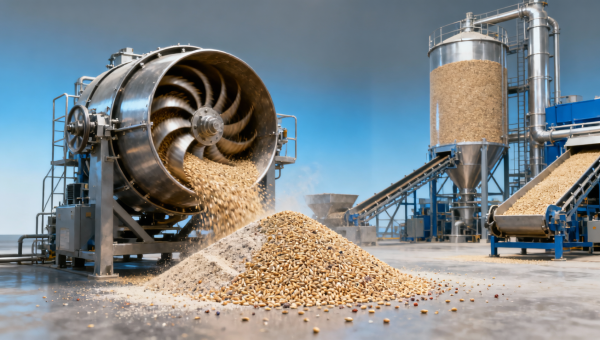
In feed manufacturing, the point at which a horizontal ribbon blender feed system mixes more evenly can determine batch consistency, nutrient retention, and downstream efficiency. For buyers comparing a vertical feed mixer machine, animal feed mixers wholesale options, or planning a cattle feed processing plant, understanding mixing performance is essential to better equipment selection, quality control, and production cost management.
For operators, technical evaluators, procurement teams, and project managers, the question is not simply whether a ribbon blender can mix. The practical question is when the blend reaches a usable level of uniformity, under what conditions that uniformity is sustained, and how machine design, fill rate, ingredient characteristics, and maintenance discipline affect the result.
In commercial feed and grain processing, even small deviations in mixing can create measurable consequences. A difference of 1–3 minutes in effective mixing time may affect micro-ingredient distribution, medication consistency, pellet quality, and rework rates. This makes the horizontal ribbon blender feed system a strategic decision point rather than a routine equipment purchase.
How a Horizontal Ribbon Blender Reaches More Even Mixing
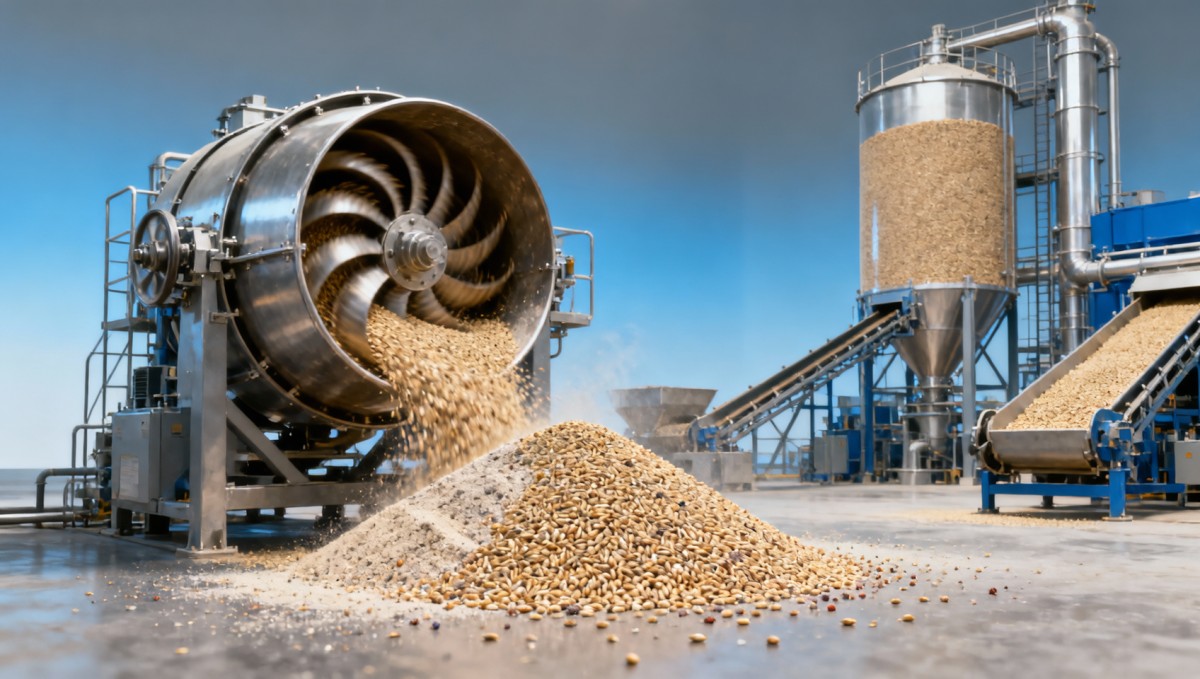
A horizontal ribbon blender feed unit works through counter-flow movement created by inner and outer ribbons mounted on a horizontal shaft. In most configurations, the outer ribbon pushes material in one axial direction while the inner ribbon moves material in the opposite direction. At the same time, radial circulation lifts and folds particles through the batch, which is why the equipment is widely used for premix, mash feed, and additive blending.
The point at which the system mixes more evenly is usually reached after the batch passes through three stages: initial loading and stratification, active circulation and redistribution, and final homogenization. In many feed applications, the effective mixing window falls between 3 and 8 minutes after full loading begins, but the exact point depends on particle size variation, liquid addition, and fill ratio. A machine that is only 30% filled or over 85% filled may not circulate ingredients efficiently.
Uniformity is commonly assessed by repeat sampling from 5–10 discharge points or timed sample locations, especially when a line handles vitamins, trace minerals, enzymes, or medication. Practical plants often monitor coefficient of variation instead of relying on visual appearance. A visually smooth blend can still be uneven if low-dose components are not dispersed correctly across the full batch.
Why “more evenly” is a process point, not a fixed number
A ribbon blender does not suddenly switch from poor mixing to perfect mixing. It moves along a performance curve. At 1–2 minutes, heavy and coarse ingredients may still dominate localized zones. At 4–6 minutes, many standard livestock feed formulas approach acceptable batch uniformity. Beyond that point, excessive mixing can become counterproductive for fragile particles, fiber-rich formulas, or formulations that include added fats and liquids.
This is particularly important for plants planning throughput above 2–5 tons per hour. If the blender requires 2 extra minutes per batch to achieve target uniformity, the effect on daily capacity, shift scheduling, and labor utilization becomes significant. In a multi-batch operation, 20 batches per day with a 2-minute delay adds 40 minutes of lost production time before considering cleaning and changeover.
Typical factors that move the even-mixing point earlier or later
- Batch fill level, with many systems performing best at roughly 50%–80% of working volume.
- Ingredient bulk density differences, especially where mineral premix and grain meal are combined.
- Particle size spread, such as powder-to-granule blends with uneven flow behavior.
- Liquid inclusion rate, often in the 1%–8% range, depending on atomization and nozzle placement.
- Ribbon clearance and wear condition, which can change circulation efficiency over time.
The practical takeaway is that even mixing should be defined through test batches and sampling under real production conditions, not only through nominal machine specifications. This matters for distributors, plant engineers, and purchasing managers who need to compare animal feed mixers wholesale offers on more than motor power and chamber size alone.
Key Variables That Influence Mixing Uniformity in Feed Plants
Not every horizontal ribbon blender feed setup performs the same way across feed formulations. A unit handling simple mash for cattle may behave differently from one used for poultry premix or aquafeed ingredients. Formula complexity, material flowability, and line integration all influence the point at which the blend becomes acceptably uniform.
For technical assessment teams, the most useful approach is to isolate operational variables one by one. Instead of asking whether a machine is “good” or “bad,” it is better to ask how it performs at 500 kg, 1 ton, and 2 tons; with dry-only formulas versus fat-added formulas; and across 3–5 successive batches after startup. That process reveals whether the blender is stable, not just theoretically capable.
The table below outlines common variables that affect when a horizontal ribbon blender begins to mix more evenly in real feed manufacturing environments.
For procurement and finance reviewers, the table shows why a lower purchase price can become expensive over time. If a machine lacks effective liquid injection, has poor internal tolerances, or performs inconsistently at different load levels, the plant may experience extended batch times, higher rejection rates, or downstream pellet instability.
Common operating mistakes that distort mixing results
A frequent mistake is evaluating a ribbon blender against a single, easy-to-mix formula. That gives a misleading picture. Feed plants should test at least 3 formula types: a standard grain blend, a mineral-rich or micro-ingredient formula, and a formula with liquid inclusion. These represent the stress cases that reveal actual process reliability.
Another error is ignoring discharge behavior. A blender may achieve good internal uniformity, but poor discharge gate design can cause hold-up zones and cross-batch contamination. In facilities producing medicated feed or species-specific products, even small residue carryover can create quality and compliance concerns. This is why quality managers typically review both mixing time and clean-out performance.
- Check whether the machine can maintain repeatable uniformity across 3 consecutive batches.
- Verify sampling protocol before comparing suppliers; inconsistent sampling invalidates results.
- Review motor load, gearbox condition, and seal design if the machine will run 8–16 hours per day.
Horizontal Ribbon Blender vs Vertical Feed Mixer Machine in Selection Decisions
Many buyers enter the market comparing a horizontal ribbon blender feed design with a vertical feed mixer machine. The right choice depends on formulation complexity, batch size, floor plan, and desired cycle time. Vertical units may be suitable for lower-volume operations or less demanding formulations, while horizontal ribbon systems are often favored when faster batch turnover and tighter dispersion of micro-ingredients are required.
From a technical and commercial standpoint, the decision should not be based on appearance or footprint alone. Procurement teams should compare how each design handles mixing time, residue rate, maintenance access, and expansion potential if the plant moves from one shift to two shifts or adds medicated feed, aquafeed, or additive-rich formulas in the future.
The following comparison table helps decision-makers evaluate whether a horizontal ribbon blender or a vertical feed mixer machine better fits their production objectives.
For a cattle feed processing plant, where batch size may range from 500 kg to several tons, horizontal ribbon systems often support better throughput and more stable performance when formulas vary by season or ingredient availability. For smaller sites with limited output targets, a vertical mixer may still be viable if lower capital expenditure is the main driver and formula demands are moderate.
When horizontal systems usually make more sense
A horizontal ribbon blender is often the stronger option when the plant must handle additives below 5% inclusion, maintain shorter cycle times, or integrate with automated batching and pellet lines. It is also preferred where operators need more predictable performance across multiple feed types, including poultry, ruminant, aqua, or specialty nutritional mixes.
Selection checklist for procurement and engineering teams
- Define target batch size, such as 500 kg, 1 ton, or 2 tons, and test performance at those exact levels.
- Clarify whether formulas include oils, molasses, premix, medication, or heat-sensitive additives.
- Review discharge speed, residue level, and clean-out procedure between product changes.
- Estimate operating schedule: 8 hours, 12 hours, or 16 hours per day affects durability requirements.
- Compare spare parts availability and expected maintenance interval over 12–24 months.
This structured comparison helps commercial evaluators and plant decision-makers avoid under-specifying equipment. In many cases, the best answer is not the cheapest machine or the largest chamber, but the system that reaches usable uniformity quickly and repeatedly under the plant’s actual production mix.
Procurement, Quality Control, and Plant Integration Considerations
A horizontal ribbon blender feed purchase should be evaluated as part of a process system rather than a standalone asset. Even a well-built mixer can underperform if upstream batching is inaccurate or downstream discharge timing is poorly synchronized. For example, a plant with inconsistent weighing tolerance or uneven liquid dosing will struggle to achieve repeatable uniformity regardless of mixer type.
For quality control personnel, acceptance criteria should include more than mechanical inspection. A practical factory acceptance approach includes dry run checks, loaded trial batches, sampling at multiple points, and observation of discharge completeness. Plants often use 3 categories of acceptance review: mechanical integrity, process performance, and cleaning/changeover suitability.
Project leaders and distributors should also account for installation and commissioning time. Depending on machine size and automation level, delivery and setup may take 2–6 weeks for standard systems and longer for integrated lines with bins, elevators, dosing units, and pelletizing equipment. Delays often come not from the blender itself but from utility readiness, control panel coordination, and site preparation.
Key procurement criteria beyond the quoted price
- Working volume versus nominal volume, since quoted chamber size does not always equal usable batch capacity.
- Material of construction for product-contact parts, especially where corrosion, abrasion, or contamination risk is relevant.
- Seal arrangement and bearing protection for dusty operating conditions and long daily runtimes.
- Access doors, inspection ports, and clean-out design for safety and changeover efficiency.
- Documentation quality, including wiring diagrams, spare parts list, and recommended preventive maintenance schedule.
Operational risks that should be addressed early
One recurring risk is assuming that all animal feed mixers wholesale suppliers provide the same process support. Some vendors focus mainly on hardware and give limited guidance on formula behavior, mixing validation, or line balancing. For larger feed projects, especially a cattle feed processing plant, engineering support during commissioning can save far more than it costs by reducing startup losses and shortening the learning curve.
Another risk is overlooking maintenance access. If ribbon inspection, seal replacement, or chamber cleaning requires extended stoppage, the plant may lose several hours each month. A maintenance design that saves even 1 hour per week can return substantial value over a 12-month operating cycle, especially in high-throughput facilities.
For businesses building authority in regulated and specification-driven markets, disciplined equipment evaluation strengthens product quality claims and internal audit readiness. That is why many serious buyers now ask for trial data, process drawings, and service scope before approving a mixer for commercial use.
FAQ and Practical Guidance for Operators and Decision-Makers
The most frequent questions about a horizontal ribbon blender feed system are usually operational rather than theoretical. Buyers want to know how fast it reaches stable mixing, what signs indicate poor uniformity, and how to align equipment choice with production plans, budget, and compliance expectations.
How do I know the mixer is blending evenly enough for production?
Use a repeatable sampling method. Collect 5–10 samples from timed discharge or multiple points after a defined mixing interval, then compare variance in a target marker ingredient. Repeat the test across at least 3 batches. A single successful batch does not prove stable production performance.
Is longer mixing time always better?
No. Once the formula reaches practical uniformity, extra time may reduce throughput and in some cases encourage segregation after overworking the batch. With fragile ingredients or added liquids, excessive mixing can also affect texture and downstream handling. The target should be the shortest time that consistently delivers the required batch quality.
What should a cattle feed processing plant prioritize when buying a blender?
Focus on four areas: batch size fit, mixing repeatability across seasonal formulas, discharge cleanliness, and maintenance practicality. If the site plans to expand within 12–24 months, also consider whether the blender can integrate with automated dosing, conveyors, and pellet equipment without becoming a bottleneck.
Quick decision guide
- If the operation runs simple formulas at modest output, compare both ribbon and vertical options carefully.
- If the operation handles micro-ingredients, liquid addition, or multiple species feed, prioritize repeatable ribbon-blender performance testing.
- If downtime is costly, review service access, spare parts support, and expected maintenance intervals before approval.
When a horizontal ribbon blender feed system mixes more evenly is not merely a technical curiosity. It is a direct indicator of whether a feed line can control quality, protect margins, and scale output without hidden inefficiencies. For researchers, operators, buyers, and executive reviewers alike, the most valuable equipment decision is the one grounded in realistic testing, process fit, and long-term serviceability. To assess suitable configurations, compare application requirements, request a tailored evaluation plan, and contact us to discuss product details or a customized feed processing solution.
Related Intelligence
- Commercial Feed PelletIndia Launches Anti-Dumping Review on Chinese Commercial Feed PelletsIndia's anti-dumping review on Chinese commercial feed pellets could extend the 18.3% duty—key for importers, feed mills & agri-supply chains. Act now.
- Commercial Feed PelletIndia Launches Mid-Term AD Review on Chinese Commercial Feed PelletsIndia's mid-term AD review on Chinese Commercial Feed Pellets impacts exporters, feed mills & importers—get actionable insights, HS code guidance, and duty-scenario planning now.
- Commercial Feed PelletIndia Launches Mid-Term AD Review on Chinese Commercial Feed PelletsIndia's mid-term AD review on Chinese commercial feed pellets could raise duties to 28.5% — critical for exporters, feed mills & agri-input suppliers. Act now.
The Morning Broadsheet
Daily chemical briefings, market shifts, and peer-reviewed summaries delivered to your terminal.
