
India Launches Anti-Dumping Review on Chinese Commercial Feed Pellets
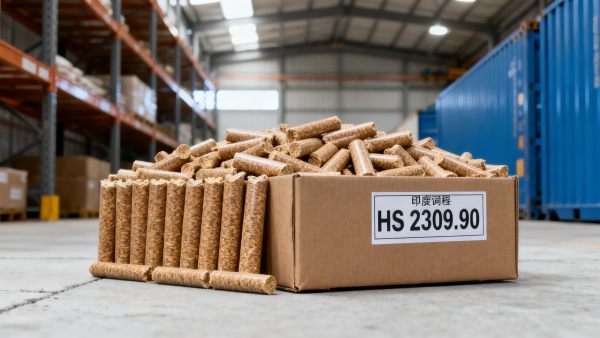
On April 27, 2026, India’s Central Board of Indirect Taxes and Customs (CBIC) initiated a sunset review of anti-dumping duties on commercial feed pellets originating from China — a development with direct implications for feed ingredient traders, compound feed manufacturers, livestock integrators, and agricultural supply chain service providers. This action signals potential continuity — or adjustment — of the current 18.3% duty, affecting cost structures, sourcing strategies, and long-term supplier viability.
Event Overview
The Central Board of Indirect Taxes and Customs (CBIC), under India’s Ministry of Finance, issued a notice on April 27, 2026, launching a sunset (anti-dumping) review concerning commercial feed pellets from China. The CBIC has distributed sampling questionnaires to 12 Chinese exporting enterprises. The review focuses on export prices, production costs, and domestic sales structure in China during 2025. A finding of continued dumping would extend the existing 18.3% anti-dumping duty for another five years.
Which Subsectors Are Affected
Direct Trading Enterprises (Exporters & Importers)
Chinese exporters named in the sampling list face heightened compliance demands, including documentation of cost accounting and domestic pricing practices. Indian importers relying on these suppliers may experience delays in customs clearance, increased price volatility, and uncertainty in contract renewals beyond mid-2026.
Compound Feed Manufacturers & Livestock Integrators
These downstream users source commercial feed pellets as key inputs. Any extension of the duty could raise landed costs, compressing margins unless passed on — which risks resistance from poultry, aquaculture, or dairy clients sensitive to feed cost inflation.
Agricultural Supply Chain Service Providers
Firms offering logistics, customs brokerage, or trade finance for China–India agri-commodity flows must anticipate longer lead times for documentation verification and possible reclassification scrutiny. Service agreements tied to duty-stable cost assumptions may require renegotiation.
What Relevant Enterprises or Practitioners Should Monitor and Do Now
Track official CBIC communications and questionnaire deadlines
The review is at an early procedural stage. Respondents have limited time to submit verified data. Non-response or incomplete submissions may lead to adverse facts available (AFA) determinations — impacting duty calculations for all sampled and non-sampled exporters alike.
Map exposure by supplier and product line
Indian importers should identify whether their current Chinese suppliers are among the 12 sampled entities — or if they rely on non-sampled firms that may still be covered under the original measure. Product-level classification (e.g., HS code 2309.90 for mixed feed preparations) must be confirmed against CBIC’s scope definition to assess coverage risk.
Distinguish between policy signal and operational impact
The initiation of a sunset review does not imply automatic duty extension. It is a procedural step — not a determination. However, it does indicate CBIC’s intent to verify whether injury to domestic producers would recur if duties lapse. Businesses should treat this as a trigger for scenario planning — not immediate cost adjustment.
Begin contingency preparation for procurement diversification
Given the five-year horizon of potential duty continuity, importers and feed mills should initiate technical and commercial evaluation of alternative sources — including Vietnam, Thailand, or domestic Indian pellet producers — particularly for non-specialized formulations where substitution feasibility is higher.
Editorial Perspective / Industry Observation
Observably, this review functions primarily as a policy signal — not an outcome. It reflects institutional continuity in India’s trade remedy framework rather than new evidence of market distortion. Analysis shows that sunset reviews are routinely initiated when duties approach expiry, especially where domestic industry petitions remain active. From an industry perspective, the more consequential variable is not the review itself, but whether Indian domestic producers demonstrate measurable recovery or ongoing vulnerability in the record period (2025). Current attention should therefore focus less on the procedural launch and more on how petitioners frame injury arguments — and how CBIC weighs them against evolving import volumes and pricing trends.
Conclusion
This development underscores the growing complexity of cross-border feed ingredient trade amid tightening trade defense enforcement. It is not yet a disruption, but a formalized checkpoint — one that makes visible the interdependence between export compliance rigor, import cost modeling, and strategic sourcing flexibility. For stakeholders, it is better understood as a structured reminder: tariff stability in agri-inputs can no longer be assumed, only managed.
Information Sources
Main source: Official notification issued by the Central Board of Indirect Taxes and Customs (CBIC), Ministry of Finance, Government of India, dated April 27, 2026.
Note: The final determination date, scope clarification documents, and petitioner identity remain pending and require ongoing monitoring.
Related Intelligence
- Commercial Feed PelletIndia Launches Anti-Dumping Review on Chinese Commercial Feed PelletsIndia's anti-dumping review on Chinese commercial feed pellets could extend the 18.3% duty—key for importers, feed mills & agri-supply chains. Act now.
- Commercial Feed PelletIndia Launches Mid-Term AD Review on Chinese Commercial Feed PelletsIndia's mid-term AD review on Chinese Commercial Feed Pellets impacts exporters, feed mills & importers—get actionable insights, HS code guidance, and duty-scenario planning now.
- Commercial Feed PelletIndia Launches Mid-Term AD Review on Chinese Commercial Feed PelletsIndia's mid-term AD review on Chinese commercial feed pellets could raise duties to 28.5% — critical for exporters, feed mills & agri-input suppliers. Act now.
The Morning Broadsheet
Daily chemical briefings, market shifts, and peer-reviewed summaries delivered to your terminal.
