
India Launches Mid-Term AD Review on Chinese Commercial Feed Pellets
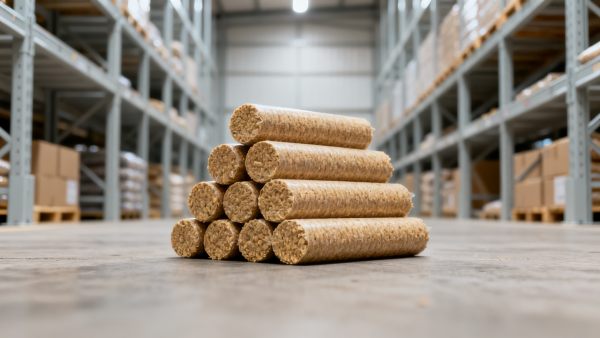
On April 26, 2026, India’s Central Board of Indirect Taxes and Customs (CBIC), under the Ministry of Finance, initiated a mid-term anti-dumping (AD) review concerning imported Commercial Feed Pellets from China. This development directly affects feed manufacturers, export-oriented producers, and agri-input supply chain actors operating across India and China.
Event Overview
On April 26, 2026, the Central Board of Indirect Taxes and Customs (CBIC) of India officially launched a mid-term anti-dumping review on Commercial Feed Pellets originating from China. As part of this review, CBIC issued sampling questionnaires to 12 major Chinese exporting enterprises. The outcome will determine the application of anti-dumping duties for the period from the second half of 2026 through 2028.
Industries Affected by This Review
Direct Exporting Enterprises (China-based)
Chinese manufacturers and exporters of Commercial Feed Pellets are directly subject to the sampling process. Their responses to CBIC’s questionnaire — covering production costs, domestic sales prices, export pricing, and related financial documentation — will influence duty rate calculations. Delays or inconsistencies in submission may result in adverse facts being applied during final determination.
Indian Feed Formulators & Compound Feed Producers
Domestic Indian feed mills that rely on imported Commercial Feed Pellets as raw material inputs face potential cost increases and procurement uncertainty. Since the review outcome affects duty rates through 2028, forward planning for raw material budgeting, supplier diversification, and landed-cost modeling becomes more consequential.
Agri-Input Importers & Trading Firms (India-based)
Importers handling Commercial Feed Pellets from China must reassess customs clearance timelines, bond requirements, and margin-of-dumping exposure. Any upward revision in duty rates could compress margins or trigger renegotiation of landed-price terms with end customers — especially where contracts lack tariff adjustment clauses.
What Relevant Enterprises Should Monitor and Do Now
Track official CBIC communications and deadline calendars
The 12 sampled Chinese exporters must respond to CBIC’s questionnaire within the stipulated timeframe — typically 37 days from issuance, unless extended. Non-response or incomplete submissions may lead to use of ‘facts available’ methodology, often resulting in higher provisional duties. All stakeholders should monitor CBIC’s public notices for extensions, clarifications, or supplementary requests.
Assess exposure by product scope and HS code alignment
Commercial Feed Pellets covered under this review fall under specific Harmonized System (HS) codes — likely including 2309.90 (other prepared animal feeds). Enterprises should verify whether their exported/imported products match CBIC’s defined scope. Minor formulation or labeling differences do not automatically exclude a product; classification remains subject to CBIC’s technical interpretation.
Distinguish between policy signal and enforceable obligation
This is a mid-term review — not a new investigation. Existing anti-dumping duties remain in force pending the review’s conclusion. The outcome may revise, maintain, or terminate those duties prospectively. Stakeholders should avoid treating preliminary CBIC actions (e.g., questionnaire issuance) as indicative of final duty changes.
Prepare contingency plans for procurement and working capital
Indian feed producers and importers should model duty scenarios (e.g., no change, +5%, +15%) against current inventory levels, contract durations, and FX exposure. Where feasible, consider staggered sourcing from alternative origins (e.g., Vietnam, Thailand) — though substitution feasibility depends on pellet specifications, certifications, and logistics lead times.
Editorial Observation / Industry Perspective
From an industry perspective, this mid-term review signals continued regulatory scrutiny of agri-input imports into India — particularly those perceived to displace domestic manufacturing capacity. Analysis来看, it reflects CBIC’s procedural consistency rather than a sudden policy shift: such reviews are routine under WTO-consistent AD frameworks and occur roughly midway through a five-year duty order. Current更值得关注的是 how CBIC interprets ‘commercial’ versus ‘farm-level’ feed use — a definitional boundary that could affect future scope expansions. Observation来看, this review functions primarily as a compliance checkpoint, not an immediate trade barrier escalation — but its outcome sets the baseline for two full years of duty enforcement.
Conclusion
This mid-term anti-dumping review does not alter current duty collection but establishes the framework for levy application through 2028. Its significance lies not in immediate disruption, but in reinforcing predictability — and risk — within cross-border feed ingredient trade. It is更适合理解为 a calibrated administrative step within an established trade remedy mechanism, rather than a de novo policy intervention.
Source Attribution
Main source: Official notice issued by India’s Central Board of Indirect Taxes and Customs (CBIC), dated April 26, 2026. No additional background data, historical duty rates, or third-party analysis has been incorporated. Ongoing developments — including questionnaire response deadlines, CBIC verification visits, or preliminary findings — remain subject to official CBIC updates and require continuous monitoring.
Related Intelligence
- Commercial Feed PelletIndia Launches Mid-Term AD Review on Chinese Commercial Feed PelletsIndia's mid-term AD review on Chinese Commercial Feed Pellets impacts exporters, feed mills & importers—get actionable insights, HS code guidance, and duty-scenario planning now.
- Commercial Feed PelletIndia Launches Mid-Term AD Review on Chinese Commercial Feed PelletsIndia's mid-term AD review on Chinese commercial feed pellets could raise duties to 28.5% — critical for exporters, feed mills & agri-input suppliers. Act now.
- Commercial Feed PelletChina Launches GB 13078-2026 Draft for Commercial Feed PelletsGB 13078-2026 draft mandates mycotoxin monitoring, AMR gene screening & carbon labeling for China’s commercial feed pellets — act now to ensure 2027 compliance.
The Morning Broadsheet
Daily chemical briefings, market shifts, and peer-reviewed summaries delivered to your terminal.
