
What causes fines in a sinking fish feed machine line
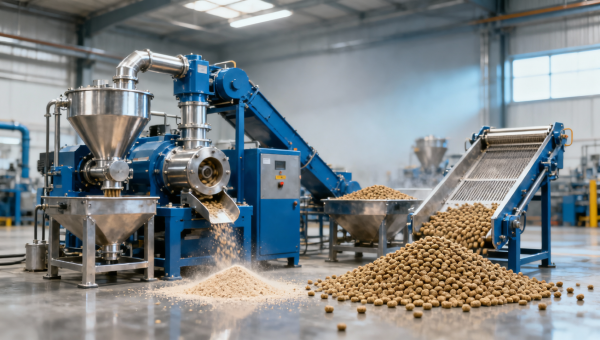
In a sinking fish feed machine line, excess fines often result from poor ingredient grinding, unstable moisture control, die wear, or improper extrusion and drying settings. For operators, buyers, and technical evaluators comparing a shrimp feed pellet machine, floating fish feed extruder, or automatic fish feeder commercial system, understanding these causes is critical to improving pellet quality, reducing waste, and optimizing overall aquaculture production efficiency.
Why do fines increase in a sinking fish feed machine line?
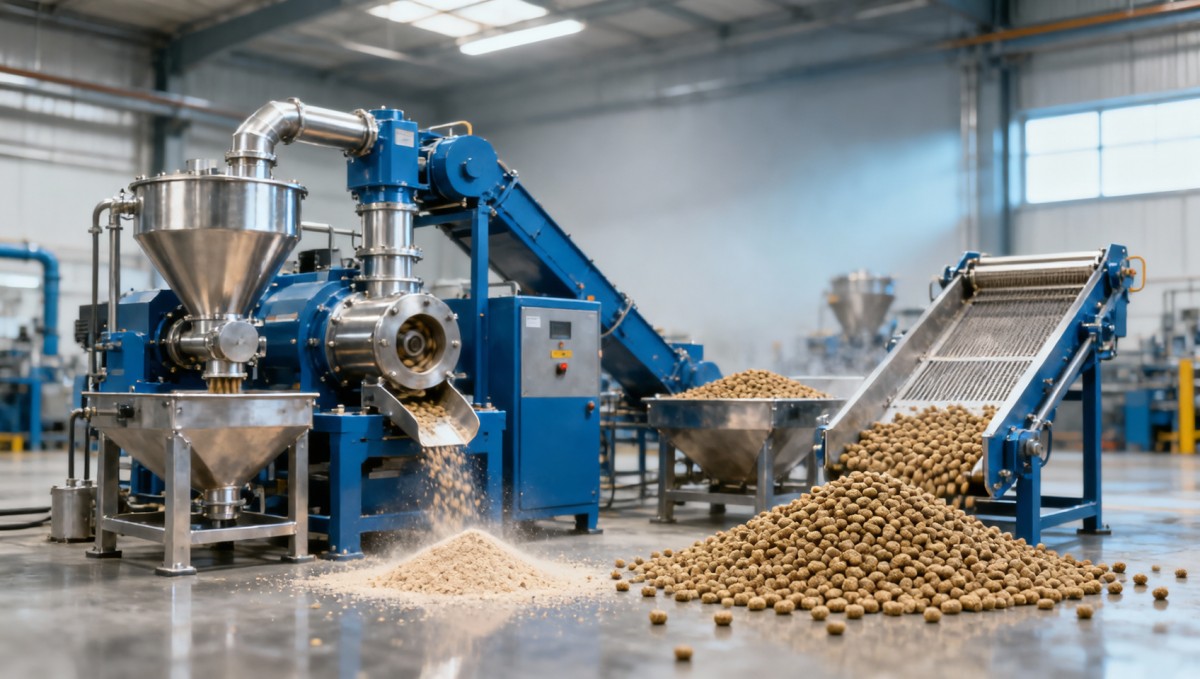
Fines are the broken particles, dust, and weak fragments generated before packaging, during conveying, or after cooling and screening. In a sinking fish feed machine line, they signal that pellets are not holding their intended density and structure. For aquaculture operators, even a 1%–3% increase in fines can affect feed conversion, water stability, and housekeeping load across the line.
The problem is rarely caused by one machine alone. In most commercial feed plants, fines emerge from interaction between grinding fineness, mixing uniformity, conditioning moisture, extrusion pressure, drying profile, and post-processing handling. That is why technical assessment should cover the full process window rather than focusing only on the fish feed extruder or pellet die.
For procurement teams and project managers, this matters because excessive fines raise hidden costs in at least 4 areas: raw material loss, lower finished-feed yield, higher rework ratio, and more unstable pellet performance in ponds or recirculating systems. For quality and safety personnel, fine dust also increases cleaning frequency and can complicate production hygiene control.
AgriChem Chronicle follows this issue closely because feed and grain processing now sits inside a more regulated and performance-driven supply chain. Buyers do not only compare line capacity such as 1–2 t/h, 3–5 t/h, or 8–10 t/h. They increasingly compare pellet durability, process stability over 8–12 hours of continuous running, and traceable operating parameters that reduce waste and batch variation.
The most common root causes in daily production
- Grinding is too coarse or too inconsistent, leaving oversized particles that weaken pellet bonding and create fracture points after extrusion or pelleting.
- Moisture and steam conditioning fluctuate from batch to batch, causing unstable starch gelatinization and poor structural cohesion.
- Die wear, screw wear, or poor compression ratio selection reduce compaction efficiency and create fragile pellets with uneven density.
- Drying or cooling is too aggressive, leading to surface cracks, internal stress, and breakage during conveying, screening, and bagging.
A key operational point is that sinking fish feed requires different balance settings from floating feed. Floating fish feed extruder lines typically rely on stronger expansion and lower final density, while sinking feed targets tighter density control and better submersion behavior. If operators borrow settings from a floating feed program, fines can rise quickly, especially in small-diameter pellets such as 1.0–2.5 mm shrimp or juvenile fish feed.
Which process stage causes the most fines: grinding, extrusion, drying, or handling?
In technical evaluations, it is useful to separate fines by stage rather than treating them as a single quality defect. This helps operators identify whether the issue begins with formulation preparation or appears after pellets leave the die. In many lines, 3 checkpoints are enough for a first diagnosis: after extrusion, after drying/cooling, and after final screening.
The table below summarizes how different stages in a sinking fish feed machine line typically contribute to fines, what symptoms to look for, and which corrective actions usually deliver the fastest operational benefit.
For many plants, extrusion and drying account for the most visible quality loss, but grinding often creates the hidden weakness upstream. If raw materials are not prepared consistently, downstream equipment has to compensate with tighter settings, and this usually narrows the operating window. Over a 2–4 week production cycle, that instability can become a recurring source of reject material.
How to identify the dominant failure point
A simple method for operators is to sample pellets at 3 locations and compare physical appearance and breakage behavior. If pellets are already weak at the extruder outlet, focus first on conditioning, die condition, and formulation moisture. If they crack only after drying, the thermal profile is more likely the root cause. If fines increase mainly after conveying, the problem may be mechanical impact rather than pellet formation.
A practical 5-point check routine
- Verify incoming grind consistency and remove oversized particles before conditioning.
- Record moisture and temperature at the conditioner every batch or every 30–60 minutes in continuous runs.
- Inspect screw, die, and cutter condition at scheduled intervals rather than waiting for visible failure.
- Check dryer residence time and final discharge condition to prevent shell-hardening and internal stress.
- Review conveyor layout, screen vibration, and drop heights after any line modification.
What technical parameters should buyers and engineers check before selecting equipment?
When a buyer compares a shrimp feed pellet machine with a floating fish feed extruder or evaluates a retrofit inside an existing sinking fish feed machine line, the key question is not only output. It is whether the line can maintain low fines under the target formula, pellet diameter, and shift duration. That requires parameter-based procurement, not brochure-based procurement.
The most relevant evaluation dimensions usually fall into 5 categories: raw material adaptability, process control stability, wear-part economics, post-processing gentleness, and operator visibility into settings. For finance approvers, this matters because a lower machine price can be offset by higher wear cost, more rework, and lower usable output within the first 6–12 months.
The comparison table below helps technical evaluators and procurement teams review the machine line more systematically before issuing RFQs, requesting test runs, or approving commercial negotiations.
A robust procurement review usually includes at least 3 deliverables before contract approval: process flow confirmation, wear-part and maintenance list, and a parameter matrix for target pellet sizes. This is especially important when a line must handle multiple SKUs such as shrimp feed, carnivorous fish feed, and slow-sinking specialty feed in the same facility.
Selection advice for different stakeholders
Operators should prioritize process visibility: stable control screens, easy adjustment of moisture and dryer settings, and clear maintenance access. Technical evaluators should prioritize trial reproducibility across 2–3 formulations. Procurement teams should compare total cost of ownership instead of initial machine price alone. Decision-makers and finance teams should ask how quickly better fines control converts into higher sellable output and lower waste disposal.
Distributors and agents can also use this framework when qualifying manufacturers. A supplier that can explain fines control with process logic, not only sales language, is usually better prepared for post-sale support, spare-part planning, and customer troubleshooting.
How can plants reduce fines without rebuilding the whole line?
Not every plant needs a full equipment replacement. In many cases, fines can be reduced through staged optimization over 3 levels: parameter adjustment, targeted component upgrade, and handling redesign. This approach is valuable for facilities facing budget pressure, short delivery windows, or production schedules that cannot support long shutdowns.
A practical first step is to stabilize what already exists. Record conditioning moisture, die load, dryer settings, cooling duration, and screening reject rate over 7–14 days. Once the line shows a repeatable baseline, engineers can identify whether the issue is procedural or mechanical. Without that baseline, plants often replace the wrong component and still keep the same fines problem.
The second step is selective upgrade. Examples include changing grinder screens, replacing worn die components, improving conditioner retention, or modifying high-impact transfer points. These focused interventions usually cost less than a line rebuild and can improve consistency quickly if the diagnosis is correct.
The third step is integration review. A sinking fish feed machine line should be treated as one coordinated system. If an automatic fish feeder commercial program requires tighter pellet durability for long transport and field loading, then post-process handling and packaging become part of fines control, not separate downstream details.
A phased improvement roadmap
- Phase 1, within 1–2 weeks: audit particle size, moisture variation, die condition, and screen reject ratio; establish a routine sampling plan.
- Phase 2, within 2–6 weeks: implement parameter corrections, train operators by shift, and compare results across 3 or more product runs.
- Phase 3, within 1–3 months: complete priority hardware upgrades and redesign damaging transfer points if fines remain above acceptable internal targets.
Common misconceptions that delay correction
One common mistake is assuming that more drying always improves pellet integrity. In reality, over-drying can make pellets brittle and increase breakage during transport. Another is blaming the die first, while ignoring upstream grind inconsistency. A third is optimizing only for output rate, even when a slightly lower throughput would produce better saleable yield over an entire shift.
Plants also underestimate handling damage. A line can produce acceptable pellets at the extruder and still lose quality through long vertical drops, aggressive bucket elevators, or screen settings that are too harsh for small-diameter feed. This is why quality teams should inspect the physical route of the pellet, not just the core machine settings.
FAQ for operators, buyers, and technical evaluators
How fine should ingredients be for sinking fish feed?
There is no single universal value because raw materials, pellet diameter, and formulation goals differ. However, the practical rule is consistency rather than extreme fineness. Small sinking pellets, especially in the 1.0–2.5 mm range, usually require tighter particle control than larger grow-out feed. Buyers should ask suppliers what particle distribution the line is designed to handle repeatedly, not only what it can achieve in a one-time test.
Is a floating fish feed extruder suitable for sinking feed production?
Sometimes, but only if the process configuration supports density control and the supplier can demonstrate stable sinking performance. Floating feed systems are designed around expansion behavior, while sinking fish feed machine lines prioritize compactness, water stability, and controlled submersion. Procurement teams should request process clarification, product range confirmation, and test evidence for intended sinking grades before assuming one line can do both equally well.
What should procurement teams ask during supplier evaluation?
At minimum, ask 5 questions: what formulations have been run, how wear parts are managed, what parameters are operator-adjustable, how final fines are measured in factory testing, and what support is available during commissioning. Also ask about lead time ranges such as 4–8 weeks for standard configurations versus longer cycles for customized dryer, conveyor, or control packages.
Can fines be reduced through training alone?
Training helps, especially when the problem comes from inconsistent shift practices, delayed maintenance response, or weak sampling routines. But training cannot solve mechanical wear, unsuitable compression setup, or damaging transfer design. The best results come from combining operator discipline with machine inspection, parameter documentation, and selective hardware correction.
Why work with AgriChem Chronicle when evaluating fish feed processing lines?
For institutional buyers, OEM partners, distributors, and industrial aquaculture operators, the challenge is not finding more generic product pages. It is finding decision-grade information that connects machine configuration, processing behavior, compliance expectations, and procurement risk. AgriChem Chronicle focuses precisely on that gap across aquaculture technology, feed processing, and adjacent primary industries.
Because ACC serves readers involved in agricultural machinery, aquaculture systems, biochemical processing, and regulated supply chains, our editorial lens is practical and cross-functional. We help teams compare not just a shrimp feed pellet machine or sinking fish feed machine line on paper, but also the surrounding issues that matter in real procurement: wear economics, process reliability, documentation quality, and implementation feasibility.
If you are assessing a new line or troubleshooting fines in an existing plant, you can contact us for support around parameter confirmation, supplier comparison logic, process-flow review, target product matching, typical delivery-cycle expectations, and compliance-oriented documentation questions. This is especially useful when multiple stakeholders such as operations, engineering, QA, finance, and purchasing need one shared decision framework.
You can also reach out to discuss custom evaluation topics, including sinking versus floating feed line selection, pellet durability risk points, retrofit priorities, spare-part planning, trial-run preparation, and quotation comparison criteria. For manufacturers and equipment providers seeking stronger visibility among institutional buyers, ACC also offers a high-trust publishing environment for validated technical content, whitepaper integration, and market-facing authority building.
Related Intelligence
- Commercial Feed PelletRed Sea Crisis Drives Up Asia-Europe Freight Costs, Feed Pellet FOB Prices Rise 8–12%Red Sea Crisis drives Asia-Europe freight costs up—Commercial Feed Pellet FOB prices rise 8–12%. Critical insight for exporters, traders & importers navigating supply chain volatility.
- Commercial Feed PelletAksu Cotton Mills at Full Capacity; Cottonseed Protein Export Stability RisesAksu cotton mills hit 100% capacity; cottonseed protein exports surge with Thailand & Saudi FDA approvals—99.2% delivery reliability drives feed ingredient buyers’ interest.
- Commercial Feed PelletGrass Forage Chopper Blade Wear Is Costlier Than It LooksGrass forage chopper blade wear drives hidden costs in fuel, downtime, and silage quality. Compare square baler machine, round baler machine, and wrapper options for smarter ROI.
The Morning Broadsheet
Daily chemical briefings, market shifts, and peer-reviewed summaries delivered to your terminal.
