
Grass Forage Chopper Blade Wear Is Costlier Than It Looks
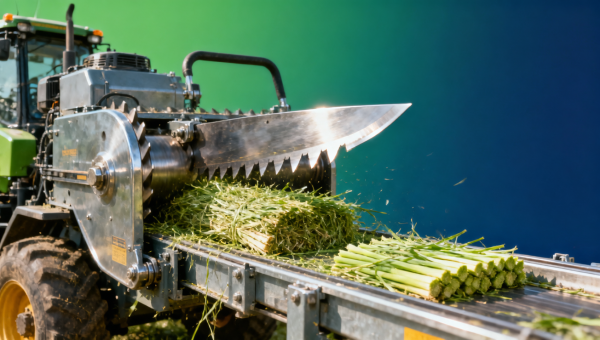
A worn grass forage chopper blade can quietly erode throughput, forage quality, fuel efficiency, and maintenance budgets long before failure becomes visible. For buyers comparing a grass forage chopper with a square baler machine, round baler machine, or silage bale wrapper machine, understanding total wear cost is essential to smarter lifecycle planning, safer operations, and stronger return on investment.
Why blade wear in a grass forage chopper becomes a hidden cost center
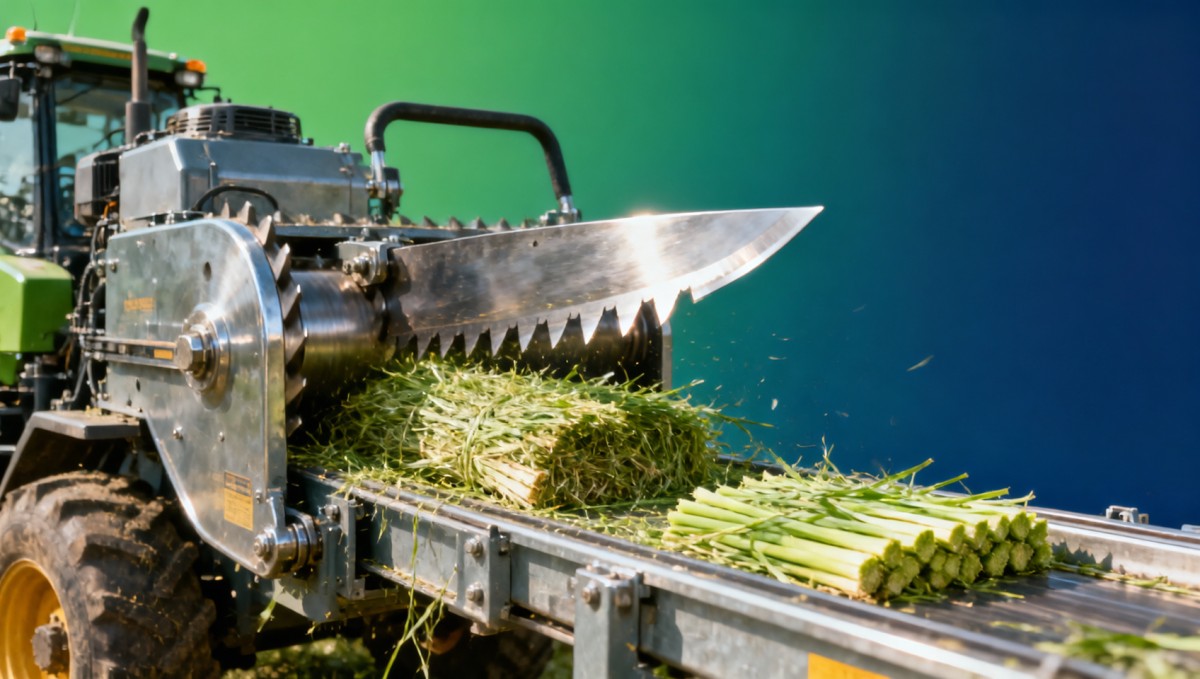
In forage operations, blade wear rarely appears first as a dramatic mechanical failure. It usually starts as a gradual decline in chop consistency, feed flow stability, and power efficiency. For technical evaluators and procurement teams, this matters because a grass forage chopper can still run while delivering lower-value output for weeks or even 1–2 harvest cycles before the problem becomes obvious.
The commercial impact reaches beyond spare part replacement. Dull or unevenly worn blades often increase recutting, create variable particle size, and push the machine to consume more fuel per ton processed. In silage preparation, that can affect compaction behavior, fermentation uniformity, and downstream feed handling. For finance approvers, the issue is not only blade price, but cost per processed ton over a 6–12 month operating window.
This is where many buyers misread lifecycle economics. They compare purchase prices across machines but do not model blade wear against labor stoppage, rotor balancing risk, extra sharpening frequency, and shortened maintenance intervals. In mixed operations using a grass forage chopper alongside a square baler machine or round baler machine, a weak cutting stage can create a bottleneck that affects the entire forage chain.
At AgriChem Chronicle, our editorial approach is valuable precisely because machinery decisions now sit inside regulated, cost-sensitive, globally sourced supply chains. Buyers need more than catalog claims. They need practical interpretation of wear behavior, sourcing transparency, and realistic assessment criteria that can be used by project managers, distributors, and safety teams at the same time.
What usually drives premature blade wear?
Premature wear is rarely caused by one factor alone. In field conditions, 4 variables tend to interact: forage moisture variation, foreign material contamination, blade metallurgy, and maintenance discipline. Moisture swings across a 15%–30% range can alter cutting resistance, while sand, stones, and wire fragments can create localized edge damage long before operators notice a full performance drop.
- Low or inconsistent blade hardness can accelerate edge rounding and reduce stable cutting hours.
- Incorrect knife-to-shear bar clearance, often drifting beyond typical service tolerance, can increase rubbing and heat generation.
- Rotor imbalance after partial blade replacement may trigger vibration, bearing stress, and uneven wear progression.
- Overextended sharpening intervals, especially during peak harvest weeks, can convert recoverable wear into irreversible geometry loss.
For quality control and safety managers, the key point is simple: wear is not just a maintenance issue. It is a process stability issue. Once blade condition slips, feed quality variability and operating risk often rise together.
Where the real money goes: throughput, quality, fuel, and downtime
When buyers ask whether a grass forage chopper blade is “still usable,” the better question is whether it is still economically acceptable. A machine can continue processing forage at a lower standard while quietly adding cost in 5 places: fuel burn, throughput loss, overlength chop, operator intervention, and unplanned service. These cost leaks are especially important when harvest timing is tight and weather windows are only 2–4 days long.
The table below helps procurement and commercial review teams map visible and hidden cost effects of blade wear. It is not a universal formula, but it provides a practical framework for comparing current operating performance against replacement timing decisions.
For project owners and financial reviewers, the practical conclusion is that blade replacement decisions should be linked to process metrics, not visual appearance alone. A blade edge that looks acceptable may already be increasing operating cost across multiple linked machines.
Why the cost comparison changes when other forage machines are involved
A grass forage chopper does not operate in isolation. In integrated forage lines, output from chopping affects baling density, wrapping consistency, storage handling, and transport loading. If blade wear causes unstable chop size, a silage bale wrapper machine may face less predictable bale surfaces, while square baler machine or round baler machine workflows may require more operator adjustments downstream.
This is why a simple replacement-part budget is often misleading. What matters is chain cost. One delayed machine can reduce utilization across 3–4 connected assets, increase labor idle time, and compress maintenance into a narrower service window. For distributors and dealers, that is also a customer retention issue because users judge the whole system, not only the blade.
Where operations are seasonal, downtime costs can be highly concentrated. A 6-hour stoppage during a peak cut period may be operationally more serious than several minor stoppages in the off-season. That timing effect should be included in total cost reviews.
How to compare a grass forage chopper with balers and wrapper systems
Buyers often compare a grass forage chopper with a square baler machine, round baler machine, or silage bale wrapper machine because all are part of forage preservation strategy. Yet they solve different processing problems. The right choice depends on forage moisture, transport distance, labor availability, storage method, and whether the operation prioritizes chopped feed, dry bale logistics, or wrapped silage retention.
The comparison table below is designed for technical screening and budget discussion. It helps mixed-role teams decide when blade wear management in a grass forage chopper is the highest leverage investment, and when a different machinery path may better fit the production model.
This comparison shows why blade wear deserves more attention in a grass forage chopper than many teams initially give it. In chopping systems, the blade is directly tied to output quality. In baling and wrapping systems, critical wear points are different, but the principle remains the same: component wear must be assessed by its effect on end-product value, not part cost alone.
Which operations benefit most from tighter blade management?
High-throughput forage contractors
Contractors processing variable crops across multiple locations often face frequent contamination risk and compressed service windows. They benefit from scheduled blade inspection every 25–50 operating hours, pre-positioned spare sets, and batch tracking for sharpening cycles. Their cost exposure comes from downtime and missed field schedules more than blade price.
Large farms with integrated silage handling
Farms that feed directly into bunkers, wagons, or wrapped silage systems gain from stable chop length and predictable machine loading. Here, blade condition influences not just machine output but storage performance and ration handling. For these users, replacement timing should align with forage quality targets and not only workshop availability.
Distributors and resellers
Dealers supporting several machine categories can use blade wear analysis as a consultative sales tool. Instead of pushing a spare part transaction, they can help customers compare repair timing, stocking strategy, and whether their current grass forage chopper still matches volume and crop conditions.
What procurement teams should verify before buying blades or machines
A good procurement process for a grass forage chopper should connect technical fit, commercial clarity, and maintenance realism. That means asking how blades are made, how they are serviced, what tolerances matter, and how fast replacement sets can be delivered during peak season. A low purchase price becomes far less attractive if emergency lead time stretches from 7 days to 3 weeks during harvest.
For procurement officers, project managers, and safety personnel, the most effective approach is a structured checklist. This reduces internal disagreement between teams focused on price, uptime, quality, and field service.
- Confirm blade material consistency, heat-treatment control, and dimensional repeatability across replacement batches.
- Verify recommended sharpening intervals, replacement criteria, and knife-to-counter-edge setup procedure.
- Check spare part lead time for standard and peak-season orders, ideally with realistic supply window ranges.
- Review whether balancing, mounting hardware, and operator instructions are included or sold separately.
- Ask for maintenance documentation that supports safe installation, torque control, and service frequency planning.
In regulated or export-oriented sectors, documentation discipline also matters. While agricultural machinery blades are not assessed like APIs, procurement teams still benefit from clear traceability, material declarations where relevant, and supplier records that support internal quality systems. ACC’s cross-sector perspective is useful here because supply chain scrutiny now affects machinery procurement far more than it did a decade ago.
A practical selection matrix for blade and supplier evaluation
The following matrix can be used during supplier comparison meetings. It is especially helpful when technical evaluators and finance approvers need a shared decision format.
This kind of matrix helps teams move from general preference to defensible procurement judgment. It is also useful for distributors building stronger aftersales proposals instead of competing only on unit price.
Common mistakes, compliance considerations, and decision FAQs
Many organizations wait too long to act because blade wear is treated as a workshop matter instead of a business risk. That assumption can delay replacement decisions, weaken feed quality consistency, and create avoidable operator safety issues. In practical terms, wear should be reviewed at fixed intervals, such as daily visual checks during heavy use and deeper measurement at scheduled service points.
Compliance considerations are also broader than many teams expect. Even where no product-specific certification is being claimed, safe maintenance procedures, documented lockout practices, spare-part traceability, and operator training records can all support internal quality management and accident prevention. For larger buyers, supplier transparency is increasingly part of vendor approval.
Below are several decision-focused questions that frequently arise when evaluating a grass forage chopper, blade replacements, or adjacent forage machinery.
How often should a grass forage chopper blade be inspected?
Inspection frequency depends on crop cleanliness, throughput, and operating intensity. In high-use periods, a quick condition review every shift and a more detailed inspection every 25–50 hours is a practical starting point. The goal is not excessive service, but early detection of edge rounding, chips, uneven wear, or mounting looseness before quality and safety are affected.
Is sharpening always cheaper than replacement?
Not always. Sharpening can be cost-effective when blade geometry remains within serviceable limits and balancing can be maintained. But repeated sharpening may shorten usable blade life, reduce edge strength, or create inconsistency across a set. If sharpening frequency rises sharply within one season, replacement may deliver better cost per ton and less downtime risk.
When should buyers consider a baler or wrapper instead of a chopper-focused upgrade?
If the operation prioritizes bale transport, decentralized storage, or wrapped fermentation rather than chopped feed flow, a square baler machine, round baler machine, or silage bale wrapper machine may better fit the process. The decision should be based on forage moisture condition, storage infrastructure, labor profile, and feed-out method, not on one machine category appearing cheaper in isolation.
What is the most common procurement mistake?
The most common mistake is treating blades as generic consumables. In reality, fit accuracy, wear behavior, supplier response time, and maintenance guidance can materially change annual operating cost. A lower-priced blade with unstable performance may cost more over a single season than a better-managed supply arrangement.
Why consult AgriChem Chronicle before making a machinery or spare-parts decision
AgriChem Chronicle supports decision-makers who cannot afford vague technical content or one-dimensional sales claims. Our coverage connects agricultural and forestry machinery insight with the broader realities of regulated supply chains, industrial procurement discipline, and cross-border sourcing. That perspective is especially useful when a grass forage chopper purchase intersects with spare-parts risk, vendor qualification, and operational continuity.
For information researchers, technical reviewers, and commercial stakeholders, we help translate component-level questions into business-level decisions. That includes assessing blade wear implications, comparing a grass forage chopper with a square baler machine, round baler machine, or silage bale wrapper machine, and identifying what should be clarified before budget approval.
You can contact us to discuss 6 practical areas: blade and component parameters, machine selection logic, expected delivery windows, maintenance planning, documentation and compliance expectations, and supplier comparison criteria. If your team is evaluating sample support, RFQ preparation, or a custom operating scenario, those topics can also be structured into a clearer decision brief.
If your current question is whether blade wear is already costing more than it appears, the answer usually starts with better measurement, better comparison, and better sourcing clarity. That is exactly where ACC adds value: turning fragmented machinery information into procurement-ready intelligence for institutional buyers and industrial operators.
Related Intelligence
- Commercial Feed PelletAksu Cotton Mills at Full Capacity; Cottonseed Protein Export Stability RisesAksu cotton mills hit 100% capacity; cottonseed protein exports surge with Thailand & Saudi FDA approvals—99.2% delivery reliability drives feed ingredient buyers’ interest.
- Commercial Feed PelletGrass Forage Chopper Blade Wear Is Costlier Than It LooksGrass forage chopper blade wear drives hidden costs in fuel, downtime, and silage quality. Compare square baler machine, round baler machine, and wrapper options for smarter ROI.
- Commercial Feed PelletGrass Forage Chopper Output Drops for Reasons Often MissedGrass forage chopper output drops for overlooked reasons. Learn how agricultural diesel engines, square baler machine and round baler machine setups affect efficiency, quality, and cost.
The Morning Broadsheet
Daily chemical briefings, market shifts, and peer-reviewed summaries delivered to your terminal.
