
Square Baler Machine Problems That Start with Moisture
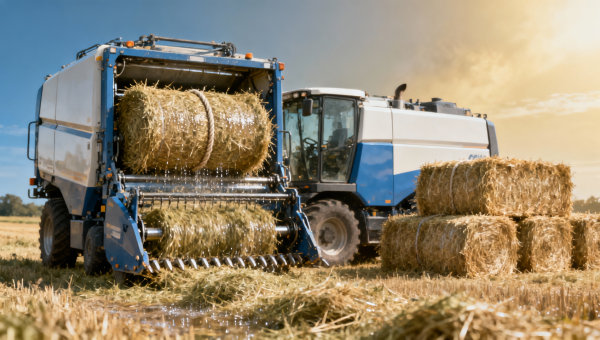
Moisture is often the hidden trigger behind square baler machine failures, from inconsistent bale density to knotter jams and storage losses. For buyers, engineers, and farm operators comparing a square baler machine with a round baler machine or related hay balers wholesale options, understanding moisture-related risks is essential to protecting output quality, machine uptime, and total operating cost.
Why does moisture become the starting point of square baler machine problems?
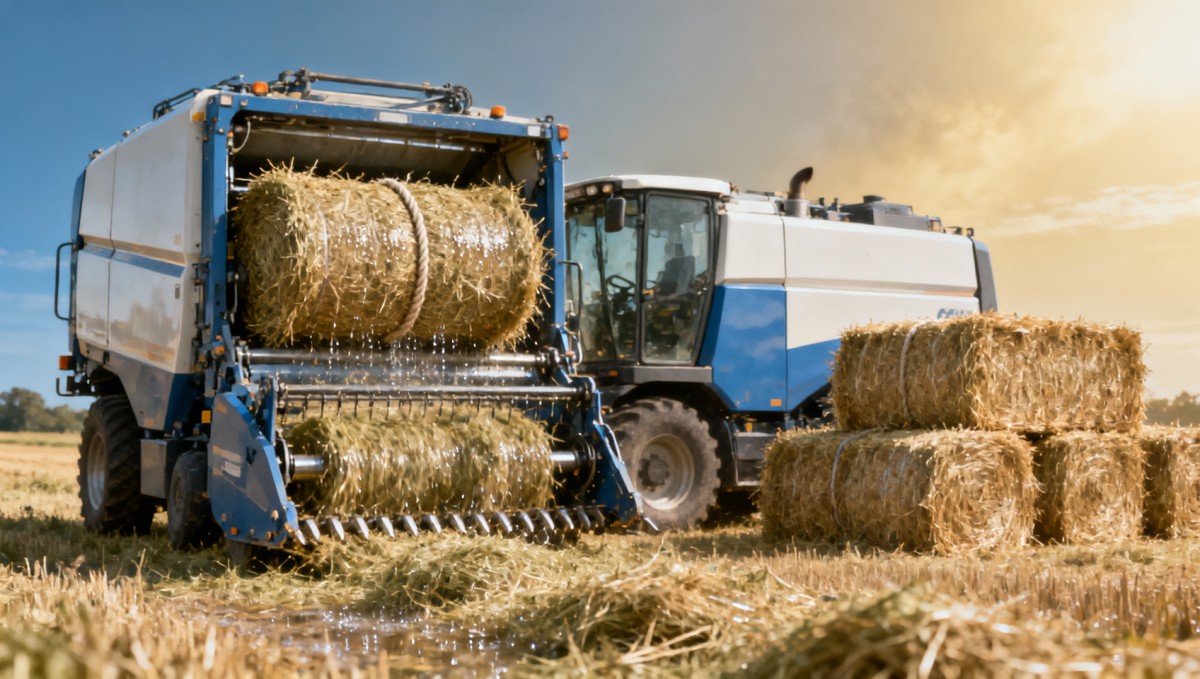
In square baling operations, moisture is not just a crop condition. It directly affects compression resistance, friction behavior, knot formation, bale stability, transport durability, and storage safety. When forage, straw, or crop residue enters the chamber outside a practical moisture window, a square baler machine may show symptoms that appear mechanical, even though the root cause began in the field.
For technical evaluators and procurement teams, this matters because moisture-related issues rarely stay isolated. A bale that forms at excessive moisture can lead to higher plunger load, slower throughput, more frequent stoppages, increased twine stress, and downstream spoilage. In a 6–10 hour harvest window, even small moisture deviations can compound into missed delivery schedules and unplanned maintenance.
This is especially relevant in mixed-climate regions, contract baling businesses, and large farms that run several machines across different crop types. Alfalfa, grass hay, wheat straw, and corn stalk residue do not behave the same way. A square baler machine set correctly for one crop at 12%–16% moisture may struggle when another material arrives closer to 18%–22%.
AgriChem Chronicle focuses on this kind of operational risk because machinery buying decisions are increasingly linked to compliance, inventory protection, and total system efficiency. For institutional buyers and industrial farming operators, the key question is not only whether a baler runs, but whether it runs predictably under realistic field moisture variation.
Common problem chain triggered by moisture
- Wet crop enters the pickup and feed system, increasing drag and uneven feeding, which can create slug loads before material reaches the bale chamber.
- Compression force rises, causing bale density variation, heavier stress on the plunger, and unstable knotter timing in high-capacity square baler machine operations.
- Twine tension changes as wet, springy material expands after tying, increasing the risk of broken knots, loose bales, or miss-ties during continuous runs.
- Stored bales retain internal heat and moisture pockets, elevating the risk of mold, discoloration, nutrient decline, and in severe cases, fire hazards.
What symptoms buyers should not ignore
If a machine repeatedly produces banana-shaped bales, inconsistent bale length, or twine cuts without obvious part damage, moisture should be checked before replacing components. Many service calls begin with a complaint about knotters or density systems, yet field inspection shows the crop condition was outside the intended operating range.
For safety managers and quality control teams, visible dampness is not the only warning sign. A crop can feel dry on the outside while remaining wetter in stems or lower windrow layers. That is why field moisture checks at 2–3 intervals per lot, rather than a single reading, are a practical baseline before baling starts.
Which machine failures are most often linked to wet material?
A square baler machine handles crop in a more defined package shape than many round baler machine systems, which makes uniformity an advantage but also raises sensitivity to moisture variation. When material is too wet, the machine often reveals that stress through repeated stoppages, poor bale finish, and excessive wear in specific assemblies rather than across the entire unit.
From a procurement standpoint, it is useful to separate moisture effects into feed problems, tying problems, and post-baling losses. This helps engineering teams identify whether they need a different machine configuration, improved sensing, operator training, or revised harvest timing. It also helps finance approvers understand why “same horsepower” does not equal “same operating cost.”
The table below summarizes the most common moisture-related failure points seen in square baler machine use across hay, straw, and mixed forage applications. These are practical evaluation points for buyers comparing new equipment, dealer-stock units, or hay balers wholesale offers.
The key insight is that moisture does not only affect the crop. It changes machine load profile and product risk at the same time. That makes moisture management both an engineering issue and a commercial issue, particularly for distributors, project owners, and feed processors handling high daily bale volumes.
Failure patterns during a typical operating day
Early morning baling
Dew commonly raises surface moisture in the first 1–3 working hours. This can increase feeder drag and create a false impression that the machine needs immediate mechanical adjustment. In reality, the same square baler machine may stabilize later in the day once crop moisture falls into the intended range.
Afternoon over-dry and stem-leaf imbalance
Some operators move too far in the opposite direction and delay baling until crop becomes overly dry. That can reduce mold risk but increase leaf loss in forage crops and lower bale integrity. Moisture management is therefore not simply “the drier the better.” It is about staying within a workable range for the material and storage method.
Square baler machine vs round baler machine: where moisture changes the decision
Buyers often compare a square baler machine with a round baler machine when the real issue is not shape preference alone, but moisture tolerance, handling method, transport economics, and end-use quality requirements. The best choice depends on whether your operation prioritizes stackability, feed logistics, export handling, or lower sensitivity to variable field conditions.
Square bales are typically favored where transport density, storage geometry, and automated handling matter. However, these advantages increase the importance of moisture control, because dense rectangular packages can hold internal heat and trapped moisture more uniformly than loosely managed alternatives. That is why storage planning and field testing must be part of capital evaluation.
For distributors and commercial contractors, the comparison should include at least 5 factors: crop type, average harvest window, target bale weight, transport distance, and storage duration. A machine that performs well in dry straw may not be the best fit for higher-moisture forage unless additional drying or wrapping strategies are in place.
The practical message is not that one format is universally better. It is that moisture exposure changes the cost profile of each option. If the business model requires export-ready packages, warehouse efficiency, or resale consistency, a square baler machine remains highly attractive, but only when moisture measurement and operator discipline are built into the workflow.
When square balers are still the stronger choice
- When the operation needs standardized bale dimensions for storage systems, container loading, or feed processing lines.
- When buyers or downstream users specify bale density, bale count per truck, or cleaner stacking performance.
- When the farm or dealer network can implement 2–4 moisture checks per shift and maintain disciplined field timing.
What should procurement and engineering teams evaluate before purchase?
A baler purchase should not start with brochure horsepower or nominal output alone. For project managers, procurement officers, and finance approvers, the more relevant question is how the machine performs when crop conditions are imperfect, labor is limited, and the harvest window is short. Moisture-related resilience should be part of the selection framework from the beginning.
In practice, evaluation should cover 4 layers: crop profile, machine design, service access, and storage consequence. A machine that offers acceptable field throughput but weak support for density adjustment, knotter access, or moisture monitoring may appear cheaper at purchase yet cost more through spoilage, downtime, and labor loss over 1–3 seasons.
ACC recommends that industrial buyers request operating guidance by crop category, not only generic specifications. Straw, hay, mixed forage, and residue each create different moisture and compression patterns. Suppliers who can explain realistic operating windows, wear points, and service intervals usually provide better long-term value than vendors who only emphasize output claims.
Practical procurement checklist
- Confirm the intended crop range and typical field moisture window, including whether the machine will handle dry straw, haylage-adjacent material, or mixed forage conditions.
- Review feeder, plunger, and knotter access for maintenance because moisture-related plugging often increases service frequency during peak season.
- Ask about spare parts lead time, especially twine-path components, wear surfaces, and critical driveline parts, with a realistic target of 7–15 days for stocked items where possible.
- Check whether moisture measurement, bale density adjustment, and operator alerts are integrated or must be managed externally.
- Match machine capacity to labor and storage infrastructure, not only to tractor power, because an overloaded logistics chain will erase field efficiency gains.
Selection table for moisture-sensitive operations
The table below can support internal review by technical, purchasing, and commercial teams when selecting a square baler machine for operations where moisture variation is a recurring risk rather than an occasional exception.
For distributors and agents, this table also supports better customer qualification. It clarifies whether the prospect needs a high-throughput commercial square baler machine, a more flexible baler strategy, or a broader field-to-storage solution including monitoring, training, and handling equipment.
How can operators reduce moisture-related downtime and quality loss?
The most effective mitigation is operational discipline rather than reactive repair. In most cases, 3 control points deliver meaningful improvement: pre-baling moisture checks, in-shift machine adjustment, and post-baling storage verification. This approach is relevant to farm operators, contractors, and industrial feed businesses alike.
A practical routine starts before the machine enters full production. Test several windrow locations, not only the top layer. Recheck when weather changes, when field zones differ, or after lunch when solar drying shifts. In unstable conditions, checking every 2–3 hours is often more useful than assuming the whole lot is uniform.
Machine settings should then be adjusted with moisture behavior in mind. If bale shape changes, twine breakage increases, or feed irregularity becomes frequent, reduce the push for maximum hourly output. A short-term speed reduction can preserve more saleable bales than forcing throughput and creating inventory losses later.
Post-baling, storage should not be treated as a separate department problem. Dense square bales require airflow planning, stack spacing discipline, and periodic inspection during the first days and weeks. Quality control teams should document temperature or odor anomalies early, especially when bale lots are intended for feed, export, or long-distance distribution.
Field-to-storage control steps
- Measure crop moisture at multiple points before baling, especially in shaded zones, low areas, and thicker windrows where moisture can remain trapped.
- Adjust feeding speed and bale density when the crop becomes tougher or more elastic, rather than waiting for plugging or knotter errors to appear.
- Inspect the first production bales for shape, tie security, and handling durability before committing to full-volume output.
- Store bales in ventilated conditions and review stack condition during the first 24–72 hours, when retained moisture problems are more likely to reveal themselves.
Compliance and risk perspective
While baler equipment itself is not governed by one single global moisture standard, buyers in regulated or export-linked supply chains should still align operations with broader safety and traceability practices. This includes documented maintenance, operator training, lot segregation, and storage records. In agricultural and primary processing sectors, these habits support safer inventory management and clearer accountability.
That is where a specialist intelligence platform such as AgriChem Chronicle adds value. ACC helps readers connect machinery performance with wider procurement reality: supplier credibility, technical documentation quality, service support, risk visibility, and the demands of industrial buyers who cannot afford avoidable handling losses.
FAQ and next-step guidance for buyers, engineers, and distributors
How do I know if a square baler machine problem is caused by moisture or by worn parts?
Start with pattern recognition. If plugging, inconsistent density, or knotter issues increase during early morning, after weather shifts, or in certain field zones, moisture is a likely contributor. If the issue remains constant across dry conditions and multiple crop lots, worn parts or timing errors become more probable. In many cases, both factors interact, so diagnosis should include crop testing and mechanical inspection together.
What moisture-related questions should procurement teams ask suppliers?
Ask how the square baler machine performs across your actual crop types, what bale density adjustment range is practical, which components wear fastest under tough material, and how quickly spare parts can be supplied during peak season. Also request guidance on recommended storage conditions, operator checks, and whether the supplier can support commissioning or training in the first harvest cycle.
Are hay balers wholesale purchases always cheaper in total cost?
Not necessarily. Wholesale pricing may lower unit acquisition cost, but total cost also depends on setup compatibility, service access, spare parts lead time, and crop suitability. A lower-priced machine that suffers frequent moisture-related stoppages or bale losses can become more expensive within one season. Buyers should evaluate purchase price together with downtime risk, storage loss exposure, and dealer support.
When is a round baler machine a better alternative?
A round baler machine may fit better where field conditions vary widely, stacking efficiency is less important, or wrapping and alternative forage handling methods are part of the operation. However, if transport density, warehouse order, and standardized package dimensions are central to the business, a square baler machine usually remains the better commercial format, provided moisture is managed with discipline.
Why choose us for technical publishing and buyer-oriented industry visibility?
AgriChem Chronicle serves decision-makers who do not buy on claims alone. Our editorial environment is built for manufacturers, agricultural equipment OEMs, and technical suppliers that need to explain performance in a way procurement teams, engineers, distributors, and compliance-conscious buyers can actually use. We translate machinery capability into credible market-facing intelligence.
If you need support around square baler machine positioning, product comparison content, procurement-focused technical communication, or market visibility for hay balers wholesale and related agricultural machinery solutions, contact us to discuss concrete topics such as parameter confirmation, crop-fit analysis, delivery cycle expectations, service support framing, documentation requirements, and quotation communication strategy.
For enterprises targeting institutional buyers, ACC can help shape content around technical specifications, application scenarios, maintenance logic, compliance context, and commercial differentiation. That makes your offer easier to assess by information researchers, technical evaluators, purchasing teams, and financial reviewers who need clear decision support before moving forward.
Related Intelligence
- Heavy Agri MachinerySilage Bale Wrapper Machine Film Waste Comes from SetupSilage bale wrapper machine film waste often starts with setup, not film. Compare round baler machine and square baler machine risks, calibration, and agricultural plastic mulch film compatibility.
- Heavy Agri MachineryHay Balers Wholesale Pricing Is Not the Full PictureHay balers wholesale pricing is only the start. Compare square baler machine and round baler machine value, lifecycle cost, system fit, and service support before you buy.
- Heavy Agri MachineryHay Balers Wholesale Orders Often Miss This Spec DetailHay balers wholesale buyers often miss bale chamber specs that impact square baler machine and round baler machine efficiency, wrapper fit, and total farm logistics cost.
The Morning Broadsheet
Daily chemical briefings, market shifts, and peer-reviewed summaries delivered to your terminal.
