
When a Square Baler Machine Makes Dense Bales Unevenly
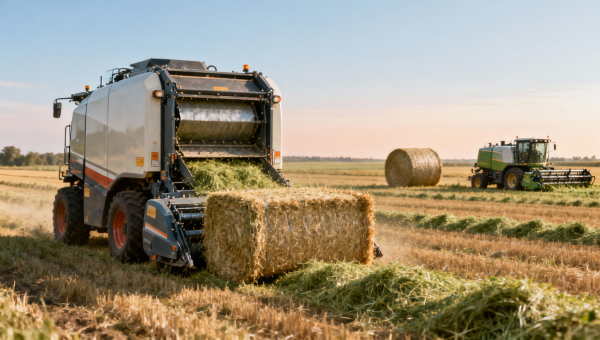
When a square baler machine produces dense bales unevenly, the issue often points to deeper problems in feeding consistency, chamber pressure, knotting timing, or crop condition. For buyers comparing a round baler machine, grass forage chopper, or hay balers wholesale options, understanding these causes is essential for technical evaluation, operating efficiency, and long-term procurement decisions.
Why uneven dense bales usually signal a system issue, not a single fault
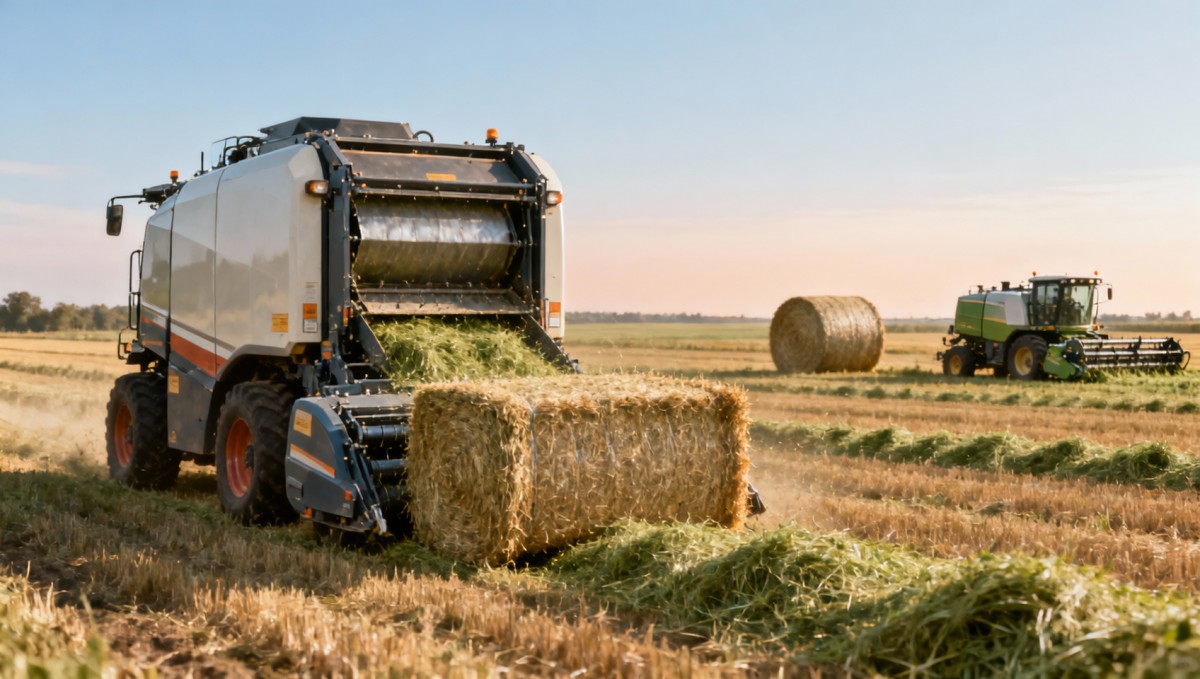
In field operations, uneven density in a square baler machine rarely comes from one isolated component. It usually develops through interaction between crop intake, plunger stroke stability, bale chamber resistance, knotter synchronization, and operator speed. For technical evaluators and project managers, this matters because a bale that looks slightly irregular may already be reducing stackability, transport efficiency, and downstream feed processing performance.
A common procurement mistake is to treat bale inconsistency as a minor maintenance problem. In reality, when density variation exceeds a practical working range across multiple bales in the same lot, it can indicate mismatch between machine design and field conditions. This is especially relevant in mixed-moisture forage, high-throughput straw collection, and operations running 8–12 hours per shift during harvest peaks.
For procurement teams comparing hay balers wholesale offers, the right question is not only whether the machine can make dense bales, but whether it can maintain density consistency across changing windrow volume, tractor PTO stability, and chamber load. A square baler machine that performs well in demonstration conditions may behave differently in commercial fields with variable crop length and moisture.
AgriChem Chronicle follows these issues from the perspective of industrial buyers, equipment OEM partners, and primary processing operators. That means evaluating equipment not just by brochure output, but by traceable operating logic, maintenance risk, compliance expectations, and total-use suitability across agricultural and feed-processing environments.
- Uneven bale density affects storage stability, especially in lots transported over 2–4 weeks and handled multiple times.
- Inconsistent compression can increase twine stress and knot failure frequency during continuous operation.
- Irregular bale dimensions reduce trailer loading efficiency and warehouse stacking predictability.
- For financial approvers, these operational losses often outweigh the apparent savings from a lower upfront machine price.
What buyers should observe during a field test
A reliable field test should cover at least 3 operating conditions: a light windrow, a normal production windrow, and a heavier section with moderate crop variation. Observing only a short, ideal-condition run gives limited value. Density consistency, flake formation, knot tightness, and bale edge squareness should be checked over a sequence of 20–30 bales rather than 3–5 samples.
Quality and safety teams should also review whether guards, driveline protection, and servicing points support routine maintenance without excessive downtime. In many real-world fleets, small access difficulties lead to missed lubrication intervals, and those missed intervals later appear as plunger instability, feeder wear, and knotter timing drift.
Operational symptoms that deserve immediate investigation
Look for one side of the bale consistently denser than the other, irregular bale length under similar feed rate, repeated twine tension differences, or chamber resistance adjustments that stop solving the problem after a short interval. These are signs that the issue is structural or cumulative rather than temporary. For distributors and resellers, documenting these patterns early helps avoid misdiagnosis and unnecessary parts replacement.
Which technical causes most often make a square baler machine bale unevenly?
The technical causes usually fall into 5 core categories: inconsistent feeding, plunger or chamber imbalance, knotter timing deviation, unsuitable crop condition, and drivetrain instability. Each category can produce similar visual results, which is why structured diagnosis matters. Buyers assessing a square baler machine against a round baler machine should understand that square balers are often more sensitive to feed uniformity and synchronization precision.
Feeding inconsistency is one of the most frequent causes. If the pickup delivers uneven crop volume into the pre-compression area, the bale chamber receives irregular flakes. Even when the machine is mechanically sound, windrow shape, excessive travel speed, or feeder fork wear can create alternating dense and soft sections. This becomes more visible when straw length is mixed or moisture moves outside the typical 12%–20% working window for many dry baling conditions.
Chamber pressure problems come next. A square baler machine depends on controlled resistance to form stable dense bales. If tension rails, resistance doors, or hydraulic density systems are unevenly adjusted, compression on one side can differ from the other. Over time, wear in chamber liners or guide surfaces may also reduce uniform contact, leading to bale twist or inconsistent length under the same plunger rate.
Knotter timing and twine handling are also critical. A bale may be internally uneven before knot failure becomes obvious. If tying occurs slightly out of synchronization with bale formation, the final package can lock in asymmetry. For quality-control personnel, repeated knotter complaints should be reviewed together with density records rather than treated as a separate issue.
The table below summarizes the main fault categories, their likely operational signs, and the practical implications for procurement and maintenance planning.
For purchasing teams, this comparison shows why price-only selection is risky. Two machines may offer similar advertised throughput, yet differ significantly in tolerance to crop variability, servicing burden, and bale uniformity under long runs. That difference becomes more important when the machine supports feed processing, commercial transport, or dealer resale commitments.
How crop condition changes machine behavior
Crop moisture, stem length, leaf retention, and windrow consistency directly affect compression. Material that is too dry may fracture and feed unevenly. Material that is too damp may resist stable compression and increase plugging risk. If the same square baler machine is expected to handle hay, straw, and forage residue across different seasons, buyers should request realistic crop-range clarification before order placement.
This is also where comparisons with a grass forage chopper become useful. A forage chopper is designed for cutting and particle-size preparation, not baling density control. When end users compare these solutions, they are often comparing different workflow goals. The correct decision depends on whether the operation prioritizes transportable dry packages, chopped feed preparation, or continuous silage handling.
How to compare square baler, round baler machine, and grass forage chopper for the right workflow
A square baler machine is usually preferred when transport density, stack efficiency, and standardized package dimensions matter. A round baler machine often offers simpler bale formation in some field conditions and may be more forgiving with variable feeding. A grass forage chopper serves a different chain altogether, supporting chopped material flow for silage or feed mixing rather than tied bale logistics.
For business evaluators, the key is not which machine is universally better, but which one aligns with the site’s handling, labor, storage, and downstream processing model. If a processor sells baled hay to multiple buyers, dimensional consistency and stackability may justify the tighter control demands of a square baler machine. If the objective is rapid forage harvest into ensiling systems, a chopper may produce better system economics.
Distributors should also consider after-sales complexity. Square baler machine fleets often require more disciplined setup, timing checks, and wear monitoring. That can be a business advantage if service capability is strong, but it can become a liability where local technical support, spare parts flow, or operator training is weak over the first 6–12 months of use.
The following table helps decision-makers compare the three equipment paths from a B2B operations perspective rather than a simple feature list.
This comparison is especially useful for finance and procurement reviewers. It turns a machinery discussion into a workflow decision: package density versus forage processing, service intensity versus operator simplicity, and transport value versus harvest speed. Those are the trade-offs that shape return on investment.
Three scenarios where square baler evaluation should be stricter
- When bales must move through dealers, exporters, or contract transporters who require predictable dimensions and secure tying.
- When storage density and warehouse stacking are financially significant over one season or multiple quarters.
- When one machine is expected to cover different crop types without frequent downtime for mechanical retuning.
In these scenarios, uneven dense bales are not just an operator annoyance. They are a warning sign that the selected machine, service plan, or crop protocol may not match the business model.
What should procurement teams, QA staff, and project managers check before buying?
Before approving a square baler machine purchase, cross-functional teams should use a structured checklist. Information researchers may focus on manufacturer claims, but technical evaluators need verifiable operating details. Procurement cares about lead time and spare parts. QA and safety personnel need guarding, maintenance access, and predictable operation. Finance teams need cost visibility over 12–36 months, not only initial quotation value.
A practical evaluation process often works best in 4 steps: define crop and throughput targets, compare machine architecture, validate field performance, and review service support. Skipping any one of these steps increases the risk of buying a machine that can form dense bales in principle but fails to maintain them consistently in commercial use.
For hay balers wholesale orders, unit consistency across batches also matters. Dealer and distributor buyers should ask whether key assemblies are standardized, what typical spare part lead times look like, and how quickly knotter or feeder wear items can be shipped during harvest season. A short procurement saving can become costly if replacement parts take 2–6 weeks during peak use.
ACC’s editorial perspective is particularly relevant here because industrial buyers increasingly need supply-chain transparency, technical substantiation, and a realistic view of operating risk. In regulated primary industries, disciplined equipment selection is part of broader process reliability and compliance culture.
A practical pre-purchase checklist
- Confirm the target crop range, expected moisture window, and seasonal operating hours.
- Request a field demonstration long enough to observe 20–30 continuous bales under changing windrow volume.
- Review density adjustment method, chamber wear points, and knotter service accessibility.
- Clarify spare parts support, operator training scope, and recommended preventive maintenance intervals.
- Check whether local safety expectations, guarding practices, and operating documentation are adequate for your site.
Questions that often reveal hidden risk
Ask how the square baler machine behaves in variable windrows, what happens when one side of the chamber begins wearing faster, how often knotter timing typically needs review, and what the standard handover includes. Also ask which parts are considered routine consumables versus less common replacements. These questions help separate a well-supported commercial solution from a machine sold mainly on nominal capacity.
If the supplier cannot explain the link between crop condition, feeder consistency, and bale density control, that is a decision signal in itself. Serious technical support should translate machine features into field outcomes and maintenance responsibilities.
FAQ: common procurement and troubleshooting questions about uneven dense bales
How do I know whether uneven bales come from the machine or the crop?
Start by comparing bale consistency across at least 2–3 sections of the same field with different windrow uniformity. If the problem follows crop variation closely, feeding and material condition may be the main drivers. If the problem remains similar even under relatively even windrows, inspect chamber balance, feeder timing, plunger stability, and knotter synchronization. The answer is often a combination, not a single cause.
Is a round baler machine a better choice if density consistency is difficult?
Not automatically. A round baler machine may be more forgiving in some crop and windrow conditions, but it serves different handling and storage preferences. If your operation depends on rectangular stackability, trailer efficiency, or resale in standardized bale form, moving away from a square baler machine may solve one issue while creating another. The better path is to match the baler type to logistics, labor, and downstream processing needs.
What should distributors watch when sourcing hay balers wholesale?
Beyond price tiers, distributors should examine unit consistency, parts packaging, documentation quality, and service training. They should also ask how quickly wear parts can be dispatched during peak season and whether assembly tolerances are stable across shipments. For wholesale programs, one inconsistent batch can damage dealer reputation more than a modest price difference helps margin.
Can a grass forage chopper replace a square baler machine?
Only if the operational goal changes. A grass forage chopper supports chopping and bulk forage handling, while a square baler machine creates tied packages for storage and transport. If your workflow requires dense, countable bales, a chopper is not a direct substitute. If your operation is moving toward silage systems or ration-based feed preparation, then the comparison becomes strategic rather than mechanical.
Why informed buyers work with AgriChem Chronicle when evaluating agricultural machinery options
AgriChem Chronicle serves decision-makers who need more than general product descriptions. In agricultural and primary processing sectors, machinery selection now sits inside broader concerns: supply-chain reliability, technical documentation quality, operating risk, and alignment with regulated or performance-sensitive production environments. That is why ACC frames equipment analysis in language useful to agronomists, procurement directors, industrial operators, and compliance-minded project teams.
When evaluating a square baler machine, a round baler machine, or grass forage chopper options, buyers often need help translating field symptoms into procurement criteria. ACC helps narrow that gap by focusing on application context, technical logic, maintenance burden, and commercial decision points. This supports better internal approval discussions between technical staff, purchasing departments, and financial reviewers.
If your team is comparing hay balers wholesale offers, reviewing bale uniformity complaints, or preparing a machinery shortlist for a feed, forage, or primary processing project, you can use ACC as a specialized channel for structured industry intelligence and supplier-facing technical communication. That includes discussion around parameter confirmation, machine category selection, expected delivery windows, service scope, documentation expectations, and fit-for-purpose comparison.
Contact us if you need support clarifying evaluation criteria, comparing solution paths, refining an equipment shortlist, or shaping a more credible technical presentation for institutional buyers. Typical consultation topics include density-control logic, crop suitability, delivery cycle expectations, custom configuration questions, compliance-oriented documentation, and quotation-stage comparison for procurement teams and distribution partners.
Related Intelligence
- Heavy Agri MachinerySilage Bale Wrapper Machine Film Waste Comes from SetupSilage bale wrapper machine film waste often starts with setup, not film. Compare round baler machine and square baler machine risks, calibration, and agricultural plastic mulch film compatibility.
- Heavy Agri MachineryHay Balers Wholesale Pricing Is Not the Full PictureHay balers wholesale pricing is only the start. Compare square baler machine and round baler machine value, lifecycle cost, system fit, and service support before you buy.
- Heavy Agri MachineryHay Balers Wholesale Orders Often Miss This Spec DetailHay balers wholesale buyers often miss bale chamber specs that impact square baler machine and round baler machine efficiency, wrapper fit, and total farm logistics cost.
The Morning Broadsheet
Daily chemical briefings, market shifts, and peer-reviewed summaries delivered to your terminal.
