
Round Baler Machine or Not? Watch Bale Loss First
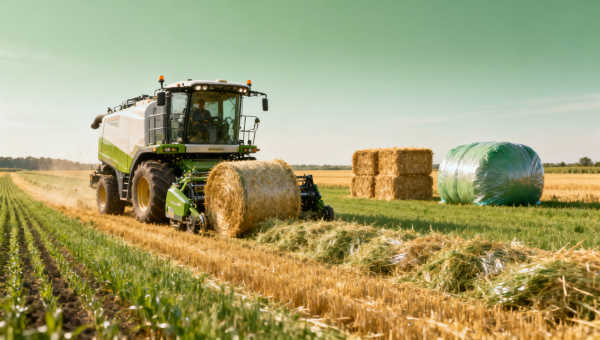
Before deciding whether a round baler machine is the right investment, start by measuring bale loss across moisture, density, and handling conditions. For buyers comparing a square baler machine, hay balers wholesale options, or a silage bale wrapper machine, loss rates often reveal more than brochure specs. This analysis helps technical evaluators, procurement teams, and farm operators identify the most cost-effective baling setup with clearer operational and financial confidence.
Why bale loss should come before machine preference
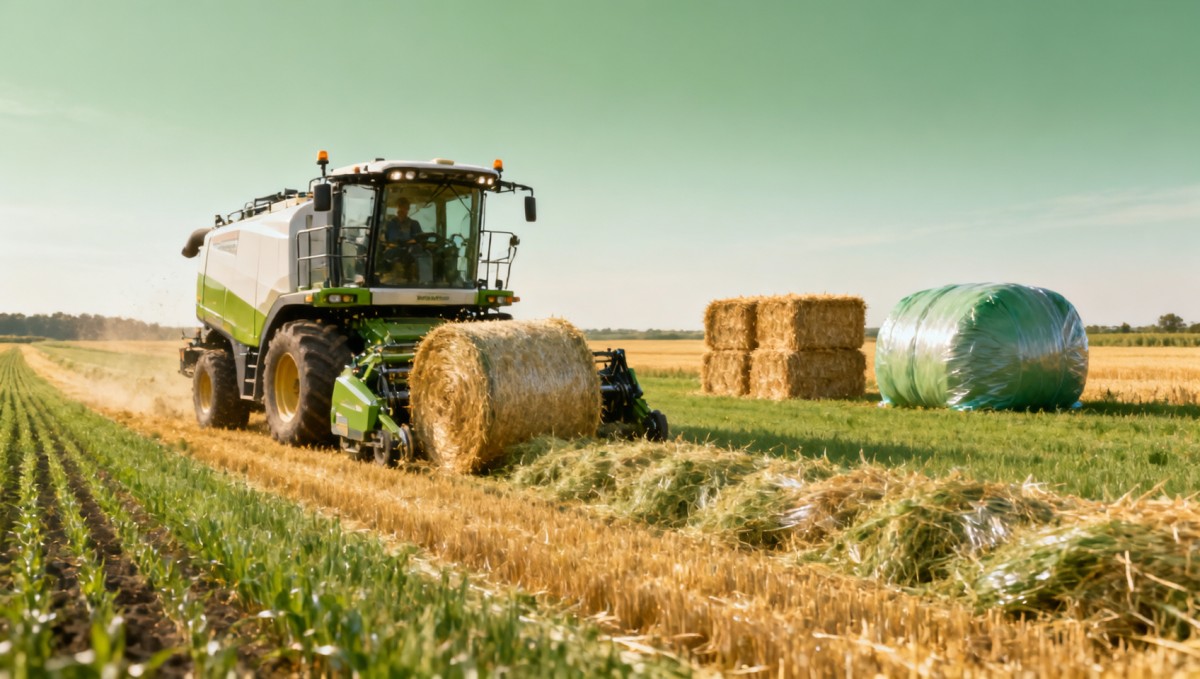
Many procurement discussions begin with machine type, horsepower compatibility, or unit price. In practice, bale loss is often the better first filter. A round baler machine may appear efficient in field throughput, yet if dry matter loss rises during baling, storage, transport, or feed-out, the real operating cost changes quickly over 1 season, 2 crop cycles, or a 3-year capital review.
For information researchers and technical evaluators, bale loss is not one number. It usually includes pickup loss, chamber loss, leaf shatter in dry forage, wrapping or tying loss, storage deterioration, and handling damage. When moisture sits in a common working range such as 12%–18% for dry hay or 45%–65% for silage material, the preferred baler format may shift materially.
This matters across the broader primary industries supply chain covered by AgriChem Chronicle. Agricultural machinery procurement rarely stands alone. It affects downstream feed quality, livestock performance, transport frequency, storage planning, and auditability for operations where process control and material consistency are under constant review by finance, quality, and site management teams.
A practical decision starts with 4 questions: where loss happens, how often it happens, what condition triggers it, and whether the cost of prevention is lower than the cost of recurring waste. Once these are documented, the debate between a round baler machine and alternatives becomes less subjective and more commercially defensible.
- Field stage: pickup efficiency, windrow condition, crop dryness, operator speed, and terrain stability.
- Bale formation stage: chamber compression, density consistency, tying or net wrap quality, and shape retention.
- Post-baling stage: loading damage, storage exposure over 2–12 weeks, and transport losses between field and yard.
- Utilization stage: feed-out waste, outer-layer spoilage, and compatibility with downstream silage bale wrapper machine workflows.
How round and square baling compare when loss is the real KPI
A round baler machine is often selected for flexibility, lower labor dependency in many field conditions, and practical use on mixed-size farms. A square baler machine may gain preference where transport density, stack efficiency, and standardized bale geometry directly influence logistics cost. The correct choice depends less on popularity and more on which format contains loss under your crop, climate, and handling routine.
In alfalfa, grass hay, straw, and silage applications, the highest-value material is not always the easiest to preserve. Leafy crops can suffer shatter loss if over-dried. Wet material can trigger spoilage or shape instability if compression and wrapping steps are not aligned. That is why distributors and procurement managers increasingly compare complete baling systems rather than one machine in isolation.
The table below organizes common purchase logic around loss control, handling, and cost predictability. It is not a universal ranking. Instead, it helps project managers and financial approvers test whether a round baler machine fits the actual operating profile better than a square baler machine or a wrapped silage workflow.
The key reading is simple: if your main cost pressure is transport, the square baler machine may justify itself. If your main risk is weather windows and operational flexibility across variable fields, a round baler machine can remain the stronger option. If storage preservation under wetter forage is the core issue, the baler-plus-wrapper route can outperform both on retained feed value.
When does the round baler machine make more sense?
It often suits farms and contractors dealing with mixed crop volumes, shorter labor rosters, and frequent changes in field condition. In such operations, the ability to keep baling through variable windrows and to simplify operator routines can reduce stoppages over daily windows of 6–10 hours.
It also fits buyers sourcing hay balers wholesale for dealer networks serving diverse end users. A more adaptable machine platform can reduce stocking complexity, training demands, and after-sales parts fragmentation across regions.
When is square or wrapped silage the better answer?
If the project depends on stackable inventory, container planning, or long-distance transport, the square baler machine has a structural advantage. If nutrient retention in wetter forage is financially critical, pairing baling with a silage bale wrapper machine usually deserves early evaluation, especially when rainfall exposure compresses the harvest window into 24–72 hours.
These decisions are exactly where ACC-style industry analysis is useful: the machine purchase should align with material flow, compliance expectations, and measurable cost recovery, not with generic preference.
What technical indicators should buyers measure first?
Technical evaluation should begin with a short list of measurable indicators rather than a long feature catalog. For a round baler machine, 5 indicators usually provide a reliable first screen: pickup performance, bale density consistency, moisture suitability, tie or wrap integrity, and handling durability. These metrics give procurement teams a more stable basis for cross-supplier comparison.
Density consistency matters because an uneven bale increases handling loss and storage inefficiency. Moisture suitability matters because even a well-built baler cannot compensate for crop outside the safe processing range. Tie or net wrap integrity matters because bale breakup often creates hidden losses during loading, road transport, and yard movement rather than in the field itself.
For quality and safety personnel, the machine must also support inspection routines. Typical checks include bearing temperature trends during continuous operation, guarding adequacy, driveline protection, emergency stop accessibility where applicable, and maintenance intervals such as every 50 hours, 100 hours, or at each seasonal startup.
The following table can be used during supplier discussions, distributor audits, or project tender reviews. It is especially helpful when comparing a round baler machine package with hay balers wholesale offers that differ in base equipment, training support, and spare-part coverage.
After the table review, buyers should run at least 1 field validation under local crop conditions. A supplier demonstration is useful, but a meaningful decision usually requires observing 10–30 representative bales, then checking shape retention, wrap quality, and visible loss during loading and storage movement.
A 4-step assessment model for technical and procurement teams
- Define crop profile by moisture, stem-to-leaf sensitivity, expected tonnage, and storage method.
- Compare machine suitability, including tractor match, throughput expectations, and maintenance access.
- Measure loss points over field pickup, baling, transport, and 2–8 weeks of storage.
- Translate observed loss into cost per ton, labor hours, and payback period before final approval.
This method helps convert an equipment conversation into an investment analysis that finance approvers can review without relying on assumptions alone.
How should procurement, finance, and compliance teams evaluate total cost?
Purchase price is only the first layer. Total cost usually includes fuel demand, labor input, net or twine consumption, film use where wrapping is involved, wear-part replacement, downtime exposure, and the value of dry matter lost across the season. In many operations, a seemingly lower-priced round baler machine becomes more expensive if bale consistency is poor and loss compounds over dozens or hundreds of loads.
For financial approvers, the most useful model is cost per usable ton rather than cost per machine. This reframes the discussion around output quality. A unit that preserves more sellable or feedable material can outperform a cheaper alternative even when initial capital expenditure is 10%–20% higher, provided maintenance and utilization stay within plan.
Compliance and safety also belong in the cost review. Agricultural equipment may not face the same regulatory profile as GMP production assets, yet professional buyers still need documented manuals, maintenance schedules, operator training, guarding conformity, and traceable spare-part support. For importers and distributors, these points reduce warranty disputes and improve after-sales control.
The cost planning matrix below is designed for commercial discussions where multiple stakeholders need a common view of technical and budget impact before moving to quotation or tender stage.
The operational lesson is direct: buyers should compare machine price, logistics efficiency, and material retention together. A round baler machine may still be the right answer, but only after total cost is tested against bale loss, not before.
Common procurement mistakes
- Buying by nominal output alone without checking actual bale stability over repeated runs.
- Comparing hay balers wholesale quotes without normalizing included accessories and service terms.
- Ignoring whether a silage bale wrapper machine will be needed within 1–2 seasons as crop strategy changes.
- Approving the project before assigning responsibility for moisture measurement and storage inspection.
Which implementation path reduces risk after purchase?
Implementation failure often starts after the machine arrives. Even a suitable round baler machine can underperform if operator setup, field preparation, consumable selection, and storage handling are not aligned. For project leads, the safer approach is to treat deployment as a controlled process with defined checkpoints over the first 30 days and the first harvest cycle.
A practical rollout includes machine inspection at delivery, tractor matching verification, operator training, trial baling under two crop conditions if possible, and post-trial review of bale condition after handling. This can be completed in 4 implementation stages and usually gives enough evidence to adjust density, speed, or wrap settings before peak workload begins.
Distributors and agents should add one more layer: parts readiness and service communication. If customers are evaluating hay balers wholesale programs, they will ask not only about hardware but also about response speed, seasonal inventory, and what support exists when a pickup or wrap component fails mid-harvest.
ACC’s value in this context lies in connecting technical due diligence with commercial execution. In regulated and capital-intensive supply environments, decision makers need more than specifications. They need a review framework that links machine choice to operational continuity, quality retention, and procurement transparency.
A low-risk onboarding checklist
- Confirm 3 baseline settings before first operation: crop type, target bale density, and intended storage method.
- Document 5 inspection items at delivery: frame condition, guarding, driveline interfaces, control functions, and consumable loading.
- Run a supervised field test and review at least 10 representative bales for shape, wrap consistency, and visible material loss.
- Set a support plan for the first 2–4 weeks, including spare-parts contact points and maintenance intervals.
FAQ for buyers comparing baling options
How do I know if a round baler machine is causing too much loss?
Check loss at 3 stages: field pickup, transport handling, and storage or feed-out. If bale edges break down easily, density varies noticeably from bale to bale, or outer layers deteriorate quickly, the machine setup or crop condition may be mismatched. A side-by-side test over 10–30 bales often gives more reliable insight than a specification sheet.
Is a square baler machine always better for commercial operations?
Not always. It is often better where standardized stacking, transport efficiency, and inventory control dominate the economics. But if fields are irregular, weather windows are short, or operator simplicity is essential, a round baler machine may generate better operational continuity and lower total disruption.
When should a silage bale wrapper machine be added to the evaluation?
Add it early if forage is frequently baled at higher moisture, if storage preservation matters more than transport geometry, or if weather pressure reduces drying time. In many cases, the wrapper is not an accessory decision but part of the core preservation strategy over the harvest period.
What should dealers ask when sourcing hay balers wholesale?
Ask about configuration scope, wear-part supply, operator training, commissioning support, recommended consumables, and realistic response time during the season. A strong wholesale program is not just about unit pricing; it should reduce support friction across 1 season and beyond.
Why consult ACC before final equipment selection?
AgriChem Chronicle supports industrial buyers, technical reviewers, and distribution partners who need more than promotional product language. In agricultural and primary processing markets, equipment decisions increasingly intersect with quality assurance, handling efficiency, compliance expectations, and international sourcing complexity. That is why the strongest purchase decisions combine field practicality with structured due diligence.
If your team is deciding between a round baler machine, a square baler machine, hay balers wholesale supply models, or a baler-plus-silage bale wrapper machine setup, we can help clarify the evaluation path. Useful consultation topics include parameter confirmation, application fit, delivery cycle expectations such as 2–6 weeks or seasonal lead-time risk, consumable planning, and total cost review tied to bale loss behavior.
For procurement managers and financial approvers, we can help organize a comparison framework that aligns technical indicators with commercial questions. For distributors and agents, we can support discussions around portfolio positioning, service readiness, documentation quality, and supplier transparency. For project and quality teams, we can help map operating checks, storage assumptions, and risk points before issuing a final recommendation.
Contact us if you need a structured review of baler selection, bale loss checkpoints, wrapper integration, supplier question lists, or quote-stage comparison criteria. A better baling decision usually starts with one disciplined step: measure loss first, then match the machine to the process.
Related Intelligence
- Heavy Agri MachinerySilage Bale Wrapper Machine Film Waste Comes from SetupSilage bale wrapper machine film waste often starts with setup, not film. Compare round baler machine and square baler machine risks, calibration, and agricultural plastic mulch film compatibility.
- Heavy Agri MachineryHay Balers Wholesale Pricing Is Not the Full PictureHay balers wholesale pricing is only the start. Compare square baler machine and round baler machine value, lifecycle cost, system fit, and service support before you buy.
- Heavy Agri MachineryHay Balers Wholesale Orders Often Miss This Spec DetailHay balers wholesale buyers often miss bale chamber specs that impact square baler machine and round baler machine efficiency, wrapper fit, and total farm logistics cost.
The Morning Broadsheet
Daily chemical briefings, market shifts, and peer-reviewed summaries delivered to your terminal.
