
Sinking fish feed machine capacity claims vs actual throughput
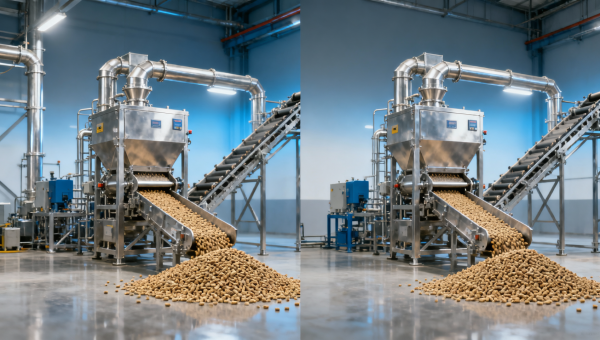
In aquaculture equipment procurement, advertised output often differs from real operating performance. This article examines how sinking fish feed machine capacity claims compare with actual throughput, while placing the issue in the wider context of floating fish feed extruder selection, shrimp feed pellet machine efficiency, and integrated systems such as automatic fish feeder commercial solutions and recirculating aquaculture systems. It helps buyers and technical teams evaluate performance with greater accuracy.
Why do sinking fish feed machine capacity claims often differ from actual throughput?
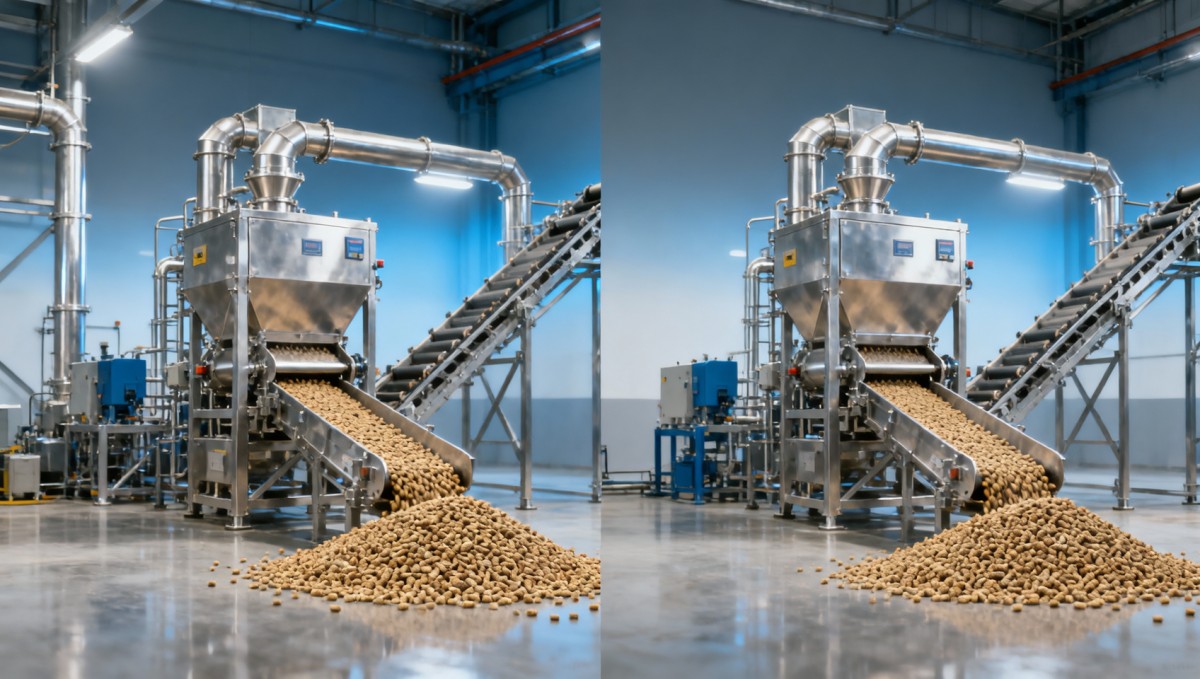
A sinking fish feed machine may be advertised at a nominal capacity such as 500 kg/h, 1 t/h, or 3 t/h, yet real plant output can be 15%–40% lower once moisture variation, formulation density, die wear, and operator settings are considered. This gap is not necessarily a sign of poor equipment. In many cases, the supplier is quoting peak mechanical capacity under controlled material conditions rather than stable commercial throughput over an 8–12 hour production shift.
For technical evaluators, the key question is simple: what exactly is being measured? Some manufacturers refer to output at the conditioner inlet, others at the pellet discharge, and others after cooling or screening. These are not the same numbers. A line that processes 1,000 kg/h mash feed may only deliver 850–920 kg/h finished sinking pellets once fines, moisture loss, and start-up losses are removed from the calculation.
This issue becomes more important when comparing a sinking fish feed machine with a floating fish feed extruder or a shrimp feed pellet machine. Each machine responds differently to starch content, protein level, fat addition, and die compression ratio. A buyer who compares headline capacity only, without matching formula and pellet size, can make a costly procurement mistake that affects labor planning, utility loading, and payback calculations.
At AgriChem Chronicle, editorial analysis across aquaculture and feed processing focuses on operational clarity rather than brochure language. For procurement teams, plant managers, and finance approvers, the practical objective is to translate claimed capacity into verified throughput, expected losses, and production economics under realistic factory conditions.
The four most common reasons for the output gap
- Raw material variability: fish meal, soybean meal, bran, binders, and moisture content can change bulk density and pelletability within the same week.
- Pellet specification changes: a line making 1.5 mm shrimp feed often runs slower than the same line producing 4–6 mm sinking fish feed.
- Support equipment mismatch: feeder, grinder, conditioner, dryer, cooler, and screener bottlenecks often cap real throughput before the main machine reaches nameplate load.
- Operational discipline: start-up stabilization, die cleaning, shift handover, and preventive maintenance can reduce daily average output by 5%–20%.
What should buyers measure instead of relying on nameplate capacity alone?
A reliable procurement process should evaluate at least 5 core indicators: finished pellet throughput, acceptable pellet rate, energy consumption, moisture consistency, and changeover time. This approach is more useful than asking only whether a sinking fish feed machine can produce a certain hourly figure. Procurement failure often starts when a plant buys for a peak number rather than for line stability across multiple formulas and pellet sizes.
Operators and quality teams should also distinguish between dry basis and wet basis measurements. If conditioned mash enters at a higher moisture level, the machine may appear to process more mass per hour, but the dry matter throughput is not necessarily improving. For this reason, serious technical discussions usually review output together with inlet moisture, outlet moisture, steam addition, and the percentage of fines after cooling.
Project managers should request a test protocol covering at least 3 production states: start-up, stabilized run, and post-changeover run. A 20–30 minute demonstration may look satisfactory, but it does not reveal what happens over a full shift. Throughput should ideally be judged over 2–4 hours per representative formula, especially when the line is expected to produce both fish feed and shrimp feed.
The table below shows a more practical framework for evaluating actual throughput. It is designed for B2B buyers who need to align technical performance with cost control, production planning, and internal approval requirements.
For most procurement teams, this framework changes the conversation from “How many tons per hour?” to “How many tons per shift, at what reject rate, and at what energy cost?” That shift leads to more accurate budgeting and fewer disputes after commissioning.
How quality control teams can validate throughput claims
Quality control and safety managers should build a 6-point acceptance checklist before signing off on any sinking fish feed machine or related feed line. This is especially relevant where the line interfaces with automatic fish feeder commercial systems or recirculating aquaculture systems, because feed consistency influences feeding accuracy, water quality, and biomass performance.
- Confirm the tested formula, including protein, fat, starch, fiber, and moisture range.
- Record pellet size, die specification, and target bulk density.
- Measure net finished output over a stable run of no less than 120 minutes where possible.
- Check fines percentage after cooling and screening, not only at the die face.
- Review motor load, steam consumption, and operator interventions during the test.
- Define acceptance tolerance in writing before shipment, installation, or final payment.
This kind of structured validation reduces ambiguity between supplier and buyer. It also helps distributors and agents present a more defensible technical position when supporting tenders or multi-site projects.
How does a sinking fish feed machine compare with floating fish feed extruders and shrimp feed pellet machines?
Comparison matters because throughput expectations change by process type. A sinking fish feed machine generally relies on pellet mill mechanics and formula conditioning to achieve density and water stability. A floating fish feed extruder uses pressure, heat, and expansion to create buoyancy, while a shrimp feed pellet machine often prioritizes fine particle control, water stability, and smaller die openings. Comparing all three under one capacity label can be misleading.
In practice, smaller pellet diameters usually reduce throughput. A line rated for 1–2 t/h on 4 mm fish feed may deliver a lower stable rate when running 1.2–2.0 mm shrimp feed. Likewise, a floating fish feed extruder may show lower mass throughput than a pellet mill but deliver a different product value due to feed conversion strategy, floating time, and suitability for automated feeding control.
The next table helps buyers compare process expectations across common aquaculture feed equipment types. It is not a substitute for plant-specific testing, but it helps narrow the selection process before requesting quotations or line drawings.
For enterprise decision-makers, the lesson is clear: compare output only after normalizing formula, pellet diameter, utility assumptions, and downstream equipment. A lower headline number can still be the better commercial choice if it delivers more stable pellets, lower rework, or better compatibility with farm feeding systems.
Which equipment fits which application scenario?
Small and mid-scale feed plants
Plants producing several hundred kilograms per hour to low-tonnage daily output often need flexibility more than maximum speed. In these cases, a sinking fish feed machine with simpler maintenance and shorter die change intervals may outperform a more complex system on total usable output per week.
Commercial aquaculture groups
Large operators integrating automatic fish feeder commercial equipment and recirculating aquaculture systems usually care about pellet consistency, feed waste control, and water stability. Throughput matters, but so does the relationship between pellet quality and farm performance over monthly production cycles.
Distributors and project contractors
For channel partners, the safest route is to quote a realistic operating band rather than a single peak figure. A transparent range helps avoid disputes during installation and protects long-term market credibility.
What should procurement teams, finance approvers, and project managers check before purchase?
A sound procurement decision requires alignment between technical output, budget discipline, installation constraints, and compliance expectations. In feed and aquaculture processing, many purchasing errors happen because the buying team reviews machine price first and system fit second. In reality, the better order is to verify process requirements, then estimate total installed cost, and only then compare quotations.
For most industrial projects, there are 4 stages that should not be skipped: requirement definition, technical clarification, pilot or test verification, and commercial negotiation. Depending on site readiness, a typical review cycle can take 2–6 weeks before purchase order release, and longer if electrical integration, steam supply, or civil work is still uncertain.
Because feed lines often operate under food and environmental controls, procurement teams should also ask about material contact surfaces, cleanability, spare parts availability, documentation completeness, and operator training. While equipment certification varies by region, buyers commonly expect clear documentation on electrical safety, material specification, and operating manuals suitable for plant acceptance and routine inspections.
The checklist below is especially useful when evaluating a sinking fish feed machine alongside auxiliary systems. It helps technical, financial, and operational stakeholders use one language during approval.
- Capacity basis: ask whether the quoted number is gross infeed, stable discharge, or net finished pellets after screening.
- Formula range: verify whether the equipment is being quoted for fish feed, shrimp feed, or mixed production with documented pellet sizes.
- Utility demand: confirm power load, steam or thermal requirement, compressed air needs, and cooling arrangement.
- Wear parts plan: request expected replacement intervals for dies, rollers, cutters, and key seals under normal duty.
- Installation scope: define what is included in 7–15 day site work versus what remains the buyer’s responsibility.
- Acceptance terms: document measurable criteria for output, pellet quality, training, and post-commissioning support.
Common misconceptions that delay good decisions
One common misconception is that higher rated capacity always means lower unit cost. Not necessarily. If a larger line runs far below its efficient operating band, energy use, labor allocation, and maintenance costs can become disproportionate. Another misconception is that the main machine determines everything. In reality, grinder fineness, conditioning stability, and cooler performance often shape final throughput just as much.
A third misconception is that farm feeding performance is separate from pellet production. It is not. If pellets break down too quickly in water or vary in bulk density, automatic fish feeder commercial systems may deliver feed unevenly, while recirculating aquaculture systems may face higher solids loading. Procurement teams should therefore evaluate the feed line as part of a broader operational ecosystem.
FAQ: practical questions buyers ask about throughput, testing, and implementation
How should we define actual throughput in a purchase contract?
Use net finished output, measured after the relevant downstream stages such as cooling and screening, and tie it to a defined formula, pellet diameter, and moisture range. It is also wise to state the test duration, for example a stable run of 2 hours after start-up stabilization, so that neither side relies on a brief peak reading.
Is a floating fish feed extruder always better than a sinking fish feed machine?
No. The right choice depends on species, feeding behavior, farm system design, feed economics, and water management goals. A floating fish feed extruder may be better for visible feeding control, while a sinking fish feed machine may be more appropriate for species or stages that require denser pellets and specific sink behavior.
What is a realistic commissioning and ramp-up period?
For many projects, initial installation and mechanical checks may take 7–15 days depending on line complexity and site readiness. Process tuning, operator training, and stable formula validation often require an additional 1–3 weeks. Buyers should budget time not only for equipment arrival but also for recipe adaptation and shift-level consistency.
Can one line produce fish feed and shrimp feed efficiently?
It can, but efficiency depends on die range, conditioning capability, formula strategy, and changeover discipline. Plants expecting frequent switches between larger fish pellets and smaller shrimp feed should study changeover time, cleaning loss, and acceptable throughput by product type rather than relying on one average nameplate figure.
Why work with AgriChem Chronicle when evaluating aquaculture feed equipment and supplier claims?
AgriChem Chronicle serves procurement-led industries where technical precision, compliance awareness, and supply chain transparency are essential. In aquaculture and feed processing, this means helping readers move beyond generic marketing claims and toward documented evaluation logic. Our editorial lens connects machinery performance, raw material handling, operating risk, and commercial decision-making in one framework.
For information researchers, technical assessment teams, and enterprise buyers, ACC offers industry-focused analysis shaped by biochemical engineering, agricultural processing, and international trade compliance perspectives. This matters when a throughput claim affects not just one machine purchase, but plant design, financing assumptions, operating margins, and downstream feeding system performance.
If you are comparing a sinking fish feed machine, a floating fish feed extruder, a shrimp feed pellet machine, or integrated solutions linked to automatic fish feeder commercial deployments and recirculating aquaculture systems, the most useful next step is a structured technical review. That review should cover target output, formula range, pellet size, utility conditions, expected delivery cycle, spare parts planning, and acceptance criteria.
Contact us to discuss parameter confirmation, equipment selection logic, realistic throughput expectations, line matching, delivery schedule planning, compliance documentation, sample or test run requirements, and quotation comparison. For distributors, project leaders, and industrial buyers, a well-defined review at the start can save months of correction work after installation.
Related Intelligence
- Commercial Feed PelletRed Sea Crisis Drives Up Asia-Europe Freight Costs, Feed Pellet FOB Prices Rise 8–12%Red Sea Crisis drives Asia-Europe freight costs up—Commercial Feed Pellet FOB prices rise 8–12%. Critical insight for exporters, traders & importers navigating supply chain volatility.
- Commercial Feed PelletAksu Cotton Mills at Full Capacity; Cottonseed Protein Export Stability RisesAksu cotton mills hit 100% capacity; cottonseed protein exports surge with Thailand & Saudi FDA approvals—99.2% delivery reliability drives feed ingredient buyers’ interest.
- Commercial Feed PelletGrass Forage Chopper Blade Wear Is Costlier Than It LooksGrass forage chopper blade wear drives hidden costs in fuel, downtime, and silage quality. Compare square baler machine, round baler machine, and wrapper options for smarter ROI.
The Morning Broadsheet
Daily chemical briefings, market shifts, and peer-reviewed summaries delivered to your terminal.
