
Floating fish feed extruder: where expansion quality goes wrong
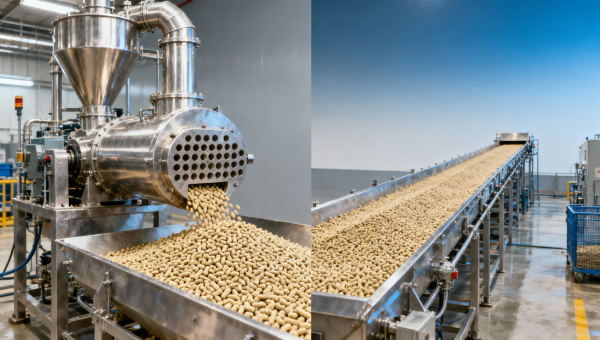
When a floating fish feed extruder starts producing unstable pellets, the root cause is rarely a single setting. From formulation moisture and screw configuration to die wear and drying control, expansion quality can fail at multiple points in the line. For buyers comparing a sinking fish feed machine or a shrimp feed pellet machine, understanding these variables is essential to reducing waste, protecting feed performance, and making smarter aquaculture equipment decisions.
Why does expansion quality fail in a floating fish feed extruder?
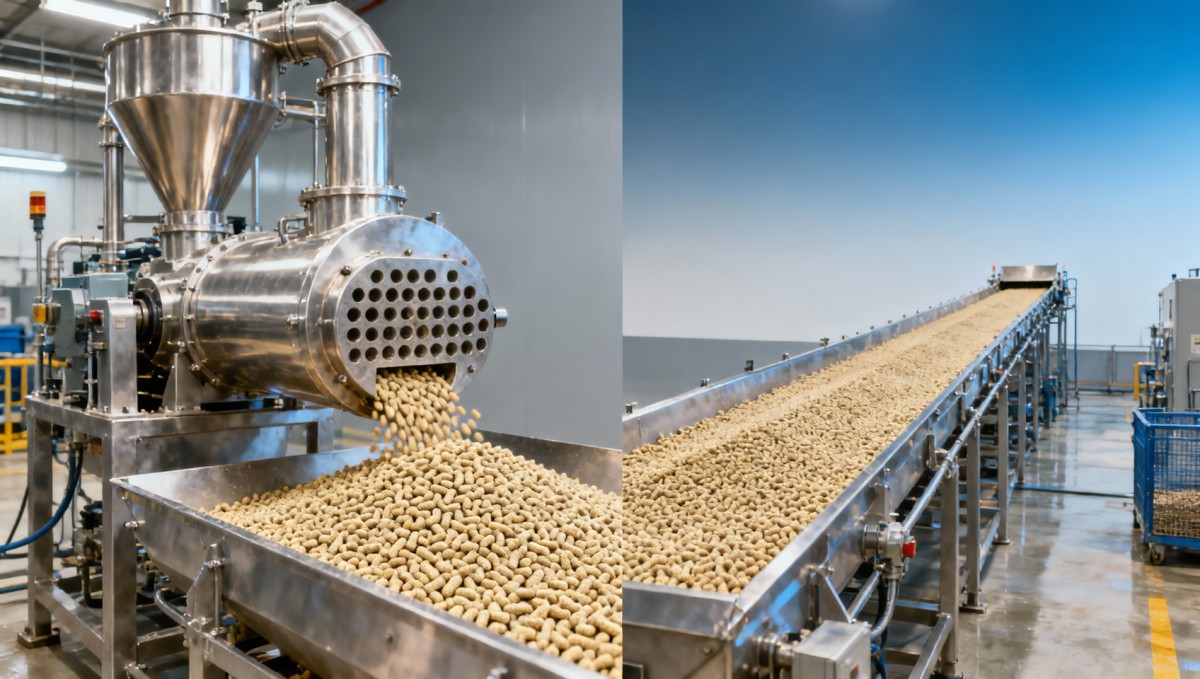
In aquaculture feed processing, poor expansion is usually not a standalone machine fault. A floating fish feed extruder works as part of a process chain that includes batching, grinding, pre-conditioning, extrusion, drying, and cooling. If pellets sink unexpectedly, break during handling, or show uneven density, the issue may come from any of these 5–7 process stages rather than from barrel temperature alone.
For operators and technical evaluators, the most common warning signs are visible within the first 30–90 minutes of production. Pellets may show inconsistent diameter, excessive fines, cracked surfaces, or unstable buoyancy after 5–10 minutes in water. For procurement teams, these signs matter because they directly affect feed conversion, customer complaints, and the long-term operating cost of the floating fish feed extruder line.
Expansion quality depends on how starch gelatinizes, how steam and moisture are managed, and how pressure is released at the die. If raw materials vary from one batch to the next, a machine that performed well last week can suddenly produce weak pellets today. That is why experienced buyers do not evaluate only nameplate capacity such as 1–2 t/h or 3–5 t/h. They assess process stability under changing feed formulas.
At AgriChem Chronicle, this is where technical intelligence becomes valuable. Institutional buyers, project managers, and OEM channel partners increasingly need comparative process understanding, not sales claims. In regulated and cost-sensitive primary industries, decision quality improves when machinery selection is linked to formulation behavior, operating windows, maintenance intervals, and traceable documentation.
The most frequent failure points in pellet expansion
- Moisture entering the conditioner or extruder is outside the practical operating range, making pellets either too dense or too fragile.
- Particle size after grinding is too coarse or inconsistent, reducing starch cooking efficiency and increasing void instability.
- Screw elements, shear section, or die configuration do not match the target fish species, feed formula, or output rate.
- Drying temperature or residence time is poorly controlled, causing surface hardening while the pellet core remains wet.
These failure points explain why some lines can achieve acceptable pellet appearance but still fail on water stability or float rate. A pellet may look expanded at discharge yet collapse after cooling or transport. This distinction is critical for quality control personnel and finance approvers evaluating whether a lower-price machine actually creates a higher cost of waste over 6–12 months.
Which process variables should buyers and operators check first?
If the goal is to stabilize a floating fish feed extruder, the first review should focus on variables that most strongly influence density and expansion repeatability. In practical terms, teams should start with 4 core categories: raw material condition, thermal input, mechanical shear, and post-extrusion drying. This approach is faster and more cost-effective than immediately replacing hardware.
For information researchers and equipment specifiers, the table below summarizes the main variables that commonly shift expansion quality. These are not fixed universal values, because fish species, formula composition, and plant altitude can change the operating window. Still, the ranges provide a structured reference for technical comparison and procurement screening.
The table shows a key procurement lesson: expansion quality is process-dependent. Two extruders with similar advertised output can perform very differently if one offers better moisture control, more adaptable screw design, or more stable dryer integration. This is why technical due diligence should examine the full line, not just the main extruder body.
A practical 4-step troubleshooting sequence
- Verify raw material consistency over at least 2–3 production batches, especially starch level, oil inclusion, and incoming moisture variation.
- Review conditioning and extrusion records over one operating shift to see whether temperature, steam, and load remain stable.
- Inspect screw wear, die wear, knife condition, and cutter setting after defined maintenance hours rather than waiting for visible failure.
- Check drying and cooling balance, because a good pellet can still fail if moisture migration continues during storage or bagging.
For project leaders, this sequence helps avoid unnecessary capex. In many plants, instability comes from process tuning, maintenance discipline, or formulation mismatch rather than immediate need for a new floating fish feed extruder. For distributors and agents, it also provides a better framework for pre-sales qualification and post-installation support.
Why formulation matters more than many buyers expect
A formula with higher oil, higher fiber, or lower starch usually behaves differently in the barrel. That is why a machine used for one species or life stage may not deliver the same expansion for another. Shrimp feed, for example, often prioritizes water stability and controlled sinking behavior, while floating fish feed requires a different balance of density reduction and structural strength.
This matters in mixed-product plants. If a buyer expects one line to switch between floating fish feed, sinking fish feed, and some shrimp feed applications, the usable flexibility will depend on screw configuration, pre-conditioner efficiency, die set options, and operator training over a realistic 2–4 week commissioning period.
Floating fish feed extruder vs sinking fish feed machine vs shrimp feed pellet machine
Many purchasing errors happen because buyers compare machines only by capacity or price. In reality, a floating fish feed extruder, a sinking fish feed machine, and a shrimp feed pellet machine are built around different pellet behavior targets. The correct comparison is not “which machine is better,” but “which process route best fits the feed specification, farm model, and margin structure.”
For technical assessment teams, comparing end-use requirements first reduces later disputes between production, QA, and procurement. A floating pellet line typically prioritizes buoyancy control and expansion consistency. A sinking fish feed machine may focus more on density stability and lower expansion. A shrimp feed pellet machine usually emphasizes durability, water stability, and fine size control.
The next table helps decision-makers compare these equipment paths in a way that is useful for specification writing, vendor discussions, and budget approval. It is especially relevant for integrated farms, contract manufacturers, and distributors building a product portfolio for multiple aquaculture segments.
The comparison makes one point clear: if the plant’s commercial objective changes, the preferred machinery route can also change. A low-cost machine may appear acceptable during quotation review, but if it cannot maintain product performance across 2–3 different formulas or pellet sizes, the total business case weakens quickly.
When a cheaper option becomes more expensive
Financial approvers often ask whether it is enough to buy the lowest-capex unit and optimize later. That can work in simple, single-formula operations. It becomes risky in commercial aquaculture where throughput, feed uniformity, and customer retention matter. Hidden costs often appear as trial waste, longer commissioning, higher spare-part turnover, and lower sellable output per shift.
A practical procurement review should therefore consider at least 5 cost layers: equipment price, utility demand, wear parts, operator dependence, and off-spec product loss. In feed and grain processing, those recurring factors often shape the true ownership cost more than the initial quotation alone.
This is consistent with ACC’s editorial perspective across agricultural machinery and primary processing: industrial buyers benefit from a supply-chain view, not an isolated equipment view. Machine choice affects formulation flexibility, maintenance planning, vendor responsiveness, and downstream commercial risk.
What should procurement and QA teams verify before ordering?
Before placing an order, procurement teams should define the intended feed profile in measurable terms. That means not just naming the species, but clarifying expected pellet size range, target behavior in water, formula variability, plant utility conditions, and output expectation by shift or by day. Without that front-end discipline, machine comparisons become unreliable and vendor quotations become difficult to interpret.
For QA and safety personnel, the review must also include material-contact design, sanitation access, documentation quality, and practical maintenance intervals. In many plants, a machine is technically capable on paper but difficult to clean, recalibrate, or inspect. Over time, that increases quality drift and compliance risk, especially in operations working under formal internal SOPs or export-oriented audit requirements.
A procurement checklist for expansion-sensitive feed lines
- Confirm whether the vendor can explain how the floating fish feed extruder handles at least 3 formula conditions, not just one demonstration recipe.
- Request a clear list of wear parts, recommended replacement intervals, and lead times that are realistic, such as 7–15 days for common spares or longer for custom components.
- Check whether the scope includes conditioner, dryer, cooler, and control logic integration, because expansion quality depends on the line as a system.
- Review commissioning support, operator training depth, and the expected stabilization period, which in many projects can run from several days to a few weeks.
Common compliance and documentation expectations
Specific certification needs differ by market, but industrial buyers commonly expect traceable documentation for materials, electrical configuration, operating manuals, and maintenance procedures. Where food, feed, environmental, or export controls apply, teams may also reference general frameworks related to safety, sanitation, and emissions. The exact standard list should match the destination market and the buyer’s internal policy.
This is where informed publishing support matters. AgriChem Chronicle serves technical and procurement audiences that operate in regulated supply chains. By translating equipment claims into decision-oriented analysis, ACC helps readers compare not only what a supplier sells, but how well the proposed line aligns with operating reality, audit preparation, and long-range asset planning.
For distributors and project managers, that perspective can shorten screening time. Instead of evaluating 20 scattered product claims, teams can focus on 6 key review areas: formulation fit, process controllability, wear profile, documentation quality, service responsiveness, and total ownership implications over the first 12–24 months.
FAQ: how to reduce risk when selecting or operating a fish feed extrusion line
The questions below reflect common search intent from researchers, operators, and B2B buyers comparing a floating fish feed extruder with other aquaculture feed equipment. They also address the most frequent gaps seen during vendor evaluation and line optimization.
How do I know whether poor floating performance comes from the machine or the formula?
Start with controlled trials across 2–3 batches using the same raw material and the same operator settings. If float rate, bulk density, and pellet strength still vary widely, inspect machine wear, steam stability, and die condition. If performance changes mainly with ingredient shifts, the formula is likely the main driver. In practice, both factors often interact.
Can one line produce floating fish feed and shrimp feed effectively?
It can, but only if the design allows enough process flexibility. Buyers should verify screw arrangement options, die change convenience, control range, and drying capability. The greater the difference in target pellet behavior, the more important it becomes to confirm the real changeover window, operator skill requirement, and likely output reduction during product switching.
What delivery and startup timing should buyers normally plan for?
Timing depends on scope, localization, and customization. For standard equipment, production and shipment may fit within several weeks, while integrated lines and plant-level projects usually require longer planning. Startup should also include installation checks, trial production, parameter tuning, and operator training. A realistic project schedule often works better than an aggressive date that ignores commissioning complexity.
What is the most overlooked issue in fish feed machine procurement?
Many teams overlook the connection between expansion quality and downstream drying. They focus on the extruder because it is the core machine, but pellets can fail later if moisture removal is uneven. Another common mistake is buying against one ideal recipe while the plant will actually run multiple formulas across the year.
Why work with AgriChem Chronicle when evaluating fish feed processing solutions?
AgriChem Chronicle operates at the intersection of agricultural machinery, aquaculture technology, feed processing, and regulated industrial sourcing. That editorial position is useful for buyers who need more than basic product descriptions. Whether you are screening a floating fish feed extruder, reviewing a sinking fish feed machine, or comparing a shrimp feed pellet machine for a multi-species project, the real challenge is connecting process details to procurement outcomes.
ACC helps close that gap by framing equipment decisions around technical precision, supply-chain transparency, compliance awareness, and application fit. This is especially relevant for enterprise buyers, OEM partners, and distributors who must justify decisions to operations, QA, finance, and management at the same time. A machine that looks acceptable in isolation may not be the right solution once formula range, documentation, spare parts, and service support are fully considered.
If you are currently comparing fish feed extrusion options, you can engage on practical decision points: parameter confirmation for target pellet size and buoyancy, line matching for conditioner and dryer sections, expected lead time for standard versus customized configurations, documentation for compliance review, spare-part planning, trial or sample discussion, and quotation alignment with your required throughput range.
For technical teams, project managers, and procurement leaders, the most productive next step is to organize your inquiry around 5 items: feed type, target capacity, utility conditions, formula range, and required delivery schedule. With that information, the evaluation process becomes faster, more transparent, and more useful for internal approval. If needed, ACC can support the discussion framework that turns fragmented equipment information into a sound industrial purchasing decision.
Related Intelligence
- Commercial Feed PelletAksu Cotton Mills at Full Capacity; Cottonseed Protein Export Stability RisesAksu cotton mills hit 100% capacity; cottonseed protein exports surge with Thailand & Saudi FDA approvals—99.2% delivery reliability drives feed ingredient buyers’ interest.
- Commercial Feed PelletGrass Forage Chopper Blade Wear Is Costlier Than It LooksGrass forage chopper blade wear drives hidden costs in fuel, downtime, and silage quality. Compare square baler machine, round baler machine, and wrapper options for smarter ROI.
- Commercial Feed PelletGrass Forage Chopper Output Drops for Reasons Often MissedGrass forage chopper output drops for overlooked reasons. Learn how agricultural diesel engines, square baler machine and round baler machine setups affect efficiency, quality, and cost.
The Morning Broadsheet
Daily chemical briefings, market shifts, and peer-reviewed summaries delivered to your terminal.
