
Single screw or twin screw floating fish feed extruder?
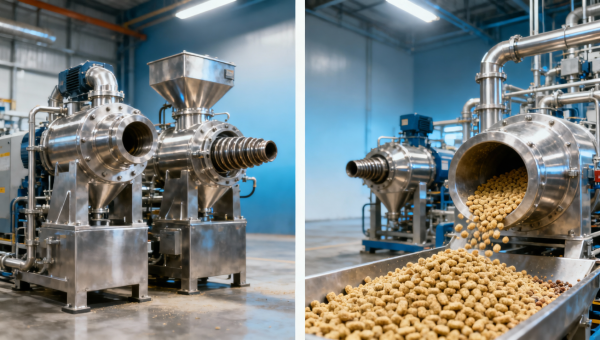
Choosing between a single screw and twin screw floating fish feed extruder can determine feed quality, energy use, and production flexibility in modern aquaculture. For buyers comparing a floating fish feed extruder with a sinking fish feed machine, shrimp feed pellet machine, or integrated recirculating aquaculture systems, understanding output stability, formulation adaptability, and operating cost is essential before making a commercial investment.
How do single screw and twin screw floating fish feed extruders differ in practical production?
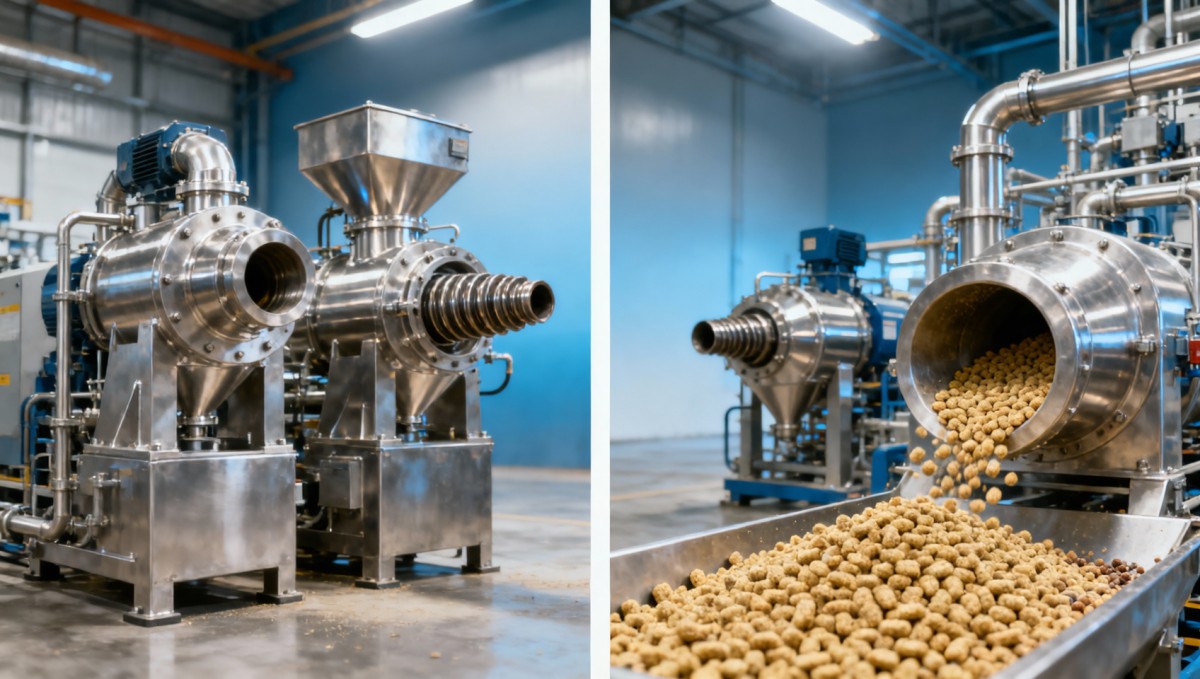
For most feed processors, the real question is not which machine sounds more advanced, but which extruder matches target species, recipe variability, and plant throughput. A single screw floating fish feed extruder usually offers a simpler mechanical structure, lower initial investment, and easier operator onboarding within the first 3–7 production days. A twin screw floating fish feed extruder, by contrast, is typically selected when the line must handle wider formulation changes, stricter density control, and more complex raw material combinations.
In commercial aquaculture, extrusion is not only about pellet shape. It influences starch gelatinization, water stability, bulk density, floatability, and downstream drying load. If a plant makes floating fish feed for tilapia, catfish, carp, or ornamental species, stable expansion and moisture management matter as much as rated capacity. When the same factory also plans shrimp feed, sinking feed, or specialty aquatic diets, formulation responsiveness becomes a deciding factor.
Single screw systems are often preferred in small to medium capacity projects, especially where recipes remain within a narrower ingredient window and the production target is relatively standardized. Twin screw systems are commonly evaluated for multi-product factories, pilot lines, contract manufacturing, and projects that require more frequent changeovers every week or every production shift. This distinction matters for procurement teams because equipment cost alone rarely captures the true cost of formulation limits.
At AgriChem Chronicle, this comparison is especially relevant because aquaculture machinery sourcing now sits inside a more regulated and data-driven supply chain. Buyers increasingly need a decision framework that connects machinery performance, ingredient behavior, compliance expectations, and long-term operating economics rather than relying on brochure claims or isolated capacity figures.
Core structural difference
A single screw extruder relies on one rotating screw to convey, compress, shear, and cook the feed mash inside the barrel. It is mechanically straightforward and often easier to maintain with a smaller spare parts list. A twin screw extruder uses two intermeshing or co-rotating screws, which usually provides more controlled conveying, more uniform mixing, and stronger process flexibility across variable moisture and fat levels.
This structural difference affects how the machine behaves under changing loads. If raw material particle size varies, or if fishmeal, soybean meal, rice bran, wheat flour, and oil ratios shift from batch to batch, a twin screw system usually responds with better consistency. In plants running 8–16 hours per day, such stability can reduce off-spec pellet frequency and improve planning accuracy for drying and packaging sections.
Quick comparison for procurement teams
The table below helps technical evaluators, buyers, and project managers compare the two machine types across the factors most often reviewed during capital approval, line design, and vendor screening.
The key takeaway is simple: single screw extruders are not outdated, and twin screw extruders are not automatically the better choice. The right decision depends on how often recipes change, how sensitive the feed specification is, and whether the plant values lower entry cost or broader process control over a 3–5 year equipment horizon.
Which machine fits different aquaculture products, operating models, and plant sizes?
Application fit is where many purchase decisions go wrong. A machine that performs well for standard floating fish feed may not be ideal for shrimp feed pellet production, micro pellets, high-fat carnivorous fish diets, or integrated recirculating aquaculture systems where feed uniformity and water quality are tightly linked. Buyers should assess not only current production but also the next 12–24 months of planned product mix.
For hatcheries and smaller commercial mills, a single screw floating fish feed extruder can be a practical choice when the output target is moderate and feed sizes are limited to a smaller range. These users often prioritize operational simplicity, manageable maintenance, and lower utility burden. In such cases, stable raw material preparation and disciplined moisture control often matter more than owning the most complex extrusion platform.
For larger plants, toll processors, or companies serving multiple species, a twin screw floating fish feed extruder can create operational advantages. It is often more suitable when a line must switch between floating and semi-sinking concepts, trial alternative protein sources, or maintain tighter pellet density targets. This matters for exporters and branded feed companies because pellet consistency affects customer confidence, feed conversion expectations, and inventory segregation.
Distributors and project contractors should also consider commissioning environments. In some regions, stable steam supply, power quality, and operator skill levels vary widely. A technically superior machine may still be the wrong choice if the plant cannot support the control discipline required for repeatable operation across three daily shifts or seasonal ingredient changes.
Typical application matching logic
- Choose a single screw system when the line mainly produces standard floating pellets for a limited species portfolio, runs predictable formulas, and needs a straightforward startup with lower capital pressure.
- Choose a twin screw system when the plant requires higher formulation flexibility, more controlled expansion, or regular switching across fish feed, specialty aquafeed, and experimental recipes.
- Evaluate both options carefully if the factory plans phased expansion, because the first machine must still fit dryer, cooler, coating, and packaging capacity after 6–18 months of scale-up.
Application-oriented selection table
The next table maps common production scenarios to likely equipment preference. It should be used as a screening tool, not as a substitute for formulation trials and engineering review.
This comparison helps finance approvers and technical teams align around the true business model. The machine should fit not only today’s output but also the company’s margin strategy, product roadmap, and service obligations to downstream farms or dealer networks.
What technical and cost indicators should buyers review before approving a fish feed extrusion line?
A responsible purchase review should examine at least 5 core dimensions: target capacity, pellet specification range, raw material characteristics, utility availability, and maintenance support. Without these inputs, comparing a single screw and twin screw floating fish feed extruder only by quoted price is misleading. A lower purchase price can turn into higher production cost if the line produces unstable pellets, requires frequent stoppages, or cannot process the intended recipe consistently.
Capacity must be examined as a system value, not just as an extruder nameplate. Buyers should confirm whether the stated output refers to one formula, one pellet size, or one moisture condition. A line that claims strong throughput under ideal conditions may deliver much less once pre-grinding, conditioning, drying, oil coating, and cooling are included. In many feed projects, the effective bottleneck appears downstream rather than inside the extruder itself.
Energy review should cover both connected load and operating behavior. Some plants operate 1 shift, others 2 or 3 shifts, and the economics change accordingly. If a factory runs 20–26 days per month, even modest differences in specific energy use, steam demand, or wear-part replacement cycles can materially affect annual budgeting. That is why procurement teams should ask for expected consumables lists over 6–12 months rather than only a machine quotation.
From a quality standpoint, pellet floatability, durability, fines level, and density consistency should be reviewed together. A floating fish feed extruder is part of a process chain, so poor grinding uniformity, unstable steam conditioning, or inconsistent dryer discharge can undermine otherwise solid extrusion performance. Quality control managers should therefore request a process map, not only a machine specification sheet.
5 practical checkpoints before vendor comparison
- Define the target pellet range, such as small, medium, and larger diameters, and confirm whether one die and one screw setup can handle the required spread.
- List the top 5 ingredients by inclusion rate and note whether moisture, fat, or fiber levels change seasonally across 2–4 procurement cycles per year.
- Verify utility conditions, including voltage stability, steam availability, water quality, and compressed air support for continuous operation.
- Ask for the wear-parts plan, including screw elements, die components, cutters, and seals, with realistic replacement intervals.
- Confirm commissioning scope, operator training hours, and the response window for technical support during the first 30–90 days.
Cost and decision factors at a glance
This table supports internal discussions between project managers, procurement teams, and finance reviewers when comparing total project implications rather than just purchase price.
In many B2B projects, the best procurement outcome comes from balancing 3 timelines: immediate budget approval, 12-month production stability, and 3-year business flexibility. This is where structured industry intelligence becomes valuable, especially when comparing multiple suppliers across regions and technical claims.
What compliance, implementation, and risk issues are often overlooked?
Feed extrusion equipment is not purchased in isolation. It operates inside a plant environment shaped by food and feed safety controls, occupational safety procedures, environmental handling requirements, and traceability expectations. While standards vary by market, buyers commonly review material contact suitability, electrical safety configuration, documentation quality, and the machine’s compatibility with plant hygiene procedures. For export-oriented businesses, documentation discipline is often as important as mechanical performance.
Implementation risk usually appears during the handover period. A realistic startup plan often includes 4 stages: utility verification, dry commissioning, wet commissioning with trial formulas, and stabilized production sign-off. Depending on line complexity, this can take from several days to a few weeks. If the vendor does not define responsibilities clearly, disputes can arise over capacity validation, pellet quality acceptance, and operator readiness.
Quality and safety managers should also pay attention to cleaning access, cross-contamination controls, and process repeatability. A machine that handles multiple formulations must be assessed for changeover practicality. If recipe switches occur daily or several times per week, dead zones, residue retention, and cleaning time become operational cost issues rather than secondary details.
AgriChem Chronicle’s value in this context lies in connecting machinery selection with broader industrial due diligence. In regulated and internationally traded sectors, robust purchasing decisions depend on verified technical interpretation, realistic implementation planning, and transparent supplier communication. That approach helps reduce the gap between quoted capability and actual plant performance.
Common misconceptions that delay good decisions
- “Twin screw is always better.” In reality, a twin screw extruder may be unnecessary if formulas are stable, budget is tight, and the plant does not need broad product flexibility.
- “Single screw means low quality.” That is also inaccurate. With proper grinding, conditioning, die selection, and drying control, single screw lines can produce reliable commercial floating fish feed.
- “Capacity figures are directly comparable.” They are not, unless formula, moisture, pellet size, and line configuration are defined under similar test conditions.
- “The extruder alone determines pellet quality.” Actual performance depends on the full line, including mixer, grinder, conditioner, dryer, cooler, and operating discipline.
FAQ for buyers, engineers, and operators
How do I choose between a floating fish feed extruder and a sinking fish feed machine?
Start with the biological and market requirement. If the target species and farming method need visible surface feeding and easier intake monitoring, a floating fish feed extruder is usually the right direction. If the feed must sink rapidly or remain at a lower water column level, a sinking fish feed machine or pellet mill route may be more suitable. Some plants need both capabilities, which should be addressed during the initial process design rather than as an afterthought.
Is a twin screw extruder necessary for shrimp feed pellet production?
Not always. Shrimp feed often imposes tighter requirements on water stability, density, and pellet uniformity, but the best solution depends on formula design and line objective. If the plant produces only one narrow shrimp feed range, other process configurations may still be viable. If the business needs frequent reformulation, premium feed consistency, or broader technical control, a twin screw setup may justify closer review.
What delivery and commissioning timeline is typical?
Actual lead time depends on line scope, customization level, and logistics route. Buyers should separate manufacturing lead time, shipping time, site preparation, and commissioning support. For project control, it is more useful to request milestone dates for drawing approval, pre-shipment inspection, installation readiness, and trial production than to rely on a single calendar promise.
What should distributors and project integrators ask suppliers first?
Ask for 6 things early: target capacity definition, suitable raw material range, utility requirements, pellet size range, wear-parts scope, and support responsibilities during startup. These points reveal whether the supplier understands application engineering or is only quoting a standard machine without validating the project context.
Why consult AgriChem Chronicle before finalizing your extrusion equipment decision?
When a company compares a single screw or twin screw floating fish feed extruder, the real challenge is not access to sales literature. It is filtering technical claims through operational reality, compliance expectations, and commercial risk. AgriChem Chronicle supports that process with an editorial framework grounded in primary industries, fine chemicals, feed processing, and global procurement intelligence. That cross-sector perspective is especially useful when machinery decisions interact with raw material sourcing, environmental obligations, and institutional buying requirements.
For information researchers, technical evaluators, and procurement teams, ACC helps translate fragmented supplier data into comparable decision criteria. For plant operators and project leaders, the value lies in understanding where production issues usually originate and how line design, ingredient behavior, and operating control influence outcomes over the first 30, 60, and 90 days after startup. For enterprise decision-makers and finance approvers, this improves capital allocation discipline.
If you are assessing a floating fish feed extruder, sinking fish feed machine, shrimp feed pellet machine, or a broader aquaculture processing line, you can contact ACC for practical guidance on parameter confirmation, supplier comparison logic, delivery planning, formulation-fit review, documentation expectations, and quotation interpretation. This is particularly useful when your team must align engineering, quality, procurement, and commercial stakeholders around one investment decision.
Reach out when you need support on 5 high-value topics: suitable machine type, expected product range, implementation timeline, compliance documentation scope, and technical-commercial comparison between shortlisted offers. A clearer decision process at the beginning usually saves much more time and cost than correcting an under-scoped extrusion project later.
Related Intelligence
- Commercial Feed PelletAksu Cotton Mills at Full Capacity; Cottonseed Protein Export Stability RisesAksu cotton mills hit 100% capacity; cottonseed protein exports surge with Thailand & Saudi FDA approvals—99.2% delivery reliability drives feed ingredient buyers’ interest.
- Commercial Feed PelletGrass Forage Chopper Blade Wear Is Costlier Than It LooksGrass forage chopper blade wear drives hidden costs in fuel, downtime, and silage quality. Compare square baler machine, round baler machine, and wrapper options for smarter ROI.
- Commercial Feed PelletGrass Forage Chopper Output Drops for Reasons Often MissedGrass forage chopper output drops for overlooked reasons. Learn how agricultural diesel engines, square baler machine and round baler machine setups affect efficiency, quality, and cost.
The Morning Broadsheet
Daily chemical briefings, market shifts, and peer-reviewed summaries delivered to your terminal.
