
What Slows a Cattle Feed Processing Plant Most Often?
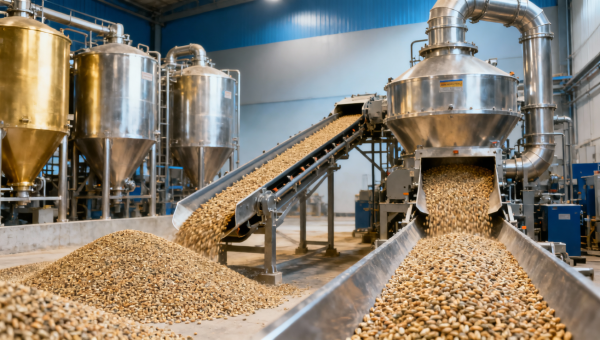
In a cattle feed processing plant, the most persistent slowdowns rarely come from a single machine—they arise from poor material flow, mixer mismatch, pelletizing bottlenecks, and inconsistent ingredient handling. From selecting a horizontal ribbon blender feed system or a vertical feed mixer machine to optimizing a poultry feed pellet machine or scaling a floating fish feed plant, understanding these friction points is essential for operators, buyers, and technical evaluators alike.
The short answer is this: most cattle feed plants lose throughput not because the line is undersized on paper, but because one or two process steps disrupt the flow of the entire system. In practice, the biggest delays usually come from raw material receiving and batching errors, slow or uneven mixing, conditioning and pellet mill limitations, ingredient moisture variation, and poor coordination between upstream and downstream equipment. For plant managers and procurement teams, the key question is not simply “Which machine is slow?” but “Where does the process stop behaving like a continuous system?”
Where do cattle feed processing plants slow down most often?
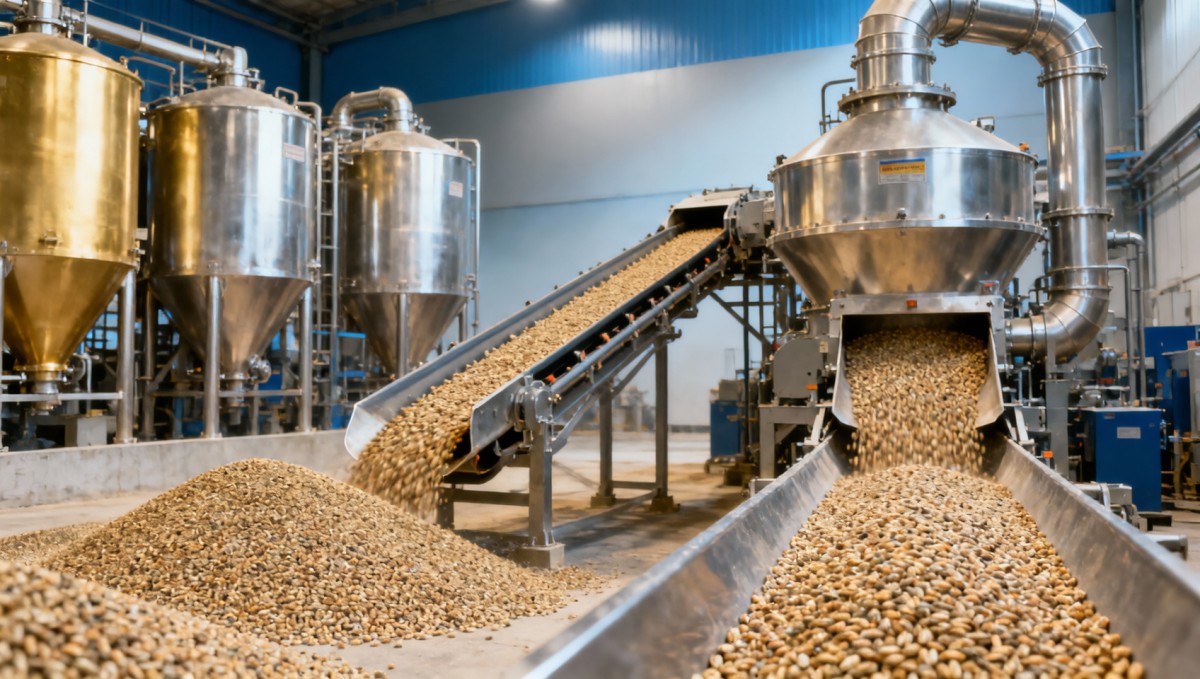
In real production environments, the most common bottlenecks are concentrated in five areas:
- Raw material intake and pre-cleaning: inconsistent unloading rates, contamination, oversized particles, and poor storage logistics delay the whole line before production properly begins.
- Batching and dosing: inaccurate weighing, bridging in bins, and manual correction steps create stop-start production rather than stable throughput.
- Mixing: an undersized or mismatched mixer, whether a horizontal ribbon blender feed setup or a vertical feed mixer machine, often stretches cycle time beyond what the rest of the line can support.
- Pelletizing: conditioning instability, die blockage, roller wear, or a pellet mill chosen for another feed type can become the dominant throughput limit.
- Finished product handling: cooling, screening, crumbling, bagging, and bulk loading are frequently overlooked until they begin backing up the pellet line.
Among these, pelletizing and mixing are the most visible bottlenecks, but ingredient handling problems are often the root cause. A plant can appear to have a pellet mill issue when the real problem is inconsistent moisture, poor grinding uniformity, or delayed batch transfer from the mixer.
Why material flow problems slow a plant more than operators expect
Material flow is the hidden performance driver in almost every feed mill. Even when installed capacity looks sufficient, poor flow turns a nominally continuous process into a sequence of interruptions.
Typical causes include:
- Bin arching and rat-holing with fibrous or sticky ingredients
- Improper hopper angles for difficult materials
- Conveyors sized for peak throughput on paper but not for real bulk density variation
- Frequent manual intervention due to inconsistent ingredient discharge
- Long transfer distances between grinding, mixing, pelleting, and packaging
This matters especially in cattle feed because formulations often include variable raw materials such as bran, molasses-bearing ingredients, oilseed meals, minerals, and roughage-related components. These do not always behave like free-flowing grains. When ingredient movement is unstable, operators compensate manually, cycle times expand, and overall plant efficiency declines.
For technical evaluators, this is a critical assessment point: a plant that advertises high hourly output may still underperform if its material handling design does not match the physical behavior of the feed formula.
How mixer selection becomes a hidden throughput bottleneck
Mixer performance is often judged only by blend uniformity, but throughput depends just as much on loading time, discharge speed, carryover, and batch rhythm.
A horizontal ribbon blender feed system is usually favored in commercial-scale plants because it delivers faster mixing cycles, better uniformity, and more predictable discharge. This makes it suitable for higher-capacity operations where batching speed matters. By contrast, a vertical feed mixer machine may be attractive for smaller operations due to lower cost and simpler structure, but it often requires longer mixing time and may not support the pace needed in larger integrated lines.
Common mixer-related slowdowns include:
- Batch size too small relative to downstream pellet mill demand
- Excessive fill or underfill, reducing mixing efficiency
- Slow discharge causing transfer queueing
- Ingredient dead zones leading to rework or longer cycle times
- Poor cleanout performance during formula changes
For buyers comparing equipment, the practical question is not simply whether one mixer type is “better,” but whether the selected mixer can sustain the required batches per hour while maintaining acceptable CV, hygiene standards, and changeover efficiency.
Why pelletizing is often the line’s most obvious bottleneck
When managers ask what slows a cattle feed processing plant most often, the pellet mill is usually the first suspect—and often for good reason. Pelletizing combines thermal conditioning, mechanical compression, wear-sensitive components, and feed formula variability in one critical point.
The pellet line commonly slows due to:
- Insufficient or unstable steam quality
- Improper conditioning time and temperature
- Die hole specification not suited to cattle feed formulation
- Roller and die wear reducing output over time
- Frequent blockage from fibrous, oily, or poorly ground ingredients
- Inconsistent feeder control causing load swings
Some operators also compare cattle feed pelletizing performance with a poultry feed pellet machine and assume similar productivity should be achievable. In reality, feed characteristics differ significantly. A machine optimized for poultry feed may not perform efficiently on cattle formulations with different fiber levels, density, or ingredient structure.
The same principle applies when comparing with systems used in a floating fish feed plant. Extrusion-based aquatic feed lines are designed around entirely different processing physics, moisture behavior, and expansion targets. Cross-category machine assumptions often lead to poor purchasing decisions.
For procurement and engineering teams, the lesson is clear: evaluate pelletizing equipment by formula compatibility, steam system quality, wear part economics, and actual stable tons per hour—not just rated peak capacity.
How inconsistent ingredients quietly reduce plant output
Ingredient inconsistency is one of the most underestimated causes of lost throughput. Even a well-designed line slows down when raw materials vary too much in moisture, particle size, density, or contamination level.
Examples include:
- High-moisture ingredients causing flow issues and unstable conditioning
- Variable grind size reducing mixing consistency and pellet quality
- Foreign matter increasing downtime in cleaning and maintenance
- Density variation affecting weighing accuracy and batch repeatability
- Seasonal raw material changes forcing frequent process adjustment
This is why quality control and operations cannot be treated separately. QC teams may focus on nutrient specifications and contamination limits, but process stability also depends on physical consistency. A formulation that is nutritionally acceptable can still perform poorly in the plant if it does not flow, mix, or pellet consistently.
For enterprise decision-makers, supplier quality discipline often produces better ROI than chasing marginal machine upgrades. Better incoming consistency can raise effective capacity without major capital expenditure.
What should buyers and plant managers check before blaming equipment?
Before replacing machinery, it is worth running a structured bottleneck review. Many plants invest in larger equipment when the actual issue is control logic, process balance, or raw material variability.
A practical evaluation should include:
- Measure actual throughput by section: receiving, grinding, mixing, pelleting, cooling, and packing.
- Track cycle time losses: startup delays, waiting time, cleaning time, formula changeover, and unplanned stoppages.
- Compare rated vs stable output: nameplate capacity is less useful than sustained production over a full shift.
- Review material behavior: where do ingredients bridge, segregate, or require manual handling?
- Assess process balance: is one machine oversized while another quietly constrains the line?
- Check utility support: steam, air, power stability, and dust control are often overlooked constraints.
- Audit wear parts and maintenance intervals: throughput declines gradually when wear is normalized instead of corrected.
This approach helps technical buyers, project managers, and financial approvers make better decisions. It separates real capacity constraints from symptoms and reduces the risk of overbuying or buying the wrong machine category.
How to reduce slowdowns without overinvesting
Not every solution requires a major retrofit. In many cattle feed plants, throughput improves meaningfully through process optimization and better matching of equipment to formulas.
High-value actions often include:
- Improving hopper and bin design for difficult ingredients
- Standardizing incoming raw material specifications beyond nutrient content alone
- Matching mixer type and batch size to true hourly production goals
- Stabilizing steam supply and conditioner performance
- Optimizing die selection for actual cattle feed formulas
- Reducing unnecessary transfer points and manual handling steps
- Installing better process monitoring for feeder load, moisture, and cycle time
- Coordinating QC, maintenance, and production around shared throughput KPIs
For expanding operations, the best investment is often the one that removes the most persistent constraint in the current process, not the one with the largest standalone capacity figure.
Conclusion: the plant slows where process balance breaks down
What slows a cattle feed processing plant most often is rarely a single isolated failure. More commonly, the plant loses speed where flow balance breaks down: ingredients do not move consistently, the mixer cannot keep pace, the pellet mill is poorly matched to the formula, or downstream handling cannot clear product fast enough.
For operators, the practical takeaway is to diagnose the process as a connected system. For procurement teams and business decision-makers, the priority is to evaluate equipment in the context of formulation, flow behavior, utility support, and stable full-line output. When those factors are aligned, a feed plant runs faster, more predictably, and with lower operational risk.
Related Intelligence
- Commercial Feed PelletIndia Launches Anti-Dumping Review on Chinese Commercial Feed PelletsIndia's anti-dumping review on Chinese commercial feed pellets could extend the 18.3% duty—key for importers, feed mills & agri-supply chains. Act now.
- Commercial Feed PelletIndia Launches Mid-Term AD Review on Chinese Commercial Feed PelletsIndia's mid-term AD review on Chinese Commercial Feed Pellets impacts exporters, feed mills & importers—get actionable insights, HS code guidance, and duty-scenario planning now.
- Commercial Feed PelletIndia Launches Mid-Term AD Review on Chinese Commercial Feed PelletsIndia's mid-term AD review on Chinese commercial feed pellets could raise duties to 28.5% — critical for exporters, feed mills & agri-input suppliers. Act now.
The Morning Broadsheet
Daily chemical briefings, market shifts, and peer-reviewed summaries delivered to your terminal.
