
Poultry Feed Pellet Machine: Ring Die or Flat Die?
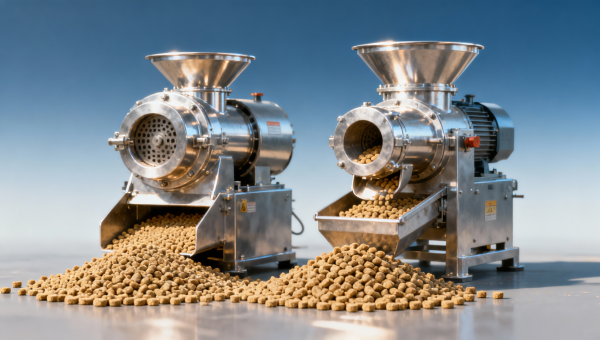
Choosing the right poultry feed pellet machine can directly affect pellet quality, energy use, and plant profitability. For buyers comparing ring die and flat die systems, the short answer is this: flat die machines are usually the practical choice for small-scale, lower-output operations, while ring die pellet mills are better for commercial feed plants that need higher capacity, more stable pellet quality, and lower long-term unit cost. The best option depends less on the machine type alone and more on your target output, raw material characteristics, labor capability, maintenance resources, and future expansion plan.
Ring Die vs Flat Die: Which One Makes More Sense for Your Operation?
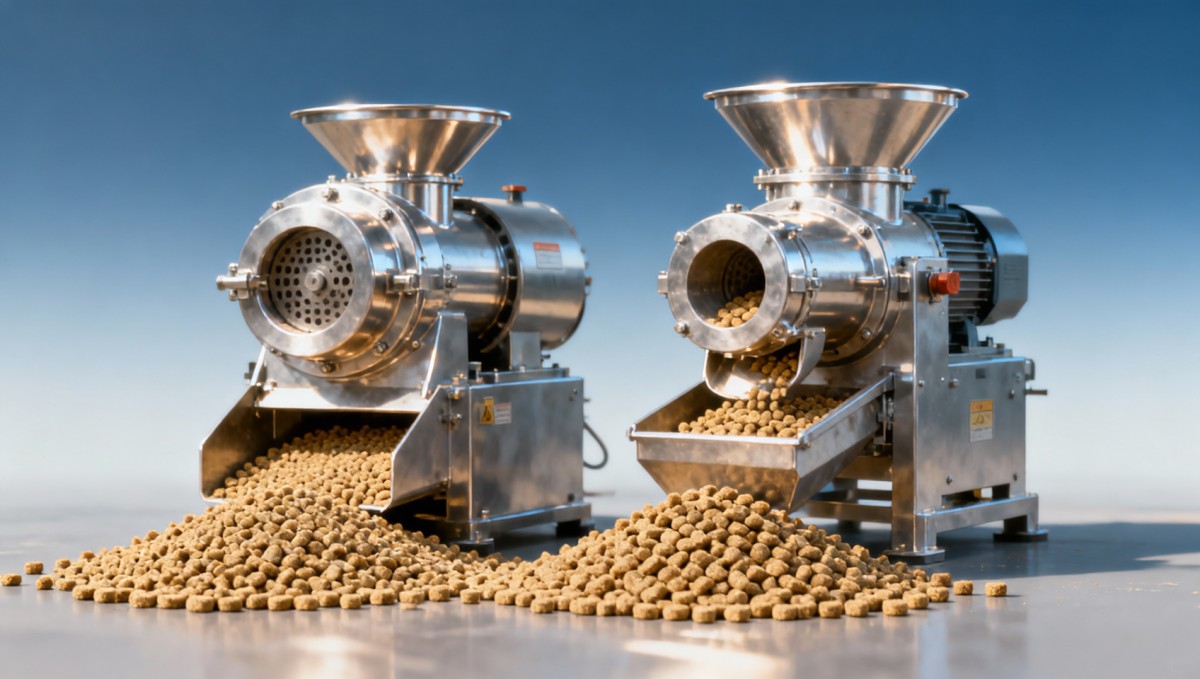
For most buyers, the decision comes down to scale, consistency, and cost structure.
- Choose a flat die poultry feed pellet machine if you run a small farm, produce feed for your own use, need a lower initial investment, and can accept lower throughput and somewhat less uniform pellets.
- Choose a ring die pellet machine if you need continuous production, commercial output, tighter pellet consistency, better automation potential, and lower cost per ton over time.
This is why ring die systems are more common in professional feed mills, while flat die units are often used by smallholders, pilot projects, or decentralized feed production setups.
What Buyers Usually Care About Most Before Choosing
Different stakeholders look at the machine from different angles, but their concerns usually converge around a few practical questions:
- Will the machine produce pellets that birds actually consume well and convert efficiently?
- What output can it deliver per hour under real working conditions?
- How much energy, labor, and maintenance will it require?
- How often will wear parts need replacement?
- Can it handle the intended formula, moisture level, and raw material variation?
- Is the investment justified by feed savings, production efficiency, or commercial revenue?
- Will it fit future expansion into larger feed production lines?
For procurement teams and financial approvers, the key issue is not simply machine price. It is total cost of ownership, output reliability, and suitability for the plant’s production objectives.
How Ring Die and Flat Die Machines Actually Work
The mechanical difference affects almost everything: pellet density, wear pattern, output stability, and maintenance approach.
Flat die pellet machine: the die is flat, and rollers press feed mash through die holes. The structure is relatively simple, compact, and easier to understand for operators with limited technical support.
Ring die pellet machine: the die is cylindrical, and feed is compressed through holes in a rotating ring die by internal rollers. This design supports higher pressure, better throughput, and more stable operation in commercial-scale applications.
Because of that structural difference, ring die systems generally perform better in demanding, long-run production environments. Flat die machines remain attractive where simplicity and low entry cost matter more than industrial efficiency.
Capacity and Throughput: The First Major Decision Factor
If your daily production target is modest, a flat die machine may be sufficient. But once capacity expectations rise, its limitations become clear.
Flat die pellet mills are typically better suited to small batch production. They can work well for on-farm feed preparation, small poultry units, or test-scale applications. However, output can fluctuate more depending on ingredient fineness, moisture control, and operator skill.
Ring die pellet mills are designed for larger and more continuous production. They are better for feed plants serving commercial broiler, layer, or integrated livestock operations. In facilities where downtime is expensive and delivery schedules matter, ring die machines usually offer the more dependable path.
If the project may later expand into a larger cattle feed processing plant or a more integrated feed production line, starting with a ring die-compatible layout often reduces future retrofit costs.
Pellet Quality and Feed Consistency: Why It Matters More Than Many Buyers Expect
Pellet quality affects not only appearance, but also bird intake, transport durability, dust generation, and feed conversion performance.
In general, ring die poultry feed pellet machines produce:
- more uniform pellet size and density,
- better durability during handling and transport,
- more stable production under continuous operation.
Flat die machines can still make acceptable poultry feed pellets, but results are more sensitive to formulation, conditioning quality, and operator control. If your feed is used directly on-site and transport damage is not a major concern, this may be acceptable. If you are producing for sale or distribution, pellet consistency becomes much more important.
For quality control teams, this is a critical distinction. Better pellet uniformity can support more predictable feeding performance and lower fines rates.
Energy Use, Labor Requirement, and Operating Cost
Many buyers focus heavily on upfront machine price, but the larger financial impact often comes from operating cost over several years.
Flat die systems usually have:
- lower initial purchase cost,
- simpler installation,
- easier access for basic maintenance.
But they may also involve:
- higher labor dependence,
- lower hourly output,
- less favorable cost per ton when production volume increases.
Ring die systems usually require:
- higher capital investment,
- more structured maintenance management,
- more professional installation and commissioning.
In return, they often deliver:
- better energy efficiency at scale,
- lower unit production cost in medium to large plants,
- greater integration with automation and upstream/downstream systems.
For financial decision-makers, the right comparison is not machine price versus machine price. It is cost per ton of acceptable pellets over the expected service period.
Maintenance, Wear Parts, and Downtime Risk
Maintenance is one of the biggest practical differences between the two options.
Flat die machines are easier to service in basic operating environments. Their simpler construction can be helpful where technical support is limited or operators need fast, straightforward repairs.
Ring die machines involve more specialized maintenance, but they are engineered for industrial duty. In well-managed plants, they can offer better reliability over sustained production cycles.
Key maintenance questions to ask suppliers include:
- What is the expected service life of die and roller components?
- How easy is die replacement?
- What spare parts should be kept in stock?
- What level of operator training is required?
- How quickly can technical service respond in your region?
For project managers and procurement teams, spare parts availability can be just as important as the original machine specification.
Raw Material Flexibility and Formula Suitability
Not all feed formulas behave the same way in a pellet machine. Ingredient composition, fiber level, fat inclusion, particle size, and moisture all affect pellet formation.
Ring die machines generally offer better performance when processing larger volumes of standardized formulations. They are often more suitable for plants that use controlled pre-conditioning and need repeatable output.
Flat die machines can be practical for simpler formulas or situations where feed recipes change frequently in smaller batches. However, they may respond less consistently when ingredient quality varies widely.
If you are evaluating a machine for poultry feed but also considering diversification into other product lines, such as livestock feed or even a floating fish feed plant with separate extrusion equipment, you should assess the broader process layout rather than the pellet mill in isolation.
Which Type Is Better for Small Farms, Dealers, and Commercial Feed Plants?
Small farms and self-use feed production:
Flat die machines are often the better fit because they are affordable, compact, and sufficient for lower daily demand.
Distributors and local equipment dealers:
Flat die units may be easier to sell into price-sensitive rural markets, while ring die models appeal more to professional buyers seeking scale and repeat performance.
Commercial poultry feed plants:
Ring die machines are generally the stronger choice due to output capacity, pellet consistency, and long-term production economics.
Integrated agribusiness projects:
If the operation includes multiple production stages, expansion planning, or strict quality targets, ring die systems typically align better with long-term industrial requirements.
Questions to Ask Before You Approve a Purchase
Before selecting either a ring die or flat die poultry feed pellet machine, decision-makers should confirm:
- What is the required hourly and daily output?
- Is the machine for self-use feed or commercial sales?
- What pellet quality standard is necessary?
- How stable are the raw materials and formulations?
- What is the realistic labor skill level on site?
- What downtime risk can the operation tolerate?
- How important is future line expansion?
- What is the expected payback period based on feed demand?
A supplier that cannot discuss these points in detail is unlikely to be the right technical partner.
Final Verdict: Ring Die or Flat Die?
If your priority is low upfront cost, simple operation, and small-scale feed production, a flat die pellet machine is often the sensible choice.
If your priority is commercial capacity, better pellet uniformity, lower long-term cost per ton, and scalable plant performance, a ring die pellet machine is usually the better investment.
In other words, flat die is typically the entry-level or small-operation solution, while ring die is the production-focused option for serious throughput and quality control.
The best buying decision comes from matching machine design to actual production goals, not from choosing the cheapest model or the most advanced specification on paper. For poultry feed operations that expect growth, tighter quality demands, or more disciplined cost control, ring die systems usually offer stronger long-term value. For smaller operators with limited budget and modest output needs, flat die machines remain a practical and effective starting point.
Related Intelligence
- Commercial Feed PelletIndia Launches Anti-Dumping Review on Chinese Commercial Feed PelletsIndia's anti-dumping review on Chinese commercial feed pellets could extend the 18.3% duty—key for importers, feed mills & agri-supply chains. Act now.
- Commercial Feed PelletIndia Launches Mid-Term AD Review on Chinese Commercial Feed PelletsIndia's mid-term AD review on Chinese Commercial Feed Pellets impacts exporters, feed mills & importers—get actionable insights, HS code guidance, and duty-scenario planning now.
- Commercial Feed PelletIndia Launches Mid-Term AD Review on Chinese Commercial Feed PelletsIndia's mid-term AD review on Chinese commercial feed pellets could raise duties to 28.5% — critical for exporters, feed mills & agri-input suppliers. Act now.
The Morning Broadsheet
Daily chemical briefings, market shifts, and peer-reviewed summaries delivered to your terminal.
