
Why Poultry Feed Pellet Machines Waste More Steam
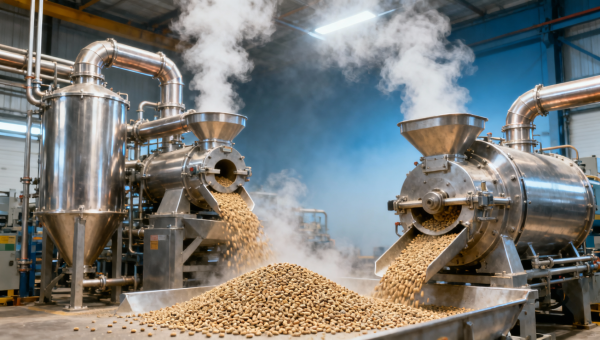
Steam losses in a poultry feed pellet machine often stem from poor mixing, inconsistent moisture control, and mismatched upstream equipment such as a vertical feed mixer machine or horizontal ribbon blender feed system. For buyers, operators, and project evaluators comparing animal feed mixers wholesale options or planning a cattle feed processing plant or floating fish feed plant, understanding these inefficiencies is essential to reducing energy costs and improving pellet quality.
Why does a poultry feed pellet machine consume more steam than expected?
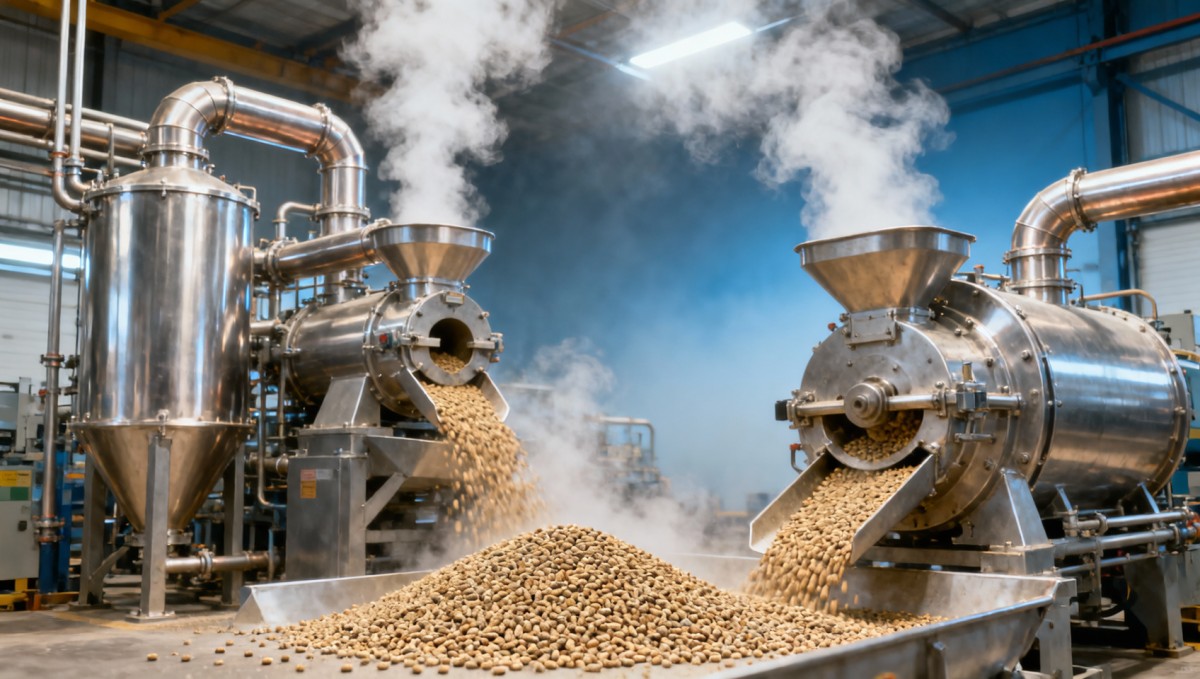
In feed and grain processing, excess steam use is rarely caused by one component alone. It usually appears when the conditioning, mixing, conveying, and pelleting stages are not synchronized. A poultry feed pellet machine may be rated correctly, yet still waste steam if the mash entering the conditioner has unstable particle size, uneven moisture, or poor ingredient dispersion. In practical plant assessments, these three factors account for a large share of avoidable thermal inefficiency.
For operators, the first warning signs are familiar: fluctuating pellet hardness, visible condensate around the conditioner, die choking during 2–4 hour runs, and frequent steam valve adjustments. For procurement and technical teams, the issue becomes more expensive because steam waste affects boiler load, fuel planning, throughput stability, and maintenance intervals across the line. The pellet machine is only the visible endpoint of a broader process imbalance.
This is especially relevant in integrated projects where one line may be expected to handle poultry feed today, ruminant formulations next week, and even selected aquafeed pre-conditioning trials later. When upstream systems are selected only on purchase price instead of process fit, steam demand rises quickly. A poorly matched vertical feed mixer machine, for example, may struggle with micro-ingredient uniformity, while an oversized horizontal ribbon blender feed unit may create cycle mismatches that destabilize conditioner loading.
The 4 most common root causes
- Inconsistent mash moisture before conditioning, often caused by uneven mixing time or poor liquid addition control.
- Unsuitable particle size distribution, where too many fines or too many coarse particles reduce heat transfer consistency.
- Steam quality issues, including wet steam, pressure swings, and undersized piping or traps.
- Upstream and downstream capacity mismatch, especially when mixer discharge, feeder rate, and die load are not balanced within the same operating window.
In commercial evaluations, a well-tuned conditioning section often works within a narrow and repeatable process window rather than a broad one. Even a 1–2 percentage point drift in incoming moisture or a short mixing cycle deviation can push the pellet mill to demand more steam just to maintain target conditioning temperature and pellet durability. That is why steam efficiency should be reviewed as a system KPI, not as an isolated machine metric.
How upstream mixing equipment changes steam efficiency
Many buyers focus on pellet mill motor power, die specification, or conditioner length, but the upstream mixer often determines whether steam is absorbed efficiently or wasted. If ingredients are not blended evenly, the conditioner receives a mash stream with local pockets of dry bran, oily additives, mineral concentration, or incomplete micro-ingredient dispersion. Steam then condenses unevenly, creating both under-conditioned and over-wet material in the same batch flow.
A vertical feed mixer machine may be adequate for lower-capacity operations or simpler formulations, but in plants handling vitamin premixes, fats, enzymes, or variable grain structures, a horizontal ribbon blender feed system often offers tighter batch uniformity and shorter cycle control. That does not mean one design is universally better. It means the mixer must match the formulation complexity, target capacity, and moisture management strategy of the line.
For technical evaluators and project managers, the key is not only mixer type but process compatibility. Typical batch mixing cycles may range from 3–8 minutes depending on formula, liquid addition points, and discharge efficiency. If the mixer outputs mash in irregular intervals while the conditioner expects a stable feed curtain, operators compensate by opening steam more aggressively. The result is poor thermal control and higher condensate loss.
The table below helps compare how different upstream conditions influence steam use in a poultry feed pellet machine during normal industrial operation.
For buyers comparing animal feed mixers wholesale offers, this table highlights an important point: mixer cost should be evaluated against downstream steam efficiency, pellet consistency, and rework risk. A lower mixer price can look attractive in capex review, but if it raises steam use and increases pellet instability, the operating cost penalty often appears within the first production season.
What to verify during equipment review
Process fit matters more than nominal capacity
Ask whether the quoted mixer output is based on low-density mash, standard poultry formula, or a heavier recipe with liquid addition. Capacity can differ materially between these cases. A practical review should compare at least 3 dimensions: batch uniformity, discharge consistency, and compatibility with the conditioner retention time.
Look at line balance, not isolated machines
A cattle feed processing plant or floating fish feed plant often has different moisture, starch, and density behavior than a poultry line. If an integrator proposes shared upstream machinery, confirm whether the mixer, surge bin, feeder, and conditioner can maintain stable flow under all intended formulas. Shared infrastructure saves floor space, but only when process windows overlap safely.
Which technical parameters should procurement teams check first?
Steam waste is easier to prevent during specification than after commissioning. Procurement teams should require a structured review covering at least 5 core indicators: mixer uniformity, conditioner retention time, steam pressure stability, feeder control range, and die-load compatibility. These indicators do not require proprietary data to assess, but they do require disciplined technical questioning before contract award.
For many medium and large projects, the most useful approach is to compare process windows rather than headline power alone. A pellet line may run acceptably in a narrow formula range, but become steam-hungry when fiber levels rise, fat inclusion changes, or seasonal raw material moisture shifts. This is why engineering review should include normal, high-load, and variable-material operating scenarios over at least 3 representative formulas.
The following table can be used as a practical screening matrix when evaluating a poultry feed pellet machine and its supporting system.
This matrix is useful for procurement officers, technical assessment staff, and financial approvers because it connects operating cost with specification discipline. Instead of debating only purchase price, teams can compare where steam inefficiency is likely to appear and whether the supplier has addressed line integration in a measurable way.
A 5-point procurement checklist
- Request a process flow review from raw material intake to pellet cooling, not only a machine brochure.
- Match the mixer type to formula complexity, especially if liquids, premixes, or variable cereals are used.
- Verify whether the steam system design includes traps, separators, and practical access for maintenance every quarter.
- Ask how the line performs during start-up, shutdown, and recipe changeover, because steam loss often spikes at transitions.
- Confirm documentation for materials, food-contact suitability where relevant, and general compliance with plant safety practice.
In regulated and quality-sensitive environments, this review discipline also supports broader governance. Teams responsible for safety, quality control, or audit readiness need traceable technical logic behind equipment choices. That is why ACC places value on engineering-backed content, cross-sector process interpretation, and procurement language that can be used in internal approvals.
How do steam losses affect cost, pellet quality, and project ROI?
Steam waste is not only an energy issue. It compounds into multiple cost centers: boiler fuel, water treatment, unplanned stoppages, softer pellets, higher fines after cooling, and more operator intervention. Over a 6–12 month operating period, these costs often outweigh the small capex difference between a process-matched system and a minimally compliant one. For finance approvers, this is the real decision frame.
In poultry feed lines, inconsistent conditioning can reduce starch gelatinization consistency and weaken pellet integrity. That means more fines, more recirculation, and greater variation in bulk density. For distributors and commercial evaluators, such instability also affects customer acceptance because finished feed handling becomes less predictable across storage, transport, and farm delivery conditions.
For project leaders comparing a dedicated poultry line with a shared cattle feed processing plant or floating fish feed plant infrastructure, steam behavior should be part of the ROI model. Multi-purpose plants can be efficient, but only when formulation changes, conditioning demand, and residence time are engineered carefully. Otherwise, one line may inherit the steam penalties of another product category.
Where hidden cost usually appears
- Higher fuel consumption due to repeated steam compensation during unstable operation.
- More wear on die and rollers when operators force throughput using pressure instead of process stability.
- Extra labor during recipe changeovers, especially when wet mash carryover causes cleaning delays of 20–40 minutes.
- Quality claims or internal rework when pellet hardness and moisture are inconsistent between batches.
Alternative thinking: improve the front end before upgrading the pellet mill
A common misconception is that steam waste automatically requires a larger or newer pellet mill. In many plants, better results come from optimizing the front end first: raw material grinding control, mixer discharge regularity, liquid dosing accuracy, and steam line maintenance. These interventions are often less disruptive than a full mill replacement and can fit into phased project planning over 2–3 implementation stages.
For this reason, decision-makers should compare at least 2 investment paths: full equipment replacement versus targeted process correction. The right answer depends on age, capacity bottlenecks, service history, and production goals. A reliable technical publisher or advisory partner can help frame these options with neutral, process-based logic rather than single-machine marketing.
What mistakes do buyers and operators most often overlook?
One of the biggest mistakes is treating steam waste as a utility department issue only. In reality, feed formulation, raw material variability, mixing performance, feeder control, and operator routines all influence steam demand. If teams investigate only the boiler or only the pellet machine, they often miss the true source of the problem and spend budget on the wrong fix.
Another frequent error is relying on nominal throughput claims without clarifying the recipe basis. A line that performs well on straightforward broiler feed may behave very differently when handling higher-fiber formulas, added oils, or medicated premixes where permitted by local regulations. Technical evaluation should therefore include at least 3 formula categories and not just one demonstration mix.
There is also a documentation gap in many cross-border purchases. Procurement teams may collect quotations and drawings, yet fail to request a clear utility balance, maintenance access description, and commissioning scope. Without these details, budget holders cannot assess whether a quoted poultry feed pellet machine will remain steam-efficient after 8–12 months of real operation.
FAQ for procurement, engineering, and operations teams
How can I tell whether the mixer is causing steam waste?
Look for signs such as variable conditioner temperature, repeated steam valve corrections, uneven mash appearance, and pellet quality swings between batches made from the same formula. If these symptoms appear alongside inconsistent mixer discharge timing or weak liquid dosing control, the upstream mixer is a likely contributor.
Is a horizontal ribbon blender feed system always better than a vertical feed mixer machine?
Not always. A horizontal system is often preferred for more complex formulations and tighter batch control, but the better choice depends on throughput, ingredient profile, floor layout, cleaning requirements, and budget. Small or less complex operations may still use a vertical design effectively if the process window is narrow and well managed.
What delivery and implementation points should be discussed before ordering?
Clarify 4 areas early: process design assumptions, utility requirements, installation boundaries, and commissioning support. For imported or project-based lines, practical lead times often vary with scope, fabrication queue, and documentation readiness. Teams should also confirm spare parts planning for the first 6–12 months of operation.
Do compliance requirements matter for feed machinery decisions?
Yes. Even when the machinery itself is not regulated under pharmaceutical frameworks, industrial buyers increasingly require traceable materials, safe design practice, and documentation that supports food, feed, environmental, and workplace compliance expectations. In export-oriented sectors, documentation quality can influence project approval almost as much as the hardware specification.
Why work with a specialist industry intelligence partner before you commit?
When equipment decisions affect utilities, quality, compliance, and long-term operating cost, generic product descriptions are not enough. ACC supports industrial readers with analysis shaped by agricultural machinery knowledge, biochemical process awareness, and practical supply chain scrutiny. That matters when your team must compare not just machines, but risk exposure, documentation quality, and implementation logic across regions.
For information researchers, ACC helps translate technical claims into decision-ready criteria. For operators and engineering managers, the value lies in linking process behavior to root causes such as poor mixing, steam instability, or mismatched line balance. For procurement, finance, and commercial teams, ACC provides the context needed to judge whether a quotation supports reliable production or simply shifts hidden cost into operations.
If you are reviewing a poultry feed pellet machine, comparing animal feed mixers wholesale suppliers, or planning line integration with a cattle feed processing plant or floating fish feed plant, you can consult ACC on concrete decision points rather than broad marketing claims. Typical discussion areas include 5 practical topics: parameter confirmation, process-matched equipment selection, expected delivery cycle, customization scope, and documentation for compliance review.
You can also engage ACC for structured content support when presenting technical capabilities to institutional buyers and industrial procurement teams. This is especially useful for OEMs, manufacturers, and solution providers that need credible editorial positioning around feed & grain processing, agricultural machinery, biochemical applications, and primary industry supply chains. The goal is simple: reduce uncertainty before purchase, shorten evaluation cycles, and improve confidence in every major equipment decision.
Related Intelligence
- Commercial Feed PelletIndia Launches Anti-Dumping Review on Chinese Commercial Feed PelletsIndia's anti-dumping review on Chinese commercial feed pellets could extend the 18.3% duty—key for importers, feed mills & agri-supply chains. Act now.
- Commercial Feed PelletIndia Launches Mid-Term AD Review on Chinese Commercial Feed PelletsIndia's mid-term AD review on Chinese Commercial Feed Pellets impacts exporters, feed mills & importers—get actionable insights, HS code guidance, and duty-scenario planning now.
- Commercial Feed PelletIndia Launches Mid-Term AD Review on Chinese Commercial Feed PelletsIndia's mid-term AD review on Chinese commercial feed pellets could raise duties to 28.5% — critical for exporters, feed mills & agri-input suppliers. Act now.
The Morning Broadsheet
Daily chemical briefings, market shifts, and peer-reviewed summaries delivered to your terminal.
