
Cattle Feed Processing Plant Capacity Looks High on Paper
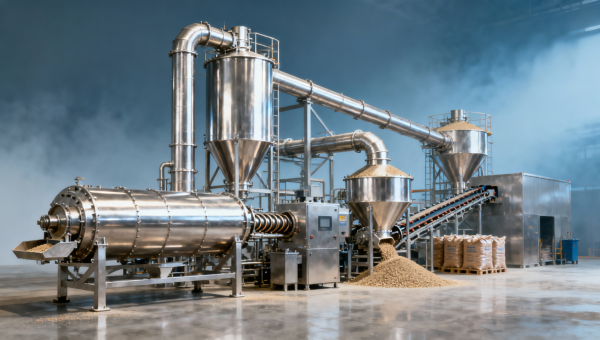
A cattle feed processing plant capacity can look impressive on paper, yet real output depends on formulation, moisture control, and equipment matching. For buyers comparing a horizontal ribbon blender feed setup, a vertical feed mixer machine, or a poultry feed pellet machine, this guide explains what capacity figures truly mean and how they affect cost, quality, and project feasibility.
Why a cattle feed processing plant capacity figure often misleads buyers
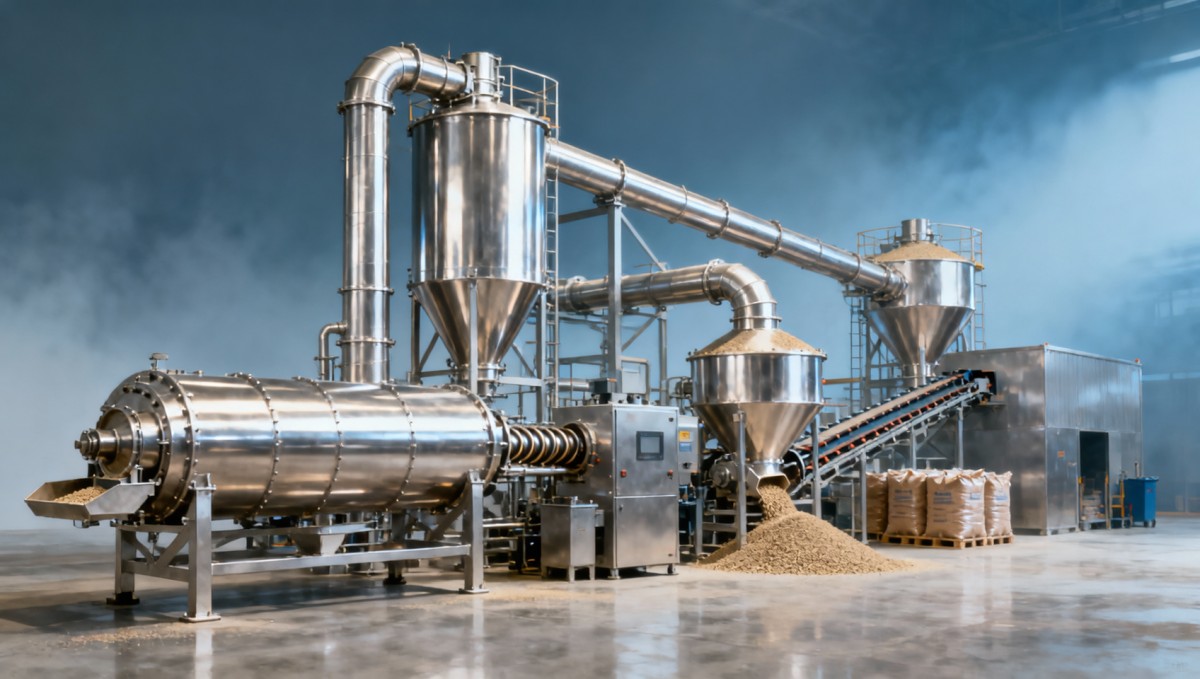
In feed and grain processing, nameplate capacity usually reflects a narrow test condition rather than daily commercial reality. A supplier may quote 3–5 tons per hour, but that figure can shift once molasses, premixes, bran, fiber, or wet ingredients enter the formula. For information researchers, technical evaluators, and procurement teams, the first task is to separate nominal throughput from stable throughput under actual plant conditions.
A cattle feed processing plant works under variable raw material density, particle size, moisture, and mixing time. A horizontal ribbon blender feed line may perform well for powder-rich formulations, while a vertical feed mixer machine may suit smaller farms with simpler recipes and lower batch frequency. A poultry feed pellet machine, although highly efficient in the right setting, should not be used as a benchmark for cattle feed output without considering conditioning, fiber level, and pellet durability targets.
Operators and project managers often see a 10%–30% deviation between quoted output and on-site production once startup losses, changeovers, and cleaning cycles are included. In many practical layouts, the mixer is not the only bottleneck. Grinding, batching accuracy, steam availability, cooling time, bagging speed, and power stability can each reduce hourly output. That is why capacity must be evaluated as a system figure, not a single machine promise.
For business reviewers and financial approvers, this distinction matters because capital budgeting, labor planning, and payback assumptions all depend on usable capacity. A line designed for 8 operating hours may require 10–12 hours to achieve the planned daily volume if the process flow is not balanced. AgriChem Chronicle focuses on this type of decision-grade analysis because industrial buyers need realistic throughput logic, not headline numbers detached from formulation and process constraints.
Three capacity terms every buyer should clarify before asking for a quote
Before comparing equipment offers, define which capacity term is being used. This prevents disputes during technical review and factory acceptance.
- Installed capacity: the theoretical output based on motor size and machine geometry under ideal input conditions.
- Rated capacity: the supplier’s stated throughput under a specified material type, moisture range, and operating method.
- Effective capacity: the output achieved across a full shift after startup, stoppages, formula change, sampling, and routine cleaning.
Among these three, effective capacity is usually the most useful number for procurement personnel, safety managers, and enterprise decision-makers. It connects directly to output planning, inventory turnover, and unit manufacturing cost.
How formulation, moisture, and equipment matching change real output
The same cattle feed processing plant may deliver very different results depending on feed formulation. High-fiber cattle feed is fundamentally different from poultry feed. Fiber-rich ingredients such as hay meal, bran, hulls, and certain by-products reduce bulk density and may extend mixing or pelleting time. If a line is selected using a poultry-oriented benchmark, the projected capacity can be overstated from day one.
Moisture is another hidden variable. In many practical feed operations, an input moisture range of roughly 10%–14% behaves very differently from material closer to 15%–18%. Higher moisture may improve conditioning in some processes, yet it can also increase sticking, screening load, and cooling demand. In a horizontal ribbon blender feed system, moisture imbalance may reduce blending consistency and create residue build-up. In a vertical feed mixer machine, it may increase the time required to reach acceptable homogeneity.
Equipment matching determines whether the plant runs as a line or as disconnected machines. A mixer with 2 tons per batch is of limited value if the grinder only supports 1 ton per hour for the target particle size, or if the pellet mill conditioner lacks sufficient retention time. For technical assessment teams, the correct question is not “What is the largest machine?” but “Which section governs sustained output over 1 shift, 1 day, and 1 month?”
This is especially relevant for dealers, distributors, and engineering contractors who must align customer expectations with plant reality. ACC regularly sees projects where the bagging section, not the process core, becomes the final bottleneck. A line with a strong mixing and pelleting block can still underperform if weighing, sewing, palletizing, or dust control is undersized. Balanced configuration often matters more than isolated machine size.
Key process variables that can reduce practical capacity
The table below helps procurement and engineering teams compare the main variables that influence real output in a cattle feed processing plant.
For most buyers, these variables explain why a quotation should always include the intended formula family, moisture condition, and process route. Without those details, a capacity number may be technically valid yet commercially misleading.
A practical rule for site planning
If your project includes 3 process stages such as grinding, mixing, and pelleting, validate each stage separately and then test the full line as one system. This simple discipline prevents overinvestment in one section and underinvestment in another.
Horizontal ribbon blender feed vs vertical feed mixer machine vs poultry feed pellet machine
These three equipment categories are often compared during early research, yet they serve different processing goals. A horizontal ribbon blender feed unit is usually favored where mixing uniformity, additive distribution, and medium-to-large batch handling matter. A vertical feed mixer machine is commonly chosen for simpler farm operations, lower capital outlay, or limited floor planning. A poultry feed pellet machine is optimized for pellet production and should be assessed carefully before being applied to cattle feed expectations.
The most common buying mistake is to compare them only by stated tons per hour. That misses the operating context. A vertical mixer may be acceptable for low-frequency daily batches, but not for an operation that runs 2 shifts and handles multiple formulations. A pellet machine may show attractive output, but if cattle rations contain higher fiber and variable by-products, pellet quality and die wear can change the economics quickly.
For procurement managers and technical evaluators, the useful comparison should include batch cycle time, expected homogeneity, cleaning convenience, expansion options, and labor dependency. In dealer and distributor channels, these differences also influence after-sales workload because misapplied equipment tends to create recurring complaints about output inconsistency rather than true equipment failure.
The table below organizes these differences into decision language suitable for project teams, finance reviewers, and plant operators.
A useful interpretation is this: select the process goal first, then the machine. If the project needs high batch accuracy, frequent formulation changes, and controlled additive inclusion, a horizontal ribbon blender feed approach often offers stronger long-term value. If the goal is simple local production with moderate expectations, a vertical feed mixer machine may remain commercially sensible. If pellets are the main output, do not evaluate the poultry feed pellet machine in isolation; assess the full preparation, conditioning, cooling, and handling chain.
Four decision questions that prevent wrong equipment matching
- Will the plant run one formula per day or 3–6 formulations per shift?
- Is your target output measured by batch volume, hourly tonnage, or finished packed product?
- Do you need mash feed, pellet feed, or both for different customer groups?
- Can your utilities support the chosen process, including steam, dust control, and stable power supply?
These questions are simple, but they often reveal whether a project is evaluating capacity as a marketing figure or as a production commitment.
What procurement teams should check before approving a feed processing project
In B2B procurement, capacity is only one dimension. Technical assessment personnel, quality teams, and financial approvers should review at least 5 core areas before a cattle feed processing plant purchase moves to negotiation: formula suitability, output definition, utility demand, compliance documentation, and lifecycle operating cost. This creates a shared language between engineering and commercial departments.
A robust procurement package should describe material flow, expected moisture range, cleaning method, wear parts strategy, and acceptance criteria. For example, if the seller states a 2–4 week manufacturing lead time for a standard unit, the buyer should still confirm how much additional time is needed for electrical integration, foundation preparation, and commissioning. In practice, the full project path may extend well beyond equipment fabrication.
Compliance and safety should not be treated as an afterthought. Depending on market destination and installation context, project teams may need to consider electrical safety, dust management, environmental handling, and material contact expectations. While feed equipment does not follow the same pathway as pharmaceutical APIs, disciplined documentation and traceability are increasingly important across regulated agricultural and primary processing supply chains.
This is where a specialist intelligence platform such as AgriChem Chronicle adds value. ACC connects technical writing, trade compliance awareness, and process-industry literacy in one editorial environment. For enterprise decision-makers and distributors, that means a clearer basis for supplier comparison, capability validation, and communication with global buyers who expect precise, evidence-based specifications.
A practical procurement checklist for cattle feed processing capacity review
Use the following checklist before issuing a final inquiry or internal capital request.
- Confirm whether capacity is measured on mash feed, pellet feed, or mixed operational mode, and under what moisture condition.
- Request the expected batch cycle, including loading, mixing, discharge, and cleaning time, not just mixing time alone.
- Check the bottleneck section across grinder, mixer, pelletizer, cooler, and packing line rather than accepting the largest single machine rating.
- Review wear parts availability, service support window, and whether key consumables can be sourced locally within 7–15 days.
- Define acceptance items in advance, such as 4 key tests covering throughput, mixing consistency, power behavior, and discharge performance.
When these points are documented early, procurement negotiations become more precise and change-order risk is reduced during installation.
Common cost traps in capacity-based buying
A cheaper machine can become more expensive over 12–24 months if it requires extra labor, frequent cleaning, or repeated output compromise. The cost trap is not always the purchase price. It may be hidden in energy demand, spare parts turnover, lower packing speed, or rework caused by inconsistent mixing.
For financial reviewers, ask for a cost view that separates capital expense from operating expense. Even a basic model comparing labor hours, utility load, and expected maintenance intervals can reveal whether an apparently lower-cost option truly supports long-term plant economics.
FAQ: the most common misunderstandings about feed plant capacity and project feasibility
Search behavior in the feed equipment market often centers on short questions with large purchasing consequences. The answers below address the misunderstandings most frequently seen during technical review and supplier comparison.
Is a higher tons-per-hour number always better?
No. A higher stated capacity only helps if the full line can support it. If grinding, conditioning, cooling, or packing cannot keep up, the extra rating has little business value. For many projects, a stable line running near realistic effective capacity is more profitable than an oversized line operating irregularly.
Decision-makers should also ask how often the plant changes formulas. A line serving 1 formula per day behaves differently from a line serving 5 or more recipes in the same shift. Frequent changeovers can materially reduce practical output.
Can a poultry feed pellet machine be used for cattle feed without major adjustments?
Sometimes, but not as a direct assumption. Cattle feed often includes more fiber and variable raw materials than poultry feed. The conditioner, die specification, and cooling section may need adjustment, and some formulas may be better supplied as mash rather than pellets. Evaluate the full product objective before using poultry-based equipment assumptions.
If the project serves mixed markets, a dual-path strategy may be more practical: one route for mash feed and another for pelletized products. That can be more realistic than forcing all formulas through one pellet process.
How long does a feed processing project usually take from inquiry to startup?
Timelines vary by scope, but many projects move through 3 broad phases: technical clarification, manufacturing and supply, then installation and commissioning. A standard machine package may be quoted in a few weeks, while a complete line with civil work, electrical integration, and testing can extend substantially longer. Buyers should always separate equipment lead time from total project lead time.
For project managers, a realistic schedule should include approval time, utility preparation, operator training, and acceptance testing. Omitting these items creates avoidable delays even when the machines arrive on time.
What matters more in selection: mixer type or full process design?
Full process design matters more. The mixer is critical, but it cannot compensate for poor batching, unstable grinding, or limited discharge and packing capacity. Selection should therefore start with process flow and material behavior, then move to machine type. This is especially important when comparing a horizontal ribbon blender feed solution with a vertical feed mixer machine for different production scales.
Quality and safety personnel should also consider cleanout accessibility, dust control, and contamination risk when comparing layouts. Capacity without maintainability is rarely a strong long-term choice.
Why informed buyers work with AgriChem Chronicle and what to discuss next
AgriChem Chronicle is built for industrial readers who need more than generic summaries. Our editorial scope spans feed and grain processing, agricultural machinery, fine chemicals, biochemical manufacturing, and compliance-sensitive primary industries. That cross-sector lens is useful because feed processing decisions increasingly intersect with traceability, documentation discipline, global sourcing risk, and operational efficiency.
For buyers assessing a cattle feed processing plant capacity, ACC helps frame the right questions before costly commitments are made. We support a decision process grounded in application reality: formula characteristics, process bottlenecks, configuration logic, and commercial feasibility. This benefits not only end users and operators, but also procurement teams, engineering leads, distributors, and board-level approvers who need a defensible basis for action.
If you are preparing an equipment shortlist or market-facing technical content, the most useful next step is a focused discussion around 6 practical items: target formula type, planned daily output, preferred process mode, required delivery window, documentation expectations, and budget structure. With those basics defined, supplier comparison becomes faster and far more reliable.
Contact us to discuss parameter confirmation, equipment selection logic, project delivery timing, custom processing routes, compliance-sensitive documentation needs, sample content support, or quotation communication strategy. Whether you are evaluating a horizontal ribbon blender feed line, a vertical feed mixer machine, or a poultry feed pellet machine for broader feed applications, a clearer capacity discussion at the start can save substantial time, cost, and operational rework later.
Related Intelligence
- Commercial Feed PelletIndia Launches Anti-Dumping Review on Chinese Commercial Feed PelletsIndia's anti-dumping review on Chinese commercial feed pellets could extend the 18.3% duty—key for importers, feed mills & agri-supply chains. Act now.
- Commercial Feed PelletIndia Launches Mid-Term AD Review on Chinese Commercial Feed PelletsIndia's mid-term AD review on Chinese Commercial Feed Pellets impacts exporters, feed mills & importers—get actionable insights, HS code guidance, and duty-scenario planning now.
- Commercial Feed PelletIndia Launches Mid-Term AD Review on Chinese Commercial Feed PelletsIndia's mid-term AD review on Chinese commercial feed pellets could raise duties to 28.5% — critical for exporters, feed mills & agri-input suppliers. Act now.
The Morning Broadsheet
Daily chemical briefings, market shifts, and peer-reviewed summaries delivered to your terminal.
