
Floating Fish Feed Plant Setup Mistakes to Catch Early
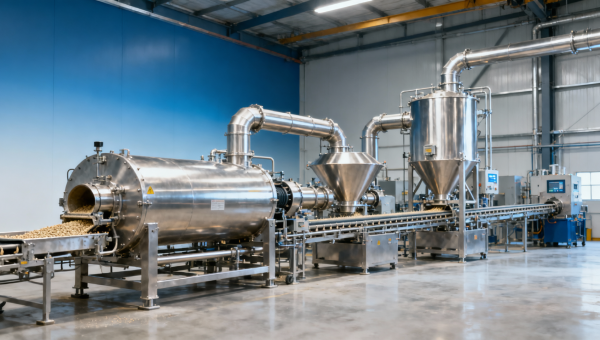
Planning a floating fish feed plant can look straightforward, but early mistakes in equipment selection, process layout, and quality control often lead to costly setbacks. From choosing a horizontal ribbon blender feed system or a vertical feed mixer machine to evaluating a poultry feed pellet machine for integrated production, buyers and engineers need to spot risks before investment decisions lock in long-term inefficiencies.
For most readers searching this topic, the real question is not simply “what mistakes happen,” but “which setup errors will damage output quality, raise operating cost, delay commissioning, or undermine ROI later?” The short answer: the biggest problems usually begin before installation starts. Wrong assumptions about raw materials, feed formula flexibility, extrusion requirements, plant capacity, utility loads, automation scope, and quality control standards can lock a project into chronic inefficiency. Catching these issues early is far cheaper than correcting them after procurement and civil work are already underway.
What Buyers and Project Teams Usually Get Wrong First
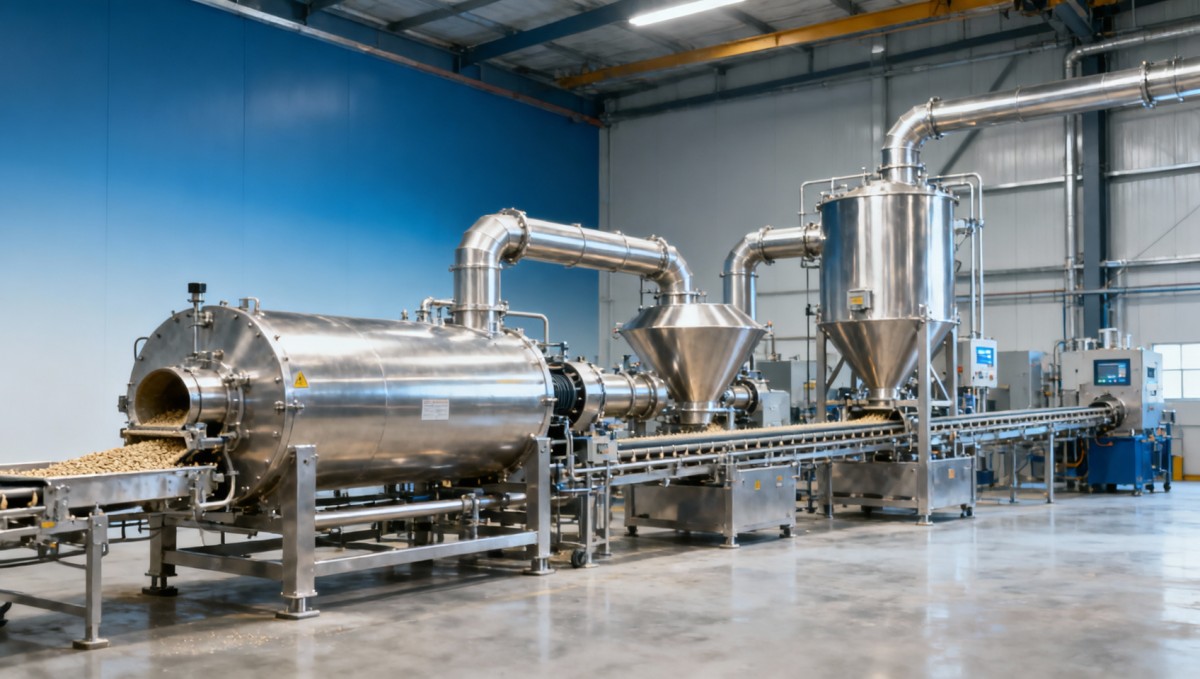
The earliest setup mistakes in a floating fish feed plant rarely come from one obvious bad machine. They usually come from treating the plant as a simple equipment list instead of an integrated process system. That creates a chain reaction: a mixer is chosen without confirming batching accuracy, an extruder is selected without understanding feed formula variability, or a dryer is undersized relative to throughput and moisture removal needs.
For decision-makers, the most important judgment is this: a floating fish feed plant succeeds when process design, raw material behavior, utility supply, quality targets, and operator capability are aligned from the start. If one of those pieces is missed, even premium machinery can perform below expectation.
The most common early misconceptions include:
- Assuming nameplate capacity equals stable production capacity
- Choosing equipment based on purchase price instead of lifecycle cost
- Overlooking the impact of fish species, pellet size range, and formula changes
- Underestimating steam, electricity, compressed air, and water requirements
- Ignoring commissioning, operator training, and after-sales service capability
- Expecting one line design to handle all feed types with no trade-offs
These are not minor oversights. In practice, they affect expansion plans, reject rates, energy consumption, feed stability, and commercial competitiveness.
Are You Designing Around the Formula, or Forcing the Formula to Fit the Machine?
This is one of the most expensive mistakes to catch late. Many projects begin with equipment discussions before the team has validated the actual feed formulas, target fish species, density requirements, floating time, digestibility goals, and raw material variability.
Floating fish feed performance depends heavily on formulation and process interaction. Protein level, starch gelatinization behavior, fat addition strategy, fiber content, particle size, and moisture conditioning all influence extrusion behavior and final pellet quality. If the plant is designed around a narrow formula assumption, it may struggle as soon as the business wants to produce feed for different species or market segments.
Key questions to resolve early include:
- Which fish species and growth stages will the plant serve?
- What pellet sizes must be produced consistently?
- How much formula switching is expected each week?
- Will the plant need to handle higher-fat recipes?
- How variable are the local raw materials in moisture, starch, and protein quality?
- Is there a requirement for sinking, slow-sinking, and floating products on the same line?
If these answers are vague, equipment selection is premature. A plant that looks efficient on paper may become operationally rigid in real use.
Mixing and Batching Errors Start Much Earlier Than Most Teams Expect
Before extrusion, feed uniformity already determines a large share of final product consistency. Yet batching and mixing are often treated as secondary steps. That is risky, especially where micro-ingredients, additives, binders, vitamins, or specialty proteins are involved.
A horizontal ribbon blender feed configuration may offer good mixing performance for certain formulations and production volumes, but that does not automatically make it right for every plant. A vertical feed mixer machine may be acceptable in some lower-complexity or lower-throughput situations, but can create limitations where formula precision and batch uniformity are critical.
For technical evaluators and quality teams, the real issue is not horizontal versus vertical in abstract terms. The issue is:
- Mixing uniformity under actual ingredient conditions
- Batch cycle time and line bottlenecks
- Residue carryover during recipe changes
- Cleanability and contamination risk
- Integration with dosing and micro-addition systems
If the project requires premium aquafeed quality, frequent formula changes, or tight nutritional control, the mixing section should be specified as a critical control point, not a commodity purchase.
Extruder Selection Mistakes Can Lock In Years of Quality and Energy Problems
For a floating fish feed plant, the extruder is the technical core of the line. Unfortunately, it is also where many buyers rely too heavily on vendor claims without enough process validation. An extruder that is badly matched to the intended formulas or output targets can create unstable expansion, poor floatability, inconsistent pellet structure, and high specific energy consumption.
Common early mistakes include:
- Choosing output size based on peak sales ambition rather than realistic ramp-up demand
- Ignoring screw configuration flexibility
- Underestimating wear parts cost and maintenance frequency
- Failing to verify control stability across different pellet diameters
- Assuming all floating feed extruders handle high-fat or high-protein formulations equally well
For procurement and finance teams, the practical takeaway is simple: the cheapest extruder is often the most expensive decision over a five-year period. Energy use, downtime, spare parts consumption, and off-spec production can easily outweigh initial savings.
Drying, Cooling, and Coating Are Often Underspecified
Many project plans focus heavily on grinding, mixing, and extrusion, then give too little attention to post-extrusion handling. That is a serious mistake because drying, cooling, and oil coating directly affect shelf stability, appearance, durability, and nutrient retention.
If the dryer is undersized or poorly controlled, moisture variation can rise, creating product instability and a higher risk of spoilage. If cooling is inadequate, pellets may deform, cake during storage, or lose handling strength. If vacuum coating or liquid addition systems are not designed around the actual recipe strategy, the plant may fail to meet target fat inclusion rates or pellet integrity standards.
This is especially relevant for operations planning to scale into higher-value aquafeed segments. A plant that can extrude pellets is not automatically a plant that can consistently produce premium floating fish feed.
Utility Planning Failures Cause Hidden Delays and Operating Cost Surprises
One of the least visible but most damaging setup mistakes is weak utility planning. Teams may finalize the equipment line before fully assessing available power quality, steam generation, boiler capacity, water supply, drainage, compressed air stability, ventilation, and heat management.
This creates two common problems. First, commissioning gets delayed because the facility infrastructure is not ready for real operating loads. Second, the plant runs at suboptimal conditions, with unstable process performance and inflated operating cost.
Project leaders should confirm early:
- Connected load and peak demand requirements
- Steam pressure and conditioning capacity for target throughput
- Water quality requirements for process and cleaning
- Dust collection and explosion risk controls
- Waste handling and environmental compliance obligations
- Layout access for maintenance and future expansion
These are not background engineering details. They are investment protection factors.
Trying to Combine Too Many Feed Types on One Line Can Create More Problems Than Savings
Some buyers evaluate a poultry feed pellet machine alongside fish feed equipment because they want integrated production flexibility. In certain cases, shared infrastructure or a hybrid feed mill concept can be commercially reasonable. But this should not be approached casually.
Aquafeed, especially floating fish feed, has process demands that differ materially from standard poultry pellet production. Pellet density control, extrusion behavior, starch cooking, drying profile, and oil application requirements are not the same. Trying to force multiple product types through a line that was not designed for them can increase cleaning complexity, reduce efficiency, and compromise quality across both categories.
That does not mean integrated production is impossible. It means decision-makers must verify:
- Which systems can be shared without quality compromise
- Whether cross-contamination risks are acceptable
- How changeover time will affect throughput
- Whether the projected market demand justifies hybrid complexity
- Which product family should drive the core process design
In many cases, “flexibility” sounds attractive in procurement discussions but performs poorly in day-to-day plant operations if not engineered carefully.
Quality Control Should Be Built Into the Plant Design, Not Added Later
Another early mistake is assuming quality assurance can be handled after the machinery is installed. In reality, a floating fish feed plant should be designed with quality control logic built into raw material receiving, grinding, batching, conditioning, extrusion, drying, coating, cooling, screening, and packing.
Quality and safety managers should look for early provision for:
- Raw material inspection and traceability
- Sampling points throughout the process
- Moisture, density, durability, and floatability testing
- Metal detection and contamination control
- Cleaning access and sanitation protocols
- Batch recording and alarm management
Plants that lack these design considerations often face unstable product claims, customer complaints, audit stress, and avoidable rework.
Weak Supplier Evaluation Is One of the Most Predictable Setup Risks
Many setup mistakes are not strictly engineering mistakes. They are vendor assessment mistakes. A polished quotation does not prove a supplier can deliver process reliability, documentation quality, spare parts support, training, or local service responsiveness.
Procurement teams and commercial evaluators should go beyond machine specifications and ask:
- Can the supplier show reference plants with similar formulas and capacities?
- What performance parameters are contractually defined?
- What is included in commissioning and training?
- How quickly are wear parts and critical spares supplied?
- What remote diagnostics or process support is available?
- Are manuals, P&IDs, electrical drawings, and validation documents complete?
For capital projects, supplier capability is part of the plant design risk profile. A technically decent line can still become a bad investment if supplier support is weak.
A Practical Early-Stage Checklist Before You Finalize the Plant
To catch setup mistakes early, teams should pause before purchase approval and verify a short list of high-impact issues:
- Confirm species, formulas, pellet sizes, and product mix with commercial realism.
- Validate capacity assumptions against actual operating hours, downtime, and changeover needs.
- Match the mixer, extruder, dryer, cooler, and coating systems to the intended formulation range.
- Review utility loads and facility readiness in detail.
- Define quality control checkpoints and traceability requirements before layout freeze.
- Assess maintenance access, spare parts planning, and operator training.
- Compare lifecycle cost, not just equipment purchase price.
- Request evidence from similar reference installations.
This checklist will not remove every project risk, but it will expose many of the mistakes that most often become expensive after the plant is built.
Conclusion: The Best Time to Prevent Floating Fish Feed Plant Problems Is Before Procurement
Floating fish feed plant setup mistakes are rarely random. Most can be identified early if buyers, engineers, operators, and business stakeholders focus on the issues that truly affect performance: formula fit, process integration, utility readiness, quality control, supplier capability, and long-term operating economics.
For technical teams, the priority is to ensure the process can reliably deliver target feed quality. For procurement and finance teams, the priority is to avoid false economy and protect total project return. For management, the key insight is clear: the right plant is not the one with the longest equipment list or the lowest quote, but the one that fits the intended products, operating conditions, and business model with the fewest hidden compromises.
If these questions are addressed before contracts are finalized, many of the most damaging commissioning and production problems can be prevented rather than repaired later at much higher cost.
Related Intelligence
- Commercial Feed PelletIndia Launches Anti-Dumping Review on Chinese Commercial Feed PelletsIndia's anti-dumping review on Chinese commercial feed pellets could extend the 18.3% duty—key for importers, feed mills & agri-supply chains. Act now.
- Commercial Feed PelletIndia Launches Mid-Term AD Review on Chinese Commercial Feed PelletsIndia's mid-term AD review on Chinese Commercial Feed Pellets impacts exporters, feed mills & importers—get actionable insights, HS code guidance, and duty-scenario planning now.
- Commercial Feed PelletIndia Launches Mid-Term AD Review on Chinese Commercial Feed PelletsIndia's mid-term AD review on Chinese commercial feed pellets could raise duties to 28.5% — critical for exporters, feed mills & agri-input suppliers. Act now.
The Morning Broadsheet
Daily chemical briefings, market shifts, and peer-reviewed summaries delivered to your terminal.
