
Floating Fish Feed Plant Output Drops for Hidden Reasons
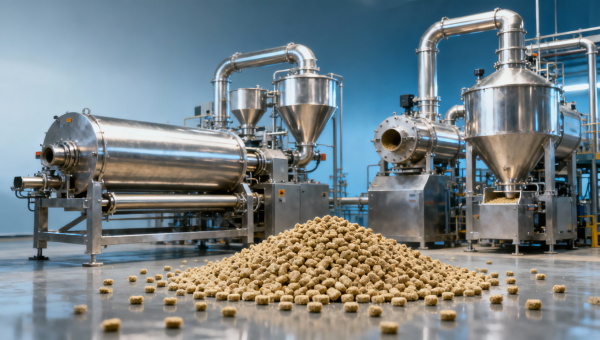
When a floating fish feed plant suffers unexplained output drops, the cause often goes beyond visible breakdowns. From horizontal ribbon blender feed consistency and vertical feed mixer machine settings to upstream links with a cattle feed processing plant or poultry feed pellet machine, hidden inefficiencies can quietly erode capacity, quality, and margins. This article examines the overlooked technical and procurement factors that decision-makers and operators should investigate first.
For operators, a 10% to 20% fall in hourly throughput may look like a routine maintenance issue. For procurement teams and plant managers, however, the same decline can signal a wider chain problem involving raw material variation, mixer residence time, steam quality, pellet expansion behavior, dryer loading, or even spare parts mismatch. In integrated feed manufacturing environments, the floating fish feed plant rarely fails in isolation.
This matters to technical evaluators, quality controllers, finance approvers, and project leaders because output loss usually appears before product rejection rates spike. A plant that was designed for 1 ton/h, 3 tons/h, or 5 tons/h can gradually underperform for weeks before the root causes become measurable in cost-per-ton and customer complaints.
Hidden Mechanical and Process Factors Behind Output Loss
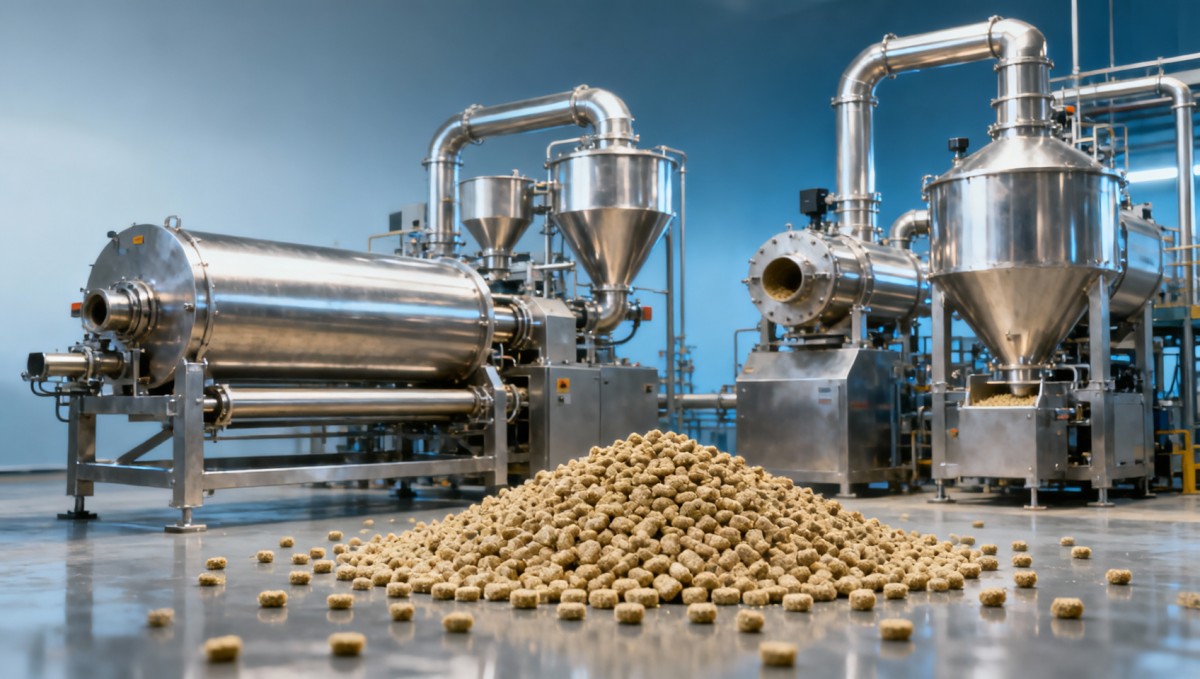
In a floating fish feed plant, the most overlooked losses often occur in the transition points between mixing, conditioning, extrusion, drying, and cooling. A visible stoppage is easy to detect, but a 3% to 8% capacity loss at each stage can accumulate into a 15% overall output reduction. This is common when equipment still runs, yet no longer runs at design balance.
Feed consistency begins upstream. If a horizontal ribbon blender feed system produces uneven premix distribution, the extruder must work harder to stabilize density and expansion. If a vertical feed mixer machine is used for formulas requiring tighter homogeneity, mixing time may need to increase from 6 minutes to 10 minutes, which directly reduces line rhythm and creates bottlenecks before conditioning.
Moisture control is another hidden variable. Many plants target raw mash moisture in the 18% to 25% range before extrusion, depending on fish species, starch level, and formulation. If steam pressure fluctuates or condensate is not drained properly, the conditioner may deliver inconsistent thermal treatment. The result is unstable floating rate, higher fines, and slower downstream drying because pellets leave the extruder with irregular internal structure.
Wear-related output decline can also remain hidden for months. Screw elements, die holes, cutter blades, and dryer air seals degrade gradually rather than suddenly. An extruder screw with moderate wear may still operate, yet require 5 kWh to 12 kWh more energy per ton and produce lower expansion. The plant seems active, but tonnage falls while energy and reject rates rise.
Where to inspect first on the production line
Plant teams should verify the sequence of hidden losses instead of checking only the main machine. In many cases, the limiting step is not the extruder itself but an upstream feeder, a slow discharge mixer, a conditioner with poor steam distribution, or a dryer overloaded beyond its effective evaporation range.
- Check mixer batch cycle time versus rated cycle time; a shift from 4 minutes to 6 minutes can cut practical throughput sharply.
- Measure conditioner outlet temperature and moisture at least 3 times per shift to identify unstable thermal input.
- Inspect die hole wear, cutter alignment, and feeder speed synchronization every 250 to 500 operating hours.
- Review dryer inlet and outlet air temperatures to confirm that evaporation load matches pellet size and hourly production.
The table below summarizes common hidden process causes and their likely operational impact in a commercial floating fish feed plant.
The practical lesson is clear: hidden output decline is usually cumulative. A plant can keep running at 80% to 90% mechanical availability and still lose meaningful commercial performance because small process deviations across 4 or 5 linked stages are left uncorrected.
Raw Material Variability and Cross-Line Interference
A floating fish feed plant is often connected to broader feed operations. In multi-line facilities, ingredient handling may be shared with a cattle feed processing plant or a poultry feed pellet machine line. While this improves asset utilization, it can introduce hidden disruption when ingredient particle size, storage conditions, or scheduling priorities are not optimized for aquafeed requirements.
Fish feed formulations are especially sensitive to starch gelatinization, protein quality, oil addition timing, and grind uniformity. If the same hammer mill screen selection used for poultry feed is applied to floating fish feed, average particle size may be too coarse. A shift from 250 microns to 600 microns can reduce expansion consistency and force operators to lower throughput in order to maintain acceptable pellet integrity.
Storage and conveying also matter. Fine raw materials with inconsistent bulk density can bridge in bins or feed erratically into batching systems. If micro ingredients, binders, or oil-bearing meals absorb moisture during storage, a line may experience unstable feeder load. Operators often respond by slowing output instead of correcting the source variation, which masks the real issue for weeks.
Cross-line scheduling is another hidden reason for output drops. If the same mixer, boiler, or screening unit supports fish feed, cattle feed, and poultry feed production, line changeovers and cleaning intervals can reduce effective fish feed production time by 1 to 3 hours per day. On paper, installed capacity remains unchanged; in practice, daily tonnage falls below budget.
Raw material checks that should be standardized
For procurement teams and quality managers, stable output starts with tighter acceptance criteria. Supplier evaluation should not focus only on price per ton. Variability in moisture, starch behavior, protein source, and fineness can produce large downstream costs that do not appear in a basic quotation comparison.
- Define incoming moisture ranges for major ingredients, often within a 1% to 2% tolerance band where practical.
- Set particle size expectations by formula category, especially for fry feed, juvenile feed, and grow-out feed.
- Document bulk density trends and discharge behavior for difficult materials before approving alternate suppliers.
- Align fish feed production windows with utility demand from other feed lines to avoid steam and labor conflicts.
The next table shows how shared-plant conditions can quietly affect aquafeed productivity.
For business evaluators, the key conclusion is that a floating fish feed plant should be analyzed as part of a production ecosystem. Output drops are often the visible symptom of shared-resource conflicts rather than a single-machine failure.
Procurement Gaps That Increase Downtime and Lower Real Capacity
Procurement decisions often determine whether a plant maintains rated output after the first 6 to 12 months of operation. A common mistake is to buy the main extruder around nominal capacity while under-specifying feeders, motors, steam components, dies, wear parts inventory, and maintenance support. The line starts well but loses stability as soon as parts age or formulas change.
For purchasing teams, spare parts planning is as important as machine selection. If critical items such as screws, cutters, bearings, steam traps, and die plates have lead times of 2 to 8 weeks, any unplanned wear can force the plant to run below target capacity. Some operators continue production with compromised parts simply to avoid stoppage, but this can create longer-term losses in output and product quality.
Commercial comparison should therefore move beyond purchase price. Decision-makers need to calculate cost per ton under realistic conditions, including energy use, consumable wear, planned maintenance intervals, formula range, and expected downtime during changeover. A line that is 8% more expensive initially may still produce lower total operating cost over 24 months if its wear profile and support package are better aligned with plant demand.
Documentation quality is another hidden procurement issue. Technical manuals, commissioning records, utility diagrams, and recommended parameter windows should be complete and usable by plant staff. In many cases, output falls not because the machine lacks capability, but because settings for moisture, screw speed, cutter adjustment, or drying temperature were never translated into routine operating standards.
Five procurement checkpoints before approving upgrades or replacement parts
- Confirm whether rated capacity is based on floating feed, sinking feed, or low-fat test formulas, since real output can differ by 15% to 30%.
- Review lead time and stocking policy for at least 10 critical wear and control items.
- Verify utility requirements including steam pressure, compressed air, and installed motor load before any capacity upgrade.
- Request operating parameter ranges, not just nameplate data, especially for different pellet diameters such as 1.5 mm, 3 mm, and 6 mm.
- Compare service response structure, including remote troubleshooting within 24 hours and on-site support windows where available.
Questions finance approvers should ask
Finance teams should ask whether output loss is being treated as a maintenance event or as a margin leak. If a 3 ton/h plant loses 0.4 ton/h across 16 operating hours, that equals 6.4 tons per day of unrealized production. Over 25 production days, the commercial effect becomes large enough to justify better spares policy, operator training, or targeted retrofits.
A disciplined procurement framework reduces this risk. It also helps distributors, agents, and project contractors present more credible proposals because the conversation moves from headline machine price to lifetime operating reliability and practical throughput assurance.
A Practical Diagnostic Framework for Operators and Technical Evaluators
When output drops for unclear reasons, the most effective response is a structured diagnostic sequence. Instead of adjusting multiple settings at once, teams should isolate the problem by stage and measure repeatable indicators over at least 3 consecutive production shifts. This prevents false conclusions caused by temporary operator intervention or raw material changes.
Start with line balance. Compare actual throughput at each section: batching, mixing, conditioning, extrusion, drying, coating, and packing. If the extruder can deliver 100% of target, but the dryer can only stabilize 85% of moisture removal demand, the plant’s real capacity is determined by the dryer. Similar logic applies when a mixer batch cycle or feeder refill delay throttles the entire line.
Next, separate process instability from mechanical wear. Measure current draw, product moisture, pellet density, float percentage, fines level, and dryer residence time. If quality swings track utility changes or ingredient variation, process control is likely the priority. If power draw rises while throughput falls and pellet shape worsens, wear inspection should move higher on the action list.
Finally, standardize corrective action. Many plants solve the same issue repeatedly because no one records the parameter window that worked. A stable operating sheet should include at least formulation code, conditioner temperature, feeder speed, screw speed, moisture range, die configuration, dryer temperature profile, and hourly output. Without this, knowledge stays with one operator rather than the plant.
Suggested 5-step diagnostic workflow
- Confirm whether output loss is continuous, formula-specific, or shift-specific over a 3 to 7 day period.
- Measure bottleneck performance at each line stage using hourly logs rather than end-of-day estimates.
- Check critical utilities: steam quality, moisture addition, electrical load, and compressed air consistency.
- Inspect high-wear components and compare current condition against replacement intervals.
- Implement one corrective change at a time and review at least 2 full production cycles before closing the case.
Common misdiagnoses to avoid
One frequent mistake is assuming the extruder is undersized when the real problem is poor preconditioning or dryer saturation. Another is blaming operators when incoming particle size or moisture distribution has changed due to supplier variation. In integrated facilities, a third misdiagnosis is overlooking the effect of upstream cattle feed or poultry feed scheduling on fish feed utilities and labor allocation.
A disciplined diagnostic framework improves communication across operations, procurement, quality, and management. It turns an output complaint into a measurable improvement project with defined checks, timelines, and capital priorities.
Selection, Maintenance, and Service Strategies That Protect Throughput
Protecting output in a floating fish feed plant requires coordinated action across equipment design, maintenance planning, and supplier support. The best-performing facilities do not wait for severe decline. They set intervention thresholds early, often when throughput falls by 5% to 7%, energy use per ton rises, or pellet uniformity drifts outside internal control limits.
Maintenance should be built around operating hours and formula severity, not calendar dates alone. High-fat or abrasive formulas can accelerate screw and die wear. A preventive program may include quick visual inspections each shift, deeper mechanical checks every 250 hours, and planned wear-part replacement reviews every 1,000 hours, depending on line design and formulation mix.
Service strategy also affects business continuity. Plants in remote regions should prioritize modular wear parts, clear remote support channels, and standardized documentation that local technicians can use. Distributors and project managers should evaluate whether service coverage includes commissioning support, troubleshooting protocols, and operator retraining after formulation or utility changes.
For enterprises expanding capacity, the right decision is not always a full replacement. In some plants, targeted upgrades such as improved steam regulation, die optimization, feeder control improvement, or dryer airflow correction can recover 8% to 15% of lost capacity without major line reconstruction. The business case depends on current bottlenecks, spare parts availability, and production growth plans over the next 12 to 24 months.
Maintenance and support priorities by stakeholder
Different stakeholders evaluate throughput protection from different angles. The table below aligns plant needs with functional responsibilities.
A resilient floating fish feed plant is built on more than machine capacity. It depends on coordinated material control, realistic procurement, disciplined maintenance, and evidence-based troubleshooting. Organizations that treat these areas as one management system usually recover output faster and with lower commercial risk.
FAQ: questions often raised during plant evaluation
How long does it usually take to identify the true cause of output loss?
For a well-documented plant, initial diagnosis often takes 3 to 7 production days. If multiple formulas, shared utilities, or inconsistent raw materials are involved, a reliable root-cause review may take 2 to 3 weeks because the line must be observed across different operating conditions.
When should a plant consider retrofit instead of full replacement?
Retrofit is usually worth considering when the core line remains structurally sound and the bottleneck is localized, such as steam instability, die wear profile, feeder control, or dryer airflow imbalance. If these targeted issues account for most of the 8% to 15% output gap, selective upgrades may be more economical than total replacement.
Which indicators matter most during procurement review?
The most useful indicators are practical throughput by formula type, energy use per ton, wear-part replacement intervals, spare lead time, utility requirements, service response expectations, and documentation quality. These indicators reveal whether a supplier can support stable production rather than just initial installation.
Hidden output drops in a floating fish feed plant are rarely caused by one obvious fault. They usually emerge from the interaction of process imbalance, raw material variation, shared utility constraints, incomplete procurement planning, and delayed maintenance response. A structured review of mixers, conditioning, extrusion, drying, utilities, and spare parts strategy can reveal where capacity is being lost and what action will recover it fastest.
For manufacturers, operators, distributors, and enterprise buyers seeking clearer evaluation criteria, AgriChem Chronicle provides decision-oriented industry insight across aquaculture, feed processing, machinery selection, and technical sourcing. To assess a current line, compare upgrade options, or explore a tailored production solution, contact us today to discuss your plant conditions and get a more practical path to stable output.
Related Intelligence
- Commercial Feed PelletIndia Launches Anti-Dumping Review on Chinese Commercial Feed PelletsIndia's anti-dumping review on Chinese commercial feed pellets could extend the 18.3% duty—key for importers, feed mills & agri-supply chains. Act now.
- Commercial Feed PelletIndia Launches Mid-Term AD Review on Chinese Commercial Feed PelletsIndia's mid-term AD review on Chinese Commercial Feed Pellets impacts exporters, feed mills & importers—get actionable insights, HS code guidance, and duty-scenario planning now.
- Commercial Feed PelletIndia Launches Mid-Term AD Review on Chinese Commercial Feed PelletsIndia's mid-term AD review on Chinese commercial feed pellets could raise duties to 28.5% — critical for exporters, feed mills & agri-input suppliers. Act now.
The Morning Broadsheet
Daily chemical briefings, market shifts, and peer-reviewed summaries delivered to your terminal.
