
Animal Feed Mixers Wholesale Terms That Cause Delays
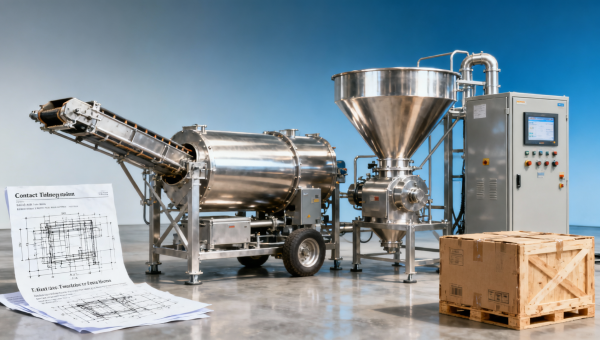
In animal feed mixers wholesale, delivery delays usually do not start on the factory floor. They start in the quotation, the purchase contract, and the technical annex. For buyers comparing a horizontal ribbon blender feed system, a vertical feed mixer machine, or larger cattle feed processing plant equipment, the biggest risk is often not price, but unclear terms around scope, performance, testing, shipment, and acceptance. The practical takeaway is simple: if key commercial and technical terms are vague, delays become highly likely. If they are defined early, lead times become more predictable, supplier communication improves, and internal approval moves faster.
Why do animal feed mixers wholesale orders get delayed even after the PO is issued?
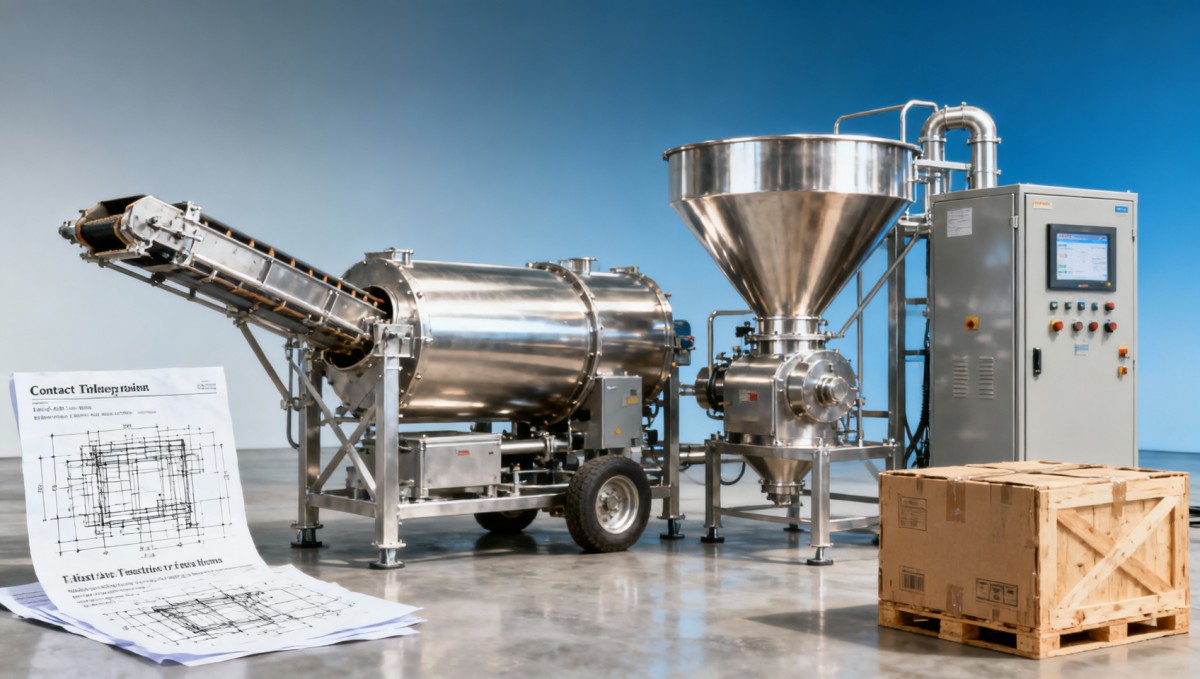
For most wholesale equipment purchases, delays happen when the buyer and supplier believe they agreed on the same machine, but in reality they agreed on different assumptions. This is especially common in animal feed mixers wholesale because feed mixing systems are rarely fully standard products. Capacity, material contact parts, automation level, dust control, discharge design, batching integration, motor brand, voltage, and safety compliance all affect manufacturing time.
The most common contract-related causes of delay include:
- Unclear equipment scope: whether the order includes only the mixer, or also feeding screw, discharge conveyor, hopper, control cabinet, platform, magnets, dust collector, and installation accessories.
- Vague throughput definitions: a supplier may quote output by volume, while the buyer expects output by density-specific tonnage.
- Incomplete raw material information: powder, premix, grain meal, molasses addition, fiber content, moisture, and particle size all influence mixer design and test standards.
- Undefined testing criteria: if uniformity, mixing time, residue level, and noise standards are not stated, acceptance can be delayed.
- Missing approval milestones: delays occur when drawings, electrical layouts, or paint color approval are required but not tied to response deadlines.
- Shipment terms that shift responsibility: Incoterms, packaging, inland transport, port booking, and export documentation can all create hidden waiting time.
- Unclear commissioning responsibilities: some suppliers quote ex-works equipment only, while buyers assume on-site startup support is included.
For procurement teams and project managers, this means delivery risk should be reviewed as a contract-clarity problem first, not only as a factory scheduling problem.
Which wholesale terms cause the most delays for feed mixer buyers?
The terms below deserve the closest review because they frequently trigger commercial disputes, technical revisions, or postponed shipment.
1. “Capacity” without a defined material basis
A feed mixer machine listed as 1 ton per batch may not deliver 1 ton for every formulation. Bulk density varies sharply across poultry feed, cattle feed, mineral premix, and fiber-rich rations. If the contract does not specify the material basis, the supplier may design to one assumption while your production plan is based on another.
What to define: batch weight, bulk density range, target cycle time, loading ratio, and whether the figure is theoretical or tested production capacity.
2. “Mixer model” without a full technical specification sheet
In animal feed mixers wholesale, model numbers alone are not enough. A horizontal ribbon blender feed system can vary significantly in shell thickness, shaft design, ribbon clearance, gearbox type, and control architecture. Two machines with the same nominal capacity can have very different durability and lead times.
What to define: material of construction, motor and gearbox brands, voltage/frequency, control system, weighing components, bearing type, seal type, and internal finish for contact surfaces.
3. “Testing before delivery” without a detailed FAT standard
Factory Acceptance Test language is one of the most overlooked areas. If FAT is not defined, the supplier may perform a simple no-load run, while the buyer expects loaded testing with actual feed ingredients and documented mixing uniformity.
What to define: no-load and load test procedures, sample quantity, coefficient of variation target if relevant, vibration and noise acceptance, current draw, safety checks, video evidence, and witness requirements.
4. “Delivery time” starting from an unclear date
Many quotations state “45 days after deposit” or “60 days after order confirmation.” But production may actually start only after drawing approval, receipt of final technical data, or confirmation of motor voltage and paint specifications. This wording creates immediate schedule ambiguity.
What to define: exact lead-time trigger, buyer data submission deadlines, drawing approval window, and consequences if approvals are delayed.
5. “Complete line” without interface boundaries
For a cattle feed processing plant or integrated feed & grain processing setup, one of the biggest causes of delay is uncertainty about who supplies connection points between machines. The mixer may be ready, but the project stalls because conveyors, bins, supports, cables, or pneumatic lines fall into a gray area.
What to define: battery limits, upstream/downstream equipment interfaces, civil foundation inputs, utility requirements, and installation scope split between supplier and buyer.
6. “Standard export packing” without packaging details
Packaging terms matter more than many buyers expect. If moisture protection, fumigation, wooden case standards, palletization, or container loading responsibilities are not written down, export readiness can be delayed at the final stage.
What to define: packing list format, anti-rust protection, wooden case compliance, marking requirements, spare parts packing, and photo confirmation before dispatch.
7. “After-sales service included” without response and commissioning terms
Service language can delay startup, especially when the equipment arrives but cannot be commissioned because remote support, site visit timing, training scope, or interpreter responsibilities were never clearly agreed.
What to define: installation supervision, remote commissioning hours, on-site engineer availability, training deliverables, travel cost allocation, and warranty response time.
What should buyers, engineers, and procurement teams verify before signing?
The most effective way to prevent delays is to treat the contract as a delivery control document, not just a commercial formality. A practical pre-signing review should cover five areas.
Commercial clarity
- Incoterm and named place
- Deposit, progress payment, and balance trigger
- Currency and validity period
- Penalty or remedy for late delivery, if negotiated
Technical clarity
- Machine capacity by material type
- Required mixing uniformity and cycle time
- Power supply, control logic, automation level
- Contact material grade and wear-part standard
Project interface clarity
- What is included in the equipment supply
- What is excluded but required for operation
- Drawing responsibilities and approval workflow
- Foundation, utilities, and site readiness obligations
Quality and compliance clarity
- Inspection method and FAT records
- Certificates, manuals, and spare parts list
- Safety guards, emergency stop, and local compliance needs
- Sanitation or contamination-control requirements where relevant
Logistics clarity
- Packing standard and shipping marks
- Container plan or break-bulk arrangement
- Document package for customs and import clearance
- Partial shipment policy and dispatch notification timing
This review matters not only to procurement personnel, but also to finance approvers and business evaluators. A cheaper quotation with poorly defined terms can create much higher total cost through idle labor, delayed plant startup, missed seasonal demand, and repeated internal review cycles.
How do these terms affect ROI, risk, and supplier comparison?
For enterprise decision-makers, the commercial value of clear wholesale terms is speed, predictability, and fewer change orders. For technical evaluators, the value is comparability. For operators and quality teams, the value is smoother commissioning and more reliable output.
When comparing animal feed mixers wholesale offers, buyers often focus first on price, motor power, and nominal capacity. But from a project outcome perspective, a better comparison framework includes:
- Lead-time credibility: Is the delivery schedule linked to realistic approval and manufacturing milestones?
- Specification completeness: Can two suppliers actually be compared on like-for-like terms?
- Acceptance transparency: Is there a shared definition of what counts as a completed, accepted machine?
- Installation readiness: Will the machine arrive with the documents, interfaces, and support needed for startup?
- Lifecycle support: Are spare parts, service response, and wear-item standards clearly stated?
If these points are weak, even a technically acceptable vertical feed mixer machine or ribbon blender can become a slow, high-friction purchase. If they are strong, approval becomes easier across engineering, procurement, finance, and operations teams.
A practical checklist of contract clauses that reduce delay risk
Before confirming a supplier, ask for these items in writing:
- Final technical datasheet signed by both parties
- General arrangement drawing and utility requirement list
- Detailed scope of supply and explicit exclusions
- Lead-time trigger definition and milestone schedule
- FAT procedure and acceptance benchmarks
- Packing specification and shipping document list
- Commissioning, training, and warranty terms
- Spare parts recommendation for startup and first-year operation
- Change-order procedure for any design revision after approval
- Named contact persons for technical, commercial, and logistics coordination
This checklist is useful whether you are sourcing a standalone feed mixer machine, evaluating a horizontal ribbon blender feed system, or planning equipment for a cattle feed processing plant. It helps every stakeholder see where delays are most likely to emerge before money and time are committed.
Conclusion
In animal feed mixers wholesale, delays are often rooted in wording, not only production capacity. The terms that cause the most trouble are usually the ones that look harmless at first glance: capacity, testing, delivery date, complete scope, packing, and service. For buyers, engineers, distributors, and plant decision-makers, the smartest approach is to turn broad sales language into precise technical and commercial definitions before signing. That reduces uncertainty, improves supplier comparison, protects project timelines, and leads to faster, more confident purchasing decisions.
Related Intelligence
- Commercial Feed PelletIndia Launches Anti-Dumping Review on Chinese Commercial Feed PelletsIndia's anti-dumping review on Chinese commercial feed pellets could extend the 18.3% duty—key for importers, feed mills & agri-supply chains. Act now.
- Commercial Feed PelletIndia Launches Mid-Term AD Review on Chinese Commercial Feed PelletsIndia's mid-term AD review on Chinese Commercial Feed Pellets impacts exporters, feed mills & importers—get actionable insights, HS code guidance, and duty-scenario planning now.
- Commercial Feed PelletIndia Launches Mid-Term AD Review on Chinese Commercial Feed PelletsIndia's mid-term AD review on Chinese commercial feed pellets could raise duties to 28.5% — critical for exporters, feed mills & agri-input suppliers. Act now.
The Morning Broadsheet
Daily chemical briefings, market shifts, and peer-reviewed summaries delivered to your terminal.
