
Shrimp Feed Pellet Machine: How to Improve Production Efficiency?
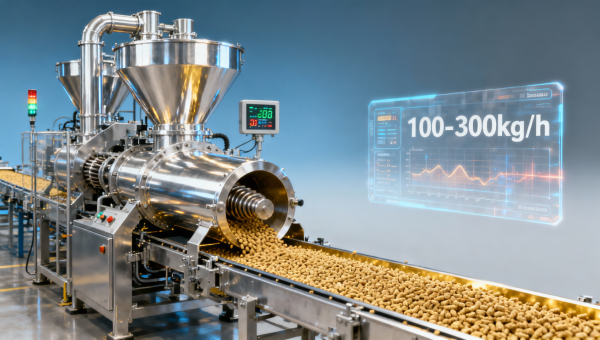
Shrimp Feed Pellet Machine: Core Technologies Driving Efficiency
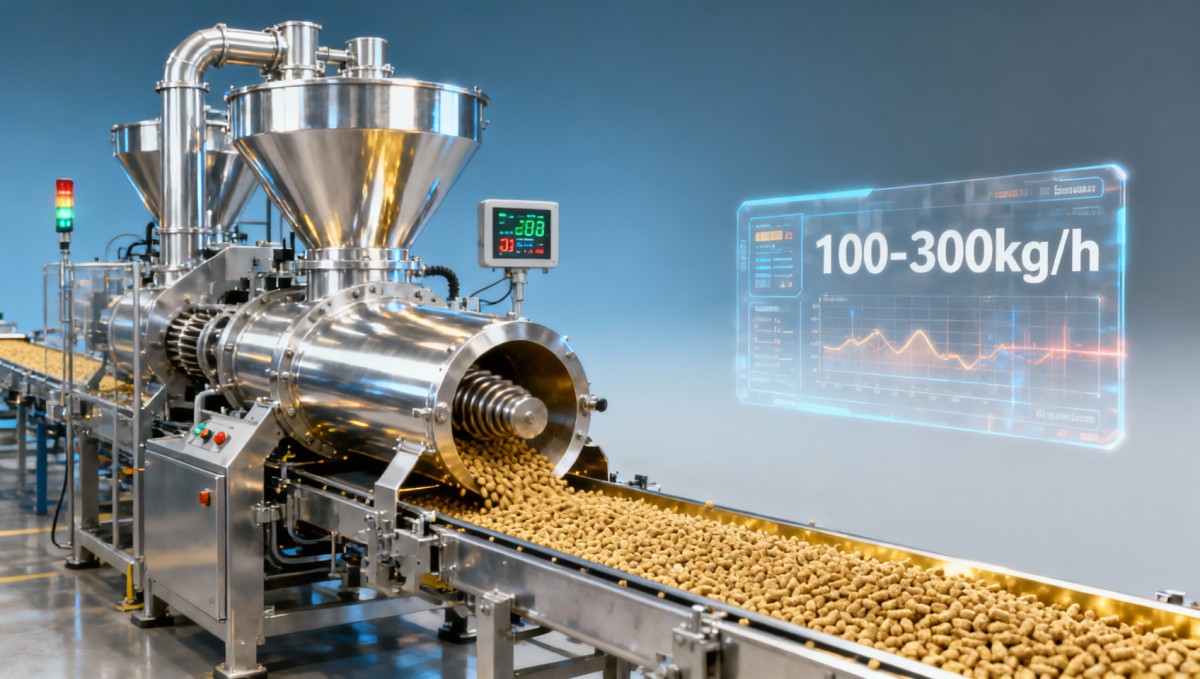
In modern aquaculture operations, shrimp feed pellet machines serve as critical infrastructure for converting raw materials into high-quality feed pellets. Two primary machine types dominate the market: sinking fish feed machines and floating fish feed extruders. Sinking models typically operate at 30–60kg/h throughput, using single-screw extrusion technology to produce dense pellets that sink rapidly in water. These machines require 15–25kW power input and maintain processing temperatures between 80–100℃ to ensure proper starch gelatinization.
Floating feed extruders represent the advanced tier, achieving 100–300kg/h production capacity with twin-screw designs. These systems employ pre-conditioning chambers that heat materials to 120–140℃ before extrusion, creating pellets with 20–30% lower density than water. The floating mechanism enables better feed utilization by keeping pellets accessible to shrimp for 8–12 hours, reducing waste by up to 35% compared to sinking types. Both machine categories now incorporate automatic lubrication systems and PLC controls, cutting maintenance labor by 40–60%.
Material compatibility significantly impacts efficiency. High-quality machines handle 12–15 different raw materials, including fishmeal, soybean meal, and wheat flour, while maintaining ±0.5mm pellet size consistency. Advanced models feature die plates with 1.5–3.0mm aperture options, allowing rapid switching between shrimp growth stages without tool changes. The die plate lifespan typically ranges from 800–1,200 operating hours, depending on material abrasiveness and maintenance frequency.
Process Optimization Strategies for Feed Production Lines
Efficiency gains stem from three interconnected optimization areas: pre-processing, extrusion parameters, and post-processing. In pre-processing, grinding systems should achieve 60–80 mesh particle size uniformity to prevent extruder blockages. Modern hammer mills with automatic screen replacement reduce downtime by 70% during material changes. Mixing efficiency directly correlates with feed quality – double-shaft paddle mixers with 3–5 minute cycle times ensure 95%+ homogeneity, compared to 85–90% for single-shaft models.
During extrusion, maintaining optimal barrel temperature profiles proves crucial. The pre-conditioning stage should reach 85–90℃ for 3–5 minutes to activate enzymes and improve digestibility. In the extrusion chamber, temperature gradients should follow this pattern: 110–120℃ (feeding zone), 130–140℃ (compression zone), and 90–100℃ (metering zone). Screw speed adjustments between 200–400rpm enable fine-tuning of shear forces, with higher speeds increasing throughput but potentially reducing pellet durability.
Post-processing optimization focuses on drying and cooling systems. Belt dryers with three temperature zones (80℃, 70℃, 60℃) reduce moisture from 18% to 8% in 20–25 minutes, while counterflow coolers lower pellet temperature from 70–80℃ to ambient within 10 minutes. Proper cooling prevents pellet cracking and reduces storage moisture absorption by 40–50%.
Maintenance Protocols for Sustained Efficiency
Preventive maintenance schedules directly correlate with machine lifespan and production consistency. Daily checks should include lubrication points (8–12 per machine), belt tension adjustments, and temperature sensor calibration. Weekly tasks involve screw and barrel inspection for wear patterns – when groove depth exceeds 1.5mm, replacement becomes necessary to prevent quality degradation. Monthly procedures include gearbox oil analysis and electrical system integrity testing.
Component replacement cycles follow specific benchmarks: cutting knives every 400–600 operating hours, die plates every 800–1,200 hours, and screw elements every 1,500–2,000 hours. Using genuine manufacturer parts extends component life by 30–50% compared to aftermarket alternatives. For example, high-quality die plates maintain aperture precision within ±0.05mm over their lifespan, while inferior products may deviate by ±0.2mm after just 300 hours.
Data-driven maintenance approaches are gaining traction. IoT-enabled machines now provide real-time vibration analysis (with alarm thresholds set at 7–9mm/s RMS) and temperature monitoring (with upper limits of 150℃ for bearing housings). These systems predict component failures 3–5 days in advance, reducing unplanned downtime by 60–70%. One case study showed a 25% increase in overall equipment effectiveness (OEE) after implementing predictive maintenance protocols.
Procurement Considerations for High-Efficiency Models
Selecting the right machine involves evaluating six core criteria: throughput capacity, energy efficiency, material flexibility, automation level, service network, and compliance certifications. For small-scale operations (50–200kg/day), single-screw machines with 22–30kW motors offer the best cost-benefit ratio, typically priced between $15,000–$25,000. Medium-scale producers (500–1,000kg/day) should consider twin-screw extruders in the $45,000–$75,000 range, which provide 20–30% lower energy consumption per ton of output.
Energy efficiency metrics prove critical in operational cost calculations. Premium models now achieve specific energy consumption (SEC) values below 0.12kWh/kg, compared to 0.18–0.22kWh/kg for basic models. Over a 10-year lifespan, this difference translates to $30,000–$50,000 in electricity savings for a medium-scale operation. Material flexibility impacts production versatility – advanced machines handle 12+ raw materials with automatic recipe storage for 50+ formulations.
- Throughput range: Match machine capacity to 120–150% of current needs
- Energy rating: Prioritize models with SEC <0.15kWh/kg
- Certifications: Ensure compliance with ISO 9001, CE, and local feed safety standards
- Spare parts: Verify availability of critical components within 72 hours
Service support packages significantly affect long-term efficiency. Leading manufacturers offer 3–5 year warranties with on-site technician response within 24–48 hours for critical failures. Training programs should include both operator training (16–24 hours) and maintenance certification (40–60 hours). Some suppliers now provide remote assistance through augmented reality (AR) headsets, enabling real-time troubleshooting with 85–90% issue resolution rates without technician dispatch.
Frequently Asked Questions (FAQs)
What's the typical payback period for high-efficiency shrimp feed machines?
For medium-scale operations (500kg/day capacity), premium machines with SEC <0.12kWh/kg typically achieve payback within 18–24 months through energy savings and reduced waste. The calculation assumes electricity costs of $0.12/kWh and feed material costs of $600–$800/ton. Labor savings from automation features contribute an additional 10–15% to the ROI.
How often should die plates be replaced in floating feed extruders?
Die plate lifespan depends on material composition and maintenance practices. For standard stainless steel dies processing fishmeal-based formulations, replacement is typically required every 800–1,000 operating hours. Using tungsten carbide dies extends this to 1,500–2,000 hours, though at 3–4x higher initial cost. Regular cleaning with specialized brushes reduces premature wear by 30–40%.
What are the key differences between Chinese and European shrimp feed machines?
European manufacturers typically emphasize precision engineering with SEC values 10–15% lower than Chinese equivalents, but at 40–60% higher purchase prices. Chinese models offer better cost-performance ratios for budget-conscious buyers, with recent advancements reducing the quality gap to within 5–8% for standard formulations. Local service networks and shorter lead times (4–6 weeks vs. 12–16 weeks) make Chinese machines more attractive for emerging markets.
Conclusion: Strategic Investments for Competitive Advantage
Optimizing shrimp feed pellet machine efficiency requires a holistic approach combining advanced technology, precise process control, and proactive maintenance. Modern twin-screw extruders with floating feed capabilities now deliver 30–40% higher throughput than legacy models while reducing energy consumption per ton by 25–35%. The most successful operations implement data-driven maintenance protocols and invest in operator training programs, achieving 85–90% overall equipment effectiveness (OEE) compared to industry averages of 65–75%.
For procurement decision-makers, prioritizing machines with ISO 9001 certification, SEC <0.15kWh/kg, and local service support within 48 hours proves critical. Financial approval processes should factor in total cost of ownership (TCO) calculations that include energy, maintenance, and labor costs over a 10-year lifecycle. Manufacturers seeking to enhance their competitive edge should contact specialized suppliers for customized solutions that align with their specific production scales and feed formulations.
Ready to optimize your shrimp feed production? Our team of agricultural machinery experts provides free consultation on machine selection, process optimization, and maintenance strategies tailored to your operation scale. Contact us today to receive a customized efficiency improvement plan within 48 hours.
Related Intelligence
- Commercial Feed PelletIndia’s Feed Pellet Machinery Import Shift Impacts Global SuppliersIndia’s feed pellet machinery import shift drives 210% surge in Chinese exports—key insight for global suppliers navigating tariffs, tech transfer, and localization.
- Commercial Feed PelletRed Sea Crisis Drives Up Asia-Europe Freight Costs, Feed Pellet FOB Prices Rise 8–12%Red Sea Crisis drives Asia-Europe freight costs up—Commercial Feed Pellet FOB prices rise 8–12%. Critical insight for exporters, traders & importers navigating supply chain volatility.
- Commercial Feed PelletAksu Cotton Mills at Full Capacity; Cottonseed Protein Export Stability RisesAksu cotton mills hit 100% capacity; cottonseed protein exports surge with Thailand & Saudi FDA approvals—99.2% delivery reliability drives feed ingredient buyers’ interest.
The Morning Broadsheet
Daily chemical briefings, market shifts, and peer-reviewed summaries delivered to your terminal.
