
India’s Feed Pellet Machinery Import Shift Impacts Global Suppliers
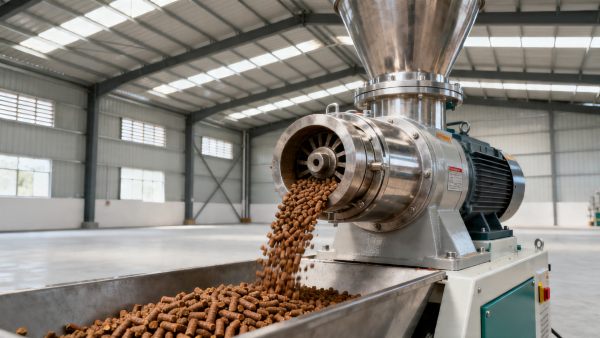
On April 18, 2026, India’s Ministry of Agriculture and Farmers’ Welfare (MoA&FW) launched the ‘Commercial Feed Pellet Domestic Substitution Initiative’ under its newly released 2026–2030 Feed Industry Self-Reliance Roadmap. The move—centered on tariff adjustments and technology transfer eligibility—has triggered a 210% year-on-year surge in Chinese milling machinery export orders for feed pellet production equipment. This development directly affects feed machinery exporters, component suppliers, and feed mill developers across Asia and Latin America—and signals a structural recalibration in India’s agricultural input supply chain.
Event Overview
On April 18, 2026, the Indian Ministry of Agriculture and Farmers’ Welfare (MoA&FW) published the 2026–2030 Feed Industry Self-Reliance Roadmap. As part of the initiative, the ministry announced a phased increase in import duty on commercial feed pellet machines to 28%. Concurrently, it opened a ‘Technology Transfer Partner’ white list, granting eligibility to equipment manufacturers from China, Germany, and Brazil. According to official Indian customs data, Chinese milling machinery export orders rose 210% year-on-year in the first week of April 2026, with primary demand originating from new feed plants in Tamil Nadu and Maharashtra.
Industries Affected
Feed Machinery Exporters (Direct Trade Enterprises)
Exporters of commercial feed pellet machines—especially those based in China, Germany, and Brazil—are experiencing immediate order volume growth. The 28% tariff hike makes imported machines significantly more expensive for Indian buyers, thereby increasing demand for locally assembled or domestically produced units under technology transfer arrangements. Impact is most visible in short-term order inflows and logistics scheduling.
Feed Mill Developers & Operators (Processing Manufacturing Enterprises)
New and expanding feed mills in India—particularly in Tamil Nadu and Maharashtra—are accelerating procurement decisions to align with the policy window before full tariff implementation. Their capital expenditure planning, equipment specification choices, and local partner selection are now tightly coupled to white-listed technology transfer terms rather than pure cost arbitrage.
Supply Chain & Component Suppliers (Supply Chain Service Enterprises)
Suppliers of critical subcomponents—including ring dies, gearboxes, steam conditioners, and control systems—are seeing upstream demand shifts. Since white-listed partners must support localized assembly or after-sales service, component vendors face tighter localization requirements, including documentation compliance, spare parts stocking plans, and technical support capacity in India.
Distribution & After-Sales Networks (Channel & Logistics Enterprises)
Indian distributors and service providers authorized by white-listed manufacturers may gain preferential access to technical training, warranty frameworks, and spare parts allocation. Conversely, non-aligned distributors risk marginalization as MoA&FW’s roadmap emphasizes certified local capability over generic import channels.
What Relevant Enterprises Should Monitor and Do Now
Track official updates on the Technology Transfer Partner white list
The initial announcement names three countries but does not publish a finalized vendor list. Enterprises should monitor MoA&FW’s official portal and India’s Directorate of Animal Husbandry for subsequent notifications—including qualification criteria, application deadlines, and audit timelines for white-listed status.
Assess exposure to key Indian states’ feed infrastructure expansion
Tamil Nadu and Maharashtra account for the majority of April 2026 order volume. Companies should cross-reference state-level animal husbandry department tenders, feed mill licensing data, and industrial incentive schemes (e.g., MSME subsidies for feed processing units) to prioritize regional engagement.
Distinguish between policy signal and operational readiness
The 28% tariff is described as ‘phased’, implying staggered implementation. Current order surges reflect anticipation—not yet full enforcement. Enterprises should avoid overcommitting production capacity or inventory until MoA&FW confirms rollout timing and exemptions (e.g., for R&D units or pilot projects).
Prepare localized technical documentation and service protocols
White-listed partners are expected to enable domestic assembly and after-sales support. Firms should begin translating operation manuals, commissioning checklists, and preventive maintenance schedules into English and regional languages (e.g., Tamil, Marathi), and verify alignment with Indian Bureau of Indian Standards (BIS) requirements for feed machinery safety and performance.
Editorial Observation / Industry Perspective
From an industry perspective, this initiative is better understood as a coordinated policy signal—not yet a fully operational regime. The combination of tariff escalation and technology transfer incentives reflects India’s dual objective: reducing import dependency while avoiding abrupt disruption to feed supply continuity. Analysis来看, the 210% export order spike is likely front-loaded, driven by pre-tariff buying behavior and early-mover advantage in white-list applications. Observation来看, the emphasis on Tamil Nadu and Maharashtra suggests that state-level implementation capacity—not just federal policy—will determine real-world adoption speed. Current更值得关注的是 how quickly MoA&FW finalizes vendor evaluation metrics and whether it extends white-list eligibility beyond the initial three countries post-2026.
Conclusion
This development marks a deliberate recalibration in India’s feed manufacturing ecosystem—not a sudden market closure, but a structured transition toward localized production capability. For global suppliers, it represents both opportunity and complexity: higher near-term demand coexists with stricter localization expectations. The current situation is best interpreted as a policy-driven inflection point requiring calibrated response—not a blanket shift, nor a temporary blip.
Source Attribution
Main source: Official press release and roadmap document issued by India’s Ministry of Agriculture and Farmers’ Welfare (MoA&FW), dated April 18, 2026. Supporting data: Indian Customs export statistics for milling machinery (April 2026, Week 1), publicly reported via the Ministry of Commerce and Industry’s Trade Statistics Portal. Note: The composition and timeline of the ‘Technology Transfer Partner’ white list remain pending formal publication and are subject to ongoing observation.
Related Intelligence
- Commercial Feed PelletIndia’s Feed Pellet Machinery Import Shift Impacts Global SuppliersIndia’s feed pellet machinery import shift drives 210% surge in Chinese exports—key insight for global suppliers navigating tariffs, tech transfer, and localization.
- Commercial Feed PelletRed Sea Crisis Drives Up Asia-Europe Freight Costs, Feed Pellet FOB Prices Rise 8–12%Red Sea Crisis drives Asia-Europe freight costs up—Commercial Feed Pellet FOB prices rise 8–12%. Critical insight for exporters, traders & importers navigating supply chain volatility.
- Commercial Feed PelletAksu Cotton Mills at Full Capacity; Cottonseed Protein Export Stability RisesAksu cotton mills hit 100% capacity; cottonseed protein exports surge with Thailand & Saudi FDA approvals—99.2% delivery reliability drives feed ingredient buyers’ interest.
The Morning Broadsheet
Daily chemical briefings, market shifts, and peer-reviewed summaries delivered to your terminal.
