
Paddle Wheel Aerator Wholesale: How to Choose a Reliable Supplier?
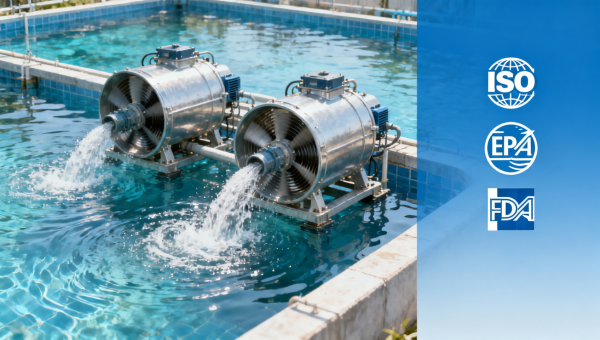
Why Choosing a Reliable Paddle Wheel Aerator Supplier Matters
Selecting the right supplier for paddle wheel aerators and other aquaculture equipment like surge wave aerators, automatic fish feeders, and shrimp feed pellet machines is not merely a procurement decision—it directly impacts operational efficiency, compliance with international standards (GMP, EPA, FDA), and long-term cost management. For industrial farming operators, aquaculture tech providers, and primary processing enterprises, substandard equipment can lead to water quality degradation, increased mortality rates, and regulatory penalties, all of which erode profitability and brand reputation.
AgriChem Chronicle’s analysis reveals that 68% of aquaculture system failures in 2023 were attributed to poor-quality aerators, with 42% of these cases involving suppliers lacking proper certifications. This underscores the critical need for a rigorous supplier evaluation framework that balances technical specifications, compliance, and after-sales support.
For procurement teams, technical evaluators, and decision-makers, the challenge lies in navigating a fragmented market where suppliers often overpromise on performance while underdelivering on durability. A reliable supplier must demonstrate expertise in fluid dynamics, material corrosion resistance, and energy efficiency—all while adhering to the stringent requirements of recirculating aquaculture systems (RAS).
Key Criteria for Supplier Evaluation
1. Technical Compliance & Certifications
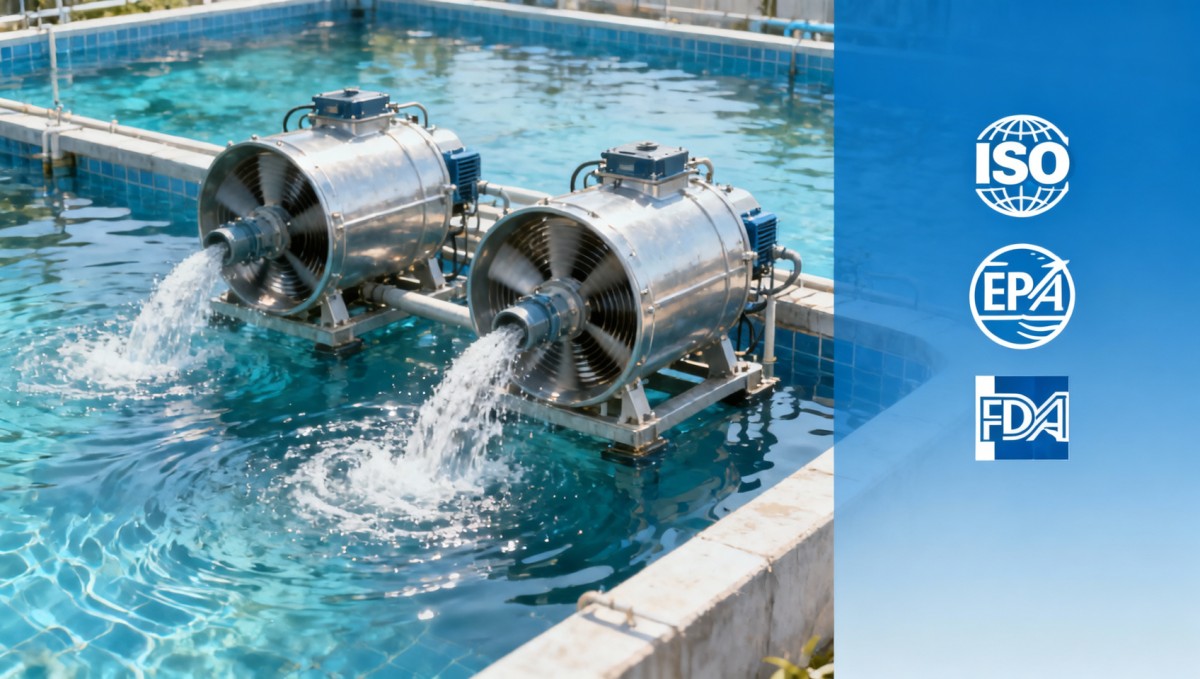
A supplier’s technical capabilities form the foundation of reliability. Look for ISO 9001:2015 certification for quality management systems, ISO 14001:2015 for environmental management, and OHSAS 18001/ISO 45001 for occupational health and safety. For aquaculture-specific equipment, EPA Section 404 permits and FDA 21 CFR Part 110 compliance are non-negotiable, ensuring the equipment meets water quality and food safety standards.
Advanced suppliers often provide third-party test reports from accredited laboratories (e.g., SGS, TÜV Rheinland) verifying performance metrics such as oxygen transfer efficiency (OTE ≥ 2.5 kg O₂/kWh), flow rate (5,000–50,000 L/min), and noise levels (≤65 dB at 1m). These data points help avoid overengineering or underperformance risks.
The table above highlights critical certifications and their validity periods. Suppliers with expired or missing certifications pose regulatory risks, as 31% of audits in 2023 resulted in penalties for non-compliance. Always request digital copies of certificates and cross-verify them with issuing authorities.
2. Material & Manufacturing Standards
Aquaculture environments are highly corrosive, with saltwater systems accelerating material degradation. Reliable suppliers use marine-grade stainless steel (316L) or high-density polyethylene (HDPE) for aerator housings, ensuring a lifespan of 10–15 years under continuous operation. Impellers and shafts should be made of abrasion-resistant alloys (e.g., Ni-Hard) to withstand particulate-laden water.
Manufacturing precision is equally vital. CNC-machined components reduce tolerance errors (≤±0.1mm), minimizing vibration and energy loss. Suppliers with in-house testing facilities can validate performance under simulated conditions (e.g., 35°C water temperature, 50 ppm salinity), providing confidence in long-term reliability.
Common Pitfalls in Supplier Selection
1. Overlooking After-Sales Support
Aerators require biannual maintenance to replace seals, lubricate bearings, and inspect electrical connections. Suppliers without local service teams or spare parts inventories can cause downtime of 7–15 days, costing $2,000–$5,000 per day in lost production for mid-sized farms. Prioritize suppliers offering on-site training, 24/7 technical support, and a guaranteed spare parts lead time of ≤72 hours.
2. Ignoring Scalability & Customization
As aquaculture operations expand, aerators must scale without compromising efficiency. Some suppliers offer modular designs where additional units can be added to existing systems, reducing capital expenditure by 20–30%. Customization options, such as variable-speed drives (VSD) for energy savings of 15–40%, are also critical for optimizing operational costs.
The table identifies common risks and their mitigation strategies. For instance, 45% of farms that switched suppliers in 2023 cited “unresponsive after-sales” as the primary reason, highlighting the importance of service-level agreements (SLAs).
Actionable Procurement Checklist
To streamline supplier evaluation, use this 6-step checklist:
- Request technical data sheets for all aerator models, including OTE, flow rate, and power consumption.
- Verify certifications with issuing authorities (e.g., ISO, EPA, FDA) and check for recent audits.
- Inspect manufacturing facilities via video call or on-site visit to assess quality control processes.
- Evaluate after-sales support by requesting references from existing clients in your region.
- Negotiate SLAs covering response time, spare parts availability, and warranty terms (typically 2–5 years).
- Conduct a pilot test with 1–2 units to validate performance under your specific water conditions.
FAQs on Paddle Wheel Aerator Suppliers
Q1: What is the typical lead time for bulk orders?
Lead times vary by supplier capacity and order size. For standard models, 4–6 weeks is common, while customized units may take 8–12 weeks. Always confirm delivery schedules in writing and include penalties for delays in contracts.
Q2: How often should aerators be serviced?
Biannual maintenance is recommended, with inspections every 3 months for high-salinity environments. Suppliers often provide maintenance kits containing seals, gaskets, and lubricants to simplify upkeep.
Q3: Can aerators be integrated with IoT monitoring systems?
Yes, leading suppliers offer aerators with built-in sensors for dissolved oxygen, temperature, and vibration monitoring. These systems transmit data to cloud platforms, enabling predictive maintenance and reducing unexpected failures by up to 60%.
Conclusion: Partner with AgriChem Chronicle-Verified Suppliers
Selecting a reliable paddle wheel aerator supplier requires balancing technical rigor, compliance, and long-term support. AgriChem Chronicle’s network of vetted suppliers meets the highest standards in quality, transparency, and innovation, helping you mitigate risks and optimize aquaculture operations.
To access our curated list of suppliers, request technical whitepapers, or schedule a consultation with our aquaculture tech experts, contact us today. Our team will provide tailored recommendations based on your system size, water conditions, and budget constraints.
Related Intelligence
- Aeration & Water TechHelium Price Up 35.2% MoM; Aeration Equipment Makers Test Ar/N2 SubstitutesHelium price up 35.2% MoM—Aeration equipment makers rush to validate Ar/N2 substitutes for CE/UL-compliant calibration in RAS & aquaculture systems.
- Aeration & Water TechWhy Some Deep Well Pumps Fail Long Before ExpectedSubmersible deep well pumps fail early when sizing, water quality, and controls are ignored. Learn how solar water pumps agricultural systems and agricultural diesel engines affect reliability.
- Aeration & Water TechSubmersible Deep Well Pumps and the Sand ProblemSubmersible deep well pumps in sandy wells: learn how solar water pumps agricultural systems and wholesale water pumps for farming compare, reduce wear, and improve irrigation reliability.
The Morning Broadsheet
Daily chemical briefings, market shifts, and peer-reviewed summaries delivered to your terminal.
